
REVIEW · CU CHI TUNNELS TOURS
3-Day Small-Group Best of Ho Chi Minh: City Sightseeing, Cu Chi Tunnels and Mekong Delta Tour
Three days, three big Vietnam stories. This small-group tour strings together Chinatown, key Saigon sights, the Mekong Delta, and the Cu Chi Tunnels—with a guide who keeps the stops focused and the day moving. I like how the plan is built around real places you can walk through, not just quick photo pulls.
I also like the comfort side: air-conditioned car/minivan pickup and drop-off, plus bottled water and three included lunches during the day tours. One thing to consider up front is that you arrange your own hotel for the two nights—this tour handles the sightseeing, not your stay.
In This Review
- Key Highlights to Focus On
- What You Really Get From This 3-Day Southern Vietnam Tour
- Your Pickup, Small-Group Comfort, and a Day That Flows
- Day 1 in Cholon and Saigon: Temples, Markets, and the War-Years in Two Big Stops
- District 1 Icons: Cathedral, Post Office, and Market Time to Decompress
- Day 2 to My Tho: A Mekong River Day You Can Actually Enjoy
- Vinh Trang Pagoda: Why This Stop Works Between War and Tunnels
- Day 3 Cu Chi Tunnels: The Film First, Then the Narrow Passages
- Lunches, Your Own Hotel Nights, and How to Plan Evenings Wisely
- Is $209 a Good Deal for 3 Days of Private Touring?
- Who This Tour Fits Best (and Who Might Want a Different Plan)
- Practical Tips Before You Go: Make Day 3 Easier and Day 1 More Enjoyable
- Should You Book This 3-Day Best of Ho Chi Minh Tour?
- FAQ
- How long is the tour?
- What time does the tour start?
- Is hotel pickup included?
- Is airport pickup available?
- What does the tour include for meals?
- Do I need to arrange my own accommodation?
- How are tickets handled?
- How many people are in the group?
- Are any entrance fees included?
- What happens if weather is bad?
Key Highlights to Focus On
- A capped small group with private guiding, so you get time to ask questions instead of being rushed
- Cholon Chinatown route with Quan Am Pagoda and Thien Hau Temple, then Binh Tay Market for everyday local life
- War Remnants Museum and Independence Palace to understand the war years in two very different ways
- My Tho + Mekong boat ride so you see the river landscape beyond the highway drive
- Cu Chi Tunnels with a short film and guided descent for context before you crawl through (tourist-accessible) sections
- Vinh Trang Pagoda with towering Buddha statues in ornate gardens, ideal as a calmer counterweight to the war sites
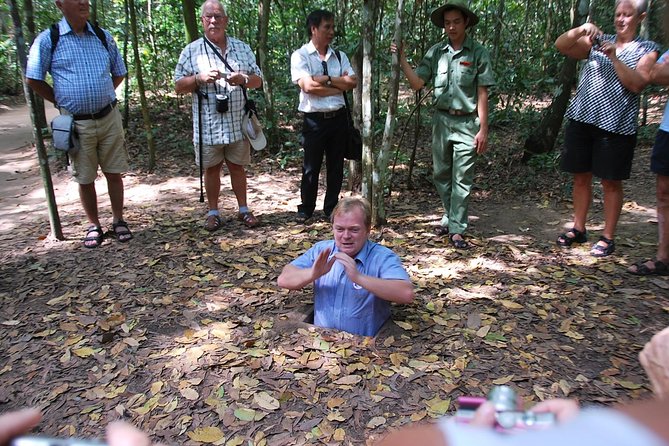
Down into the tunnels, a few more ways to go

What You Really Get From This 3-Day Southern Vietnam Tour
This is a three-day loop built for first-timers who want variety without bouncing around on their own. You start in Ho Chi Minh City with a full day of major sights, then shift to the Mekong Delta for a classic My Tho outing, and finish with Cu Chi Tunnels—one of the most intense war-related places in southern Vietnam.
The value here isn’t just the list of famous stops. It’s the way the tour balances emotional weight and visual variety. You’ll spend time in museums and government-era locations, then move to temples, markets, gardens, and a river boat ride. That rhythm matters, because Ho Chi Minh City can feel heavy if you only hit war and politics. This plan gives you breaks in between through food stops, market wandering, and a pagoda visit.
A second practical win is the logistics setup. The tour includes hotel pickup and drop-off, plus the option of airport pickup. The vehicle is air-conditioned, and you get bottled water. You’re not wrestling with rides between Districts or trying to stitch together half-day tours that don’t line up.
Your Pickup, Small-Group Comfort, and a Day That Flows
The tour starts at 8:00 am, which helps you beat the worst heat and avoid turning the day into a waiting game. You’ll be met at your hotel or the airport (airport pickup is offered upon request), then transferred by air-conditioned car or minivan. The private transport is especially helpful on this route because you’ll cover multiple areas: Chinatown (Cholon), central District 1 sights, and then full-day excursions out of the city.
Small-group guiding also changes the tone. When the group stays limited—listed as a maximum of nine travelers—you tend to get more back-and-forth with your guide. That’s important for places like the War Remnants Museum, where context helps you understand what you’re seeing rather than just reading captions and moving on.
One more detail that’s easy to miss: you get a mobile ticket. That saves time at the first exchange points and keeps you from hunting through paperwork. And because the tour is weather-dependent, having a plan that can switch dates if conditions are poor is a real comfort factor.
Day 1 in Cholon and Saigon: Temples, Markets, and the War-Years in Two Big Stops
Day 1 is your orientation day, and it’s packed in a good way. You begin in Chinatown (Cholon), which is a different world from central Saigon. It’s not only about architecture. It’s about the feeling of daily commerce and community.
You’ll visit Quan Am Pagoda and Thien Hau Temple in Chinatown. These stops are free-entry and work well as an early reset before the heavier sites later in the day. Even if you’re not a hardcore temple person, watching how worship spaces are used—incense, shrines, local rhythm—helps you understand why Ho Chi Minh City isn’t only about war history.
Next comes Binh Tay Market, also free to enter. This is the kind of market where you’ll see what locals actually buy: fruits, vegetables, poultry, meat, and seafood, sourced from across Vietnam. Compared with the more tourist-heavy market in District 1, Binh Tay feels more practical. Go slow, and don’t stress if your bargaining skills aren’t perfect—you can still enjoy browsing.
After lunch, your afternoon turns serious. The War Remnants Museum takes you through the Vietnam War through shock-and-context exhibits. The museum is known for being blunt, and that’s part of why it matters. Your goal shouldn’t be to feel okay afterward. It should be to leave with a clearer sense of what happened and how it’s remembered.
Then you’ll head to the Independence Palace (Reunification Palace). This site hits differently from the museum. Instead of artifacts and photos, you’re looking at rooms and layout tied to decision-making and the end of the war in 1975. It’s the kind of place where you’ll want to look down at details—corridors, meeting areas, the building’s logic—because it makes the timeline feel real.
District 1 Icons: Cathedral, Post Office, and Market Time to Decompress
After the museum and palace, you’ll get a classic set of French-colonial-era and city-center sights. This is your chance to shift gears and walk a little slower.
You’ll see Saigon Notre Dame Cathedral, a French-built Catholic landmark from the late 1880s. It’s also one of the few places where Catholic symbolism remains visible in a city with many other religious traditions. Nearby, you’ll stop at the Central Post Office, often described as one of the grandest in Southeast Asia due to its preserved architecture.
Then it’s Ben Thanh Market for a relaxed finish. Ben Thanh can be touristy, but it’s still useful. You can buy small souvenirs, check out eating stalls, and cool down with a drink. If you’re doing this day as a first-timer, Ben Thanh is a handy way to end in a lively place without requiring extra planning.
That mix—war sites, then architecture, then market decompression—helps you avoid the classic mistake of stacking only heavy indoor stops. By the time you reach the market, you’ll likely want food and movement more than another museum.
Tunnels in the morning, the delta after lunch
- Cu Chi Tunnels and Mekong Delta Full Day Tour – Max 12★ 5.0 · 6,257 reviews
- Ho Chi Minh: Full-Day Cu Chi Tunnels and Mekong Delta Tour★ 4.8 · 4,616 reviews
- CuChi Tunnels&Mekong Delta-Boat,TukTuk,Coconut Village SmallGroup★ 5.0 · 3,113 reviews
- Adventure Cu Chi Tunnels and Mekong Delta Tour From HCM★ 5.0 · 2,869 reviews
- Cu Chi Tunnels and Mekong Delta – Small Group Tour★ 5.0 · 2,822 reviews
Day 2 to My Tho: A Mekong River Day You Can Actually Enjoy
Day 2 takes you out of the city with a 2-hour drive to My Tho in the Mekong Delta. My Tho is known for orchards and rice fields, and even before you get to the river, the drive sets expectations: this is about agriculture, waterways, and slow life compared with Ho Chi Minh City’s speed.
Your first major stop is Vinh Trang Pagoda, about three kilometers from My Tho city center. This is not a quick roadside temple stop. It’s a sanctuary with gardens and a lot of ornamental detail, including towering Buddha statues you can spot once you’re within the complex. The setting matters here. The pagoda is described as flower- and lotus-garden heavy, and you’ll walk through gates and grounds with carved and gilded wood and mosaic-like décor.
After Vinh Trang, you’ll cross a river bridge and move into the Mekong river rhythm. The day includes a boat ride on the Mekong River. That boat time is the real payoff of the Delta portion. It’s where you get the river feel: wide water, floating views, and the sense that this region lives with the tides and channels. If you’re the type who can appreciate scenes more than shopping, this is where your camera will actually earn its keep.
Vinh Trang Pagoda: Why This Stop Works Between War and Tunnels
Vinh Trang is a smart choice as a “breather” day. On your full itinerary, it’s sandwiched between the emotional intensity of the war-focused Day 1 and the underground intensity of Cu Chi on Day 3.
You’ll likely notice two things here. First, the religious and artistic focus feels different from war museums. Second, the sheer scale of the statues and the garden layout gives you space to slow down. Even the walking routes—from gate to grounds—help break up the day without adding extra long drives.
Because admission is listed as free for the pagoda stop, it also functions like good value. You spend time there without worrying that you’re racking up paid add-ons.
Day 3 Cu Chi Tunnels: The Film First, Then the Narrow Passages
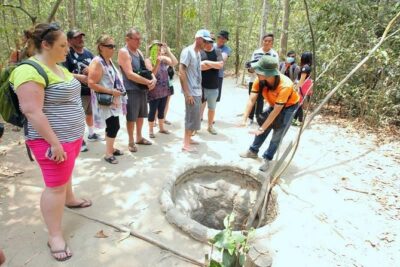
Cu Chi Tunnels is where the tour turns intense. You’ll meet your guide in the morning, then ride out to the Cu Chi memorial park area. The tour includes a short film documenting the tunnels’ role as a strategic base used during the Vietnam War. That film step is more than a warm-up. It sets the logic for what you’ll see below ground—how tunnels functioned as a living and organizing space.
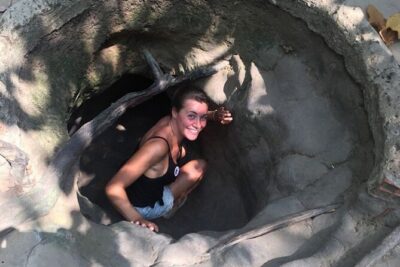
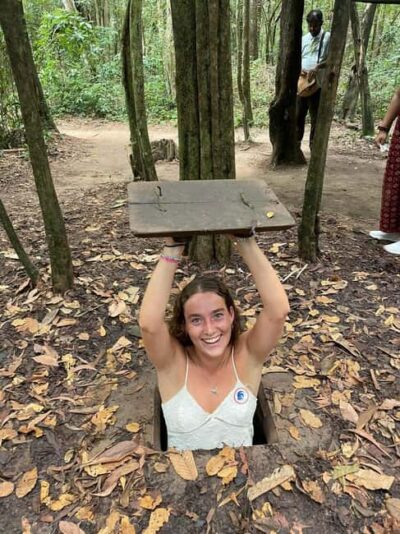
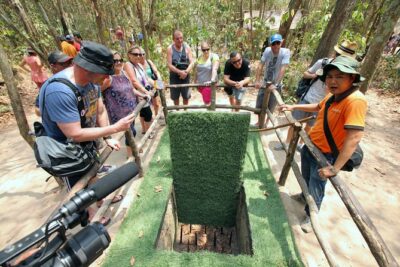
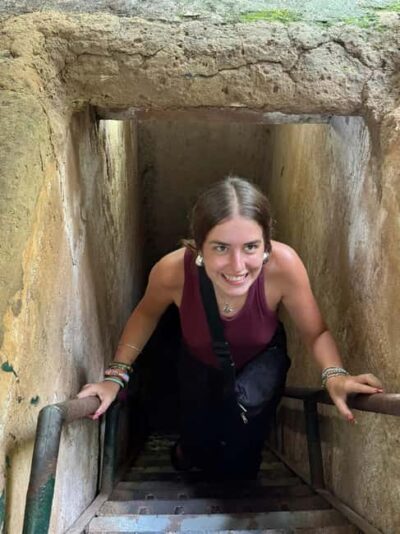
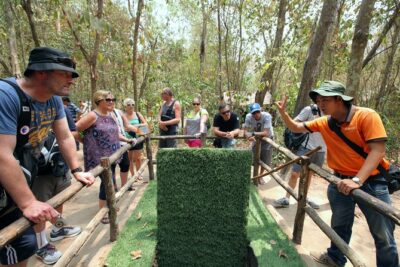
After the film, you descend into the tunnels. You’ll go down into narrow passageways and explore a section open to tourists. The goal is to get the physical sense: tight space, limited airflow, and the way movement changes when you’re underground. It’s also where your guide’s explanations matter, because the tunnels can feel like just another attraction if you don’t understand what different areas were used for.
The tour includes admission for the tunnel portion. That matters because Cu Chi is one of those places where adding or removing paid entries can quickly change the total value of a trip.
Lunches, Your Own Hotel Nights, and How to Plan Evenings Wisely
The tour includes three lunches across the three days, plus bottled water. That’s a big deal for value and energy. On a sightseeing-heavy plan, paying for lunch every day can quietly add cost and slow you down.
Dinner is not included, though, so your evenings are yours to choose. And since accommodation isn’t provided, you’ll need to pre-arrange your hotel for the two nights (or whatever your personal stay schedule ends up being for the 3-day loop). For many people, that means choosing a place in Ho Chi Minh City close enough for easy returns after Day 1 and Day 3.
Because your days start early and end after a full schedule, I recommend you keep your evening plans light. Treat night hours as recovery time—good food nearby, a short walk, maybe a coffee. You’ll get more from the tour when you’re not trying to stack nightlife on top of temple time and war history.
Is $209 a Good Deal for 3 Days of Private Touring?
At $209 per person, this tour sits in the “mid-range” zone for private multi-day experiences in Vietnam, mostly because you’re paying for time, transport, and guiding—not just admissions.
Here’s what you get that supports the price:
- Private guiding across three days, including city blocks and two full-day excursions
- Air-conditioned transport and hotel/airport pickup and drop-off
- Three lunches and bottled water
- Several key entrances listed as included on Day 1 (War Remnants Museum and Independence Palace), plus Cu Chi tunnel admission
What you don’t get:
- Your hotel rooms
- Dinner
- Any drinks beyond what’s explicitly included
So for the value math, the key question is whether you’d otherwise hire an all-day driver and buy separate tickets for museum, palace, and Cu Chi. If you’d do most of that anyway, the “bundle” makes sense. If you already plan to explore the city independently on Day 1 and want only one guided day, then you might compare costs with splitting plans.
Who This Tour Fits Best (and Who Might Want a Different Plan)
This tour fits best if you want structure. I think it’s a great match for:
- First-time visitors who want to see major Ho Chi Minh City sights without planning
- People who prefer small-group pacing over large bus tours
- Travelers who want war history context but also appreciate that the schedule includes markets, cathedrals, and temple gardens
- Anyone who likes guided explanations at places that are easy to misunderstand on your own
It might be less ideal if you:
- Hate feeling rushed between multiple big stops in one day (Day 1 is full)
- Want total freedom to choose restaurants at set times (lunch is included, but dinner isn’t)
- Don’t want to deal with arranging your own accommodation for the nights
Also, the tour is weather-dependent. If rain is heavy during your dates, expect the provider to offer a different date or refund if they cancel due to poor conditions.
Practical Tips Before You Go: Make Day 3 Easier and Day 1 More Enjoyable
A few small things can make a big difference on this itinerary:
- Dress for temples and markets: lightweight breathable clothing, and keep shoulders and knees covered when you enter sacred spaces like pagodas.
- Cu Chi comfort matters: tunnel areas can feel hot and tight. Wear shoes you can walk in steadily, and expect limited space.
- Bring sun protection: even with air-conditioned vehicle time, you’ll be outside for cathedral photos, markets, and museum/palace walks.
- Keep a little flexibility: Day 1 is packed with multiple major sites. If you arrive with patience (and water), you’ll enjoy it more.
- Ask questions about pacing: since it’s guided throughout, you can often request a little extra time at a stop if there’s a specific place you care about.
Finally, if you’re even slightly unsure about date changes, handle it early. Communication can be inconsistent with any international tour setup, and you’ll reduce stress by clarifying dates well ahead of travel.
Should You Book This 3-Day Best of Ho Chi Minh Tour?
If you want a guided, small-group overview of southern Vietnam—Ho Chi Minh City plus My Tho on the Mekong plus Cu Chi tunnels—this is a strong pick. The mix of places makes the trip more than a checklist: temples and markets give you breathing room, while the museum, palace, and tunnels answer the big war questions in different ways.
I’d book it if you value convenience and context, and you’re okay arranging your own hotel. I would think twice if you want a looser, DIY trip with lots of downtime. For most first-timers, though, this plan is efficient, thoughtful, and easy to manage.
FAQ
How long is the tour?
It runs for 3 days (approximately).
What time does the tour start?
The start time is 8:00 am.
Is hotel pickup included?
Yes. Hotel pickup and drop-off are included.
Is airport pickup available?
Airport pickup is available upon request.
What does the tour include for meals?
It includes three lunches, plus bottled water.
Do I need to arrange my own accommodation?
Yes. Accommodation is not provided, so you’ll need to pre-arrange your hotel.
How are tickets handled?
The tour uses a mobile ticket.
How many people are in the group?
The tour has a small group size with a maximum of 9 travelers.
Are any entrance fees included?
Yes. Admission is listed as included for stops like the War Remnants Museum and the Independence Palace, and the Cu Chi Tunnels admission is included.
What happens if weather is bad?
The tour requires good weather. If it’s canceled due to poor weather, you’ll be offered a different date or a full refund.
More Days Down the Mekong



Tunnels and Delta in One Big Day
The Cu Chi Tunnels, a Few More Ways Down
Just Reviewed Around Saigon
- Secret walking Food Tour Ho Chi Minh City
★ 5.0 · 3 reviews - Ho Chi Minh City: Secret Cocktail Experience
★ 5.0 · 3 reviews - From Ho Chi Minh city: Vung Tau Beach Private Day Tour
★ 5.0 · 3 reviews - Saigoncholon
★ 3.5 · 3 reviews - Saigon On 2 Wheels
★ 3.5 · 3 reviews - From Ho Chi Minh City: Relax In Mui Ne Beach In 1 Day
★ 4.3 · 3 reviews
Cu Chi Tunnels Tours, compared.
 ★ 4.7Cu Chi Tunnels Morning or Afternoon TourFrom $1319,646 reviews
 ★ 5.0Cu Chi Tunnels Tour from HCM City – Morning or AfternoonFrom $1515,833 reviews
 ★ 4.7Cu Chi Tunnels & Mekong Delta with Coconut Village TourFrom $3511,836 reviews
 ★ 5.0Cu Chi Tunnels-Tapioca Small Group Tour Morning or AfternoonFrom $147,485 reviews
 ★ 5.0Cu Chi Tunnels and Mekong Delta Signature TourFrom $337,328 reviews
 ★ 5.0Cu Chi Tunnels & Mekong Delta Tour with VIP Limousine TransferFrom $567,052 reviews
 ★ 4.8Cu Chi Tunnels Morning or Afternoon TourFrom $136,326 reviews
 ★ 5.0Cu Chi Tunnels and Mekong Delta Full Day Tour – Max 12From $436,257 reviews
Browse the lists this tour appears in