
REVIEW · SAIGON
Amazing Vietnam, Cambodia and Thailand 16 Days
Indochina, neatly stitched into 16 days. This route links Ho Chi Minh City to the Mekong Delta, then threads through Hoi An, Halong Bay, Siem Reap and ends in Phuket with multiple “big wow” sights along the way. You’ll see limestone karsts on the Gulf of Tonkin, Khmer temple scale at Angkor, and the beach reset that most people need after a lot of touring days.
I especially like two things. First, the trip leans hard on smooth handoffs—airport meet-and-greets with name signs and private, air-conditioned transfers keep your brain focused on sights, not schedules. Second, the tour provides English-speaking guides and real support; one review singled out tour manager Dat for staying in contact and helping with an on-the-spot issue like a sprained ankle.
The trade-off is pace. In 16 days you’ll do several domestic flights and change hotels often enough that you’ll want to travel light and keep your packing system simple.
In This Review
- Key highlights worth planning around
- A 16-day Indochina run that actually feels organized
- Starting in Ho Chi Minh City: a smart first day reset
- Mekong Delta day: scenery and a different kind of pace
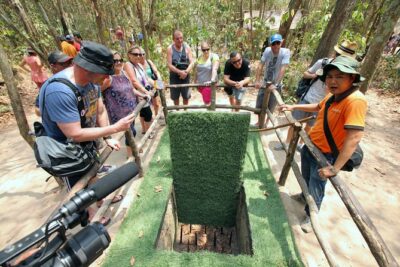
- Cu Chi Tunnels: intense history, handled as a day trip
- Flying to Hoi An: a change in scenery you’ll feel immediately
- Bay Mau Coconut Forest cycling: countryside that feels more local
- Hoi An Memories Island: one evening of show-style fun
- Hoi An to Hanoi: the quick hop that sets up Halong Bay
- Halong Bay cruise: early energy, limestone wow
- Siem Reap transition: flying in for Angkor scale
- Angkor Wat day: a full temple day with major anchors
- Tonle Sap floating village: a different side of Cambodia
- Phuket arrival and three full leisure days
- Price and value: what you’re really paying for
- Logistics that matter: group size, tickets, and pacing
- Who should book this trip (and who might want something else)
- Should you book it?
- FAQ
- What city does the tour start in?
- Are domestic flights included?
- How many days is the tour and what is the overall route?
- Is the tour guided?
- What meals are included?
- How large is the group?
Key highlights worth planning around
- Meet-and-greet airport support with name signs and 24/7 hotline backing
- Domestic flights included, plus baggage allowance (20kg checked, 7kg carry-on)
- Halong Bay cruise with early start activities like Tai Chi and a cave visit
- Hoi An countryside by bike through the Bay Mau Coconut Forest area
- Angkor day structured for big impressions, including South Gate of Angkor Thom
- Three leisure days in Phuket to recover after the temple-and-cruise sprint
Before you book, see how it holds up against the Saigon tours people pile onto most.



A 16-day Indochina run that actually feels organized
This is one of those trips where the selling point isn’t any single attraction. It’s the way the itinerary strings together very different experiences—river scenes, underground history, lantern streets, limestone scenery, temple complexes, and beach downtime—without making you plan every hop yourself.
A big part of the value is the operational structure. You’re traveling with experienced English-speaking guides for the guided parts, plus air-conditioned vehicle transfers. The small group size (up to 15) also helps keep the experience from feeling like a herd at the worst possible moments.
Starting in Ho Chi Minh City: a smart first day reset
Your trip begins in Ho Chi Minh City with a simple plan: arrival, airport-to-hotel transfer, check-in and rest. That might sound basic, but after travel it matters. You don’t want your first “day of touring” to be a scramble.
On day one, you’ll also get a sense of how the city layers colonial and traditional architecture—a useful theme for the rest of the trip. Vietnam’s history shows up again and again here, from architecture to tunnels later on.
A practical note: the tour includes hotel support and breakfasts, so you can keep mornings calmer. You’re not hunting down where to eat right away.
Mekong Delta day: scenery and a different kind of pace
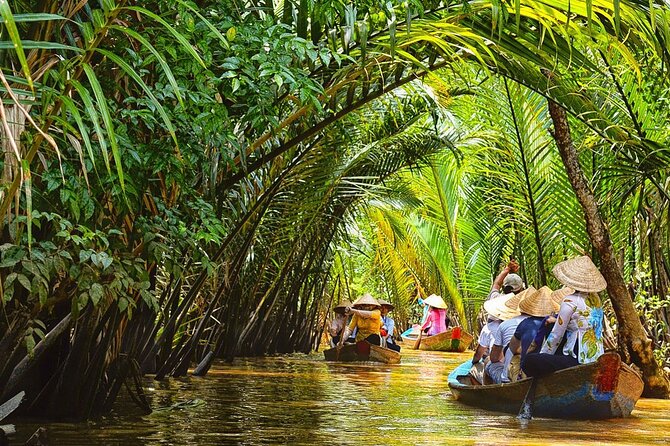
On day two you head to the Mekong Delta from Ho Chi Minh City, with My Tho as the base. You’ll ride in with a guide and driver, then spend time taking in rice paddies and river life.
What I like about this day is the change of tempo. After city energy, the Mekong gives you space—green fields, slower movement, and a landscape that makes Vietnam feel larger than one city. Even if you’ve seen rivers before, the Delta has a way of making agriculture and waterways feel like the same system.
One consideration: day two is still a full day (listed as 8 hours). If you hate long travel days, plan for a slightly heavier breakfast and easy shoes.
Cu Chi Tunnels: intense history, handled as a day trip
Day three brings you to the Cu Chi Tunnels near Ho Chi Minh City. The tour is set up as a countryside day with an English-speaking guide and included admission, with travel time around an hour and a half each way.
This stop is not “light sightseeing.” It’s a topic that can feel heavy, and it helps to go in with curiosity and patience. I’d treat the tunnels as a history lesson you can walk through, not just a photo stop—because the scale of the underground system hits harder when you’re actually there.
If you have mobility concerns, this day is worth planning for. The data only says moderate physical fitness is needed overall, but tunnels can mean uneven footing and confined spaces. Bring good walking habits and don’t rush.
- Cu Chi Tunnels Tour from HCM City – Morning or Afternoon★ 5.0 · 15,833 reviews
- From HCM City: Mekong Delta Tour with Sampan Journey★ 4.5 · 13,132 reviews
- Ho Chi Minh City Street Food Tour & Sightseeing By Motorbike★ 5.0 · 9,413 reviews
- HCM: Cu Chi Tunnels-Tapioca Small Group Tour Morning or Afternoon★ 5.0 · 7,485 reviews
- Cu Chi Tunnels and Mekong Delta Signature Tour★ 5.0 · 7,328 reviews
Flying to Hoi An: a change in scenery you’ll feel immediately
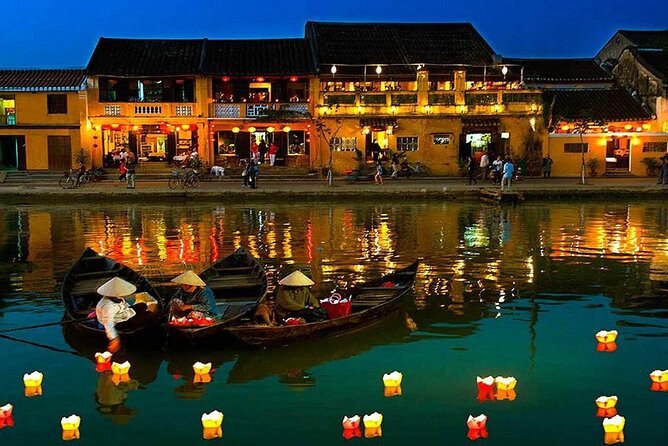
After a morning in Ho Chi Minh City, you fly to Hoi An. That’s a key value point of the tour: you’re not wasting this transition day with buses and slow transfers.
Hoi An, as a place, works well in a multi-country trip because it’s walkable and visually distinct. Expect lantern-light charm along the river area in the evenings, with a slower vibe than big-city Vietnam.
This tour keeps you mostly in the “right places” for each day rather than cramming in extra stops you’d only half enjoy.
Bay Mau Coconut Forest cycling: countryside that feels more local
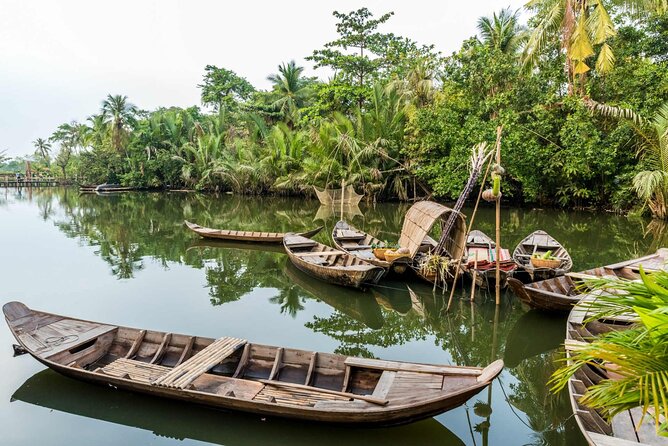
On day five, you move into the countryside around Hoi An and cycle around rivers and rural scenery in the Bay Mau Coconut Forest area. This is one of the days where the tour gives you an experience, not just a destination.
Cycling is the kind of activity that tends to work for most travelers because you’re actively moving through the landscape. You’ll also see more of the area than you could from a bus window.
One caution: cycling days can be deceptively physical. The tour notes moderate fitness overall, so wear comfortable gear and bring a bottle of water and sun protection.
Hoi An Memories Island: one evening of show-style fun
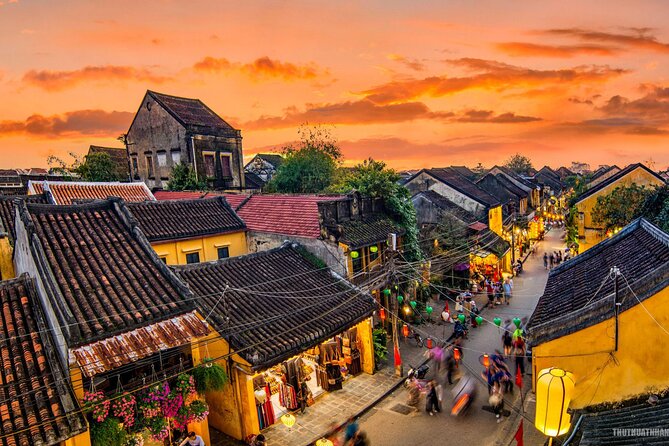
Day six includes an evening transfer to Hoi An Memories Island. You get time to take part in the island activity tied to the attraction (with included admission).
This is a “structured entertainment” day, and that’s not a bad thing. After days like tunnels and cruise schedules, having one planned evening can help you recharge without hunting for options on your own.
If you’re the kind of traveler who dislikes show-like formats, you can treat this as a flexible evening rather than a must-see performance. The key is that your later days shift north.
Hoi An to Hanoi: the quick hop that sets up Halong Bay
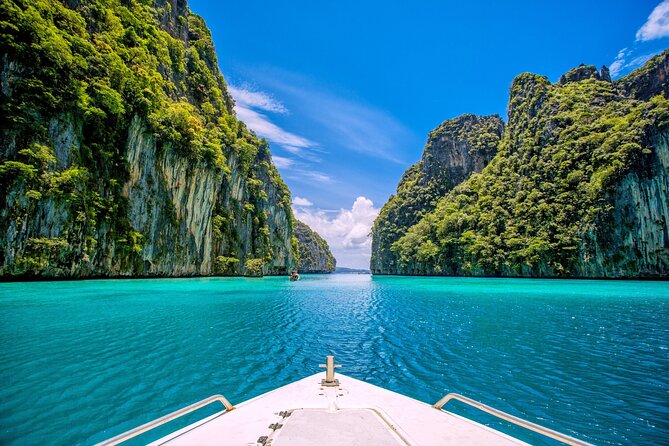
On day seven, you enjoy your own pace time in Hoi An, then fly to Hanoi. From there, the tour line-up pushes you onward quickly, because Halong Bay is scheduled for the next day.
This is one of the “design choices” in this itinerary. The trip avoids adding an entire extra city stay and instead prioritizes the cruise experience in Halong Bay. If you like to maximize signature sights, this approach fits.
If you prefer deep time in fewer places, you may wish you had one more night somewhere. But you’ll likely agree the trade-off is worth it for Halong.
Halong Bay cruise: early energy, limestone wow
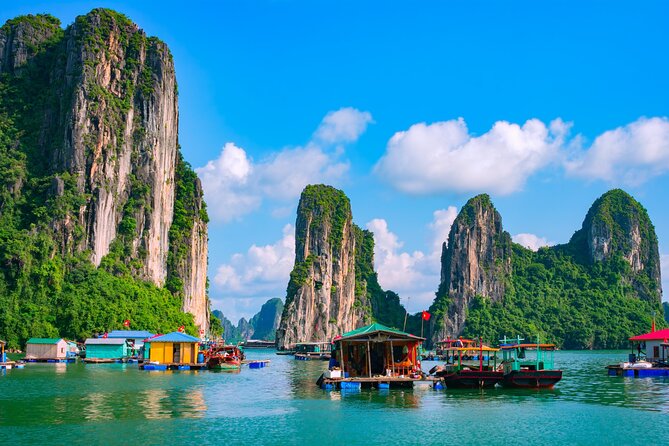
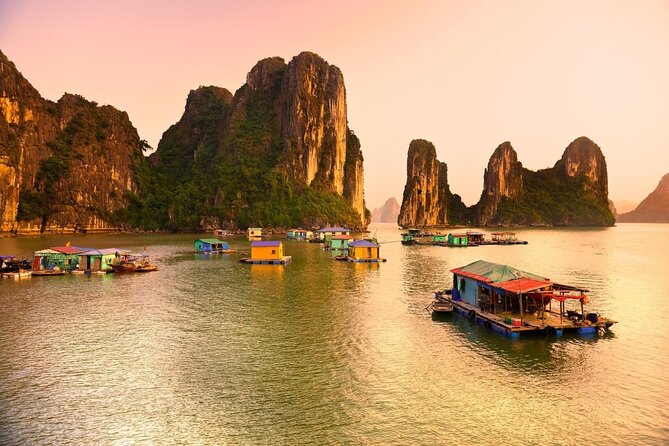
Day eight is your transfer to Halong Bay with an included day plan. It’s described as the most scenic route on the way to reach the bay, and you’ll have guide support for the cruise logistics.
Then day nine is the classic Halong experience day: wake up early, do Tai Chi on the sundeck, enjoy breakfast, and explore a cave described as full of stalagmites. This is the kind of morning that makes cruise days feel special, because the bay is calmer before the crowds stack up.
A cave visit adds value, but it also means time and steady footing. If you don’t like enclosed spaces, take it slowly and wear shoes with decent grip.
Siem Reap transition: flying in for Angkor scale
Day ten takes you from Vietnam into Cambodia via a flight to Siem Reap, with an overnight stay there. This transition matters because Angkor days are long and you don’t want to start them exhausted.
The tour is also set up for efficient airport-to-hotel movement. You’re not wandering around wondering where to go next, and that’s a real benefit if you’re traveling through multiple countries for the first time.
Angkor Wat day: a full temple day with major anchors
Day eleven is your full Angkor area day. The plan explicitly includes South Gate of Angkor Thom, plus the main ancient ruin exploring time through the Angkor complex.
What makes this day valuable is the structure around the big impact moments. The South Gate is famous for its carved faces and sets the tone for everything you’ll see next. Once you’re in that visual world, the rest of the ruins feel connected rather than like isolated monuments.
This is also a long day (about 8 hours). Plan for sun, bring water, and consider lightweight layers. Angkor isn’t about sprinting from one photo spot to another—it’s about walking enough to let the scale sink in.
Tonle Sap floating village: a different side of Cambodia
Day twelve focuses on Tonle Sap Lake, including a visit to a floating village and a ride by traditional wooden boat. This is where the trip shifts from temple stone to daily life on the water.
I like this because it adds context. Cambodia isn’t only temples. Tonle Sap shows you how communities work with the lake rather than around it, and that helps your Angkor experience feel less like a stand-alone spectacle.
Boat activities can affect comfort if you’re prone to motion sickness. If that’s you, prepare ahead and keep expectations realistic.
Phuket arrival and three full leisure days
Day thirteen brings you to Phuket by flight, with a meet-and-greet at the airport and a transfer to your hotel. Then you get day fourteen and day fifteen as true day at leisure.
This “breather” is honestly one of the best parts of the itinerary. After river time, tunnels, cycling, cruises, and temples, you’ll want quiet. Phuket gives you the chance to swim, shop, eat well, and do nothing at all for stretches of time.
Day sixteen ends the trip with a hotel-to-airport transfer for your flight home.
Price and value: what you’re really paying for
At $1,758 per person, this is not a budget-only trip. But it can be good value if you’d otherwise spend time and money coordinating everything on your own.
Here’s why the price can make sense:
- Domestic flights included with a baggage allowance (20kg checked, 7kg carry-on). Domestic flights can add up fast when you book them piecemeal.
- Guided excursions in English plus air-conditioned vehicle transfers, which reduce stress and time loss.
- Accommodation with daily breakfast and additional meals (breakfasts are listed for 15 days, plus lunch and dinner are included in the package).
It’s also notable that reviews describe hotel quality as solid for the category, including 3-star properties that felt surprisingly good and well located. Since your rooms are shared twin/double, you’re getting the savings from choosing that configuration.
What’s not included is also clear: international flights, travel insurance, tips, and any meals not mentioned. You’ll want to budget for personal expenses and leave a little room for splurges on your leisure days in Phuket.
Logistics that matter: group size, tickets, and pacing
The tour keeps things manageable with a maximum of 15 travelers and “private transfer” style handling for the moving days. Pickup is offered, and you get a mobile ticket, which helps if you’re traveling light or want everything in one place.
The pacing is the biggest practical consideration. You’ll be active on many days, and at least a few days are built around early starts, especially near Halong Bay. If you like slow mornings and long afternoons, plan to treat some afternoons as recovery time.
Finally, your fitness level should be moderate. The trip involves walking, cycling, boat time, and cave exploring. You don’t need athlete status, but you do need to be comfortable moving.
Who should book this trip (and who might want something else)
This tour is a strong fit if you want:
- A one-book solution for Vietnam + Cambodia + Thailand in about 16 days
- Big-ticket sights grouped efficiently (Halong Bay, Angkor, plus Vietnam’s river and tunnel days)
- English-guided experiences and consistent airport transfers
- A clear recovery block at the end in Phuket
You might rethink the booking if:
- You hate flying and hotel changes. This itinerary does them often.
- You want lots of unstructured time in each city rather than planned highlights.
- You’re sensitive to crowded schedules on landmark days like Angkor and Halong.
Should you book it?
I’d book this if you want maximum signature sights with the work handled for you. The big value is the chain of logistics: transfers with name-sign meet-and-greets, English-speaking guides, domestic flights, and a plan that balances action days with real downtime in Phuket.
I’d hesitate only if you’re chasing a slow, low-stress trip where you stay in one place long enough to truly settle in. This one is for travelers who like momentum—just not chaos.
FAQ
What city does the tour start in?
The tour starts in Ho Chi Minh City, Vietnam, with pickup/meeting arranged at Tan Son Nhat International Airport.
Are domestic flights included?
Yes. Domestic flights are included, and the package lists baggage allowance of 20kg checked-in and 7kg carry-on luggage.
How many days is the tour and what is the overall route?
It runs about 16 days, starting in Ho Chi Minh City, traveling through Vietnam and Cambodia, and ending in Phuket with a transfer to the airport on the final day.
Is the tour guided?
Yes. The itinerary includes experienced English-speaking guides for the activities described, plus support via a 24/7 hotline.
What meals are included?
Breakfast is included for 15 days, and the package also includes lunches (6) and dinner.
How large is the group?
The tour/activity has a maximum of 15 travelers.
More Tour Reviews in Ho Chi Minh City





Just Reviewed Around Saigon
- Secret walking Food Tour Ho Chi Minh City
★ 5.0 · 3 reviews - Ho Chi Minh City: Secret Cocktail Experience
★ 5.0 · 3 reviews - From Ho Chi Minh city: Vung Tau Beach Private Day Tour
★ 5.0 · 3 reviews - Saigoncholon
★ 3.5 · 3 reviews - Saigon On 2 Wheels
★ 3.5 · 3 reviews - From Ho Chi Minh City: Relax In Mui Ne Beach In 1 Day
★ 4.3 · 3 reviews