
REVIEW · CU CHI TUNNELS TOURS
From Ho Chi Minh: Cu Chi Tunnels – A Complex Tunnels Network
Underground life in Vietnam hits differently. This Cu Chi Tunnels tour takes you from central Saigon into a spider-web network of tunnels, showing how guerrillas hid, lived, and fought below the surface, with the added contrast of wartime documentary footage and wartime tapioca cooked the old way. I also love how you get hands-on context, not just photos—like hearing how camouflage worked with leaves, and seeing the underground spaces tied to daily survival. One catch: the tunnel sections are very narrow, so claustrophobia (and some physical discomfort) is a real factor.
If you handle tight spaces, you’ll probably come away with a clearer sense of how people endured and resisted during the war. The tour’s main strength is the mix of practical storytelling—traps, war scenarios, and how tunnels were used for rooms, hospitals, and a weapons workshop—with a snack that connects history to your taste buds. If you dislike small spaces or don’t want to crawl, this may feel like more than you bargained for.
In This Review
- Key things you’ll notice on this Cu Chi Tunnels tour
- Saigon pickup and the 6-hour rhythm
- The war story you get from the guide (and why it matters)
- What you explore underground: rooms, hospitals, and a weapons factory
- Crawling the narrow tunnels: the point, the discomfort, and how to handle it
- Wartime tapioca at the Hoang Cam stove (and what to watch for)
- Optional gun shooting with AK-47 and M-60: fun, but not included
- Price and value: is $30 worth it?
- Who this tour fits best (and who should reconsider)
- Should you book this Cu Chi Tunnels tour?
- FAQ
- How long is the Cu Chi Tunnels tour?
- Is pickup and drop-off included?
- What’s included in the price?
- Are other languages available?
- Is the tunnel crawling included?
- Is gun shooting included?
- What snack will I get?
- Can I cancel close to the trip?
Key things you’ll notice on this Cu Chi Tunnels tour
- Smoke-hiding Hoang Cam stove tapioca: you’ll taste tapioca served with tea, prepared on a stove designed to hide smoke
- Documentary-style war footage: short authentic clips filmed during the war help you place what you’re seeing underground
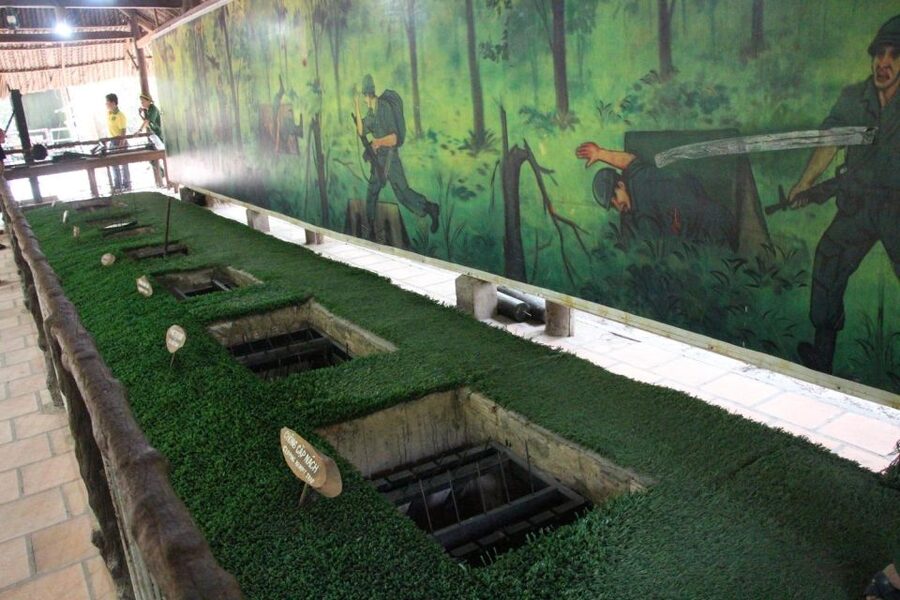
- Underground function rooms: you can explore areas described as including living spaces, hospitals, and a weapons factory
- Real-feeling tunnel conditions: you’ll crawl through very narrow sections that make the scale and stress easier to understand
- Optional shooting range adds costs: you can shoot with real guns like AK-47 and M-60, but bullet fees are extra
Down into the tunnels, a few more ways to go

Saigon pickup and the 6-hour rhythm
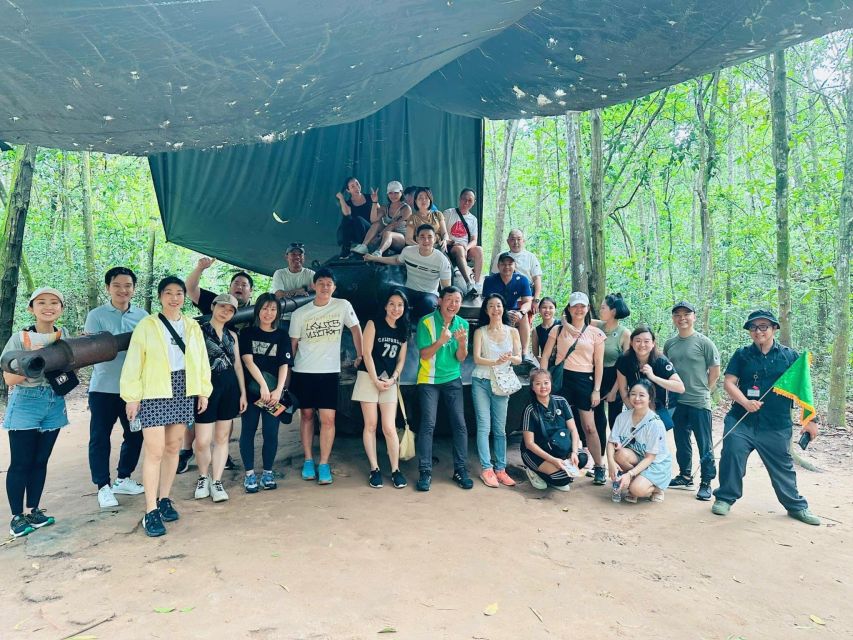
This is a 6-hour tour, built for one main goal: get you to Cu Chi and help you understand what “underground city” meant in practice. Pickup and drop-off are included at the center of Saigon, which keeps the logistics simple if you’re staying in-town. You’ll also be traveling with a live guide who can explain what you’re looking at in real time.
Once you’re on the way, you’ll quickly shift from modern Saigon streets to the war landscape Cu Chi is known for. That transition matters. A lot of people see tunnels as just a set of holes in the ground. Here, the tour framing helps you connect the tunnels to strategy, survival, and engineering under pressure.
One practical tip: because the tour includes walking and time spent outside before and after the tunnel parts, bring the right layer for heat and weather swings. In the tropics, conditions change fast, and you’ll appreciate anything that keeps you comfortable when you’re waiting or moving between areas.
The war story you get from the guide (and why it matters)
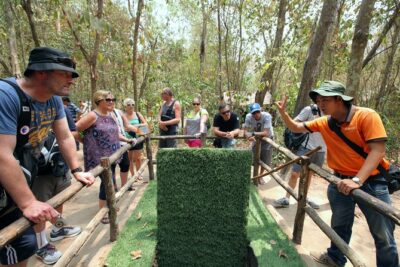
What makes this experience more than a sightseeing stop is the way the guide explains war scenarios and defensive design. You’ll learn how Vietnamese guerrillas lived and resisted, and you’ll hear how traps were used to slow or misdirect intruders. That kind of explanation changes your brain’s interpretation while you’re standing inside the tunnels. Instead of thinking, How narrow, you start thinking, Why this layout, why this doorway, why this spacing.
You’ll also get details about camouflage using leaves—something that turns a familiar word like disguise into something physical and believable. And when you watch short documentaries and authentic footage recorded by wartime cameramen, the underground spaces stop being abstract. You’ll have a visual reference for what was happening above ground while people moved and hid below.
Guides are clearly a big part of the payoff. I’ve heard first-hand how guides such as James and Steven bring clarity and keep the tone practical, including explanations of traps and how different situations played out. If you care about understanding the human choices behind the tactics, this is one of the best ways to get there in a single day.
What you explore underground: rooms, hospitals, and a weapons factory
Inside Cu Chi, you’re not just shown one tunnel. You’re guided through a tunnel system described as complex and web-like, where different underground functions connect. The tour highlights that the network included rooms, hospitals, and even a weapons factory. That’s an important distinction.
Why it matters: tunnels are often sold as escape routes. This tour positions them as full infrastructure—places to treat injuries, store supplies, and keep operations going when the surface was under constant threat. Even if you can only see parts of the system, the overall layout helps you grasp how guerrilla fighters could keep working without staying exposed.
You’ll also see how secret refuge was created through design and concealment. The tour description emphasizes camouflage and hidden refuge, and that’s what you want to look for as you move around: not just the tunnel walls, but the logic behind access points and hidden spaces.
If you want history that feels engineered rather than purely tragic, this is the angle. It’s not only about loss. It’s also about stubborn problem-solving—building a world underground and making it functional.
Crawling the narrow tunnels: the point, the discomfort, and how to handle it
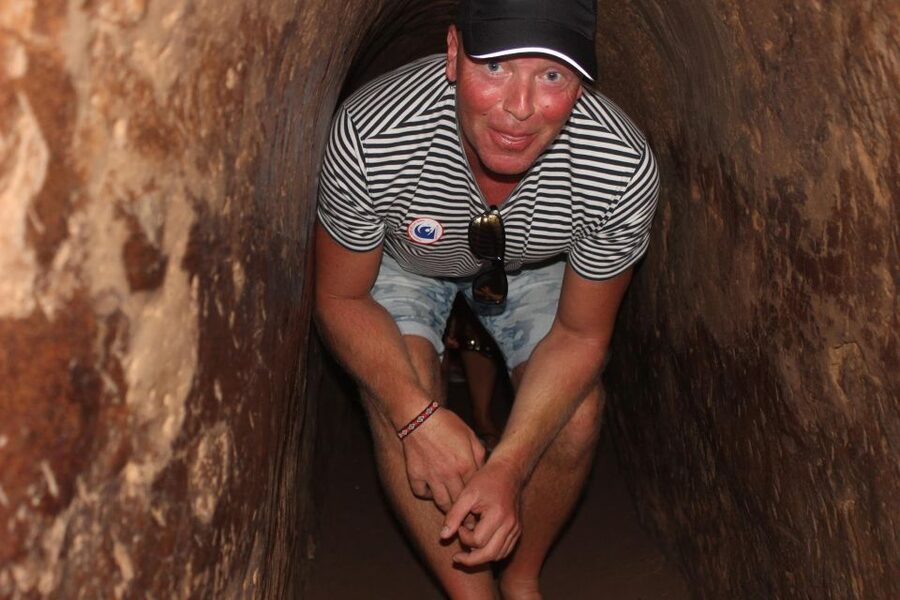
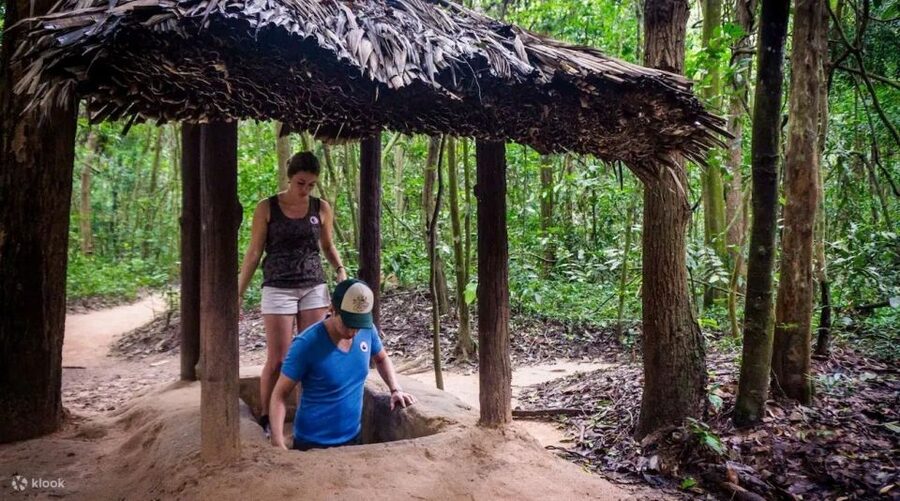
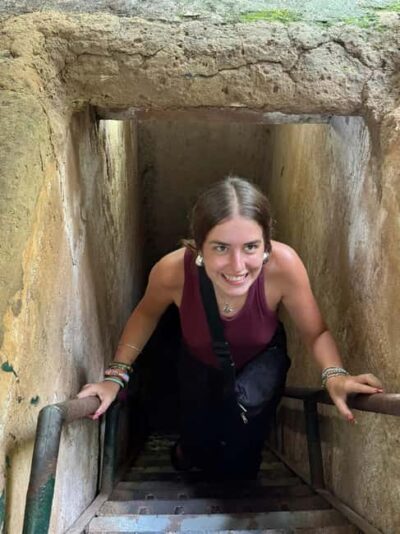
The tunnel experience is the headline. You’ll have the chance to go inside narrow tunnels so you can feel how life and movement worked during the war. This is where the tour becomes emotional and physical, because the spaces are tight and the movement is slow.
Here’s the honest consideration: narrow tunnels can trigger panic. Even confident people tend to feel your breathing and your body position the whole time. If you’re claustrophobic, you should treat this as a deciding factor before you book.
If you do go in, keep expectations realistic. You’re not sightseeing at your own pace; you’re moving through a designed route, often with others, with a guide controlling timing. That’s also why good guidance matters—especially when you’re learning what you’re looking at while you’re still concentrating on your own safety.
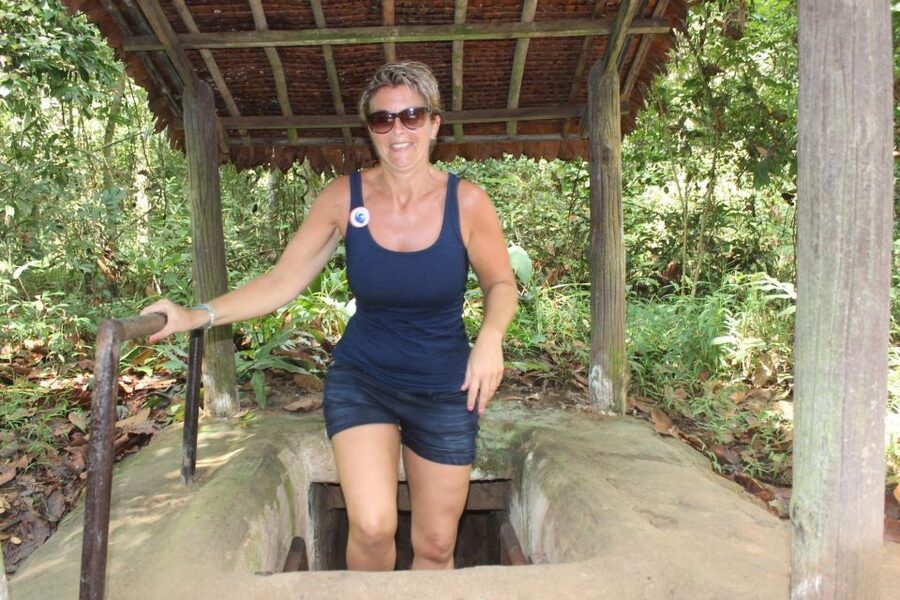
Also note: the tour indicates there can be a surcharge if you want to go down to the tunnels. That means the tunnel portion may not be automatically included in every ticket type or decision. If crawling is your priority, confirm what’s included in your booking before you arrive so you don’t get surprised by extra charges.
- Cu Chi Tunnels Tour from HCM City – Morning or Afternoon★ 5.0 · 15,833 reviews
- From HCM City: Mekong Delta Tour with Sampan Journey★ 4.5 · 13,132 reviews
- Ho Chi Minh City Street Food Tour & Sightseeing By Motorbike★ 5.0 · 9,413 reviews
- HCM: Cu Chi Tunnels-Tapioca Small Group Tour Morning or Afternoon★ 5.0 · 7,485 reviews
- Cu Chi Tunnels and Mekong Delta Signature Tour★ 5.0 · 7,328 reviews
Wartime tapioca at the Hoang Cam stove (and what to watch for)
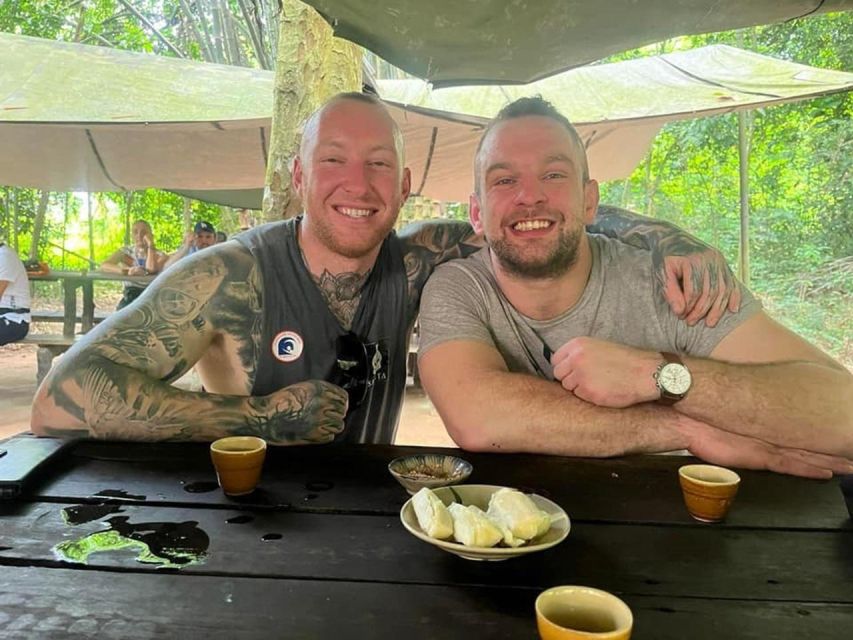
One of the tour’s smartest choices is food. You don’t just hear about wartime living—you taste it. The included light snack at Cu Chi is tapioca with tea, prepared using the Hoang Cam stove, described as a stove that can hide smoke.
This detail is more meaningful than it sounds. Smoke draws attention. So the stove design is part of the same survival logic as tunnel camouflage and hidden refuge: reduce telltale signs and keep the operation from being easy to detect. When you eat that food, you’re not only tasting something simple—you’re also connecting it to constraints.
During the tour you’ll also hear that locals ate tapioca during wartime. That matters because it gives the snack a purpose beyond fuel. It’s a small, direct link to routine under pressure.
If you’re watching your stomach, the snack is described as light. Still, you’ll be walking and moving for several hours, so pace your eating and save time for water.
Optional gun shooting with AK-47 and M-60: fun, but not included
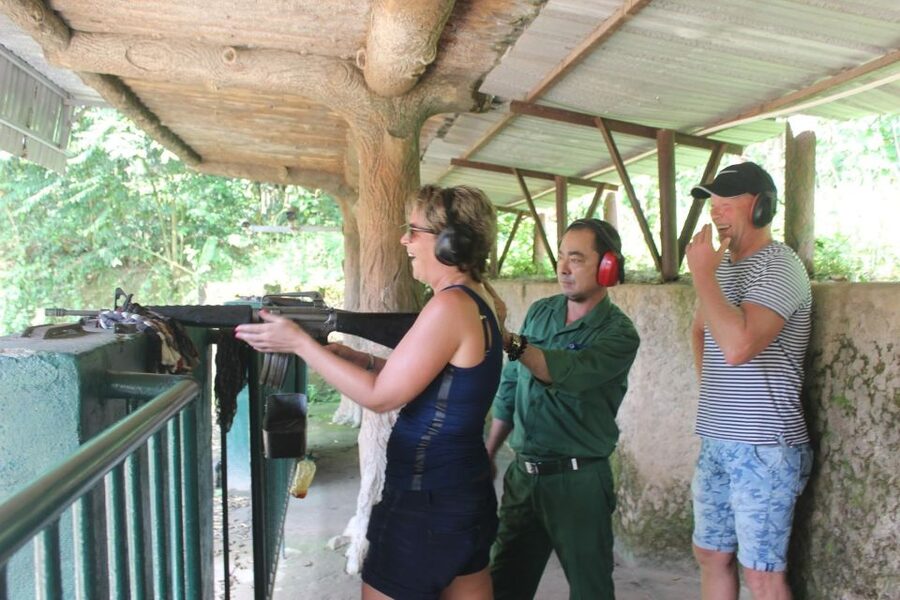
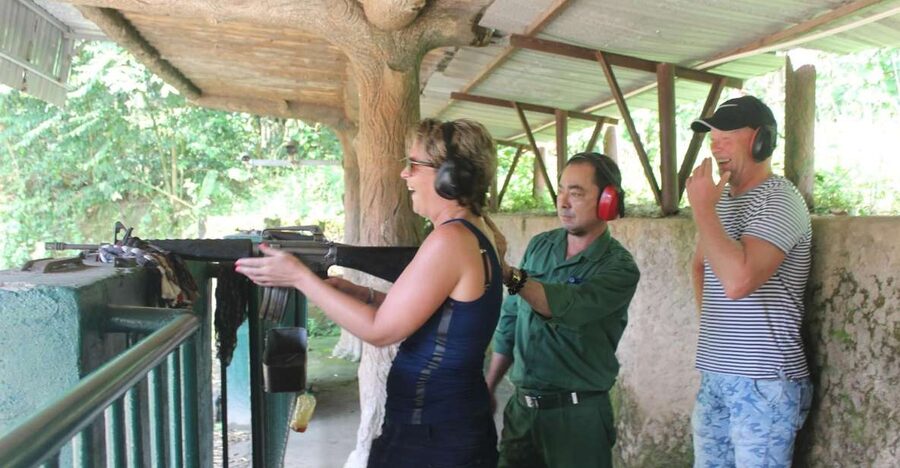
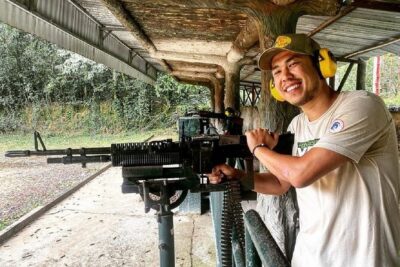
This tour also offers the chance to shoot real bullets with real famous guns such as AK-47 and M-60. That’s an undeniably memorable add-on, especially if you’ve seen these weapons only in films.
But treat it as optional, because the bullet fee is not included. The tour info puts that cost at roughly 600,000 VND for a pack of 10 bullets. If you want to include shooting, plan your budget around it, and think about how many shots you’ll realistically want rather than assuming more is always better.
One more practical point: shooting ranges can take time for instructions and safety procedures. If your focus is mainly learning and tunnel crawling, you may decide to skip shooting to keep the day flowing. If your focus is mainly the experience and adrenaline, shooting could be worth it—just go in knowing it changes the cost.
Price and value: is $30 worth it?
At around $30 per person for a 6-hour day, this tour can be good value if you want guided context and included basics. Here’s what you typically get in the price: pickup and drop-off at the center of Saigon, a live English-speaking tour guide (and other languages are available, but may carry a surcharge), bottled water, plus a light snack of tapioca and tea at Cu Chi.
On top of that, the tour isn’t limited to passive viewing. You watch short documentary footage, and you explore underground spaces tied to wartime roles like hospitals and weapons work. The option to crawl through very narrow tunnels is also a major component of the emotional weight of the day.
What drives cost up, if you choose those add-ons: there may be a surcharge if you want to go down to the tunnels (depending on your exact booking), and shooting has a separate bullet fee. If you’re the kind of traveler who definitely wants tunnel access plus shooting, your total budget should reflect that.
So the honest value calculation looks like this:
- If your top priority is history + underground experience + included snack, the base price feels reasonable.
- If you also want tunnel access upgrades and shooting, you’ll pay more, but you’ll also get more hands-on action.
Who this tour fits best (and who should reconsider)
This tour suits you if you want a single-day way to understand Vietnam’s wartime experience through the lens of tunnels, camouflage, and guerrilla survival. You’ll like it if you enjoy explanations—traps, war scenarios, and why the underground network was built the way it was. You’ll also appreciate the cultural thread through the tapioca made on the Hoang Cam stove.
It may be a mismatch if:
- You don’t want narrow, crawl-through spaces.
- You’re sensitive to confined movement or expect a comfortable walking tour.
- You prefer a lighter, more casual history visit rather than a day centered on war survival realities.
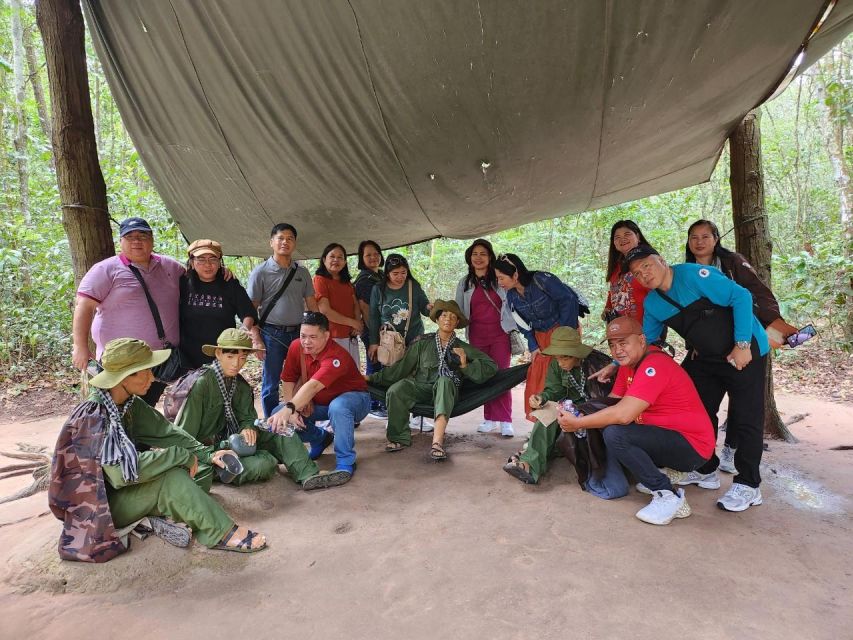
The group setup can also matter. The tour description allows for private group options, and that generally helps if you want a quieter experience and more direct handling of questions while you’re moving between stops.
If you’re traveling with friends and you care about pace, private can make the day feel more controlled. If you’re solo, you’ll likely still get a guide-led structure, with enough time in each section to connect the story to what you’re seeing.
Should you book this Cu Chi Tunnels tour?
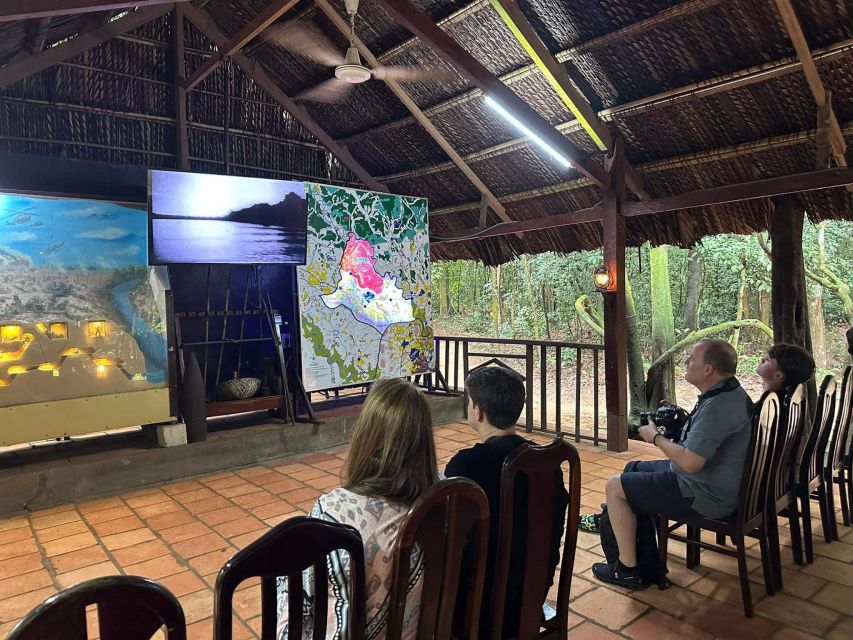
Book it if your goal is not just to say you saw Cu Chi, but to understand how tunnels worked as living and operational space. The included guide-led storytelling, war documentaries, and the Hoang Cam stove tapioca give you variety in how history reaches you—through visuals, design, and taste.
Skip or reconsider if you know you can’t handle very tight spaces. Tunnel crawling is the core experience, and you should choose comfort in your own limits.
If you’re on the fence, the smartest move is to decide in advance what you want most: tunnel access, the documentary and explanations, the snack, or the optional shooting. Then compare your priorities to the extra costs tied to tunnel access and bullets.
FAQ
How long is the Cu Chi Tunnels tour?
The duration is 6 hours.
Is pickup and drop-off included?
Yes. Pickup and drop-off are included at the center of Saigon.
What’s included in the price?
You get an English-speaking tour guide, bottled water, and a light snack with tapioca and tea at Cu Chi Tunnels, along with pickup and drop-off.
Are other languages available?
Yes. A live tour guide is available in Chinese, Finnish, English, Japanese, Italian, Spanish, Korean, Russian, and German. The info also notes a surcharge for other languages.
Is the tunnel crawling included?
There is a note that there is a surcharge if you want to go down to the tunnels, so you should confirm what your ticket includes.
Is gun shooting included?
Shooting is mentioned as possible, but the bullet fee is not included. The approximate cost is 600,000 VND for a pack of 10 bullets.
What snack will I get?
You’ll get tapioca cooked at the Hoang Cam stove along with tea.
Can I cancel close to the trip?
Free cancellation is available up to 24 hours in advance for a full refund. There is also a reserve now & pay later option mentioned.
More Tour Reviews in Ho Chi Minh City



The Cu Chi Tunnels, a Few More Ways Down
Just Reviewed Around Saigon
- Secret walking Food Tour Ho Chi Minh City
★ 5.0 · 3 reviews - Ho Chi Minh City: Secret Cocktail Experience
★ 5.0 · 3 reviews - From Ho Chi Minh city: Vung Tau Beach Private Day Tour
★ 5.0 · 3 reviews - Saigoncholon
★ 3.5 · 3 reviews - Saigon On 2 Wheels
★ 3.5 · 3 reviews - From Ho Chi Minh City: Relax In Mui Ne Beach In 1 Day
★ 4.3 · 3 reviews
Cu Chi Tunnels Tours, compared.
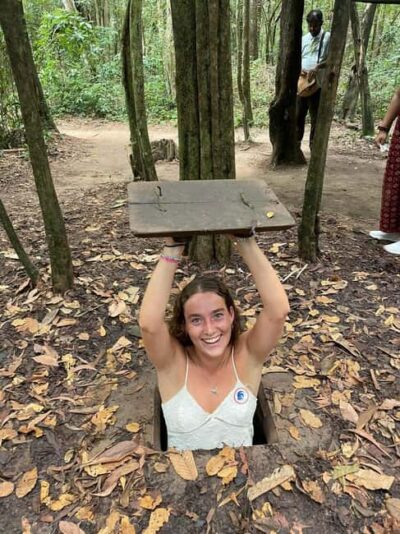 ★ 4.7Cu Chi Tunnels Morning or Afternoon TourFrom $1319,646 reviews
 ★ 5.0Cu Chi Tunnels Tour from HCM City – Morning or AfternoonFrom $1515,833 reviews
 ★ 4.7Cu Chi Tunnels & Mekong Delta with Coconut Village TourFrom $3511,836 reviews
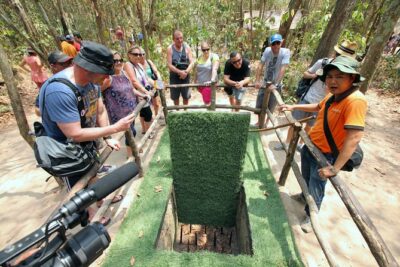 ★ 5.0Cu Chi Tunnels-Tapioca Small Group Tour Morning or AfternoonFrom $147,485 reviews
 ★ 5.0Cu Chi Tunnels and Mekong Delta Signature TourFrom $337,328 reviews
 ★ 5.0Cu Chi Tunnels & Mekong Delta Tour with VIP Limousine TransferFrom $567,052 reviews
 ★ 4.8Cu Chi Tunnels Morning or Afternoon TourFrom $136,326 reviews
 ★ 5.0Cu Chi Tunnels and Mekong Delta Full Day Tour – Max 12From $436,257 reviews
Browse the lists this tour appears in