
REVIEW · HO CHI MINH CITY WALKING TOURS
Historical Walking Tour of Saigon
One walk covers Saigon’s big stories. This Historical Walking Tour of Saigon strings together key sights tied to war-era turning points and French colonial architecture, all on foot so you also get the feel of street life near the Saigon River.
What I like most is the small group size (max 10), which keeps the pace humane and makes it easier to ask questions instead of shouting over a crowd. I also like the built-in break for Vietnamese coffee, with egg coffee (3T Cà Phê Trứng) as an included option.
One consideration: it’s a walking tour, and some stops are mostly exterior/photo-focused, so if you want long, inside-the-building time everywhere, this may feel a bit tight. You’ll also want a moderate fitness level for a 2.5–3 hour itinerary.
In This Review
- Key highlights to look for
- Saigon on foot: why this 2.5–3 hour route is such good value
- Small group logistics: meeting point, mobile ticket, and the walking pace
- Independence Palace (stop 1): war-era history you can point to
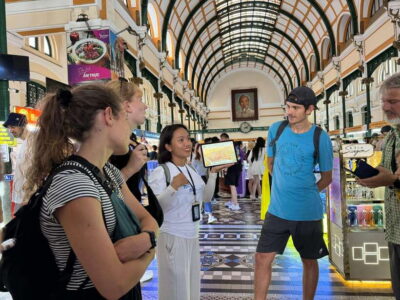
- Central Post Office (stop 2): French design that still does its job
- Saigon Notre Dame Cathedral (stop 3): photos, age, and what’s opposite
- Saigon Opera House (stop 4): how entertainment reflected rule
- People’s Committee Building and Nguyen Hue walking street (stop 5): power, design, and pictures
- Ba Son Bridge (stop 6): a quick skyline payoff
- Nguyen Hue Street (stop 7): where the city feels lived-in
- 3T Cà Phê Trứng egg coffee (stop 8): the included break that actually matters
- Price and value: what $36 buys you in central District 1
- Best departure time: morning, afternoon, or evening
- Who this walking tour is perfect for
- Should you book this Saigon Historical Walking Tour?
- FAQ
- How long is the Historical Walking Tour of Saigon?
- How much does it cost?
- What times are the tour departures?
- Where does the tour start and end?
- What’s included in the price?
- How big are the groups?
Key highlights to look for
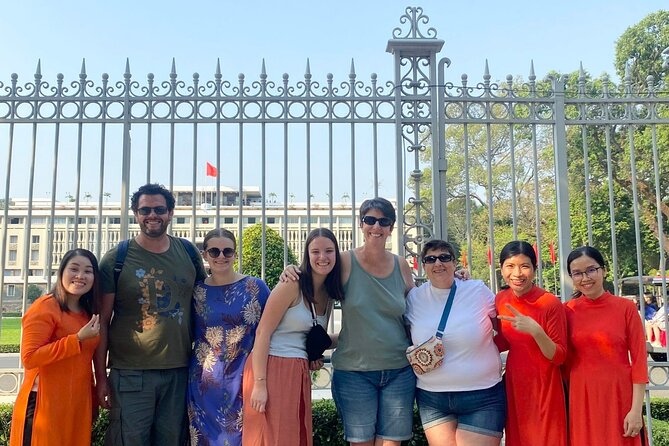
- Max 10 people keeps the tour feeling personal and easy to follow
- Coffee included (coffee and/or tea), with a dedicated egg coffee stop
- French-era landmarks like the Central Post Office and Opera House shape the story
- Photo time built in at Notre Dame Cathedral and key government buildings
- Ba Son Bridge viewpoints give you a quick aerial-feeling sweep of District 1
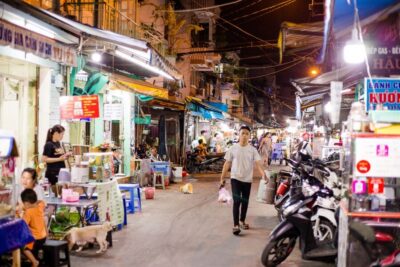
On foot through the old quarters and alleys




Saigon on foot: why this 2.5–3 hour route is such good value
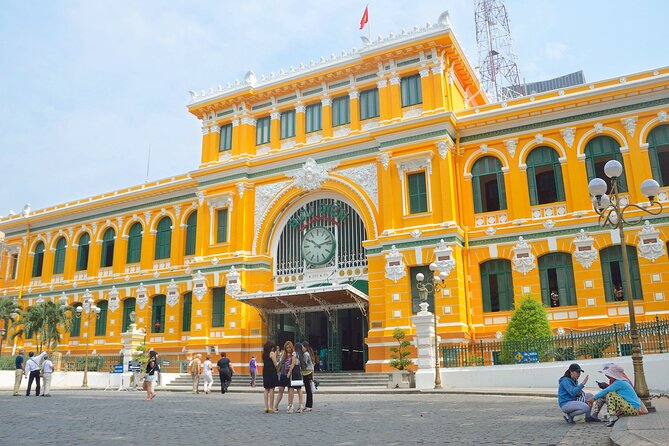
If Saigon (Ho Chi Minh City) feels like a blur when you first arrive, this tour is a smart way to slow it down without spending your whole day commuting. You get a tight loop through central landmarks where Vietnamese history and French-era design show up side-by-side. And because it’s timed as a walk-through, you’re not stuck deciding where to go first.
The pacing works because the stops are short and focused—often around 10–20 minutes each. That matters if you’re trying to fit sightseeing between meals or you’d rather spend your energy on street scenes than long museum lines. For me, the best part is how the tour organizes the city into a clear timeline you can actually remember.
Also, this is built for real schedules. There are three departure options: 7:00 AM (morning), 2:30 PM (afternoon), and 6:00 PM (evening). If you’re trying to dodge the hottest time of day or you want evening atmosphere, you can pick the rhythm that suits you.
Small group logistics: meeting point, mobile ticket, and the walking pace
You start at 179 Đ. Nam Kỳ Khởi Nghĩa, Phường Bến Thành, Quận 1. The end point is in the same general central area, finishing in front of Le Méridien Saigon at 3C Đ. Tôn Đức Thắng, Bến Nghé, Quận 1—after Ba Son Bridge.
The tour uses a mobile ticket, which is convenient if you don’t love digging for paper confirmations. And it’s near public transportation, which helps if you’re hopping in from another part of town.
With a maximum of 10 travelers, you get something you can’t fake: the guide can slow down when you have questions, and you’re not constantly moving past people. One extra bonus is that you can keep your bearings. A tour that ends near a major hotel area makes it easier to grab a quick meal afterward without planning a whole new route.
Do plan on walking. The tour is listed for people with moderate physical fitness, and the time is short enough that it won’t turn into a scenic stroll where you stop for every photo every block. Bring comfortable shoes and expect frequent sidewalk navigation around popular central streets.
Independence Palace (stop 1): war-era history you can point to
The first stop is Independence Palace, visited outside. Even from the perimeter, this is a place where you can see why Vietnamese history is hard to summarize in a single sentence. The site is described as having witnessed the ups and downs of the country, especially through the Vietnam War era.
What makes this stop useful on a walking tour is the way the guide frames what you’re looking at. You’re not just staring at a landmark—you’re getting the timeline behind it, so later when you see references in signage, documentaries, or museum exhibits, things connect in your head faster.
The drawback is also clear: it’s outside-focused with about 20 minutes. That’s plenty to get oriented and absorb the story, but it won’t satisfy you if your priority is spending lots of time inside every room.
Central Post Office (stop 2): French design that still does its job
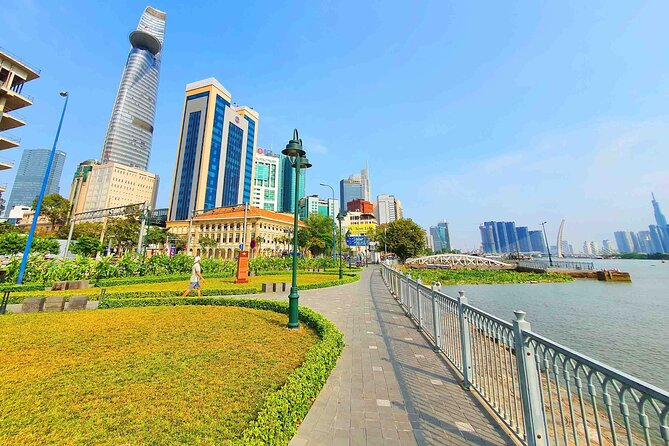
Next up is the Central Post Office, again with a short visit (about 15 minutes). This building is tied to a French architect, and that French design influence is part of why it’s such a recognizable stop in District 1.
This isn’t a “stop and read a plaque” experience. The tour sets you up to understand the building as something practical with a political and cultural context. You’ll learn about what was built during the French rule period, which helps you read the city instead of just snapping photos.
A quick heads-up: this kind of landmark often attracts crowds, so 15 minutes can feel like you’re moving through it. If you love architecture, you may want to use that time strategically—pick a view direction and spend the extra seconds noticing the details instead of walking in circles.
A couple more Saigon streets to cover on foot
- Ho Chi Minh City: Super Niche Walking Street Food Tour★ 5.0 · 438 reviews
- Ho Chi Minh City: Private Street Food Evening Walking Tour★ 5.0 · 436 reviews
- Ho Chi Minh: Original Walking Street Food Tour with Foodies★ 5.0 · 379 reviews
- Ho Chi Minh City: Walking Tour with Local Guide★ 4.8 · 363 reviews
- Ho Chi Minh City private walking tours with young local volunteers★ 5.0 · 326 reviews
Saigon Notre Dame Cathedral (stop 3): photos, age, and what’s opposite
Then you reach Saigon Notre Dame Cathedral. The tour notes it as one of the oldest churches in the city, over 100 years old, with photo opportunities in front.
The best use of this stop is to treat it like a “checkpoint” moment. You pause, take the photo, and then the guide’s context helps you understand why the cathedral and surrounding buildings matter in the bigger story of Saigon’s colonial and cultural layers. The tour also points out that there are old houses opposite, which is a great reminder to look around, not only at the main façade.
Time is tight here too—about 15 minutes. If you want a long sit-down and a slow interior look, you’ll likely need to return later on your own. But for a walking tour that’s building a citywide narrative, this timing is efficient.
Saigon Opera House (stop 4): how entertainment reflected rule

From the cathedral area, the tour moves to the Saigon Opera House (Ho Chi Minh Municipal Theater) for about 10 minutes. This is another French-influenced building, and the key value of this stop is the explanation of how the French period shaped entertainment.
Even if you’re not an opera person, this kind of context helps. A theater isn’t just a pretty building; it’s a clue about what kind of society controlled the city and how they spent leisure time. You get a quick version of that story without adding hours.
The potential downside is also straightforward: with 10 minutes, you’re mostly getting exterior viewing and interpretation. If you want to see performances or spend time inside, plan that separately. As a walking tour stop, though, it works well as a narrative bridge.
People’s Committee Building and Nguyen Hue walking street (stop 5): power, design, and pictures
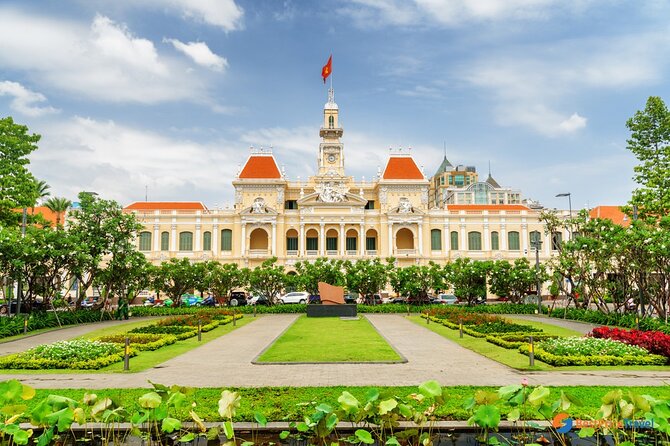
Now you hit one of the city’s symbols: the People’s Committee Building. You’re told it’s currently a government workplace with unique Western architecture, and you’ll spend around 10 minutes here.
This is a good stop for anyone who wants to understand Saigon’s political geography. Buildings like this aren’t just offices—they’re physical statements. Seeing the architecture in the tour’s sequence makes it easier to connect the French-era look with later government presence.
The tour also includes time walking along Nguyen Hue walking street and taking pictures with the statue there. This is where the tour shifts from “historic landmark mode” to “actual city street mode,” and it gives you a chance to notice how people use the space day-to-day.
Again, because it’s a short stop, you’ll get the main story, but not a full architectural lecture. It’s best as a highlight in a larger circuit.
Ba Son Bridge (stop 6): a quick skyline payoff
After walking through the historic core, you arrive at Ba Son Bridge (about 15 minutes). The tour calls it a new symbol of Ho Chi Minh City, and the payoff here is the skyline view.
From the bridge, you can see two of the tallest buildings in the city, and the experience of standing above the streets gives you a different angle than the ground-level architecture earlier in the tour. It’s also a nice mental reset, because you’ve been in “storytelling landmarks” for a while.
The only consideration: weather matters. The tour description notes that it requires good weather. If rain hits, views can be less satisfying, and your overall pace can feel tighter.
Nguyen Hue Street (stop 7): where the city feels lived-in
Next is Nguyen Hue Street, about 15 minutes. The tour highlights it as the city’s most beautiful walking square, and it’s also where you’ll see attractions tied to the younger generation.
This stop is important because it prevents the tour from turning into a purely historical checklist. You get a taste of present-day Saigon movement—street energy, people-watching, and the kind of public space that defines how locals spend time.
For a short stop, it’s ideal. You’re not forced to commit to a long detour, but you do come away with a better sense of where the “day-to-night” city feels centered.
3T Cà Phê Trứng egg coffee (stop 8): the included break that actually matters
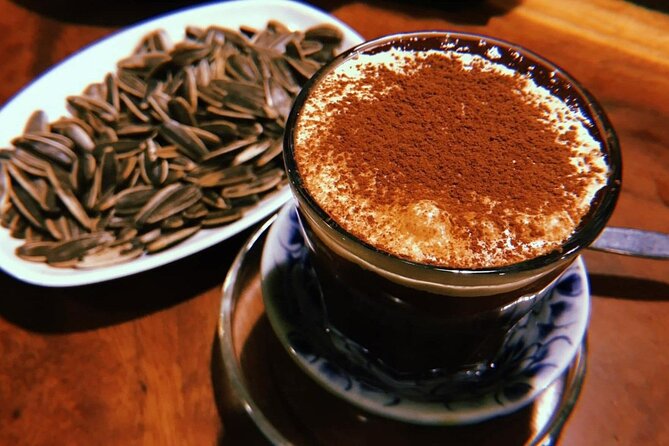
The final highlight is 3T Cà Phê Trứng, where you can enjoy egg coffee for about 25 minutes. Coffee and/or tea are included, and the egg coffee option is one of the Vietnam specialties you really should try.
Why this works on a walking tour: you’re not squeezing food in randomly while you’re still tired from walking. This is built into the itinerary as a planned rest moment, so you can cool down, sit for a bit, and then walk off with your energy back.
Egg coffee is also a cultural clue. It’s the kind of drink that makes you smile because it’s both familiar (coffee) and surprising (egg-based texture). If you’re curious about Vietnamese café culture, this is an easy entry point.
Timing note: you’ll still have places to go after the tour, so use this as a real break. Don’t just sip and rush—25 minutes is enough to reset without lingering so long that you miss your next plan.
Price and value: what $36 buys you in central District 1
At $36 per person, you’re not paying for a big museum day. You’re paying for a guided, structured walk through major District 1 landmarks, with coffee and/or tea included and multiple stops that are listed as free admission.
That “free admission” detail matters for value. You’re spending time at major sights like Independence Palace area viewpoints, the Central Post Office, and the cathedral/often-photographed colonial landmarks without adding surprise entry costs. For a short 2.5–3 hour tour, that keeps the experience predictable.
You also pay for coordination. Picking the route yourself in Saigon is doable, but it’s easy to waste time figuring out what connects to what. This tour gives you a sequence and interpretation so you can leave with a coherent sense of where the city’s story is told in buildings.
Group size is the quiet value driver here too. With no more than 10, you tend to get a better ratio of time with your guide, especially at stops where you might want extra explanation for context.
Best departure time: morning, afternoon, or evening
Choose based on what you want from the streets.
- Morning (7:00 AM): Best if you want cooler walking conditions and faster photo opportunities before the busiest crowds.
- Afternoon (2:30 PM): Good if your day is already built around late morning plans and you want the tour before dinner.
- Evening (6:00 PM): Nice if you like softer light and a more relaxed street feel, especially around central areas like Nguyen Hue.
The tour provider offers diverse departure times designed for your requirements, so if one time slot doesn’t work, another likely will. When possible, I’d pick the slot that matches your energy level and your heat tolerance.
Who this walking tour is perfect for
This is a great fit if you want:
- a tight introduction to central Saigon in one outing
- an organized way to understand the city’s war-era and French-era layers
- a tour with short stops that don’t drain your day
- a coffee break that’s actually part of the plan
It’s also well suited to solo travelers who want a social guide-led day without joining a huge group. And with a max of 10, you’re less likely to feel lost or rushed.
If you’re the type who loves deep museum hours and inside-the-building details, you might find the stop lengths too short. But if you want orientation and storytelling, this is a strong option.
One more personal note from the guide angle: a standout name mentioned in feedback is Thanh Thanh (Andy), praised as friendly and professional. That kind of guide tone really matters on a historical walk, because you’re relying on explanations to connect what you see.
Should you book this Saigon Historical Walking Tour?
Book it if you want an efficient, affordable way to learn Saigon’s story through its most recognizable central landmarks—with coffee included and a route that finishes conveniently near a major hotel zone. It’s especially worth it if it’s your first time in District 1 and you’d rather get your bearings with a guide than try to stitch the history together alone.
Skip it (or plan extra time separately) if you’re only interested in long indoor visits, or if you dislike walking for 2.5–3 hours with short stop windows. You’ll still see a lot, but it won’t be the kind of day where every stop becomes a deep, long visit.
FAQ
How long is the Historical Walking Tour of Saigon?
The tour runs about 2 hours 30 minutes to 3 hours.
How much does it cost?
It costs $36.00 per person.
What times are the tour departures?
There are three options: 7:00 AM, 2:30 PM, and 6:00 PM.
Where does the tour start and end?
It starts at 179 Đ. Nam Kỳ Khởi Nghĩa, Phường Bến Thành, Quận 1 and ends in front of Le Méridien Saigon at 3C Đ. Tôn Đức Thắng, Bến Nghé, Quận 1, after Ba Son Bridge.
What’s included in the price?
Coffee and/or tea is included, and the itinerary includes an egg coffee stop at 3T Cà Phê Trứng.
How big are the groups?
This tour has a maximum of 10 travelers.
More Tours in Ho Chi Minh City





More Tour Reviews in Ho Chi Minh City
Saigon on Foot, Continued
Just Reviewed Around Saigon
- Secret walking Food Tour Ho Chi Minh City
★ 5.0 · 3 reviews - Ho Chi Minh City: Secret Cocktail Experience
★ 5.0 · 3 reviews - From Ho Chi Minh city: Vung Tau Beach Private Day Tour
★ 5.0 · 3 reviews - Saigoncholon
★ 3.5 · 3 reviews - Saigon On 2 Wheels
★ 3.5 · 3 reviews - From Ho Chi Minh City: Relax In Mui Ne Beach In 1 Day
★ 4.3 · 3 reviews
Ho Chi Minh City Walking Tours, compared.
 ★ 5.0Private Street Food Evening Walking Tour in Ho Chi Minh CityFrom $493,175 reviews
 ★ 5.0Super Niche Walking Street Food Tour in Ho Chi Minh CityFrom $291,636 reviews
 ★ 5.0Saigon Night Bites on Foot: Local Vendors, Stories & Sweet FinishFrom $29701 reviews
 ★ 5.0Walking Food Tour with 13 TastingsFrom $27469 reviews
 ★ 5.0Super Niche Walking Street Food TourFrom $28438 reviews
 ★ 5.0Private Street Food Evening Walking TourFrom $49436 reviews
 ★ 5.0Original Walking Street Food Tour with FoodiesFrom $28379 reviews
 ★ 4.8Walking Tour with Local GuideFrom $3363 reviews
Browse the lists this tour appears in