
REVIEW · HO CHI MINH CITY WALKING TOURS
Ho Chi Minh City: Downtown Walking Tour with Local
Saigon starts making sense when you walk it. On this 3-hour downtown tour, I like how an English-speaking licensed guide keeps the pace easy while still packing in real context behind the streets. You’ll get photo stops, a relaxing break, and just enough wandering to feel you’re learning the city, not racing through it.
Two things I especially love: the mix of famous landmarks and quieter stops, and the way the guide connects different government eras to what you see in daily life today. One consideration: the route is not suitable for wheelchair users, and it involves walking through city sidewalks even when it rains.
In This Review
- Key Highlights You’ll Actually Feel
- Why This Downtown Walk Works: History You Can See
- Starting in Downtown Saigon: Choose Your Meeting Point
- Municipal Theatre Photo Stop: Not Just a Pretty Building
- Former Opium Factory: When a Past Purpose Shapes the Present
- Ho Chi Minh Statue and the City’s Ongoing Message
- Secret CIA Building: The American War Thread Hits Hard
- Saigon Opera House, Book Street, and Notre Dame Cathedral
- Saigon Opera House
- Book Street
- Notre Dame Cathedral
- Saigon Central Post Office: The Stop That Feels Like a Time Capsule
- Cong Coffee Break: A Real-World Reset
- Wrapping Up at Independence Palace: The Story Clicks Into Place
- Price and Value: Is $14 for 3 Hours Worth It?
- What to Do to Make the Most of It
- Who This Tour Suits Best
- Should You Book This Downtown Walking Tour?
- FAQ
- How long is the tour?
- How much does it cost?
- Is the tour in English?
- Where do I meet for the tour?
- Will the tour run in the rain?
- What stops are included?
- What’s included in the price?
- Is gratuity included?
- Is it wheelchair accessible?
Key Highlights You’ll Actually Feel
- Photo stops built into the walk, so you’re not juggling directions and cameras at the same time
- Easy pace plus a break at Cong Coffee, so the tour stays enjoyable, not exhausting
- A history thread through eras of government, tied to architecture and everyday culture
- A mix of famous and lesser-known sights, including the Former Opium Factory and the Secret CIA Building
- An end-of-tour tips pack you can save to your phone for what to do next
On foot through the old quarters and alleys




Why This Downtown Walk Works: History You Can See
Saigon is big, busy, and easy to misunderstand if you only hit the headline sites. This tour fixes that by giving you a route that reads like a timeline. You’ll be looking at buildings and public spaces, then hearing how each era left marks on the city’s look, culture, and day-to-day routines.
I like that the guide doesn’t treat history like a lecture. Instead, you get prompted to notice contrasts: where design feels different, where the street layout feels more planned, and where a building’s purpose still lingers in the way people move around it. You’re also walking at a pace that makes it possible to stop for photos without feeling rude to the group or your guide.
And the best part is the finish: you end at Independence Palace, with the story finally landing. That ending matters because it turns random monuments into a readable arc.
Starting in Downtown Saigon: Choose Your Meeting Point
The tour’s meeting point can vary based on the option you book. One start is at 74 Hai Bà Trưng, The Manufacturer Courtyard. Another option begins at Municipal Theatre, Ho Chi Minh City.
What you should care about: downtown logistics. If you’re staying nearby, picking the closest meeting point saves time and energy—especially because the walk is meant to feel relaxed and photo-friendly, not like a sprint before you even start. If you’re coming from farther out, I’d plan a little buffer so you’re not stressed when the guide starts the early orientation.
Once you meet up, there’s a short guided briefing. From there, you’re walking and learning right away.
Municipal Theatre Photo Stop: Not Just a Pretty Building
Your early highlight is the Municipal Theatre, Ho Chi Minh City. This is the kind of stop that looks great in photos, but the value here is how the guide frames what you’re seeing. You’ll be encouraged to read the building as part of the city’s changing layers, rather than just a landmark to check off.
A good way to enjoy this stop is to slow down and compare details: the structure’s overall feel, the way it sits in the surrounding streets, and how it contrasts with nearby buildings. That contrast is exactly what the tour keeps returning to—how different government eras shape architecture and public life.
If you’re the kind of traveler who likes to understand why a place looks the way it does, this is one of the stops where you’ll feel it click.
Former Opium Factory: When a Past Purpose Shapes the Present
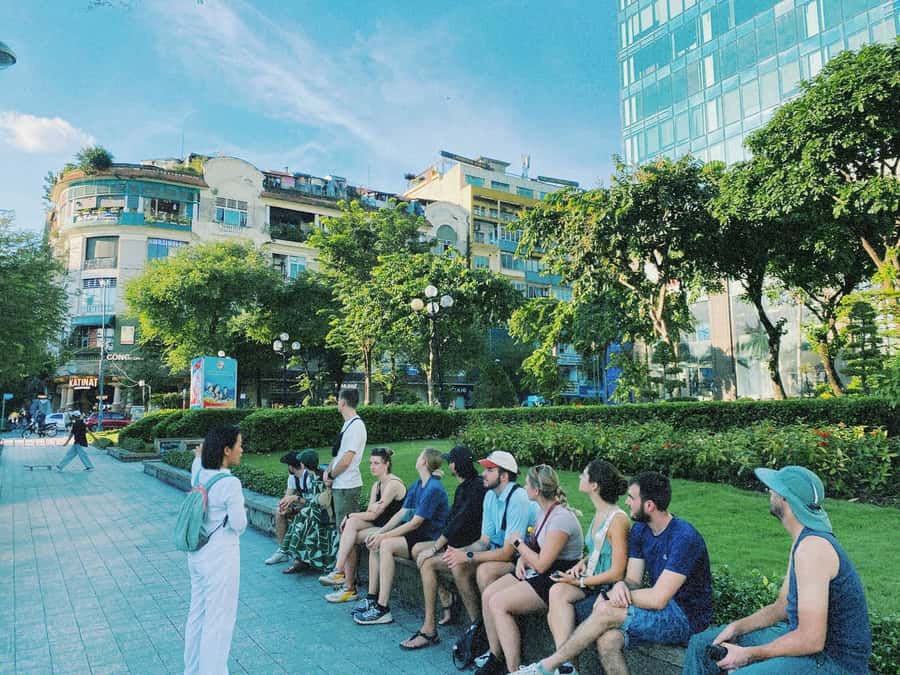
The tour includes the Former Opium Factory. With stops like this, you’re not just looking at a building—you’re seeing how the city carries complicated chapters.
Why it’s worth your time: it broadens the story beyond what’s most famous. Saigon’s famous sites are essential, but a place tied to an industrial and trade-related past helps explain why parts of the city developed in specific ways. Even without getting lost in details, you’ll come away with a clearer sense that today’s streets grew out of practical needs and shifting control.
This is also a great photo stop if you enjoy architecture and urban texture. Look for the contrast between older structures and newer surroundings. That tension is one of Saigon’s signature lessons.
A couple more Saigon streets to cover on foot
- Ho Chi Minh City: Super Niche Walking Street Food Tour★ 5.0 · 438 reviews
- Ho Chi Minh City: Private Street Food Evening Walking Tour★ 5.0 · 436 reviews
- Ho Chi Minh: Original Walking Street Food Tour with Foodies★ 5.0 · 379 reviews
- Ho Chi Minh City: Walking Tour with Local Guide★ 4.8 · 363 reviews
- Ho Chi Minh City private walking tours with young local volunteers★ 5.0 · 326 reviews
Ho Chi Minh Statue and the City’s Ongoing Message
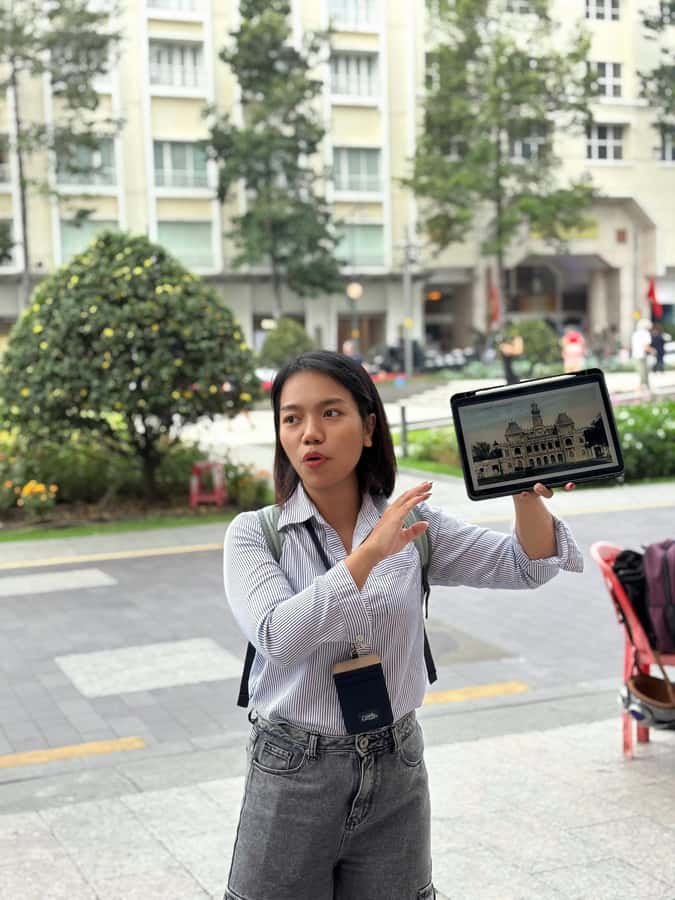
Next you’ll see the Ho Chi Minh Statue. This stop works well because it’s not just symbolic—it’s also a real public space in the middle of everyday movement.
The guide’s job here is to connect the symbol to the city’s evolution. You’ll learn how different periods of government reshaped what the city highlights and how public spaces communicate values. That theme continues throughout the tour, so the statue doesn’t feel like a random photo op. It feels like a stepping-stone.
Tip for enjoying this stop: don’t just photograph it from one angle. Give yourself a minute to look at how people circulate around it. That flow is part of what makes public monuments feel alive in a major city like Saigon.
Secret CIA Building: The American War Thread Hits Hard
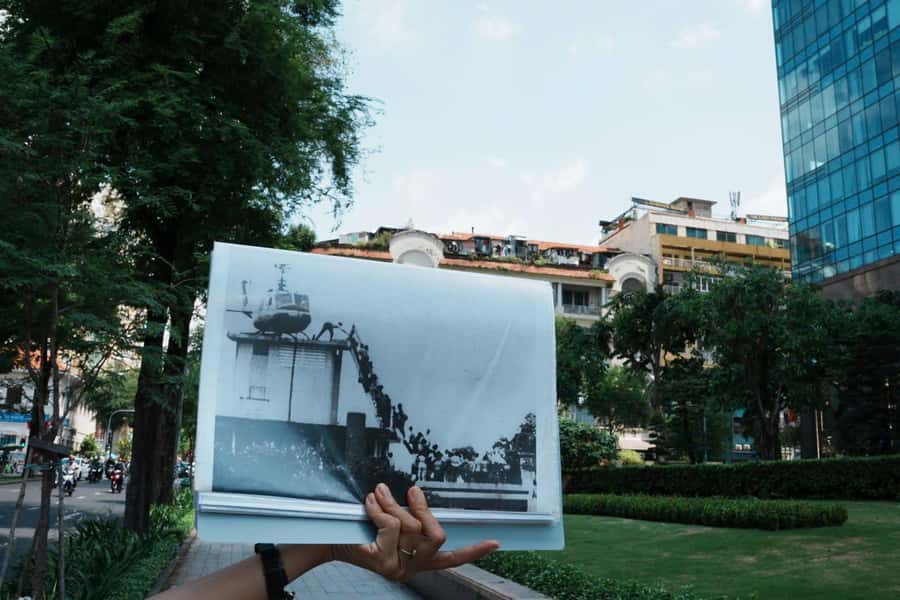
One of the most talked-about stops on this route is the Secret CIA Building. Even if you’re not an information-junkie, this is a meaningful contrast point. The city’s architecture and street-level reality can hold traces of global conflicts that still echo in how people interpret the past.
If you get a guide like Koi, you’ll likely appreciate the way he ties in American War-era history with what’s visible in the urban fabric. In my kind of travel, that mix is gold: it turns news-era headlines into something you can actually point to on a sidewalk.
How to make this stop land: listen for the connections between past events and present-day identity, not just dates. You’ll get a better takeaway when the story is anchored to places you can see and later compare.
Saigon Opera House, Book Street, and Notre Dame Cathedral
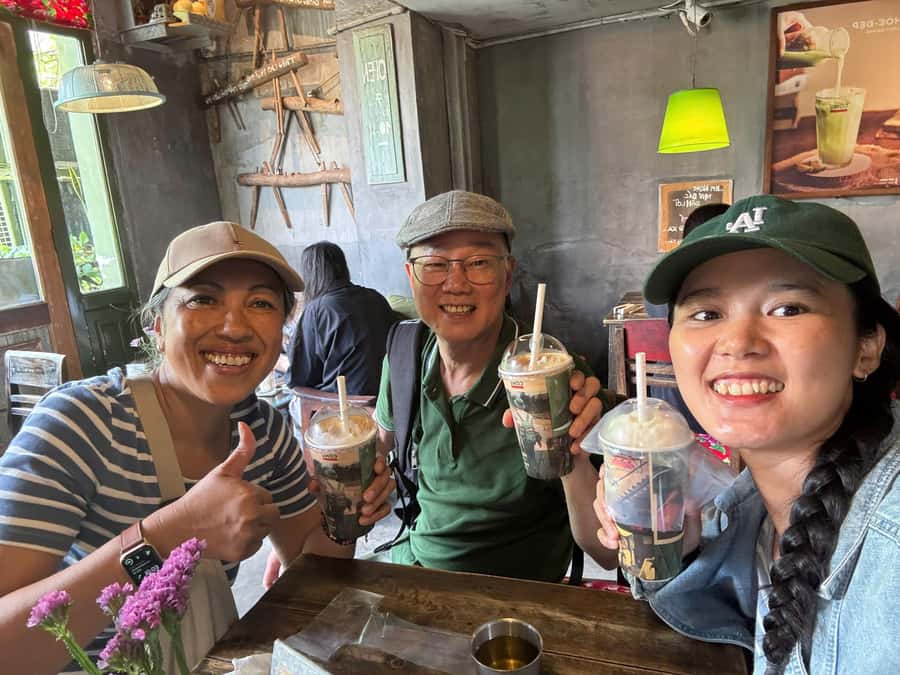
After the heavier political stops, the tour shifts into classic downtown beauty and atmosphere with three big stops: Saigon Opera House, Book Street, and Notre Dame Cathedral.
Saigon Opera House
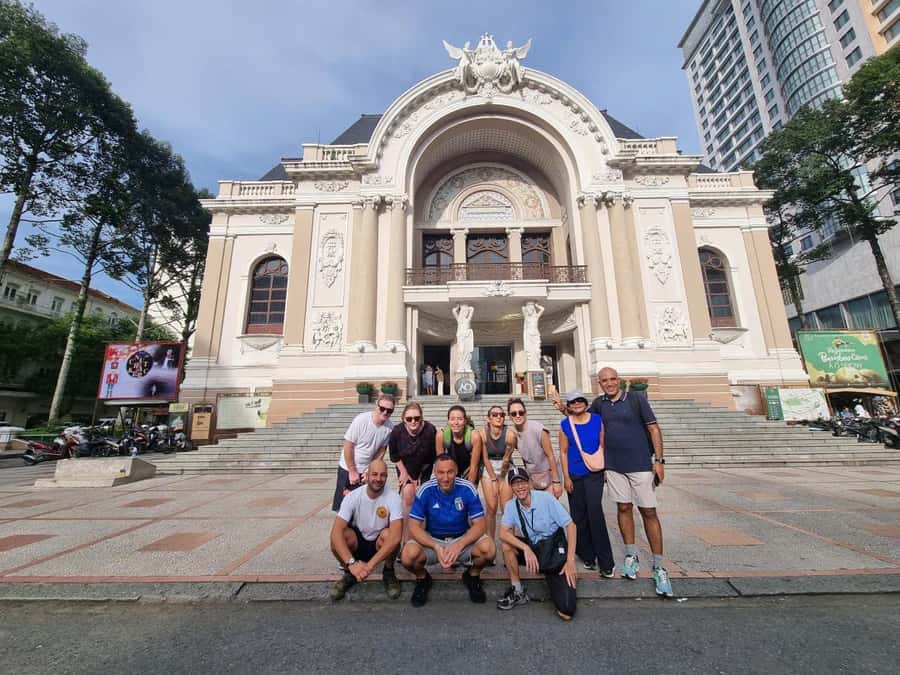
This is where the tour leans into visual storytelling. You’ll get a photo stop, then guidance on what makes the building’s look and public role meaningful. The value isn’t only the architecture—it’s how the guide links it back to the city’s earlier eras and the way public culture formed around prominent institutions.
Book Street
I like Book Street because it adds street-level texture. You’re not just visiting buildings; you’re walking through an area shaped by everyday culture—especially the kind of culture that draws locals and visitors into similar browsing habits. The guide’s comments help you place it within the larger city story, not treat it as a random shopping street.
Notre Dame Cathedral
At Notre Dame Cathedral, you’ll get another chance to compare design and setting. The guide helps you read the cathedral as part of the city’s layered identity, so it doesn’t become only a photo background. It becomes a clue for how different eras influenced what communities built and displayed in public.
If you enjoy architecture and you like seeing how cultural institutions influence daily life, this segment is a strong payoff.
Saigon Central Post Office: The Stop That Feels Like a Time Capsule

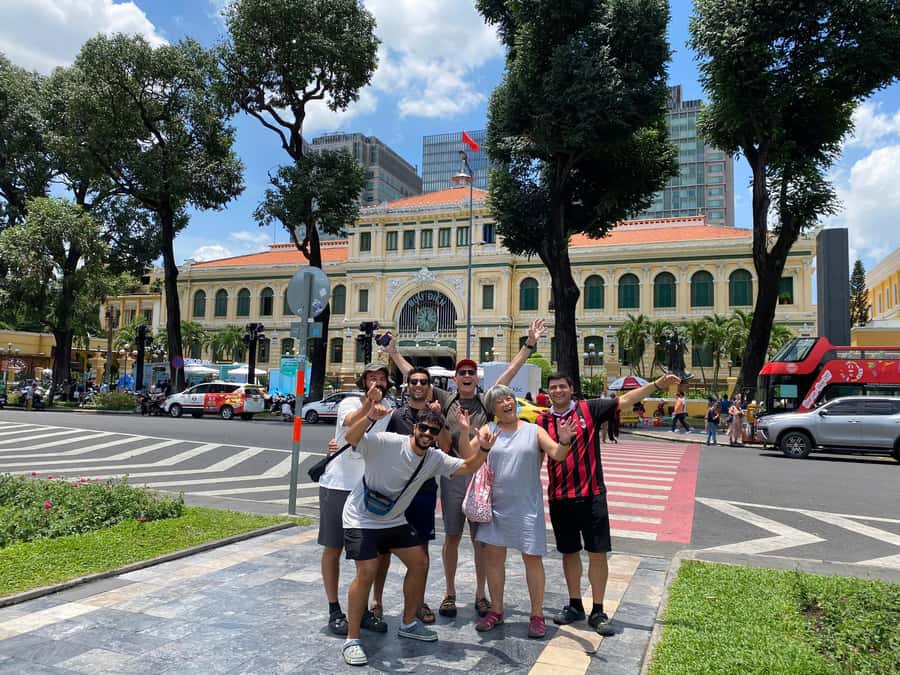
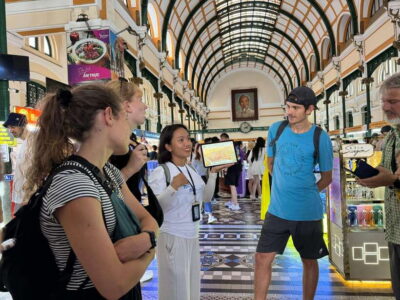
The route includes the Saigon Central Post Office for a photo stop and guided tour. This is a classic landmark for a reason: it’s visually memorable, and it also represents how the city organized communication and civic life.
Why this stop works on a walking tour: it sits at the intersection of form and function. You can look at the building and understand why it became a landmark. Then, with the guide’s context about government eras, you see it as more than a pretty exterior.
If you’re the kind of person who always looks for doors, counters, and public spaces, slow down here. This is where you’ll notice details that make the building feel like it was designed for real daily use.
Cong Coffee Break: A Real-World Reset
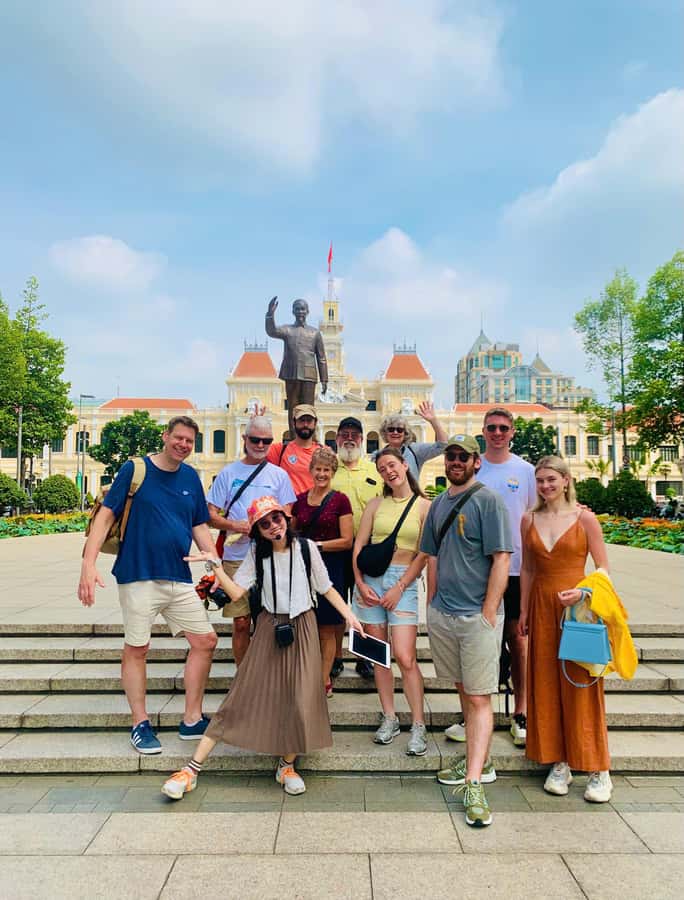
Between landmarks, the tour builds in a break at Cong Coffee. This matters more than you might think. A walking tour can feel tiring fast in a big city. Here, the pause helps you recharge, reset your attention, and keep listening instead of zoning out.
I also like that the guide uses this time to keep the tour moving with practical advice. When a guide is giving you not only history but also real-life recommendations, the break becomes part of the value, not just a break in the schedule.
Practical tip: use this time to hydrate and plan how you’ll pace the rest of the walk. Then when you resume, you’ll actually enjoy the last stretch instead of just enduring it.
Wrapping Up at Independence Palace: The Story Clicks Into Place
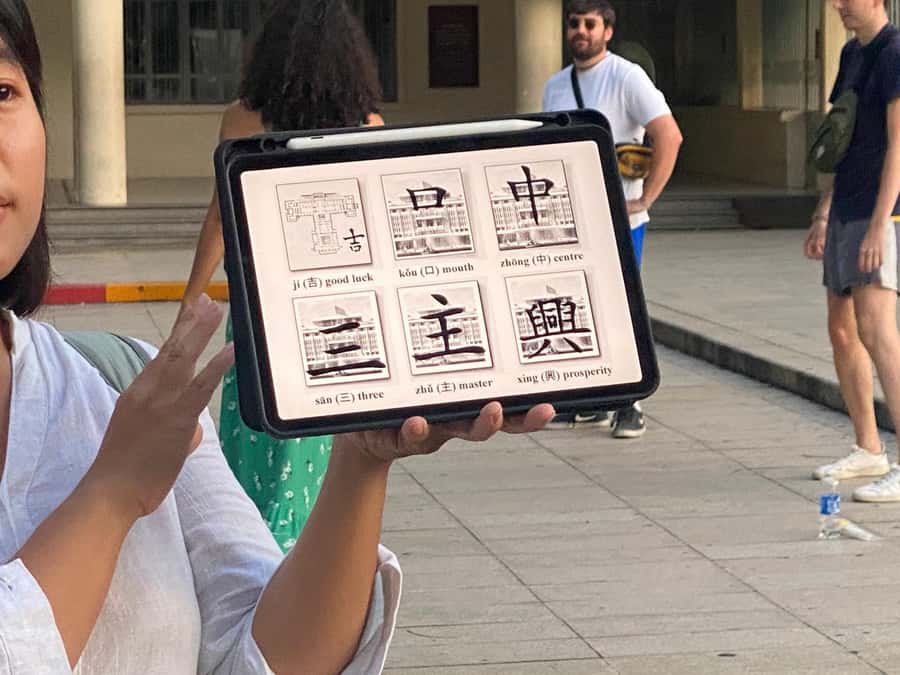
The tour ends at Independence Palace, and that final stop is where the city’s contradictions start to feel organized. It’s easy to look at a landmark like this and treat it as a static object. On this tour, you arrive with context about earlier and later government eras, so you can connect the building’s significance to the city’s broader transformation.
I like endings like this because you leave with a cleaner mental map. You understand not just what you saw, but why it matters. The palace becomes your final anchor point, the place where all the earlier contrasts add up.
Price and Value: Is $14 for 3 Hours Worth It?
At $14 per person for 3 hours, you’re not paying for transportation, and you’re not buying a museum ticket. You’re paying for something more specific: an English-speaking licensed tour guide plus local recommendation tips to take with you after the walk.
Here’s why I think it’s good value:
- You get a structured route with meaningful stops, including lesser-known places (not only the obvious icons).
- You get history tied to what you can see right now, not a random collection of photos.
- You receive a phone-friendly tips pack at the end, which can help you turn the rest of your day from guesswork into plans.
The trade-off is that you’re walking a lot in a major city. If you strongly dislike walking tours or you need lots of sitting time, you might feel the time ticking. But for most people who can handle an easy-paced downtown stroll, the price-to-content ratio is pretty strong.
What to Do to Make the Most of It
This tour is designed to be rain or shine, so don’t assume weather will bail you out. Pack smart and you’ll enjoy it more.
Bring:
- Comfortable shoes you trust for uneven sidewalks
- A camera or phone that’s ready for lots of photo stops
- Light rain protection if rain shows up
- Water for the break and the walk time
Also, treat the tips pack like part of the tour. After the final stop, spend a few minutes saving the recommendations to your phone so you’re not scrambling later.
Who This Tour Suits Best
This one is a great match if you want:
- A walking tour that mixes iconic sights and lesser-known locations
- Easy pacing with plenty of stops for photos
- A clear through-line about how government changes shaped architecture and daily life
- Practical add-ons at the end, like local suggestions for what to do next
It’s not a great fit if you need wheelchair accessibility, and it’s not suitable for people over 95 years.
Should You Book This Downtown Walking Tour?
Book it if you like your history grounded in real streets and real buildings. I’d especially recommend it for first-timers who feel overwhelmed in Ho Chi Minh City. The route gives you a quick orientation, then adds meaning so the city doesn’t just look impressive, it starts to make sense.
Skip it only if you’re trying to avoid walking as much as possible or you’d rather spend your time purely inside museums. This is a moving, photo-stop-friendly tour, and the payoff comes from that rhythm.
If you want an efficient way to understand Saigon’s layers while still enjoying the downtown atmosphere, this is a solid choice.
FAQ
How long is the tour?
The tour lasts about 3 hours.
How much does it cost?
It costs $14 per person.
Is the tour in English?
Yes, it’s conducted in English with a live tour guide.
Where do I meet for the tour?
The meeting point can vary depending on the option booked. One option is 74 Hai Bà Trưng, The Manufacturer Courtyard, and another option starts at Municipal Theatre, Ho Chi Minh City.
Will the tour run in the rain?
Yes, it operates rain or shine.
What stops are included?
The tour includes stops such as the Former Opium Factory, Saigon Opera House, Ho Chi Minh Statue, Secret CIA Building, Cong Coffee, Saigon Central Post Office, Book Street, Notre Dame Cathedral, and Independence Palace.
What’s included in the price?
The price includes an English-speaking licensed tour guide and local recommendation tips.
Is gratuity included?
No, gratuity is not included.
Is it wheelchair accessible?
No, it’s not suitable for wheelchair users.
More Tours in Ho Chi Minh City





More Tour Reviews in Ho Chi Minh City
Saigon on Foot, Continued
Just Reviewed Around Saigon
- Secret walking Food Tour Ho Chi Minh City
★ 5.0 · 3 reviews - Ho Chi Minh City: Secret Cocktail Experience
★ 5.0 · 3 reviews - From Ho Chi Minh city: Vung Tau Beach Private Day Tour
★ 5.0 · 3 reviews - Saigoncholon
★ 3.5 · 3 reviews - Saigon On 2 Wheels
★ 3.5 · 3 reviews - From Ho Chi Minh City: Relax In Mui Ne Beach In 1 Day
★ 4.3 · 3 reviews
Ho Chi Minh City Walking Tours, compared.
 ★ 5.0Private Street Food Evening Walking Tour in Ho Chi Minh CityFrom $493,175 reviews
 ★ 5.0Super Niche Walking Street Food Tour in Ho Chi Minh CityFrom $291,636 reviews
 ★ 5.0Saigon Night Bites on Foot: Local Vendors, Stories & Sweet FinishFrom $29701 reviews
 ★ 5.0Walking Food Tour with 13 TastingsFrom $27469 reviews
 ★ 5.0Super Niche Walking Street Food TourFrom $28438 reviews
 ★ 5.0Private Street Food Evening Walking TourFrom $49436 reviews
 ★ 5.0Original Walking Street Food Tour with FoodiesFrom $28379 reviews
 ★ 4.8Walking Tour with Local GuideFrom $3363 reviews
Browse the lists this tour appears in