
REVIEW · SCOOTER & VESPA TOURS
Ho Chi Minh City: Hidden Gems & Back Alleys by Motorbike with Local Students
I love how this motorbike tour threads main roads and narrow alleyways in the same afternoon, so you actually see the city’s everyday rhythm, not just a postcard loop. I also love the chance to chat with the local students over Cafe Sua Da, which turns the stops into real conversation instead of quick photo breaks. One thing to consider: you need to feel comfortable sitting on the back of a bike in busy traffic, even with a trained driver and a helmet.
The standout part for me is the way the guides set you up first—teaching the right sitting position and keeping things calm while the streets get loud. In the reviews, people repeatedly mentioned how safe it felt with guides like Heidi, plus the team behind the scenes (including Thao and Quang) who keep both the driving and the English explanations clear.
In This Review
- What makes this scooter-and-students tour worth your time
- Key highlights you’ll notice right away
- How the motorbike format changes Saigon (for the better)
- Meeting point to motion: pickup, helmets, and your first minute on the bike
- Stop 1: The Venerable Thich Quang Duc Monument and the protest story
- Stop 2: The Nguyen Thien Thuat apartment buildings from 1969
- Stop 3: Ho Thi Ky flower market through narrow alleys
- Stop 4: Chua Van Phat (Ten Thousand Buddhas) in an alley pagoda
- Riding through China Town Saigon on the way to coffee
- The Cafe Sua Da coffee break with student hosts
- Price and value: $24 for ride time, admissions, and drinks
- Safety, comfort, and who should think twice
- Tips to get the most from your alley-and-market day
- Should you book this motorbike tour in Ho Chi Minh City?
- FAQ
- How long is the tour?
- What does the tour cost?
- What stops are included during the ride?
- Are admissions included?
- Does the price include coffee and water?
- Do you pick up from my hotel?
- What transportation and safety gear are provided?
- Is this tour private?
- Can I get a refund if I cancel?
What makes this scooter-and-students tour worth your time
Hop on the back of a bike, other Saigon rides

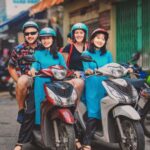
Key highlights you’ll notice right away
- You start with Thich Quang Duc’s memorial, a place most tour buses skip, with admission included.
- You see apartment life from decades ago around Nguyen Thien Thuat, where the buildings still feel frozen in time.
- You enter Ho Thi Ky’s flower chaos through alley space, not a tidy showroom, with a real look at wholesale market flow.
- You visit Chua Van Phat (Ten Thousand Buddhas) inside an alley pagoda, where the statues cover the walls in small, close-up scale.
- You finish with Vietnamese coffee and conversation, including the iced version you’ll hear called Cafe Sua Da.
How the motorbike format changes Saigon (for the better)
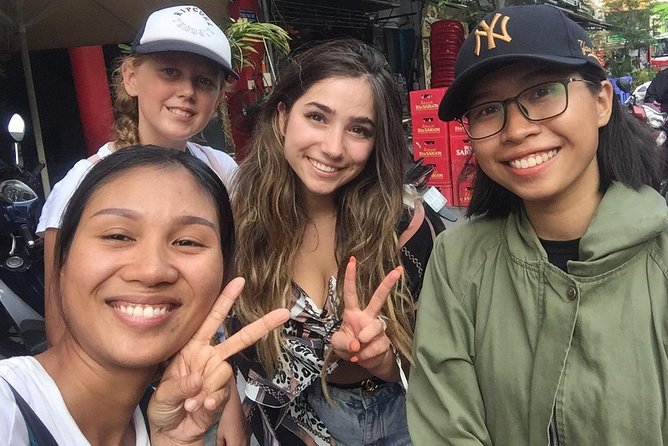
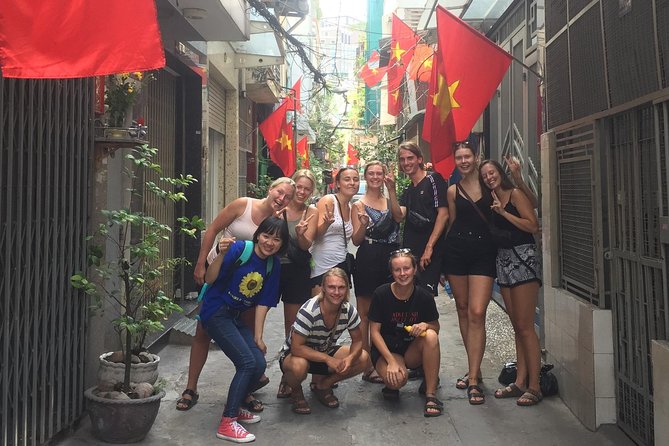
Ho Chi Minh City is a visual assault in the best way—motorbikes everywhere, street life spilling into sidewalks, and constant motion. A bus can’t slip into the tight spaces you actually need for this kind of experience. On this tour, you’re riding two wheels, which means you can get close to the texture of the city: the narrow lanes, the shaded corners, and the spots where things still feel local.
You’ll also notice the difference in pacing. The tour isn’t a long sprint from landmark to landmark. It’s structured stops—each one timed for a short visit, then back on the road—so you get time to look, ask questions, and absorb what you’re seeing.
And the “local students” element matters more than it sounds. These aren’t just guides who read from a script. The reviews highlight conversation that feels personal—people chatting like you’re learning the city from friends. That makes the memorials, markets, and temples easier to understand, because you’re getting context while you’re there.
Meeting point to motion: pickup, helmets, and your first minute on the bike
The tour includes pickup and drop-off in District 1, 3, 4, or 10, or at the Saigon Opera House. If your hotel is outside those areas, there’s an extra $5 USD paid directly to the guide.
Right away, the driver sets expectations. You’ll get help with how to sit correctly on the motorbike before you move into traffic. You’ll also have an open-face helmet and the driver handles fuel and transportation costs as part of the package. That’s important because the main “logistics problem” for this kind of tour isn’t the route—it’s whether you’ll feel secure for the duration.
Expect about 3 hours total, including stops and the coffee time. You’re not stuck for half a day, but you still get enough time to feel like you saw more than the obvious highlights.
Stop 1: The Venerable Thich Quang Duc Monument and the protest story
This is the kind of site you don’t just stumble onto on a quick city bus route. The tour begins at the Venerable Thich Quang Duc Monument, where you’ll find a green memorial park, a large statue, and big reliefs telling part of the story.
The guide explains the heart-breaking background: Thich Quang Duc, a Buddhist monk, self-immolated as a protest tied to alleged persecution of Buddhists under President Ngô Đình Diệm. It’s heavy material, and the value here is how close you can get—both visually and emotionally—to what happened.
Why it works as a first stop: you’re fresh enough to listen. You also get grounded in history before you switch gears into markets and everyday life later. Admission is included, and you’ll have about 20 minutes to take it in.
Practical note: this is a memorial connected to tragedy and political-religious conflict. If you’re sensitive to intense historical stories, keep that in mind—but don’t write it off. The impact is precisely why many people rate this tour so highly.
Wider loops through the districts
- Cu Chi Tunnels Tour from HCM City – Morning or Afternoon★ 5.0 · 15,833 reviews
- From HCM City: Mekong Delta Tour with Sampan Journey★ 4.5 · 13,132 reviews
- Ho Chi Minh City Street Food Tour & Sightseeing By Motorbike★ 5.0 · 9,413 reviews
- Mekong Delta Guided Tour from Ho Chi Minh City★ 4.5 · 7,192 reviews
- Ho Chi Minh City: Cu Chi Tunnels Morning or Afternoon Tour★ 4.8 · 6,326 reviews
Stop 2: The Nguyen Thien Thuat apartment buildings from 1969
After the memorial, you shift to daily life. Next comes the area of Nguyen Thien Thuat Apartment Buildings, where the tour focuses on how people lived starting from 1969.
The key detail is that the buildings and materials still create a strong “then and now” feeling: small apartments, wrought iron windows, wooden louver shutters, and cement tile structures that haven’t been changed much. This isn’t just about architecture for its own sake. It’s about imagining what routines felt like here—where neighbors watched the street, where balconies and windows mattered, and how living space handled the city’s pace.
You get around 20 minutes at this stop, with admission included. If you like understanding Saigon beyond the big-name monuments, this stop gives you a direct sense of how the city housed ordinary life.
Stop 3: Ho Thi Ky flower market through narrow alleys
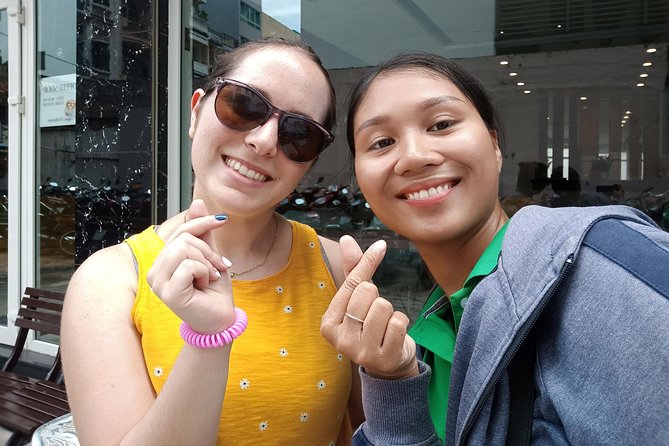
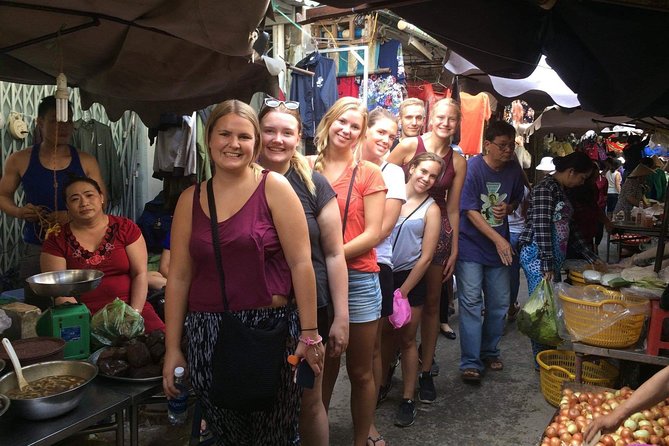
Then comes one of my favorite “sensory” parts of the route: the Ho Thi Ky Flower Market. The tour doesn’t treat it like a retail attraction. It’s wholesale space, and it’s hidden in alleyways of Ho Thi Ky Street—so you don’t get the market as a single tidy hall. You see how flowers move as part of a working system.
You’ll spend about 30 minutes here, and you can expect to see lines of popular flowers along with the bustle of people handling goods. Right next to the flower market, the tour also points you toward a wet local market, where you’ll see everything from raw foods to clothes and from street food energy to live animals and organ meat.
A quick reality check: “wet market” means you’ll see animal products and working market conditions. If that’s uncomfortable, you may want to focus on the general flow and flower sections instead of staring too long at any one area.
Still, this is the kind of stop that makes Saigon feel like Saigon. It’s also one of the best places to ask questions—because the guide can explain what’s sold and how people shop locally. Admission is included.
Stop 4: Chua Van Phat (Ten Thousand Buddhas) in an alley pagoda
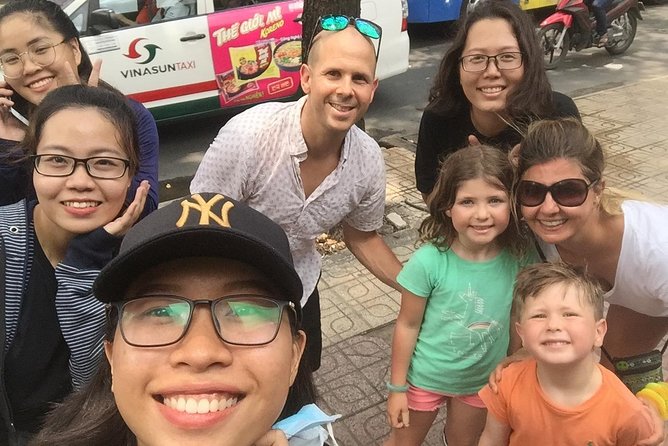
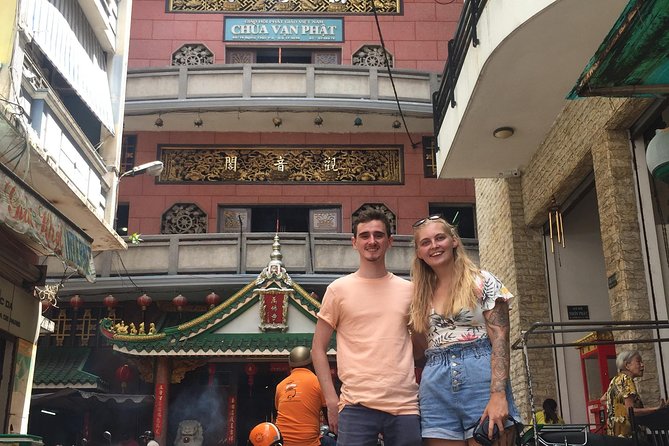
From markets, you go to a calmer but visually intense place: Chua Van Phat, also known as the Temple of Ten Thousand Buddhas.
This pagoda sits in an alley in District 5, and the focus is on scale inside small spaces. The statues are in different sizes and gestures, and they cover the walls. Even if you don’t know every religious detail, the visuals land immediately—ten thousand small stories in stone.
You’ll likely notice how the lotus seat and Buddha imagery work like a full-room wall. It’s the opposite of a lone statue in a grand plaza. Here, it’s constant, repeated, and close enough to feel personal.
You’ll have about 30 minutes for this stop, with admission included. Afterward, you move back onto the roads and weave around the city’s trading areas, including the China Town side.
Riding through China Town Saigon on the way to coffee

The tour spends time driving through part of China Town Saigon, and that matters because the route itself becomes a lesson. You see what areas feel like when they’re organized around commerce, not just tourism. You also get to move between neighborhoods quickly—something that’s hard on foot or by car.
This isn’t marketed as a museum-style “look at this famous building” segment. It’s more about watching the city function: shops, street life, signage, and the way people move in dense areas.
If you like street-level understanding, you’ll feel the benefit here most. If you prefer quiet sightseeing only, the constant movement and noise can feel like too much, which is why the coffee stop is built in.
The Cafe Sua Da coffee break with student hosts
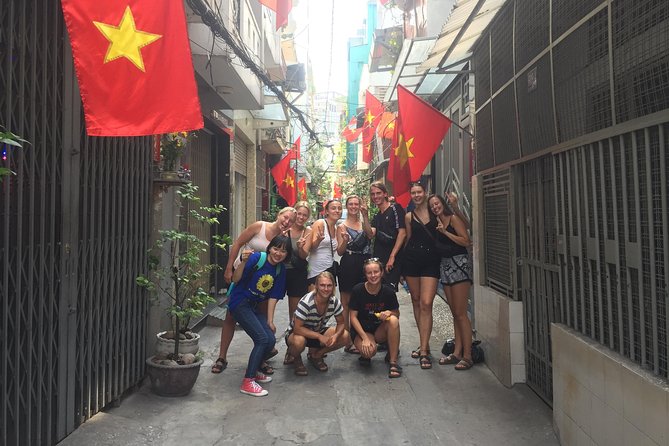
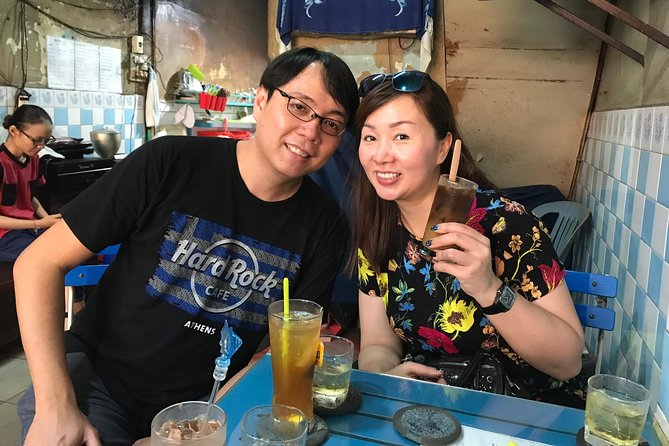
Before you head back to your pickup-drop-off point, the tour includes time at a local coffee shop to enjoy Vietnamese coffee (Cafe Sua Da) and mineral water. You also get time to chat, and this is where the experience turns personal.
The conversation element comes up again and again in the reviews—people describing it as inspiring and fun, not just informative. Having local student hosts changes the tone. Instead of you asking strangers to explain their city, you’re talking with people who live around it and can give you practical context.
The tour time here is about 30 minutes. In that window, you can ask things that don’t fit into a temple or market visit: what they think is worth seeing next, what daily life is really like, and what to eat as you keep exploring Saigon.
Price and value: $24 for ride time, admissions, and drinks
At $24 per person for about 3 hours, this is one of those deals that feels reasonable because it’s not nickel-and-diming you at each stop.
Here’s what you’re effectively getting baked in:
- Motorbike transportation with fuel
- An open-face helmet
- Admission tickets for each listed stop
- Cafe Sua Da and mineral water
- English-speaking drivers
- Pickup and drop-off in key districts, with a small extra fee only if you’re outside them
It’s also a private tour, meaning it’s just your group. Private format matters for value because it keeps the conversation and pacing focused. You’re not stuck waiting for strangers to finish photos at the same spot for the tenth time.
The only “cost consideration” is gratuities (optional) and the $5 out-of-area pickup/drop-off fee. If you’re the kind of traveler who likes to tip guides, plan a little extra budget so you don’t feel awkward at the end.
Safety, comfort, and who should think twice
This tour is designed to fit “most people can participate,” but you should still judge it honestly against your comfort.
You’ll be:
- Sitting on the back of a motorbike for sustained stretches
- Moving through busy roads and then tight alleyways
- Wearing an open-face helmet provided by the tour
If you have balance issues, motion sickness, or a hard time staying calm around traffic, you’ll want to think twice. The good news is that the driver teaches you how to sit right and people in the reviews specifically emphasized feeling safe with expert driving—especially with guides like Heidi and teams including Thao and Quang.
If you’re fit enough to handle a motorbike ride and you’re curious about real street life, this tour is a strong match.
Tips to get the most from your alley-and-market day
- Wear clothes you can move in. You’ll spend time looking around markets and temples.
- Bring a light layer. Coffee shops and indoor areas can shift in temperature.
- Keep your phone secured when you’re close to traffic or crowded lanes. Alley spaces can get tight fast.
- Ask questions during the coffee stop. This is your best moment to translate what you saw into what to do next in Saigon.
And one more practical tip: go in ready to see things beyond polished attractions. Markets show working life. Memorials show real consequences of political decisions. That’s the point.
Should you book this motorbike tour in Ho Chi Minh City?
Book it if you want Saigon as lived-in city life: memorial meaning, apartment past, flower-market work, and a pagoda that feels like an alley secret without being hidden by fog or mystery. The best reason to choose it is the combination of route flexibility (motorbike access) and human context (student conversation and English explanations).
Skip it or rethink it if you can’t handle motorbike rides in traffic or you prefer quiet, low-sensation sightseeing only.
For the $24 price tag, you’re paying for real access: ride time, entry tickets, and drinks, not just a sightseeing loop. If that’s your style, this is a smart first or second day pick—especially if you want to understand the city’s layers before you branch out on your own.
FAQ
How long is the tour?
The tour is approximately 3 hours.
What does the tour cost?
It costs $24.00 per person.
What stops are included during the ride?
The tour includes stops at the Venerable Thich Quang Duc Monument, the Nguyen Thien Thuat apartment buildings area, Ho Thi Ky flower market (and the nearby wet market area), and Chua Van Phat (Temple of Ten Thousand Buddhas), plus a coffee stop.
Are admissions included?
Yes. Admission tickets are included for the listed stops.
Does the price include coffee and water?
Yes. You’ll be served Cafe Sua Da and mineral water.
Do you pick up from my hotel?
Pickup and drop-off are included in District 1, 3, 4, and 10, and also at Saigon Opera House. If you’re outside those areas, there is an extra $5 USD fee paid directly to the guide.
What transportation and safety gear are provided?
You travel by motorbike with fuel included, and you’ll receive a high-quality open-face helmet.
Is this tour private?
Yes. It’s a private tour/activity, so only your group participates.
Can I get a refund if I cancel?
Yes. You can cancel up to 24 hours in advance for a full refund.
The Districts, One by One



More Tour Reviews in Ho Chi Minh City
On the Back of a Bike, Continued
Just Reviewed Around Saigon
- Secret walking Food Tour Ho Chi Minh City
★ 5.0 · 3 reviews - Ho Chi Minh City: Secret Cocktail Experience
★ 5.0 · 3 reviews - From Ho Chi Minh city: Vung Tau Beach Private Day Tour
★ 5.0 · 3 reviews - Saigoncholon
★ 3.5 · 3 reviews - Saigon On 2 Wheels
★ 3.5 · 3 reviews - From Ho Chi Minh City: Relax In Mui Ne Beach In 1 Day
★ 4.3 · 3 reviews
Scooter & Vespa Tours, compared.
 ★ 5.0Ho Chi Minh City Street Food Tour & Sightseeing By MotorbikeFrom $289,413 reviews
 ★ 5.0Saigon By Night and Street Food By Motorbike | Opt: Ao Dai RidersFrom $374,066 reviews
 ★ 5.0Private Street Food Tour by Motorbike/Car with Local StudentsFrom $453,950 reviews
 ★ 4.9Street Food Tasting & Sightseeing Tour by MotorbikeFrom $273,578 reviews
 ★ 5.0Top Notch Street Food Motorbike Tour In Ho Chi Minh CityFrom $292,667 reviews
 ★ 5.0Private Street Food Motorbike Tour in Ho Chi Minh CityFrom $552,180 reviews
 ★ 5.0Ho Chi Minh City Motorbike Tour with Student | Saigon AdventureFrom $231,697 reviews
 ★ 5.0Food Tour by Scooter with Eleven TastingsFrom $281,502 reviews
Browse the lists this tour appears in