
REVIEW · HO CHI MINH CITY WALKING TOURS
Ho Chi Minh City: Highlights & Hidden Gems – Free Walking Tour
Saigon history feels close on foot. This tips-only walk links big-story sites with real street scenes in District 1, including a Saigon River stretch where the city’s layers start to make sense. You’ll also get a local guide who keeps the pace human and the explanations clear.
I love that the route mixes headline landmarks with specific hangout spots you’d miss alone. The stop at 42 Nguyễn Huệ St. is a good example, since you’ll see a cafe apartment that’s built for meeting friends, working, and snapping photos, not just posing for pictures.
One consideration: this is priced like a bargain but it’s still a service, and some guests felt the guide strongly encouraged tips. Also, Notre Dame Cathedral isn’t included, so plan on that if you want to go inside.
In This Review
- Key highlights worth your time
- Meet at Bitexco, get oriented fast
- The first stop: Saigon River and the city’s long timeline
- Nguyễn Huệ Street: the cafe apartment at 42 Nguyễn Huệ St.
- Opera House area: architecture with a story attached
- People’s Committee Building and the Ho Chi Minh statue
- Pittman Apartments: a photo-history moment you won’t get solo
- Notre Dame Cathedral: go inside if you want the full effect
- Central Post Office: French colonial architecture in your hands
- Book Street: a calm, modern ending you can take with you
- Where the War Museum fits in
- Coffee, snacks, and the “what’s included” reality check
- Price and tips: how to judge value without stress
- Walking pace, group size, and hearing the guide
- Who should book this tour in Ho Chi Minh City
- Should you book the Ho Chi Minh City highlights and off-route walking tour?
- FAQ
- How long is the Ho Chi Minh City walking tour?
- Where does the tour start and end?
- Is this tour really free?
- What stops are included on the walk?
- Is entrance to Notre Dame Cathedral included?
- Is coffee or tea included?
- How big is the group?
- Can I cancel for free?
Key highlights worth your time
- A District 1 orientation walk that helps you connect geography with history in a short window
- Saigon River perspective stops that explain the city’s shift from late 1600s origins to French influence
- Nguyễn Huệ Street + 42 Nguyễn Huệ St. for a real feel of where locals go to hang out and work
- French-era architecture circuit including the Opera House, Central Post Office, and Notre Dame Cathedral
- Pittman Apartments story tied to a famous Hubert van Es photo of 1975 evacuations
- Tips-only format that keeps the entry price low, but expect the guide to care about gratuities
On foot through the old quarters and alleys




Meet at Bitexco, get oriented fast
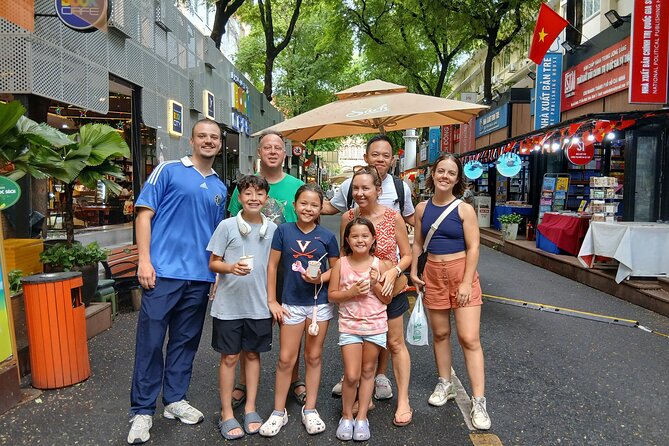
The tour starts outside the main entrance of Starbucks Coffee at the Bitexco Financial Tower (2 Đ. Hải Triều, Bến Nghé, Quận 1). It’s a smart meet point. It’s central, easy to spot, and it puts you right where District 1 stories begin to stack up.
You’re in good hands with an English-fluent local guide. Past departures have included guides such as Joseph, Son, and Mike, and the common thread is that they know how to translate the Vietnam War era and colonial period into something you can actually picture while walking.
The schedule is about 2 hours 30 minutes, with short stops that feel more like “pause and learn” than “speed-run sightseeing.” The group size can be up to 50, so if yours is on the larger side, aim for a front-ish spot early so you don’t lose details.
The first stop: Saigon River and the city’s long timeline
The tour kicks off with a stroll toward the Saigon River, with context about the city’s establishment in the late 17th century and what changed when the French arrived. That history matters because Saigon today is not one era layered on top of another. It’s more like eras arguing with each other in the street.
After the historical grounding, you shift into the “present-day Saigon” mode. The guide brings you to the vibe of trendy cafés along the river area, which is a useful contrast. It helps you see how the city reinvented itself instead of treating the past like a museum display.
If you’re arriving jet-lagged on day one, this section is a win. You’ll leave with an easier mental map for later visits, especially once you move inland toward the French-colonial cluster.
Practical note: this part includes a 30-minute stop, so wear shoes that can handle walking before and after you pause. You’ll be on foot through several neighborhoods.
Nguyễn Huệ Street: the cafe apartment at 42 Nguyễn Huệ St.
Next comes Nguyễn Huệ Street, one of the city’s main central corridors for people-watching. The fun detail here is that you don’t just “walk by a famous street.” You get a specific stop at 42 Nguyễn Huệ St., which is described as a packed cafe apartment where people come to socialize, work, bring a date, and take photography seriously.
This is the kind of place that feels ordinary if you’re scanning for landmarks. But with a guide, it becomes a lens. You start noticing how Saigon’s social life works now: how people claim a corner for conversation, how cafés double as work lounges, and how “hang out” can be an actual plan, not an accident.
You also get a short 20-minute window here. That’s enough time to step inside, look around, and understand what the space is for—without turning the stop into a full café marathon. Just be aware that coffee and tea aren’t included, so treat drinks like optional extras.
Opera House area: architecture with a story attached
The tour then points you to the Saigon Opera House (Ho Chi Minh Municipal Theater). The stop is short—about 10 minutes—but the focus is on what the building communicates. The Opera House sits in a region where French-era civic pride showed up in stone, symmetry, and money spent on public spaces.
While you look at the Opera House, you’ll also pass or hear context related to nearby hotels, including the Continental Hotel (the first hotel in Saigon) and the Caravelle Hotel. Those names matter because they anchor the colonial and post-colonial timeline to places you can physically point at.
What I like about this part is how it trains your eye. You stop seeing buildings as backdrops. You start noticing choices: where the entrances are, how facades behave in different light, and why certain streets became prestige addresses.
A couple more Saigon streets to cover on foot
- Ho Chi Minh City: Super Niche Walking Street Food Tour★ 5.0 · 438 reviews
- Ho Chi Minh City: Private Street Food Evening Walking Tour★ 5.0 · 436 reviews
- Ho Chi Minh: Original Walking Street Food Tour with Foodies★ 5.0 · 379 reviews
- Ho Chi Minh City: Walking Tour with Local Guide★ 4.8 · 363 reviews
- Ho Chi Minh City private walking tours with young local volunteers★ 5.0 · 326 reviews
People’s Committee Building and the Ho Chi Minh statue
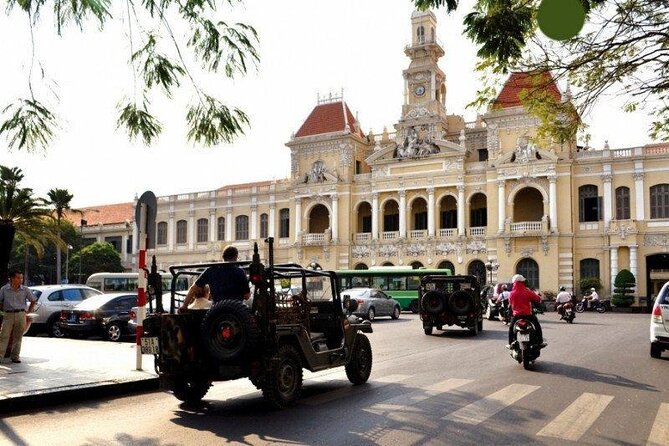
Then you head to the People’s Committee Building area. There’s a specific reference to the President Ho Chi Minh statue positioned in front along Nguyen Hue walking street.
This stop is also about 10 minutes, and it works best if you let the guide’s explanation do the heavy lifting. Statues can feel obvious, but in Ho Chi Minh City they’re not random decoration. They’re part of how the city tells its own story about national identity and modern governance.
It’s also a useful breather. You’ve been in architectural mode. You now get a political and symbolic landmark that changes the meaning of the street around it.
Pittman Apartments: a photo-history moment you won’t get solo
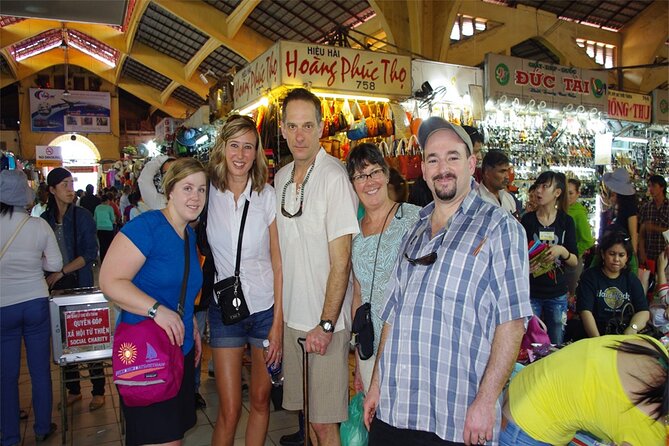
One of the most striking points on the walk is the Pittman apartments stop, with a 10-minute timeframe.
Here, the tour ties the location to a famous image: photojournalist Hubert van Es (working for UPI) captured an iconic moment in 1975 showing U.S. government employees evacuating the city by helicopter during the Fall of Saigon. The point isn’t to recite captions. It’s to stand near the place and understand that “history” wasn’t just a headline. It was people moving, frightened and fast, in real streets.
This is where a good guide really earns their tip. The location becomes a visual trigger for the story, and your brain finally connects the Vietnam War’s closing chapter to the city’s physical layout.
Notre Dame Cathedral: go inside if you want the full effect
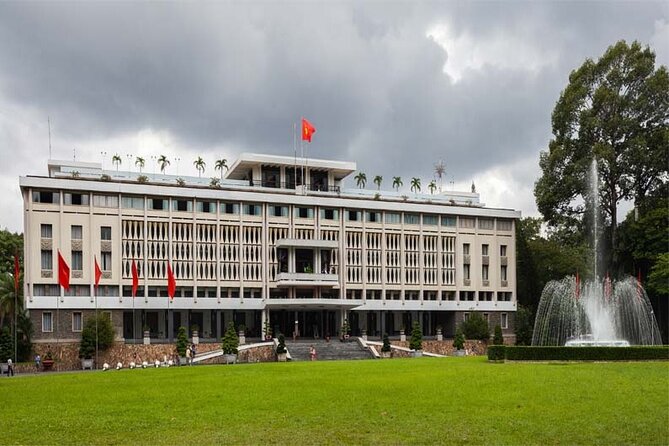
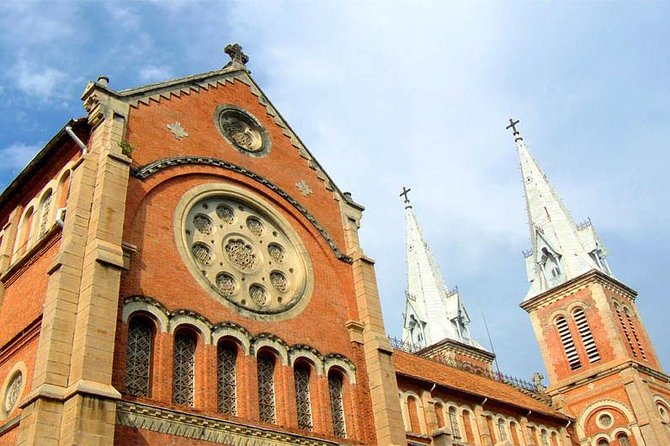
Next is the Saigon Notre Dame Cathedral, another 10-minute stop. It’s listed as a major world cathedral and noted as the only Southeast Asia representative among a group of 19 most majestic cathedrals.
The key practical detail: admission is not included here. If you want to go in, you’ll pay on-site, and you’ll need time for queues and entry. If you’re short on time or prefer to keep the walk fluid, you can still get plenty from the exterior and the guide’s context.
I’d also treat this as a photo checkpoint. The cathedral is one of those buildings that photographs better when you slow down. Look at the angles. Look at how the facade sits against the street. Let the guide’s historical notes shape how you see it.
Central Post Office: French colonial architecture in your hands
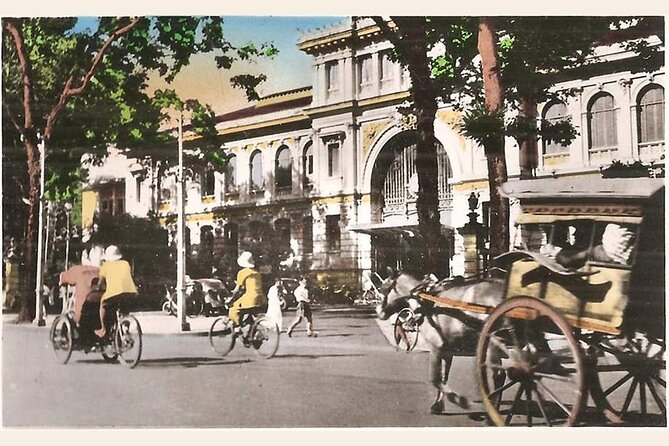
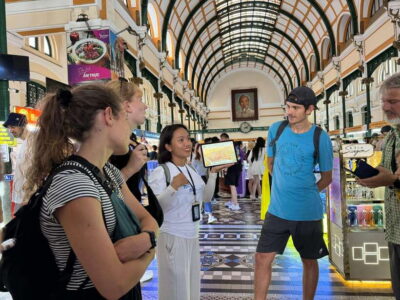
The Central Post Office stop is another 10-minute moment that rewards attention. The guide frames it as one of the best examples of French colonial architecture in the city, and you’ll get the Cathedral context as well since the stop sits in the same visual neighborhood.
Even if you don’t buy stamps or mail postcards, this is a good stop to stretch your imagination. Colonial-era postal buildings weren’t just for letters. They were about connecting empire-level systems to local streets.
This stop also works as a sensory break from just looking outward. It’s an interior-feeling kind of landmark. You’ll likely spend your short time scanning details, noticing arches and counters, and picking up the vibe of a building designed for movement and communication.
Book Street: a calm, modern ending you can take with you
The walk finishes with a stop at Ho Chi Minh City’s Book Street (another 10-minute pause). The concept is simple: rows of books across genres—literature, politics, society, science, culture, foreign languages, plus comics and other categories.
If you like traveling with a book (or you want a small souvenir that doesn’t clutter your bag), this is a perfect wrap. It’s also a good way to slow down after the heavy historical stops. The tone becomes lighter without being fake.
You might not buy anything. You might just enjoy browsing and practicing your bargaining style. Either way, you’ll leave with a sense of where modern life goes when tourists head elsewhere.
Where the War Museum fits in
The tour description includes a visit to the War Museum, even though the walking stop list highlights the District 1 landmarks. Translation: you’re meant to understand the city through the war era and its aftermath, and the museum stop is part of that story arc.
Here’s the practical way to handle it: don’t treat the walking sites as random sightseeing. Think of them as anchors. Once you see how the museum explains the conflict and its consequences, the political symbolism and the architecture around the walk start making more sense.
Also, allow your guide to set the pacing. Museum timing can shift the flow. If the group is hot, you might get a quick rest window. If it’s cooler, you might move a bit faster between photo stops.
Coffee, snacks, and the “what’s included” reality check
The tour does not include coffee or tea. That’s straightforward, but it’s worth planning around, especially on a day when you’ll be outside for much of the route.
What you might find instead is small extras along the way. Some past guests reported tasting local liquor and fried banana during the walk, and others noted short breaks to escape the heat, including time in air-conditioned spots. Those are not guaranteed in the way a fixed itinerary item is, but they show you the tour can be more than just “look and listen.”
If you want to keep control of your budget, carry water and snacks you like. You’ll also be glad you did if you’re sensitive to humidity.
Price and tips: how to judge value without stress
On paper, the booking price looks almost too good to be true: $0.71 per person. But the tour operates on a tips-only basis. That structure keeps the upfront cost low, but it also shifts the real payment into gratuities.
Here’s the balanced way to think about value:
- You get a guide who can connect multiple eras to specific buildings and streets.
- You get a route that saves you time figuring out what to see first.
- You may get small tasting moments, plus help with navigating the area.
One drawback is that some guests felt the guide expected tips in a certain range (one comment mentioned $15–$50 USD/person). You don’t want “awkward” to be part of your travel day. So the smartest move is to decide your tipping comfort level before you arrive, then tip confidently and move on with your evening.
A small practical tip: bring bills in small denominations if you can. Even if you trust yourself with an envelope, it’s easier for everyone when money is ready.
Walking pace, group size, and hearing the guide
Most people can participate, and the stops are short. Still, this is a walking tour. Wear comfortable shoes and expect a few stretches where you’ll move steadily.
The group can be up to 50, and at that size you might not always hear every detail if you’re at the back. I like tours like this when I can position myself near the front for the early stops, then relax into the middle when the route becomes familiar.
The good news: the stop design helps. With 10-30 minute chunks, you don’t feel trapped in a long monologue. You can also ask questions between landmarks, which is where the guide’s personal stories turn into your own understanding of the city.
Who should book this tour in Ho Chi Minh City
I think this is a strong first-day choice if you want your bearings fast. The route covers District 1’s major French-era landmarks, plus modern social life on Nguyễn Huệ.
It’s also great if you like history but hate museum-only days. You still get context, but you’re learning while you move through real streets.
If you’re traveling with kids or you prefer breaks, look for the guide’s pacing style. Some guests mentioned guides offering shaded listening spots and short air-conditioned resets, which makes a big difference in Ho Chi Minh City heat.
If you absolutely hate discussing tips, or you only want a strictly “priced and paid” experience, then this format may not feel comfortable. In that case, you might prefer a dedicated paid tour with a clear all-in price.
Should you book the Ho Chi Minh City highlights and off-route walking tour?
Yes, if you’re in District 1 early and you want a story-driven overview in about 2.5 hours. This walk does a good job linking Saigon River context to the French-era architecture cluster, then finishing with Nguyễn Huệ life and Book Street browsing.
My main “do it with eyes open” advice is about the money side: the upfront price is low because the tour expects you to pay through tips. Decide what feels fair to you before you start, and you’ll enjoy the day with zero guessing.
If that fits your travel style, this is a smart, practical way to get oriented and learn how the city’s past and present sit right next to each other.
FAQ
How long is the Ho Chi Minh City walking tour?
It runs for about 2 hours 30 minutes.
Where does the tour start and end?
It starts outside the main entrance of Starbucks Coffee at the Bitexco Financial Tower (2 Đ. Hải Triều, Bến Nghé, Quận 1). It ends at 216 Lê Duẩn, Bến Nghé, Quận 1.
Is this tour really free?
The tour operates on a tips-only basis. The listed price is $0.71 per person, but gratuities are expected.
What stops are included on the walk?
You’ll visit the Saigon River, Nguyễn Huệ Street (including a stop at 42 Nguyễn Huệ St.), Saigon Opera House, People’s Committee Building (Ho Chi Minh statue area), Pittman apartments, Notre Dame Cathedral, Central Post Office, and Ho Chi Minh City’s Book Street. The tour description also mentions the War Museum.
Is entrance to Notre Dame Cathedral included?
No. Admission for Notre Dame Cathedral is not included.
Is coffee or tea included?
No. Coffee and/or tea are not included.
How big is the group?
The tour has a maximum of 50 travelers.
Can I cancel for free?
Yes, free cancellation is available. You can cancel up to 24 hours in advance for a full refund.
More Tours in Ho Chi Minh City





More Tour Reviews in Ho Chi Minh City
Saigon on Foot, Continued
Just Reviewed Around Saigon
- Secret walking Food Tour Ho Chi Minh City
★ 5.0 · 3 reviews - Ho Chi Minh City: Secret Cocktail Experience
★ 5.0 · 3 reviews - From Ho Chi Minh city: Vung Tau Beach Private Day Tour
★ 5.0 · 3 reviews - Saigoncholon
★ 3.5 · 3 reviews - Saigon On 2 Wheels
★ 3.5 · 3 reviews - From Ho Chi Minh City: Relax In Mui Ne Beach In 1 Day
★ 4.3 · 3 reviews
Ho Chi Minh City Walking Tours, compared.
 ★ 5.0Private Street Food Evening Walking Tour in Ho Chi Minh CityFrom $493,175 reviews
 ★ 5.0Super Niche Walking Street Food Tour in Ho Chi Minh CityFrom $291,636 reviews
 ★ 5.0Saigon Night Bites on Foot: Local Vendors, Stories & Sweet FinishFrom $29701 reviews
 ★ 5.0Walking Food Tour with 13 TastingsFrom $27469 reviews
 ★ 5.0Super Niche Walking Street Food TourFrom $28438 reviews
 ★ 5.0Private Street Food Evening Walking TourFrom $49436 reviews
 ★ 5.0Original Walking Street Food Tour with FoodiesFrom $28379 reviews
 ★ 4.8Walking Tour with Local GuideFrom $3363 reviews
Browse the lists this tour appears in