
REVIEW · HO CHI MINH CITY WALKING TOURS
Ho Chi Minh City: Private Walking Tour with a Guide
Ho Chi Minh City feels different when you walk it. This 3-hour private walking tour strings together the big sights and the calmer corners of Old Saigon with a local English guide who keeps things moving and safe. I especially loved the chance to see Ben Thanh Market up close and the way the route links major landmarks like Notre Dame Cathedral with real street-level life.
Two highlights for me: first, the guide’s attention to practical details, like watching where people step and pointing out puddles and hazards; second, the stop-by-stop storytelling that makes places like Nguyen Hue Square and Nha Rong Wharf easier to understand. One thing to keep in mind: this is a lot of walking in the sun, so comfortable shoes, water, and a hat matter.
If you want a guided “first pass” through the city that doesn’t feel rushed, this is a smart value. Small group size (limited to 5) helps you get questions answered and photo support, especially if you’re solo.
In This Review
- Key things you’ll notice on this walk
- Starting at Tao Dan Park: warm-up, shade, and the route you’ll actually remember
- The Hindu Temple stop: a calm change of pace with real local context
- Ben Thanh Market: seeing trade in motion, not just shopping
- Nguyen Hue Square and the Ho Chi Minh City People’s Committee: why this landmark area matters
- Saigon River and Nha Rong Wharf: a waterfront break with a big historical thread
- Opera House, Notre Dame Cathedral, and Saigon Post Office: the French-period cluster you can cover on foot
- Notre Dame Cathedral
- Saigon Post Office
- Book Street by the Saigon Post Office: a pleasant detour for slower moments
- Turtle Lake (past and present) and the Pink Church: ending with atmosphere, not just monuments
- Turtle Lake: connecting how a place changes
- Pink Church: a colorful finish
- Price and pace: why $15 for 3 hours can be a very fair deal
- Who should book this walking tour (and who might want a different option)
- Quick checklist before you go
- Should you book this Ho Chi Minh City private walking tour?
- FAQ
- FAQ
- Where does the tour start?
- How long is the walking tour?
- What language is the live guide?
- What’s included in the tour?
- Are hotel pickup and drop-off included?
- Are meals included?
- What should I bring?
- Is it suitable for wheelchair users or mobility impairments?
Key things you’ll notice on this walk
- Tao Dan Park to Old Saigon: a logical start that gets you into the action without wasting time
- Ben Thanh Market trading scenes: you’re not just looking at the market, you’re watching daily commerce
- Nguyen Hue Square + City Hall area: a respectful moment tied to the city’s modern identity
- Saigon River and Nha Rong Wharf: history you can see and connect with the waterfront
- French-era buildings on foot: Opera House, Notre Dame, and the Saigon Post Office in one flow
- Book Street near the post office: a fun pause that’s less about monuments and more about people
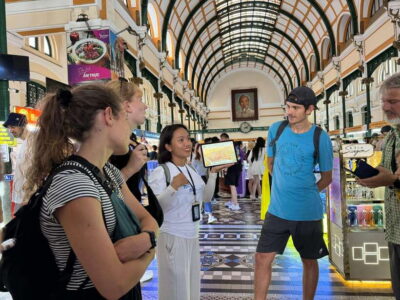
On foot through the old quarters and alleys




Starting at Tao Dan Park: warm-up, shade, and the route you’ll actually remember
Your tour begins at Tao Dan Park, which is a strong choice for a walking itinerary. It’s a real neighborhood-feeling starting point, not some far-away bus stop. You’ll get your bearings early, and from there you’re set up to move through Old Saigon in a way that feels connected instead of chopped into taxi hops.
Expect an easy first phase where your guide sets the tone: what you’re seeing, how long the walk is roughly going to take, and what to watch for on the sidewalk. If you’re coming in from jet lag or you’re a little unsure about crossing busy streets, this matters. One review praised the guide, Hoanf, for constantly making sure safety came first, not just during street crossings but also by spotting obstacles like puddles and uneven ground.
Bring the basics: comfortable shoes, a hat, and sunscreen. This is one of those cities where the weather can turn quickly, and you’ll be walking for the better part of the tour.
The Hindu Temple stop: a calm change of pace with real local context
After starting in Tao Dan Park, you’ll head toward the Hindu Temple. Even if you’ve seen temples before, this stop tends to feel different because it’s placed right in the middle of the city’s daily rhythm. The value here isn’t just the building itself. It’s the way your guide frames what the temple means in a city that grew through multiple cultures and eras.
This is also a good “reset” moment. After a stretch of sidewalks and street activity, you get a shift in atmosphere. You’ll have time to pause, look around, and take photos without feeling like you’re rushing through a checklist.
Practical note: keep your eyes up. Sidewalks can be a mix of smooth sections and uneven bits, so slow down at crossings and near curb cuts. The safety-first approach from Hoanf is exactly the kind of small service that makes a walking tour feel easy.
Ben Thanh Market: seeing trade in motion, not just shopping
One of the most worthwhile parts of the walk is the route to Ben Thanh Market. This is where you start to see the city as a working place, not just a museum. Your guide walks you through and helps you understand the trading activity around the market—how people move, what they’re buying, and how the area functions day to day.
What I like about this stop is that it’s not framed as a souvenir detour. You can actually watch how the market operates. And since your tour is guided, you’re less likely to get “stuck” inside the loudest corner. You keep your momentum and still get the context.
If you want photos, this is a good moment. One of the reviews specifically mentioned that Hoanf took plenty of pictures of the solo traveler, which tells me the guide is attentive to documenting the experience—not just talking over it.
You’ll probably have smells, sounds, and motion all at once. If that’s a lot for you, remember you can step slightly back during the busiest moments and let the guide point you toward less chaotic angles for photos.
Nguyen Hue Square and the Ho Chi Minh City People’s Committee: why this landmark area matters
Next you’ll continue to Nguyen Hue Square to pay your respects to President Ho Chi Minh. This isn’t just a photo stop. It’s part of the tour’s bigger story: how Ho Chi Minh City presents its identity in public space.
From there, you’ll walk toward the Ho Chi Minh City People’s Committee, keeping the route moving while you take in the atmosphere of a major civic area. The advantage of doing this as part of a walking tour is that the meaning of the places comes through in how close they are to the streets where people actually spend time.
You may be tempted to treat this as “see the statue and move on,” but give yourself a minute to slow down here. Even if you’re not a history person, standing in the square helps you understand why the city feels the way it does: formal structures and everyday life right next to each other.
A couple more Saigon streets to cover on foot
- Ho Chi Minh City: Super Niche Walking Street Food Tour★ 5.0 · 438 reviews
- Ho Chi Minh City: Private Street Food Evening Walking Tour★ 5.0 · 436 reviews
- Ho Chi Minh: Original Walking Street Food Tour with Foodies★ 5.0 · 379 reviews
- Ho Chi Minh City: Walking Tour with Local Guide★ 4.8 · 363 reviews
- Ho Chi Minh City private walking tours with young local volunteers★ 5.0 · 326 reviews
Saigon River and Nha Rong Wharf: a waterfront break with a big historical thread
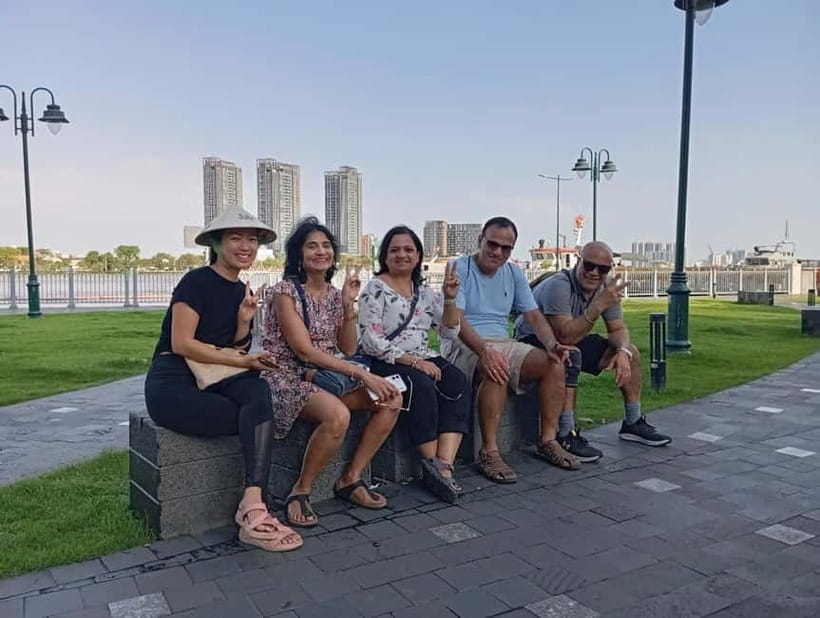
Then the walk shifts toward the Saigon River and the Nha Rong Wharf, where President Ho Chi Minh left. This waterfront portion is a nice change in tempo. After streets and crowds around central areas, the river gives you open space and a different kind of light for photos.
What makes this section valuable is the link between place and story. Your guide connects the physical waterfront to the idea of leaving, seeking a way to save the country, and the long arc of the city’s development.
Also, from a comfort perspective, waterfront walking can be easier on your attention. The pace feels different—more “look around” than “navigate every corner.” It’s still a walking tour, so keep water handy, but this is usually where people feel like they’ve caught their breath.
Opera House, Notre Dame Cathedral, and Saigon Post Office: the French-period cluster you can cover on foot
From the river you’ll keep walking to the Opera House, then on to Notre Dame Cathedral, and the old Saigon Post Office built during the French period. This is a strong run of architecture in one stretch, and doing it on foot helps you notice the details you’d miss if you arrived by car and left quickly.
Notre Dame Cathedral
Seeing Notre Dame Cathedral in this part of the route works because the city’s layers are close together. You’re not just looking at a European-style landmark in isolation. You’re seeing it inside a city that has its own pace and daily movement all around it.
Saigon Post Office
The old post office brings a different kind of interest. It’s not only about the building; it’s about how public spaces become identity markers. You’ll be able to look around and connect it to the city’s colonial-era architecture, while still feeling the modern pulse of Saigon.
This trio is also a practical gift. You’re covering multiple top sights without needing to re-orient every time you hop between them. That matters when you’re on a 3-hour time window.
Book Street by the Saigon Post Office: a pleasant detour for slower moments
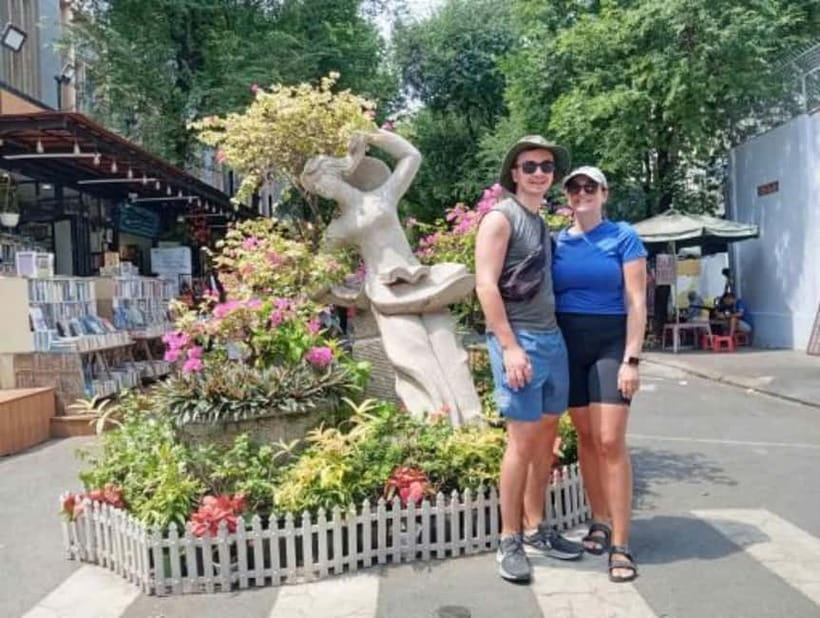
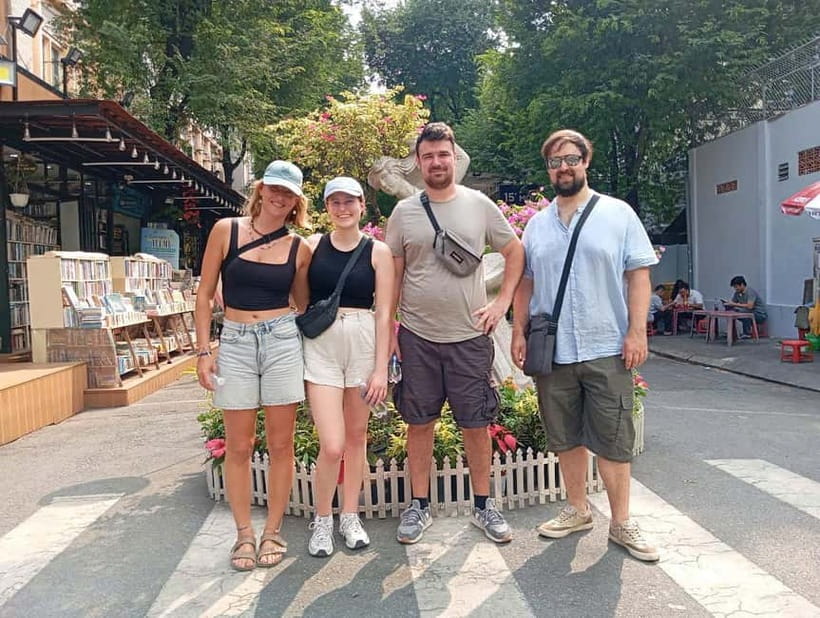
Near the Saigon Post Office, you’ll stop at Book Street, a place for book lovers. This is one of the stops that can surprise you—in a good way. After cathedral photos and architectural looks, book streets are about a different kind of enjoyment: browsing, people-watching, and letting the city slow down for a few minutes.
Even if you don’t buy anything, this break helps you balance the tour. It turns the experience from pure sightseeing into something more human-scale. And since it’s near a major landmark cluster, you won’t lose time relocating.
If you like photography, you can also get different shots here than you will in front of big facades: smaller scenes, signs, and the texture of street life.
Turtle Lake (past and present) and the Pink Church: ending with atmosphere, not just monuments
As you wrap up, your walk includes Turtle Lake, described as both past and present, and then the Pink Church. This late-tour sequence is a smart choice because it gives you more mood and less “big-stop pressure.”
Turtle Lake: connecting how a place changes
The way the tour frames Turtle Lake—past and present—encourages you to look at how a city evolves. Even without a deep lecture, the stop guides your attention toward contrasts: what looks older, what feels newer, and how the same spot can mean different things over time.
Pink Church: a colorful finish
Then comes the Pink Church, which is the kind of final stop that makes your photos look instantly memorable. It’s visually distinctive, and it helps the tour end on a lighter note.
When you’re finishing, you’ll end at your hotel or wherever you want—so you can flow naturally into the rest of your day. That flexibility is useful if you’re planning dinner nearby or want to keep exploring at your own pace.
Price and pace: why $15 for 3 hours can be a very fair deal
At $15 per person for a 3-hour walking tour with an English live guide and a small group (limited to 5), the value is strong—especially if you want the route stitched together without figuring out logistics. You’re paying for more than stops. You’re paying for:
- a guide who explains what you’re seeing
- a plan that covers a lot of ground in a realistic way
- extra attention to safety and comfort on busy streets
Most budget walking tours are either too short to feel meaningful or too generic to help you connect the dots. Here, the route includes a mix of major icons (Notre Dame, Opera House, post office) and street-level experience (Ben Thanh market, civic square, waterfront). That combination is usually what makes a tour feel worth the money.
The pace can feel like a normal sightseeing walk: not a crawl, not a sprint. You’ll cover enough to feel like you accomplished something, but the time spent at key places gives you a chance to look around.
One more practical point: bring water. It sounds basic, but in warm weather it’s the difference between enjoying the walk and getting distracted by discomfort.
Who should book this walking tour (and who might want a different option)
This tour fits best if you:
- want an English-speaking guide who explains the city in a way that’s easy to follow
- like walking routes that connect landmarks with everyday life
- want a safe, small-group experience with help crossing busy streets
It may not be a great fit if you have mobility impairments or use a wheelchair, since the activity is not suitable for wheelchair users. Also, it’s not ideal if you hate walking or you’re very sensitive to sun and heat.
For solo travelers, it’s especially worth considering. The guide’s habit of taking plenty of photos of a solo traveler shows that you won’t have to constantly ask strangers to help with pictures.
Quick checklist before you go
To get the most out of the full route, I’d show up with:
- Comfortable shoes (non-negotiable for sidewalks)
- Hat and sunscreen
- Camera
- A bottle of water
- Light clothing that works in changing weather
And keep it simple: no smoking during the tour.
Should you book this Ho Chi Minh City private walking tour?
Yes—if you want a structured, walkable route through Old Saigon with an English guide who pays attention to both stories and street-level safety. The mix of major sights (Notre Dame Cathedral, Opera House, Saigon Post Office) plus real-life Stops (Ben Thanh Market, civic square, waterfront) is the kind of combination that helps you understand the city fast without feeling like you missed the “important stuff.”
If you can’t do a walking-heavy plan or you need wheelchair access, skip it and look for an itinerary designed for your mobility needs. Otherwise, this is one of those straightforward, good-value tours where the guide makes a real difference—and your photos come out better because someone actually helps you get them.
FAQ
FAQ
Where does the tour start?
The tour starts at Tao Dan Park.
How long is the walking tour?
The tour lasts 3 hours.
What language is the live guide?
The guide is English.
What’s included in the tour?
It includes visits to a Hindu Temple, Ben Thanh Market, Nguyen Hue Square and the Ho Chi Minh City People’s Committee, walking along Saigon River and Nha Rong Wharf, exploration of the Opera House, Notre Dame Cathedral, and Saigon Post Office, plus Book Street, Turtle Lake, and the Pink Church.
Are hotel pickup and drop-off included?
No. Hotel pickup and drop-off are not included.
Are meals included?
No. Meals are not included.
What should I bring?
Bring comfortable shoes, a hat, camera, sunscreen, and water.
Is it suitable for wheelchair users or mobility impairments?
No. It is not suitable for people with mobility impairments or wheelchair users.
More Tours in Ho Chi Minh City






More Tour Reviews in Ho Chi Minh City
Saigon on Foot, Continued
Just Reviewed Around Saigon
- Secret walking Food Tour Ho Chi Minh City
★ 5.0 · 3 reviews - Ho Chi Minh City: Secret Cocktail Experience
★ 5.0 · 3 reviews - From Ho Chi Minh city: Vung Tau Beach Private Day Tour
★ 5.0 · 3 reviews - Saigoncholon
★ 3.5 · 3 reviews - Saigon On 2 Wheels
★ 3.5 · 3 reviews - From Ho Chi Minh City: Relax In Mui Ne Beach In 1 Day
★ 4.3 · 3 reviews
Ho Chi Minh City Walking Tours, compared.
 ★ 5.0Private Street Food Evening Walking Tour in Ho Chi Minh CityFrom $493,175 reviews
 ★ 5.0Super Niche Walking Street Food Tour in Ho Chi Minh CityFrom $291,636 reviews
 ★ 5.0Saigon Night Bites on Foot: Local Vendors, Stories & Sweet FinishFrom $29701 reviews
 ★ 5.0Walking Food Tour with 13 TastingsFrom $27469 reviews
 ★ 5.0Super Niche Walking Street Food TourFrom $28438 reviews
 ★ 5.0Private Street Food Evening Walking TourFrom $49436 reviews
 ★ 5.0Original Walking Street Food Tour with FoodiesFrom $28379 reviews
 ★ 4.8Walking Tour with Local GuideFrom $3363 reviews
Browse the lists this tour appears in