
REVIEW · CITY TOURS
Ho Chi Minh City: Stained Glass Art Workshop in Saigon
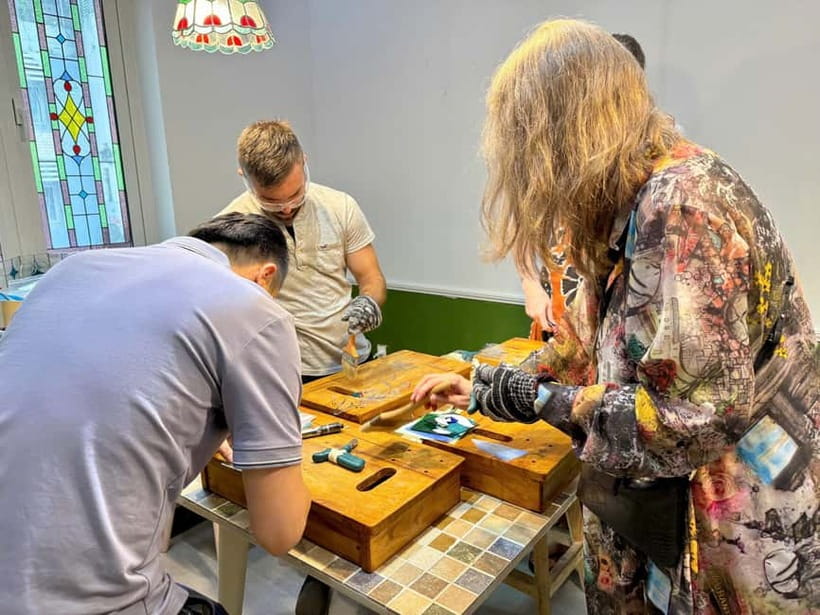
Color and light turn into art fast. This Ho Chi Minh City stained-glass workshop is a calm, hands-on way to learn the basics and walk away with something you made yourself. I really like the creative studio pace and the fact that the English-speaking instructor guides you through cutting, shaping, and assembling. One caution: communication and attention can vary by group, and one past participant felt the explanations were thin and the class time felt too self-directed.
You’ll spend about 3 to 3.5 hours working on a stained-glass ornament, coaster, or mini panel. You also get stories about how stained glass fits into Vietnamese architecture, plus a chance to choose from traditional and modern patterns for your design.
In This Review
- Key things to know before you go
- What you’ll make in Saigon: ornament, coaster, or mini panel
- Inside the peaceful studio: how the class flow works
- Cutting, shaping, and assembling: the practical skills you learn
- Choosing your pattern: traditional and modern designs that feel Vietnamese
- The Vietnamese architecture story: history and symbolism with your hands
- Price and value in real terms: what $35 buys you
- Timing, group vibe, and the one drawback to plan for
- Who this workshop is for (and who should look elsewhere)
- Tips to get the best results in 3.5 hours
- Should you book this stained-glass workshop in Ho Chi Minh City?
- FAQ
- How long is the stained glass art workshop in Ho Chi Minh City?
- What will I make during the workshop?
- Do I need any prior experience with stained glass?
- Is the instructor able to speak English?
- What’s included in the $35 price?
- Is transportation included?
- Are children allowed?
- Is it suitable for people with mobility impairments?
- What is the cancellation policy?
- Can I reserve and pay later?
- What should I bring?
Key things to know before you go
- You leave with your own stained-glass piece: ornament, coaster, or mini panel
- Tools and materials are handled for you, so you can focus on learning and making
- Beginner-friendly basics: glass cutting, shaping, and assembling
- Pattern choices connect to local inspiration, including traditional and modern designs
- You get a cultural angle, with Vietnamese history and stained-glass symbolism in architecture
- The studio is meant to feel peaceful, more craft class than performance
Wider loops through the districts




What you’ll make in Saigon: ornament, coaster, or mini panel
This workshop’s main payoff is simple: you create a stained-glass item you can use at home or display as a souvenir. Depending on what you choose, you’ll craft an ornament, a coaster, or a small panel. That’s a big difference from tours where you just buy a similar item later.
I like that your final product isn’t just a theme souvenir; it’s tied to skills you learn during the session—especially cutting and assembling. You’ll also have a range of pattern options, including traditional and modern designs, so you’re not stuck with one “standard” image.
If you’re picturing a delicate final piece, remember you’re building it step by step during the workshop. That means you’re not just copying something—you’re making decisions along the way, from how you lay out the pattern to how you bring the sections together.
Inside the peaceful studio: how the class flow works
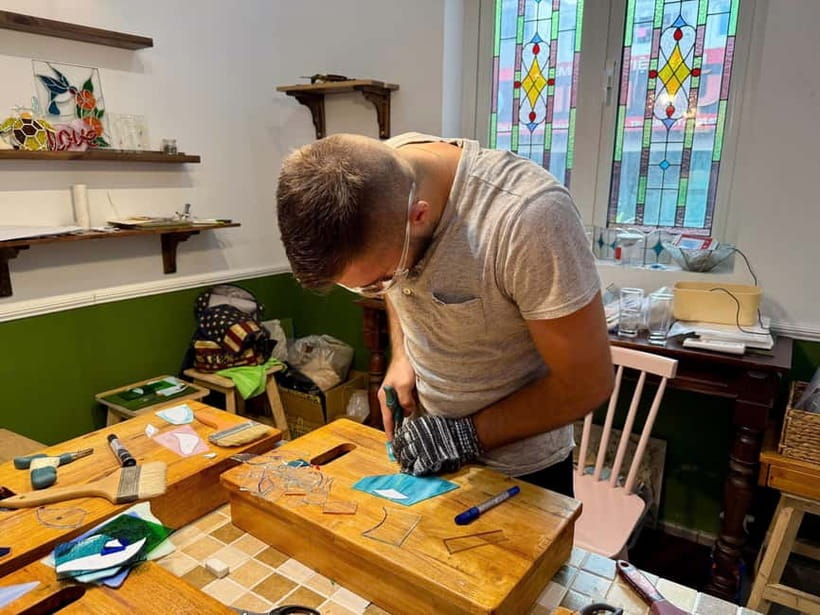
The experience happens in a quiet, creative studio in Ho Chi Minh City, designed for relaxed making. Expect a guided, hands-on lesson that moves from explanations into practice. The class runs around 210 minutes, which is long enough to go beyond the “try one thing” level.
Here’s the typical flow you should plan for:
- You start with the essentials: how stained glass tools and materials are handled safely.
- You choose a design pattern (traditional or modern) and plan your layout.
- You work through the core actions: cutting, shaping, and assembling glass pieces.
- Along the way, your instructor also shares background on stained glass in Vietnamese architecture—its history and symbolism.
- You finish with your own piece ready to take home.
That cultural storytelling matters because it gives meaning to what you’re making. Stained glass isn’t only about decoration; in many building traditions it’s a way of guiding light and communicating ideas through color and design.
Cutting, shaping, and assembling: the practical skills you learn
The workshop focuses on the core craft steps. If you’ve never touched stained glass tools before, this is exactly where you’ll get started—safely and with guidance.
You’ll learn the basics of:
- Glass cutting: turning a pattern into individual pieces
- Glass shaping: refining pieces so they fit together
- Assembling: bringing the sections together into your final ornament, coaster, or mini panel
Pay attention to safety instructions early. This kind of craft uses tools that need careful handling, and the workshop specifically covers learning how to work safely with tools and materials. Even if you’re steady with other crafts, it’s worth treating the safety briefing as part of the lesson, not just a formality.
One thing to keep in mind: the class style can feel different depending on how engaged the instructor is with the group at that moment. A previous participant reported that they were left to work more independently and had to prompt for help with steps. Another participant praised calm, ready support and said the pressure was low. Translation for you: if you want guidance at every stage, speak up early and ask for clarification when you hit a snag.
Choosing your pattern: traditional and modern designs that feel Vietnamese
You don’t just pick a random picture. You choose from a variety of patterns—traditional and modern—so you can match the final piece to your taste and your souvenir purpose.
This is where the workshop becomes personal. If you’re the type who likes meaningful design, look for patterns that connect to Vietnamese architectural influence. If you prefer something clean and modern, choose a style that feels like it would look right in your home—especially in a way that will show through light.
Also, stained glass shows best when light hits it. So think ahead: will you display it where it catches daylight? A coaster might be mostly for function at home, while an ornament or mini panel is easier to show off against a window or bright wall.
A few Saigon tours to weigh against this one:
- Cai Be Mekong Delta Tour: Cooking Class, Cycling & Craft Villages★ 5.0 · 1,881 reviews
- Chef Vu Cooking Class Plus Market Trip in Saigon Center (Pick up by Cyclo)★ 5.0 · 477 reviews
- Immersive Cooking Class & Market Tour By Local Chef+Cookbook★ 4.8 · 426 reviews
- Immersive Cooking Class & Wet Market Tour by Local Chef +Cookbook★ 5.0 · 367 reviews
- Fun & Easy Vietnamese Coffee Workshop in Hồ Chí Minh City★ 5.0 · 293 reviews
The Vietnamese architecture story: history and symbolism with your hands
A stained-glass workshop in Saigon makes more sense when you understand why the craft shows up in Vietnamese architecture. During the class, you’ll learn about the history and symbolism of stained glass in Vietnamese buildings—covering how it appears in both colonial-era and modern contexts.
That story changes the way you look at your own design. Instead of seeing only color shapes and lines, you can think about stained glass as visual storytelling—how light and pattern can communicate identity, faith, or local style.
If you like learning through doing, this part is a bonus because it’s happening while you’re working. You can connect the cultural notes directly to what you’re cutting and assembling, which helps the info actually stick.
Price and value in real terms: what $35 buys you
At $35 per person for about 210 minutes, this is priced like a true class experience, not like a museum ticket or a short “sit and watch” activity. The value sits in what’s included.
The price includes:
- An English-speaking local instructor
- All tools and materials
- Your finished stained-glass piece to take home
That’s a practical combo. Tools and materials can cost more than the workshop fee if you try to DIY later, and you wouldn’t get the guided basics in the same way. Plus, the finished piece is part of the deal—so you’re not paying for instruction alone.
What’s not included is transportation and personal expenses. So plan to handle getting to the studio on your own.
My value read: if you want a hands-on souvenir that’s genuinely yours, $35 is a fair price for a few hours of instruction plus the finished product.
Timing, group vibe, and the one drawback to plan for
This is a 3 to 3.5 hour workshop, which fits nicely when you want something creative without losing half your day. It also works well if you’re trying to balance sightseeing with a calmer activity.
The best sign from the available feedback is instructor quality. One person highlighted excellent English and said the instructors (called masters) were calm and ready to help, with no pressure. That’s the ideal workshop vibe: steady guidance, low stress, and enough support to help you finish strong.
The main drawback to keep in mind is consistency of instruction. One review described explanations as lacking, communication as difficult even though English was listed, and a feeling of being left alone for about 70% of the time—requiring frequent reminders to move through steps.
You can’t control every group dynamic, but you can control how you respond:
- Ask questions early so you’re not guessing later.
- If instructions aren’t clear, say you’d like step-by-step guidance.
- Don’t wait until the end to request help—glass cutting and assembly are easier when you get feedback right away.
Who this workshop is for (and who should look elsewhere)
This activity is a strong match for:
- beginners who want a structured intro to stained glass
- art lovers who like making, not just buying
- travelers who want a meaningful souvenir they can use at home
- people who prefer a peaceful studio experience over a fast-paced tour
It’s specifically noted as not suitable for children under 12. It also isn’t for people with mobility impairments. So if you’re traveling with accessibility needs, check with the provider before committing.
If you’re coming expecting a lecture-heavy history lesson, you might find it more craft-focused than classroom-focused. The history and symbolism are included, but the center of gravity is cutting, shaping, assembling, and finishing your own piece.
Tips to get the best results in 3.5 hours
You don’t need prior experience. Still, you’ll get a nicer outcome if you walk in with a few practical ideas:
- Choose a pattern you can finish. If there’s a lot of tiny detail, it can feel harder in a 210-minute window.
- Be ready to follow instructions on tool handling. Even if you think you’ll figure it out, safety guidance is part of the lesson.
- If language feels fuzzy, make it explicit. Ask the instructor to repeat steps or show the next part again.
- Think about lighting. If your coaster or mini panel will face a window, pick colors and shapes that will look good when light passes through.
And one more small thing: treat this like a craft session, not like a souvenir shopping stop. When you slow down and focus on the steps, the whole experience feels calmer and the final piece feels more satisfying.
Should you book this stained-glass workshop in Ho Chi Minh City?
If you want a hands-on activity with a real souvenir outcome, I think it’s worth booking. The included tools, materials, instructor support, and take-home finished piece make it a straightforward value play. And the Vietnamese architecture stories add a layer of meaning that you can’t get from simply buying stained glass.
Book it if:
- you like doing something creative with your hands
- you want a beginner-friendly intro to glass cutting and assembly
- you’re looking for a relaxing studio break in Saigon
Consider skipping or confirming expectations if:
- you strongly rely on very detailed step-by-step explanations
- you’re worried about communication clarity even with English listed
- you need accessibility accommodations not covered by the activity’s suitability notes
If you’re a “learn by making” traveler, this is the kind of experience that sticks. You’ll end the afternoon with a piece you can actually show someone later, and a better understanding of how stained glass connects to Vietnamese buildings and symbolism.
FAQ
How long is the stained glass art workshop in Ho Chi Minh City?
The workshop lasts 210 minutes, which is about 3 to 3.5 hours. Check availability to see the starting times.
What will I make during the workshop?
You’ll create your own stained glass piece to take home. Options include an ornament, a coaster, or a mini panel.
Do I need any prior experience with stained glass?
No prior experience is needed. The workshop is designed for beginners and art lovers.
Is the instructor able to speak English?
Yes. The instructor is listed as English-speaking.
What’s included in the $35 price?
The price includes the English-speaking local instructor, all tools and materials, and your finished stained glass piece to take home.
Is transportation included?
No. Transportation is not included.
Are children allowed?
The workshop is not suitable for children under 12.
Is it suitable for people with mobility impairments?
No. It is not suitable for people with mobility impairments.
What is the cancellation policy?
You can cancel up to 24 hours in advance for a full refund.
Can I reserve and pay later?
Yes. You can reserve now and pay later to keep your travel plans flexible.
What should I bring?
You don’t need anything special beyond your curiosity and creativity. The workshop provides the tools and materials.
Make Something With Your Hands





The Districts, One by One
More Tour Reviews in Ho Chi Minh City


Just Reviewed Around Saigon
- Secret walking Food Tour Ho Chi Minh City
★ 5.0 · 3 reviews - Ho Chi Minh City: Secret Cocktail Experience
★ 5.0 · 3 reviews - From Ho Chi Minh city: Vung Tau Beach Private Day Tour
★ 5.0 · 3 reviews - Saigoncholon
★ 3.5 · 3 reviews - Saigon On 2 Wheels
★ 3.5 · 3 reviews - From Ho Chi Minh City: Relax In Mui Ne Beach In 1 Day
★ 4.3 · 3 reviews
City Tours, compared.
 ★ 4.7Cu Chi Tunnels Morning or Afternoon TourFrom $1319,646 reviews
 ★ 5.0Cu Chi Tunnels Tour from HCM City – Morning or AfternoonFrom $1515,833 reviews
 ★ 4.5Mekong Delta Tour with Sampan JourneyFrom $1613,132 reviews
 ★ 5.0Ho Chi Minh City Street Food Tour & Sightseeing By MotorbikeFrom $289,413 reviews
 ★ 4.5Mekong Delta Guided Tour from Ho Chi Minh CityFrom $187,192 reviews
 ★ 4.8Cu Chi Tunnels Morning or Afternoon TourFrom $136,326 reviews
 ★ 5.0Private Street Food Evening Walking Tour in Ho Chi Minh CityFrom $493,175 reviews
 ★ 5.0Top Notch Street Food Motorbike Tour In Ho Chi Minh CityFrom $292,667 reviews
Browse the lists this tour appears in