
REVIEW · SAIGON
Lotus Experience
Lotus and temples, timed to golden hour. This private, late-afternoon tour follows the lotus from street-level beauty to spiritual meaning, and then into dinner, tea, and music. I love how it connects lotus symbolism to everyday Vietnamese life, not just posters and explanations, and I also love the pacing that moves you from Ho Thi Ky Flower Market to a pagoda setting and ends with a relaxed artsy finale.
One thing to consider: the whole experience is lotus-centered. If you strongly dislike lotus flavor or vegetarian food, this may feel a bit too focused on one theme.
In This Review
- Key highlights worth your time
- A 4½-hour lotus lesson in Ho Chi Minh City’s late afternoon
- Stop 1: Ho Thi Ky Flower Market and the lotus in everyday Vietnam
- Stop 2: Quoc Tu Pagoda and the meaning of lotus offerings at night
- Stop 3: B/S Art Studio with lotus tea, dessert, and folk music
- Lotus dinner: what an all-lotus vegetarian meal means
- Price and logistics: why $93 can make sense here
- Who should book (and who should skip)
- Small tips to make the evening feel effortless
- Should you book Lotus Experience in Ho Chi Minh City?
- FAQ
- What time does the tour start and how long is it?
- Is pickup included?
- What’s included in the price?
- What are the main stops?
- Do I need a mobile ticket or anything special to participate?
- What happens if the weather is bad?
Key highlights worth your time
- Ho Thi Ky Flower Market: see lotus up close and learn how it’s used for decoration and culture
- Quoc Tu Pagoda in the evening: get the spiritual meaning of the lotus in Buddhism and see lotus as an offering
- B/S Art Studio finale: lotus tea, dessert, and live Vietnamese folk music in a calmer setting
- All-lotus dinner: a lotus-only vegetarian meal with dishes like lotus rice, lotus salad, and lotus milk
- Private guide + private transportation: you’re not squeezed into a big group for 4.5 hours
- Welcome gift set + bottled water: small comforts that make the evening smoother
Before you book, see how it holds up against the Saigon tours people pile onto most.


A 4½-hour lotus lesson in Ho Chi Minh City’s late afternoon
This is the kind of tour that works well on a first or second evening in Ho Chi Minh City, because it gives you a theme you can actually remember. The lotus is everywhere in Vietnam, but here you get a guided story that links the flower’s symbolism to how people decorate, worship, and eat. It starts at 3:30 pm, and the total time is about 4 hours 30 minutes, so you’ll be done before you feel exhausted and still have night light in the city.
The tour is designed to feel “local-area” instead of “checklist city.” You walk through market space, visit a major pagoda setting, then shift into a gentler arts stop with music. You also get private transportation, a private guide, and even a bottled-water setup—so the evening doesn’t turn into constant logistics.
Value-wise, the price is $93 for a private outing that includes dinner, music, and fees. You’re not just paying for directions; you’re paying for access to the right stops and a guide who can translate the meaning behind the visuals—especially the lotus.
Who I think this fits best:
- Couples or solo travelers who like culture with a clear theme
- People who enjoy vegetarian meals and want to see how Vietnamese cuisine uses plants in creative ways
- Anyone who wants a more thoughtful evening than the usual market-and-museum circuit
Stop 1: Ho Thi Ky Flower Market and the lotus in everyday Vietnam
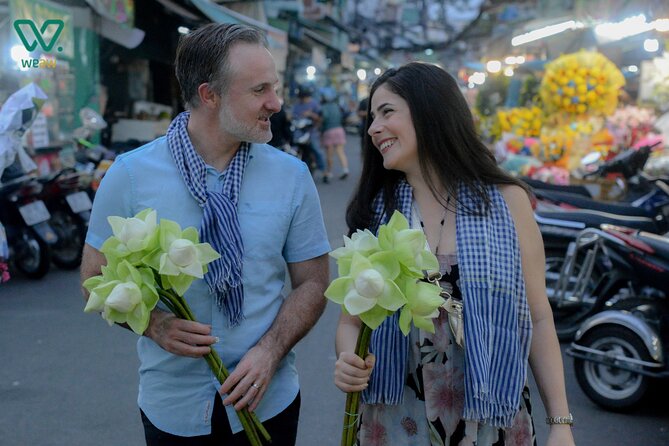
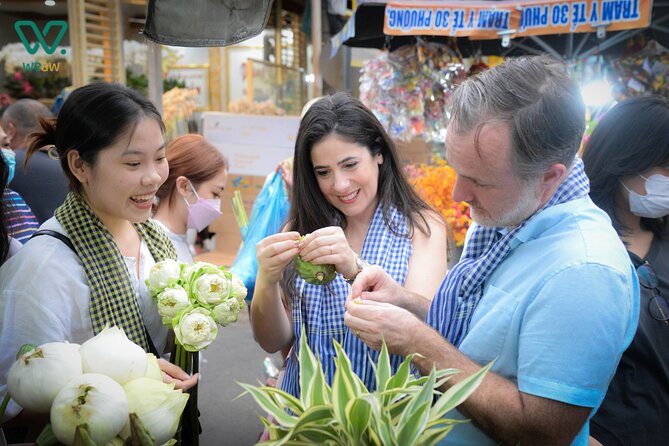
The first stop is the Ho Thi Ky Flower Market, and this is where the lotus stops being a symbol and becomes a living product. You get a close-up look at lotus flowers and you learn how people treat and transform them—both for appearance and for meaning.
What I like about starting in the market is simple: it gives you context. Lotus isn’t just a temple flower. It’s traded, cared for, and handled in ways that make it last long enough to be used for decoration. The tour also explains why the lotus matters in Vietnamese culture—purity and vitality, and the idea of rising from difficult conditions while still blooming.
A practical point: markets can be sensory and busy, even when your guide keeps things organized. Wear comfortable shoes and expect to move at a normal walking pace. If you’re the kind of person who likes to take photos, bring your phone battery charger or a power bank, because you’ll want to capture the flower details.
Also, don’t rush this stop. The best part is watching and listening long enough for the guide’s connections to click—how you move from flower beauty to cultural meaning without it feeling like a lecture.
Stop 2: Quoc Tu Pagoda and the meaning of lotus offerings at night
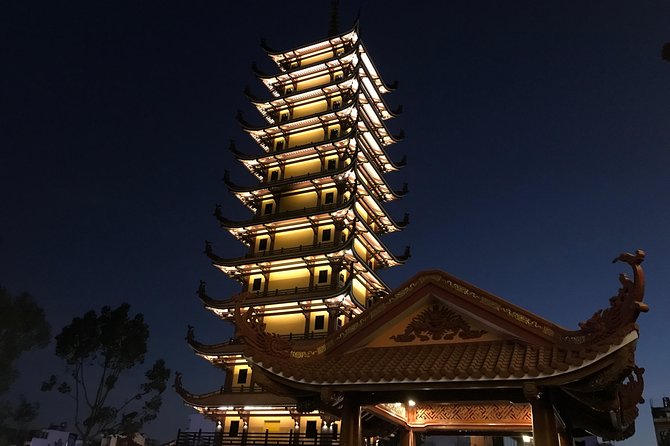
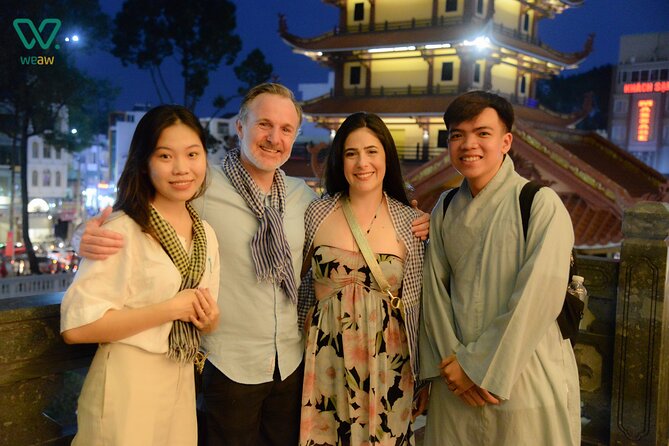
After the market, the tour moves into the evening at Quoc Tu Pagoda. This timing matters. Lotus symbolism hits harder at night because Buddhism and temple spaces naturally slow your body down. You’re not just looking at objects; you’re learning how lotus fits into belief and practice.
You’ll discover the symbolic meanings of lotus in Buddhism and understand why lotus is used as an offering. In Vietnam, the lotus is often framed as an image of spiritual purity—something that grows in muddy water but stays beautiful. That story is central to this whole tour theme, and in a pagoda setting it becomes more than an origin legend.
How to make this stop go smoothly:
- Be respectful with your pace and volume inside the temple areas
- Follow what your guide suggests before taking photos
- Keep a moment to just observe, even if you usually like to fill every second with questions
If you enjoy spirituality but don’t want anything heavy or preachy, this part is a good middle ground. It’s meaningful, but it’s also presented through the lotus as a concrete object—so it stays tangible.
Stop 3: B/S Art Studio with lotus tea, dessert, and folk music
The final leg is at B/S Art Studio, which the experience describes as a special art stop. This is where the tone changes again—from temple reflection into creative calm.
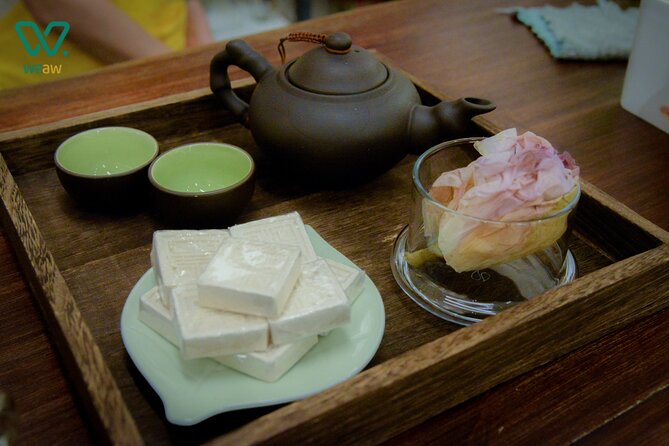
You get lotus tea and dessert, plus live Vietnamese folk music. It’s a nice combination because it lets you connect lotus culture to the arts and music side of Vietnam, not only religion and food. In other words: you’ve now seen lotus in the market, in devotion, and now in a cultural performance setting.
One of the clever touches here is that your senses get a break. Earlier, you’re looking at flowers and navigating spaces. Later, you’re tasting tea and dessert while music plays. Your brain has time to process what you learned.
The tour also mentions a surprise after the trip. That’s not something you should plan around, but it’s the kind of extra that makes a small tour feel more personal. And because it’s private, you’re not waiting for the whole bus of people to finish before the day continues.
- Cu Chi Tunnels Tour from HCM City – Morning or Afternoon★ 5.0 · 15,833 reviews
- From HCM City: Mekong Delta Tour with Sampan Journey★ 4.5 · 13,132 reviews
- Ho Chi Minh City Street Food Tour & Sightseeing By Motorbike★ 5.0 · 9,413 reviews
- HCM: Cu Chi Tunnels-Tapioca Small Group Tour Morning or Afternoon★ 5.0 · 7,485 reviews
- Cu Chi Tunnels and Mekong Delta Signature Tour★ 5.0 · 7,328 reviews
Lotus dinner: what an all-lotus vegetarian meal means
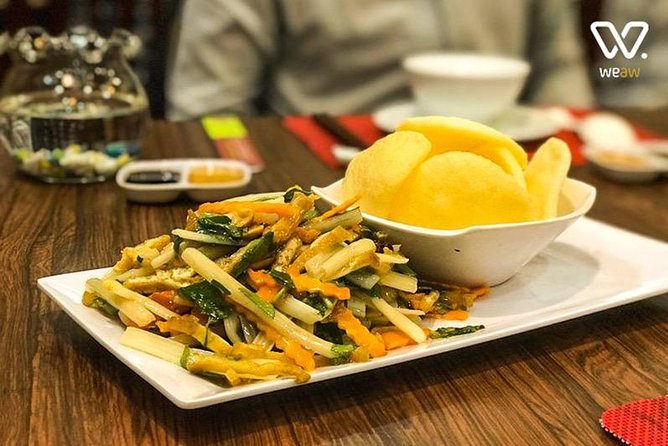
Dinner is a big deal in this experience. It isn’t a generic vegetarian meal with one lotus garnish. The tour states that dinner includes a special meal where all ingredients are made from lotus, including dishes such as lotus rice, lotus salad, and lotus milk.
That’s a very focused culinary concept, and it’s exactly why the tour feels like more than sightseeing. Lotus becomes a flavor language. You get to taste how lotus can be used across different forms—seeds, leaves, and roots—so the symbolism you heard earlier has a direct payoff.
The tour also highlights flavors and uses like lotus seeds in soup, the aroma of lotus leaves in rice, and the cool taste of lotus roots. Even if the exact dish list varies by day, you can expect lotus to be the star ingredient, not a background note.
This dinner structure also tells you something about Vietnamese food culture: plants are not treated as second-class options. Lotus is both beautiful and edible, and the tour leans into that with a meal built around its versatility.
A good tip: eat slowly here. If you’re only used to meat-based meals, an all-lotus vegetarian dinner can feel different at first. Give your palate a few bites before deciding what you think. The point is to notice how lotus can be fragrant, savory, and light rather than heavy.
Finally, the dinner ends up being part of the emotional tone of the evening. In the feedback I’ve seen shared about this experience, people often describe the feeling as warm and family-like—less like a formal restaurant visit and more like sharing an evening meal together.
Price and logistics: why $93 can make sense here
For $93, you’re buying a private experience with multiple real components: private guide and driver, private transportation, bottled water, a welcome gift set, entrance and fees, dinner, and live folk music.
If you tried to replicate this on your own, you’d quickly run into cost and time friction:
- You’d still need a guide to explain lotus meanings in a way that makes sense across market + pagoda + art stop.
- You’d have to coordinate evening timing and transport between locations.
- You’d need a restaurant that clearly offers a lotus-focused meal concept.
So the value here is less about getting a bargain meal and more about getting the whole evening built as one coherent story. You’re paying for the theme to be organized and translated, and you’re paying for the extras that reduce stress.
Practical logistics you’ll be glad about:
- You start at 3:30 pm, which lines up nicely with the market-to-evening rhythm.
- Pickup is offered, and you’ll have a mobile ticket.
- It’s a private tour, meaning only your group participates.
- It’s near public transportation, which can help if you’re staying nearby.
As for weather: the experience notes it requires good weather. If conditions are poor, they’ll offer a different date or a full refund. For a city tour like this, that’s important. A lotus market and outdoor walking won’t feel the same if it’s raining hard.
Who should book (and who should skip)
I’d book this if you want a themed evening that ties together three things people usually treat separately: flowers, religion, and food. If you like learning through stories you can taste and see, this hits well. It’s also a strong choice for couples. The format is not rushed and it gives you conversation time while the guide explains the symbolism.
You might skip it if:
- You’re not interested in lotus at all, or you find the theme too narrow
- Vegetarian meals are a challenge for you
- You dislike temple environments or want a tour that focuses more on general city sightseeing
If you’re on a honeymoon or celebrating something, it can work well too because it’s calm, guided, and memorable. The experience is designed to feel special without being overly formal.
Small tips to make the evening feel effortless
This tour is only about 4.5 hours, but you’ll move through a few different settings. To keep it enjoyable:
- Wear comfortable shoes for market and walking between stops
- Bring a light layer for the evening, especially after the sun lowers
- Plan to take photos early at the flower market; temple areas may require a quieter pace
- Come hungry—because dinner is the payoff
And one small mindset shift: go in thinking of lotus as a thread, not a single attraction. When you connect the flower you saw in the market to the offering at the pagoda and then to the dishes at dinner, the tour feels like one complete evening instead of three unrelated stops.
Should you book Lotus Experience in Ho Chi Minh City?
Yes, if you want a meaningful, organized evening built around one of Vietnam’s most recognizable symbols. The best reasons to book are straightforward: the thoughtful sequence of stops, the clear explanation of lotus meaning, and the fact that dinner isn’t an afterthought—it’s a lotus-focused vegetarian meal with real dishes like lotus rice, lotus salad, and lotus milk. Add live folk music and a relaxed art stop, and you get a well-rounded experience that feels both cultural and fun.
Book it particularly if you like private guides, hate rushed group tours, and would rather spend four hours learning something you’ll remember than ticking off a list.
FAQ
What time does the tour start and how long is it?
The tour starts at 3:30 pm and lasts about 4 hours 30 minutes.
Is pickup included?
Yes. Pickup is offered, and the tour also includes private transportation.
What’s included in the price?
The price includes dinner with lotus-based dishes, all fees and taxes, bottled water, live Vietnamese folk music, a welcome gift set, and private tour guide and driver.
What are the main stops?
The itinerary includes Ho Thi Ky Flower Market, Quoc Tu Pagoda, and B/S Art Studio.
Do I need a mobile ticket or anything special to participate?
You’ll receive a mobile ticket. Confirmation is provided at the time of booking.
What happens if the weather is bad?
The experience requires good weather. If it’s canceled due to poor weather, you’ll be offered a different date or a full refund.
More Tour Reviews in Ho Chi Minh City




Just Reviewed Around Saigon
- Secret walking Food Tour Ho Chi Minh City
★ 5.0 · 3 reviews - Ho Chi Minh City: Secret Cocktail Experience
★ 5.0 · 3 reviews - From Ho Chi Minh city: Vung Tau Beach Private Day Tour
★ 5.0 · 3 reviews - Saigoncholon
★ 3.5 · 3 reviews - Saigon On 2 Wheels
★ 3.5 · 3 reviews - From Ho Chi Minh City: Relax In Mui Ne Beach In 1 Day
★ 4.3 · 3 reviews