REVIEW · MEKONG DELTA DAY TRIPS
Mekong Delta 2-Day Tour: Floating Markets & Cultural Exploration
Floating markets meet village life in two days. I like this tour’s mix of Cai Rang floating market energy with quieter Mekong Delta moments like village bikes and canal rides, and you get real guide time in a small group. I also love the food focus, from tropical fruit tastings and hands-on cooking to honey tea and fresh noodles.
Your main trade-off is expectations and timing. The classic floating-market lifestyle has changed from what you may see in old photos, and the day can feel a bit structured, especially if you’re hoping for unplanned slow wandering or extra detours.
In This Review
- Key things I’d bet you’ll notice right away
- Setting your expectations: what the Mekong Delta feels like on this tour
- How the morning pickup (and the meeting point) affects your day
- Day 1 from Cai Be: Tien River cruising and the Ông Kiệt antique house
- Tan Phong sweet shop, canals, and a lunch you actually learn from
- The bicycle ride and sunset boat return: where the day feels most real
- Day 2 on the Bassac River: Cai Rang floating market at market-time
- Noodles and Khmer culture: Cai Rang’s food logic and Munir Ansay Pagoda
- Cồn Sơn orchard tasting and cake-making workshop: the quieter payoff
- Price and what you truly get for $119
- Who this tour suits best (and who should look elsewhere)
- Small-group comfort and guide quality: the real difference maker
- Should you book this Mekong Delta 2-day tour?
- FAQ
- What time does the tour start in Ho Chi Minh City?
- Is hotel pickup included?
- How many days is the tour?
- What’s included in the price?
- Are dietary requirements accommodated?
- Is the tour suitable for everyone?
Key things I’d bet you’ll notice right away
- Small-group guiding: it’s designed for you to get to know the English-speaking guide well, with listings showing caps at 15 and up to 25 travelers overall.
- Two big river areas: Cai Be first, then Cai Rang on the Bassac River for a different market feel.
- Boat + land blend: you don’t just sit on boats; you also do canals, a family sweet stop, and a short bicycle ride.
- Food that’s part of the culture: fruit, honey tea, fresh noodles, plus a cooking class and spring roll skills.
- Khmer heritage in the Delta: Munir Ansay Pagoda adds a different religious and cultural layer.
- Cồn Sơn focus on local work: crafts, cake-making instruction, and orchard tasting with seasonal fruit options.
Sampans, orchards and coconut candy, more delta days

Setting your expectations: what the Mekong Delta feels like on this tour
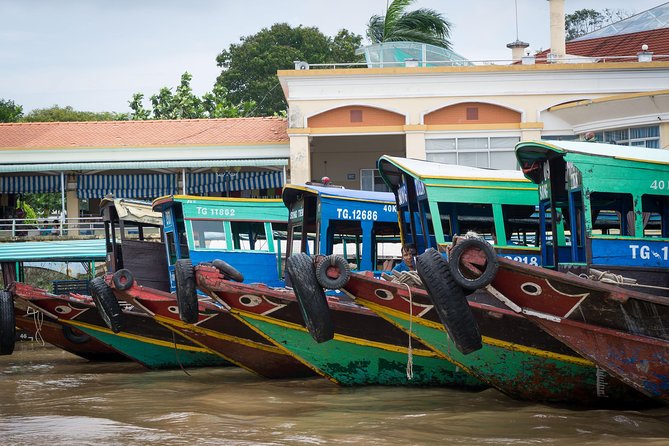
This Mekong Delta trip runs out of Ho Chi Minh City and is built for people who want a tight, high-value taste of the region without the hassle of figuring out boats and transfers alone. The big idea is simple: you’ll see how everyday life connects to the waterways, not just how markets look from a distance.
One key note from the tour theme: parts of the traditional floating market lifestyle have diminished as the region modernized. That doesn’t make the day a letdown. It just means you should expect more “current river life” than a fully frozen-in-time movie set. The best way to enjoy it is to watch what’s still happening—how goods move, how families work, and how the landscape feeds daily routines.
How the morning pickup (and the meeting point) affects your day
Your tour starts at 7:30am at the meeting point: 112 Đ. Trần Hưng Đạo, Phường Phạm Ngũ Lão, Quận 1, Hồ Chí Minh, Vietnam. The tour also lists pickup as offered, but it’s not guaranteed for every hotel location.
If your hotel is outside District 1 (or in an alley where traffic rules get strict), you may need to arrange your own way to the meeting point or pay an extra pickup surcharge. Also, the return time back to Ho Chi Minh City can shift with traffic, so don’t plan a tight same-day flight or appointment.
This matters because a smooth start sets the tone for the whole two days. If you show up early and relaxed, you’ll handle the boat rides, the mid-day stops, and the final transfer without feeling rushed.
Day 1 from Cai Be: Tien River cruising and the Ông Kiệt antique house
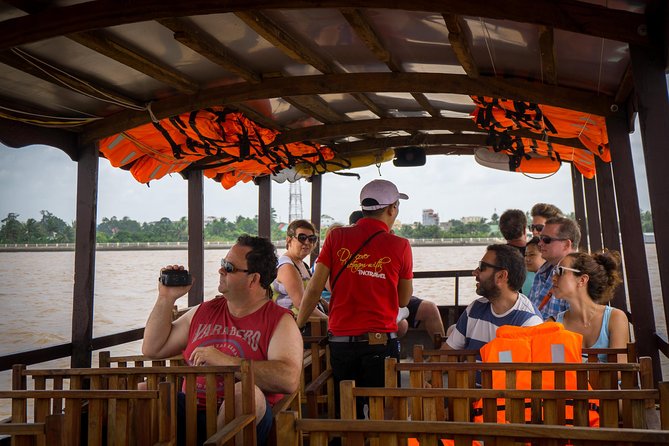
Day 1 starts with a ride from Ho Chi Minh City to Cai Be. Once you get into the Cai Be area, the day becomes a mix of river motion and slow cultural viewing. There’s a boat segment on the Tien River where you’ll watch how waterway commerce has evolved over time.
On the river, the vibe is practical, not staged. You’ll see fruit orchards along the banks and get that “this region runs on the water” feeling. Even if you’ve seen floating markets in photos, this part is less about spectacle and more about the setting: trees, canals, and daily activity that explain why people live the way they do.
Then you visit Nhà cổ Ông Kiệt, a preserved antique house that’s famous for its architecture and family artifacts. The home blends Vietnamese, Chinese, and French colonial influences—plus clever design meant for heat and floods. You’ll get to see rooms arranged around central courtyards for airflow, along with family shrines and heirlooms that point to merchant prosperity in the delta’s past.
Practical note: this stop is brief (about 30 minutes), so listen closely. A shorter visit makes it even more important to ask questions if something catches your eye.
Tan Phong sweet shop, canals, and a lunch you actually learn from
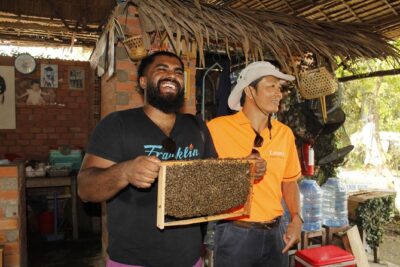
After the antique house, the day shifts into food and everyday craft. In Tan Phong, you stop at a family-run confectionery where coconut sweets and rice popcorn get made the traditional way. The description promises you’ll taste seasonal tropical fruit and honey tea, and it makes sense that the sweet stops are paired with snackable tastings rather than a full meal.
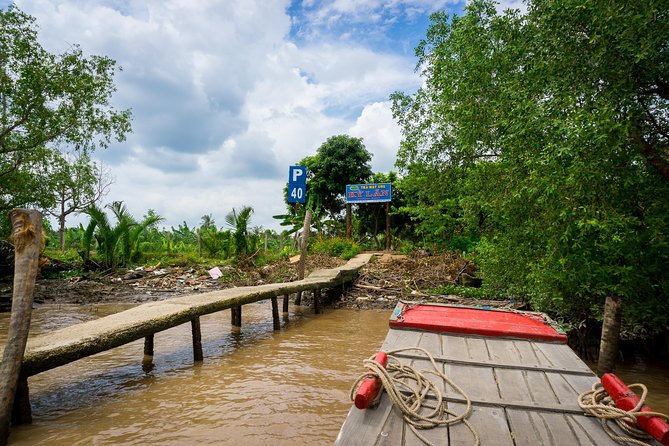
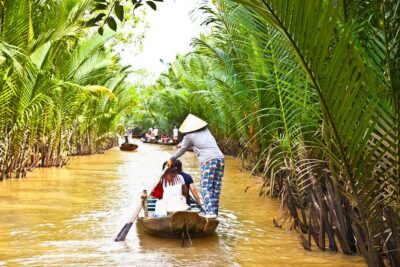
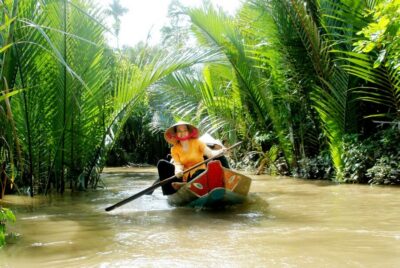
Next comes a calmer stretch: narrow canals with coconut palms and water lilies, traveled at a leisure pace. This isn’t the loud market part of the Mekong Delta; it’s the “how people move through their workday” part. You’ll see islands and orchards from the water in a way that feels slower than the floating market scene.
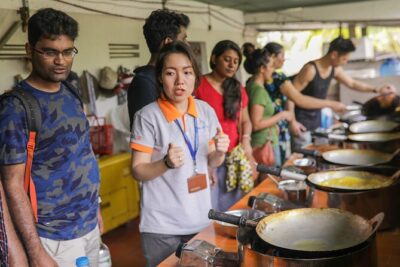
Then you reach the biggest “do something” moment of Day 1: a cooking class with lunch. You’ll work with local culinary artisans to learn spring roll creation and rice paper skills, and you’ll hear about herbs and spices used in local recipes. It’s not only about eating. The value is that you get to understand why the flavors work in a river-and-garden food system, where fresh herbs and seasonal fruit are always nearby.
The meal itself is served in a garden setting, with tropical fruits and local ingredients at the center. It’s a good reset before the more active segment later in the afternoon.
Dawn boats and bowls of noodles at Cai Rang
- From HCM: Mekong Delta & Cai Rang Floating Market 2-Day Tour★ 4.5 · 1,183 reviews
- Cai Rang Floating Market & Mekong Delta 2-Day Tour from HCM City★ 5.0 · 942 reviews
- Small-group Mekong Floating Market Day Trip from Ho Chi Minh City★ 5.0 · 886 reviews
- Mekong Delta & Cai Rang Floating Market 2-Day Tour from HCMC★ 5.0 · 813 reviews
- 1-Day Mekong Delta Cai Rang Floating Market-Ancient House-Pancake★ 5.0 · 653 reviews
The bicycle ride and sunset boat return: where the day feels most real
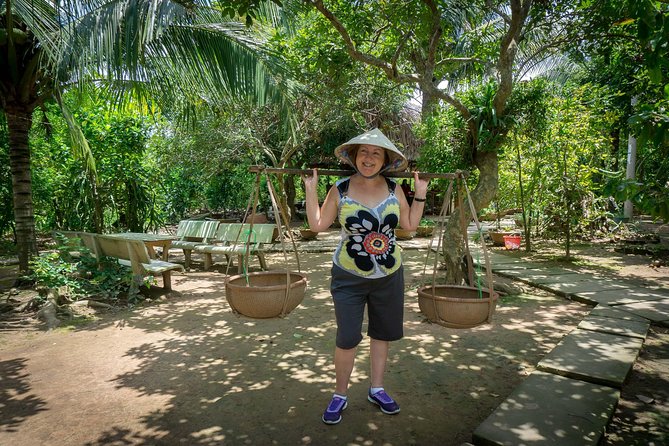
After lunch, you get a bicycle ride through countryside dirt trails around the island. The plan includes palms, rice paddies, fruit groves, and lesser-seen villages. This is the part where the tour starts to feel less like a checklist and more like a guided walk through someone’s normal life.
The bicycle segment is short, but it’s still meaningful because it changes your angle. From a bike, you notice small things you wouldn’t from inside a vehicle—paths, garden edges, and how homes sit near working land. You also get those brief moments of human connection that don’t require language skills to understand: greetings, smiles, and nods that make the area feel lived-in rather than visited.
As the day winds down, you take a tranquil boat ride back toward Cai Be for the transfer to Can Tho. Hotel check-in comes next, so you’ll have time to relax before the main floating market day. Dinner is on you at this point, so plan to keep that evening flexible.
Day 2 on the Bassac River: Cai Rang floating market at market-time
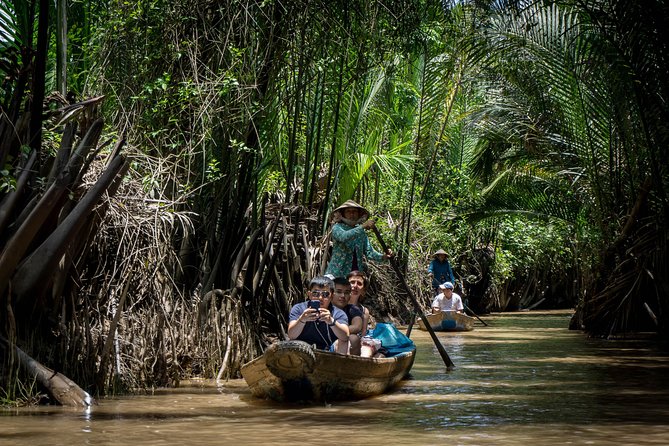
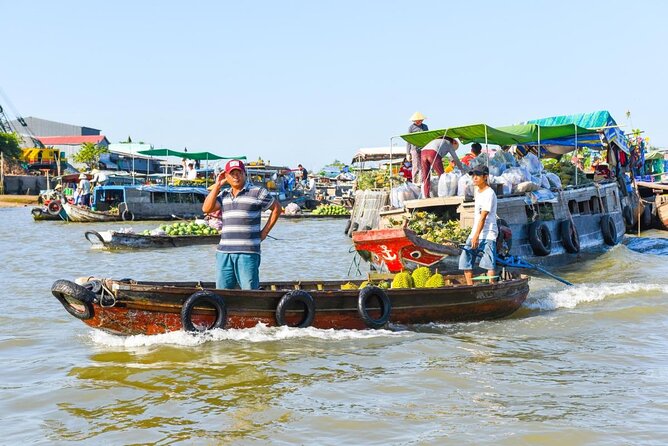
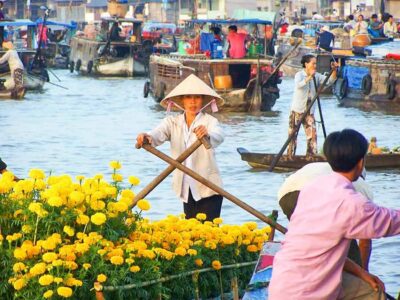
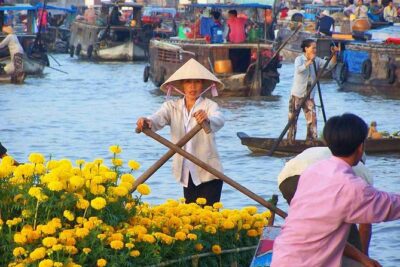
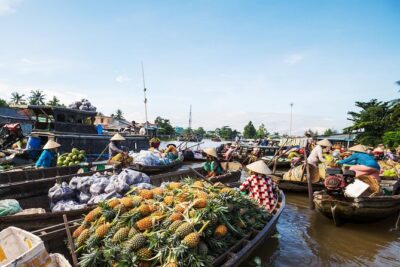
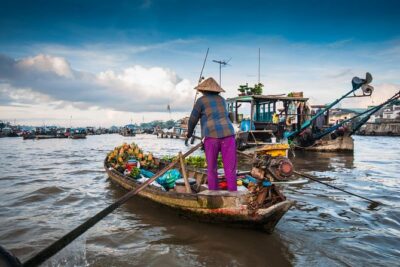
Day 2 begins after breakfast, then moves to the Bassac River for a boat excursion toward the Cai Rang Floating Market. This part is timed so you experience the market when boats are active and the river feels awake. Goods are displayed on vessels with vendor calls and sample poles announcing wares, so it’s loud enough to feel alive without being chaotic.
Cai Rang is the headline for a reason. It’s where the Mekong Delta’s river economy looks the most visible. You’ll see everything from produce to practical household items, traded right on the water. Even with modern changes, there’s still enough everyday rhythm here to make it feel grounded.
The best approach is to treat this as a visual and conversational market, not a shopping sprint. Ask your guide what each item means in daily life, and watch the way vendors interact with passing boats. That’s where the cultural value is.
Noodles and Khmer culture: Cai Rang’s food logic and Munir Ansay Pagoda
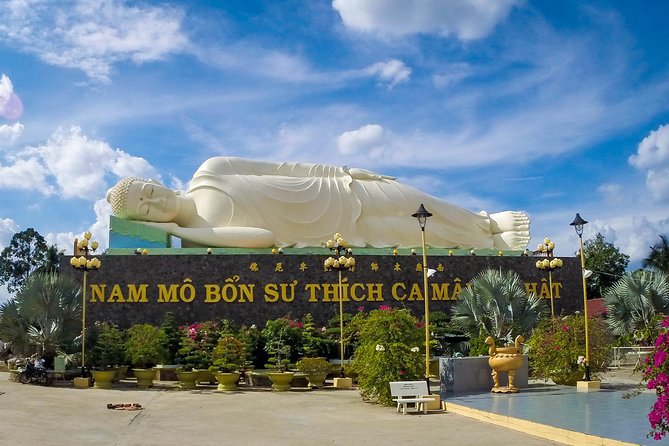
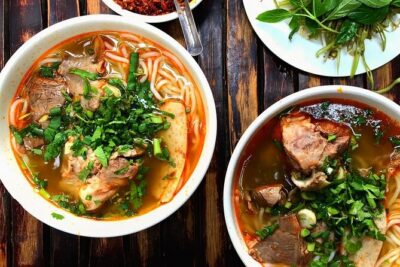
Right after the floating market, you visit a traditional noodle factory. This stop explains how rice noodles go from raw ingredients to finished product using older methods. It’s a nice follow-up to the market, because it connects what you see being sold to how it’s made.
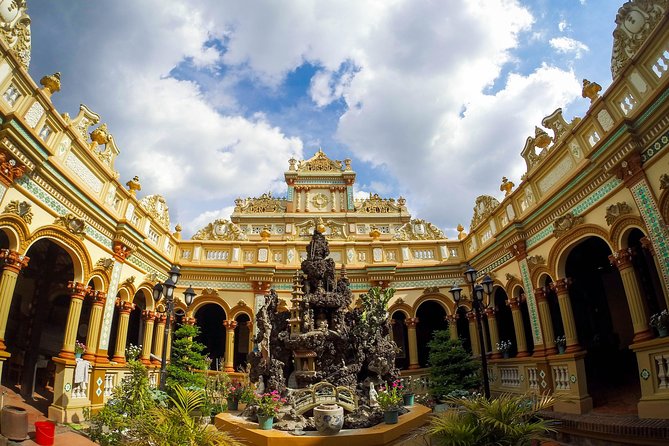
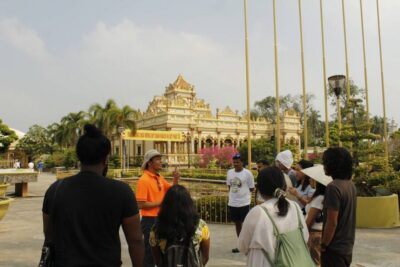
Then you shift away from river commerce and toward spiritual and cultural heritage at Munir Ansay Pagoda. This is a Khmer Buddhist temple in the Mekong Delta, and its standout feature is the Khmer artistry—murals telling Buddhist tales, columns, and detailed carvings. The guide helps connect the art to community importance and local religious practice.
This temple stop is about perspective. It reminds you the Delta isn’t only about trade and fruit. It’s also about belief systems, ethnic influences, and the way communities build sacred spaces in a working landscape. The visit is about 30 minutes, so go in ready to look closely at the carvings and murals.
Cồn Sơn orchard tasting and cake-making workshop: the quieter payoff
After the pagoda, your Day 2 continues with a boat journey to Cồn Sơn. This portion is described as community-led and eco-conscious, with crafts maintained through family initiatives using sustainable methods. You’ll also have a workshop where you learn Mekong Delta cake-making.
Seasonal fruit tasting is another highlight. Depending on what’s available, you might try fruits such as durian, mangosteen, longan, and rambutan. The description also points to environmentally sound growing practices, including avoiding harmful chemicals and conserving water resources. Even if you don’t memorize every farming detail, you’ll come away with a clearer understanding of how orchard work ties to local economies and local diets.
If you’re the type who wants the tour to end on something calm rather than another crowded market scene, this is where it happens. Cồn Sơn slows you down again after the busier Cai Rang segment.
Price and what you truly get for $119
At $119 per person for a two-day Mekong Delta program, the biggest value isn’t just the floating market. It’s the package effect: boats, a guide, basic shared accommodation, and meals all rolled into one ticket.
Here’s what’s included according to the trip details:
- Breakfast
- Accommodation for twin or double room share (basic)
- Air-conditioned vehicle
- Boat trip segments
- English-speaking guide
- Mineral water
- Lunch (2)
That turns the cost into something easier to judge. If you had to separately pay for boat transport, a guided market visit, and a one-night stay, the pricing would start to feel less like a bargain and more like normal tour math. As a result, this is a good fit if you want structure and comfort more than independent exploration.
The main “cost surprises” to watch for are not in the base price. Pickup or transfer for hotels outside District 1 can add a surcharge, and there’s an extra charge listed for specific high-demand dates. Also, meals not mentioned are on you, especially dinner after arrival in Can Tho.
Who this tour suits best (and who should look elsewhere)
This is a strong match if you want:
- A guided introduction to Cai Rang and Cai Be in only two days
- Food learning you can use again, especially spring roll and noodle context
- Small-group style guiding so you can ask questions
- A mix of river views, cultural stops, and hands-on workshop time
It may be less ideal if:
- You expect a fully authentic, slow-life floating market with no timing at all. The day is structured, and a couple segments can feel like they’re moving fast, especially when you only have limited stop time.
- You’re sensitive to physical activity. There’s a short bicycle ride, and the trip is not listed as available for handicapped travelers or anyone with heart problems.
- You want maximum flexibility on pickup. The meeting point is fixed, and hotel pickup depends on location and traffic rules.
Small-group comfort and guide quality: the real difference maker
The trip’s design keeps group size in mind. You’ll see notes that the tour is capped at 15 people, and it also states a maximum of 25 travelers. Either way, the intent is clear: you shouldn’t feel like a nameless face in a crowd.
Guide quality seems to be the deciding factor for many people. Names like Slim and Tom show up in the guide ecosystem for this style of route, and the consistent thread is good English and clear explanations of what you’re seeing—history, daily work, and the “why” behind each stop. If you enjoy learning while you move, this is the kind of tour where you benefit from asking questions instead of just photographing.
Should you book this Mekong Delta 2-day tour?
I’d book it if your goal is a well-organized sampler of the Mekong Delta that still leaves room for real connections. Cai Rang gives you the market intensity, Cai Be and the Tien River cruising give you the context, and the temple plus Cồn Sơn stops keep the trip from becoming only about shopping and boats.
I wouldn’t book it if your top priority is total unstructured freedom, or if you’re very particular about pickup arrangements from specific neighborhoods. This is a guided circuit, so plan to meet at the stated start point if pickup doesn’t work smoothly for your exact hotel.
Final check before you commit:
- Confirm whether pickup applies to your hotel area in District 1
- Plan for a structured two-day schedule and stop times
- Decide if a short bicycle ride and workshop stops fit your comfort level
If that all matches what you want, this is a solid value way to see why people build their lives around the Delta’s waterways.
FAQ
What time does the tour start in Ho Chi Minh City?
It starts at 7:30am. The meeting point is 112 Đ. Trần Hưng Đạo, Phường Phạm Ngũ Lão, Quận 1, Hồ Chí Minh, Vietnam.
Is hotel pickup included?
Pickup is offered, but it depends on your hotel location. If your hotel is outside District 1, or in an alley where pickup is restricted, you may need extra support or arrange your own way to the meeting point.
How many days is the tour?
The tour is 2 days.
What’s included in the price?
Included items are breakfast, basic twin or double shared accommodation, air-conditioned vehicle, boat trips, an English-speaking guide, mineral water, and lunch twice.
Are dietary requirements accommodated?
You should advise any specific dietary requirements at the time of booking.
Is the tour suitable for everyone?
The tour notes it is not available for handicapped travelers or anyone with heart problems. Children must be accompanied by an adult, and child pricing rules apply when sharing with paying adults.
More Tour Reviews in Ho Chi Minh City
Dawn at the Cai Rang Floating Market
More Days Down the Mekong
Just Reviewed Around Saigon
- Secret walking Food Tour Ho Chi Minh City
★ 5.0 · 3 reviews - Ho Chi Minh City: Secret Cocktail Experience
★ 5.0 · 3 reviews - From Ho Chi Minh city: Vung Tau Beach Private Day Tour
★ 5.0 · 3 reviews - Saigoncholon
★ 3.5 · 3 reviews - Saigon On 2 Wheels
★ 3.5 · 3 reviews - From Ho Chi Minh City: Relax In Mui Ne Beach In 1 Day
★ 4.3 · 3 reviews
Mekong Delta Day Trips, compared.
 ★ 4.5Mekong Delta Tour with Sampan JourneyFrom $1613,132 reviews
 ★ 4.7Cu Chi Tunnels & Mekong Delta with Coconut Village TourFrom $3511,836 reviews
 ★ 5.0Cu Chi Tunnels and Mekong Delta Signature TourFrom $337,328 reviews
 ★ 4.5Mekong Delta Guided Tour from Ho Chi Minh CityFrom $187,192 reviews
 ★ 5.0Cu Chi Tunnels & Mekong Delta Tour with VIP Limousine TransferFrom $567,052 reviews
 ★ 5.0Cu Chi Tunnels and Mekong Delta Full Day Tour – Max 12From $436,257 reviews
 ★ 4.8Full-Day Cu Chi Tunnels and Mekong Delta TourFrom $444,616 reviews
 ★ 4.7Mekong Delta, My Tho & Ben Tre Coconut VillageFrom $163,304 reviews
Browse the lists this tour appears in