
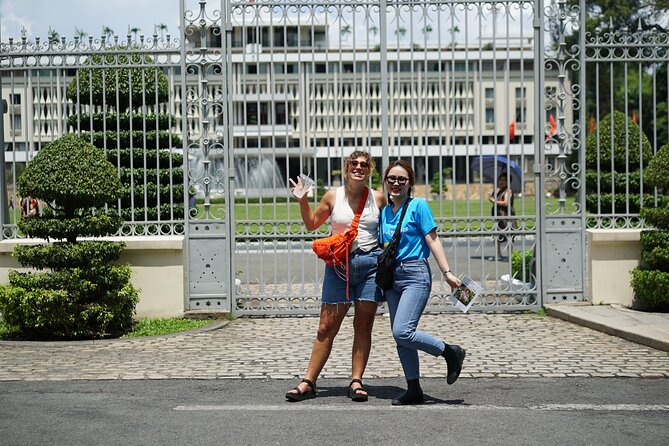
REVIEW · HO CHI MINH CITY WALKING TOURS
The Hidden Gems & Insightful Stories of Saigon Walking Tour
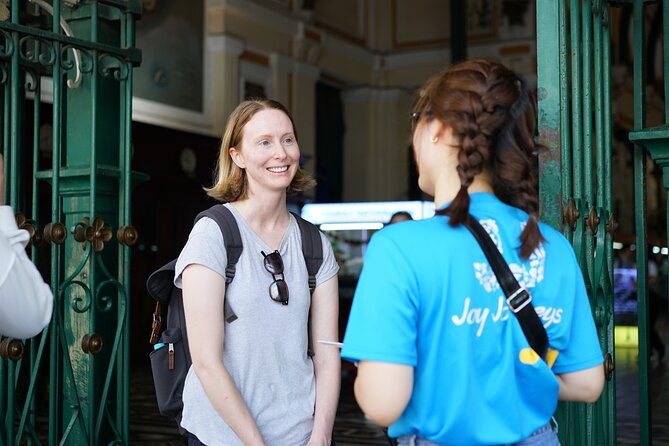
History gets personal on a small-group Saigon walk. This Saigon Walking Tour by Joy Journeys puts you with university-student guides (max 6) who steer the conversation with stories, not just facts, and you can ask questions as you go. It’s a nice change from the usual “listen and move on” format.
I like the practical value built into the price: bottled water plus Ca Phe Sua Da coffee (or tea) are included, and you don’t have to sort out the Secret Weapons Cellar entry. For $14, it feels like you’re buying time with good local context and a few helpful extras.
The main thing to consider is weather. The tour requires good weather, and it’s still a real walking morning/afternoon—about 3 hours 15 minutes in central Ho Chi Minh City.
In This Review
- Key highlights that make this Saigon walk worth it
- Why Joy Journeys keeps this walk small (and makes it better)
- The real star: student guides telling Saigon like a local
- Stop 1: Notre-Dame Cathedral Basilica of Saigon in plain sight
- Stop 2: Saigon Central Post Office and why colonial buildings feel different up close
- Stop 3: Vincom Center and The Last Helicopter sculpture
- Stop 4: Independence Palace (Reunification Palace) and the shock of timelines
- Stop 5: Thich Quang Duc Monument and respectful remembering
- Stop 6: Secret Weapons Cellar—underground war logic, explained on foot
- Time, pacing, and what to expect from the walk
- Price and value: what $14 buys you in Saigon
- Who this tour is best for (and who might want something else)
- Should you book this Saigon walking tour with Joy Journeys?
- FAQ
- How long is the Saigon walking tour?
- How much does the tour cost?
- How big is the group?
- What’s included in the price?
- Do any stops have free admission?
- Where do I meet, and where does it end?
Key highlights that make this Saigon walk worth it
- Up to 6 people: small enough for real conversation, not a lecture.
- University guides with energy: enthusiastic locals sharing personal angles on everyday Saigon.
- Ca Phe Sua Da included: coffee or tea is part of the experience, not an afterthought.
- Big landmarks, explained in human terms: Catholic, colonial, war-era, and Buddhist memory in one route.
- Secret Weapons Cellar is included: a longer stop with the war underground story handled for you.
- Mobile ticket + group discounts: useful if you’re booking with friends.
On foot through the old quarters and alleys




Why Joy Journeys keeps this walk small (and makes it better)
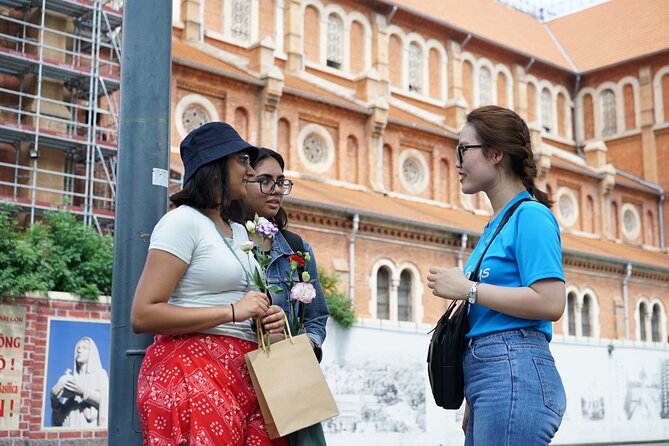
This tour works because it stays intentionally tight. With a maximum 6 travelers, you’re more likely to get your questions answered, and less likely to get lost in the group chat noise. That matters in Saigon, where history, religion, and modern life overlap in the same few blocks.
Joy Journeys is also set up for easy logistics: you get a mobile ticket, and the activity lists group discounts. Add the included bottled water, and the whole experience feels designed for walking—rather than checking boxes.
There’s one more number to keep in mind. The activity info also notes a maximum of 20 travelers, which suggests the broader operation can involve more people at once. In practice, the experience you’re paying for is built around that small-group feel.
The real star: student guides telling Saigon like a local

The guides are university students who are preparing to become professional tour guides. That gives the tour a certain “student energy” you can feel: they’re excited, they’re not jaded, and they don’t just recite a timeline.
In the feedback, names like Lucy, Lily, Tyson, and Andrea come up as guides who were especially kind and time-focused. More important than the name is the pattern: people appreciated that the explanations felt personal and meaningful, and that the guide actually wanted you to understand—not just “get through” the route.
What you’ll enjoy most is the format of conversation. You can ask why something matters, what you should notice, and what locals do with the space today. That’s the difference between learning history as dates and learning it as lived experience.
Stop 1: Notre-Dame Cathedral Basilica of Saigon in plain sight
You start at the Notre-Dame Cathedral Basilica of Saigon, right in the heart of District 1. It’s a Catholic cathedral built in the late 19th century, and the location makes it an easy win for getting your bearings fast—without a long ride first.
What makes this stop worth more than a photo is how a local guide can frame the building’s era. It’s part of the French colonial story, but it’s also an active place of worship. If you slow down for a few minutes and look carefully, you’ll understand why the city holds onto landmarks like this even as everything around them changes.
Practical tip: dress respectfully. Even when a site feels tourist-friendly, it’s still a functioning religious space.
Stop 2: Saigon Central Post Office and why colonial buildings feel different up close
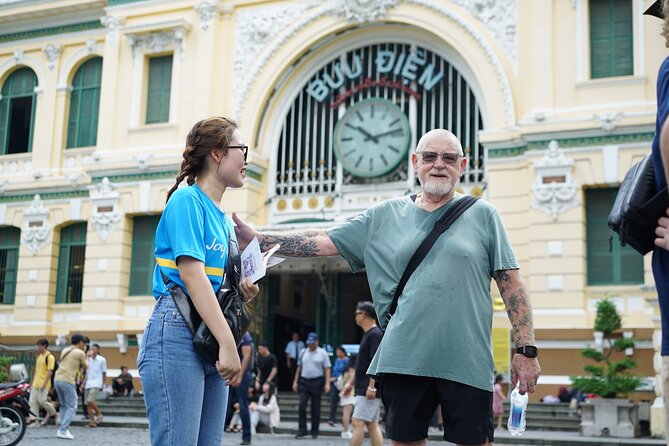
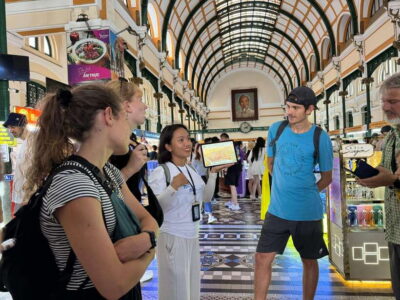
Next you’ll head to the Saigon Central Post Office. The building is historic, built in the late 19th century during the French colonial period, and it’s listed with free admission tickets on this route.
This stop tends to work well in a walking tour because you’re not rushing through. A good guide helps you notice the building’s design choices and how the city’s layers stack together. You’ll feel that contrast: colonial-era architecture sitting in a fast-moving modern metropolis.
If you like travel that teaches you how to look, this is a solid moment. Don’t just pass it. Take a few minutes to orient yourself and absorb the scale.
A couple more Saigon streets to cover on foot
- Ho Chi Minh City: Super Niche Walking Street Food Tour★ 5.0 · 438 reviews
- Ho Chi Minh City: Private Street Food Evening Walking Tour★ 5.0 · 436 reviews
- Ho Chi Minh: Original Walking Street Food Tour with Foodies★ 5.0 · 379 reviews
- Ho Chi Minh City: Walking Tour with Local Guide★ 4.8 · 363 reviews
- Ho Chi Minh City private walking tours with young local volunteers★ 5.0 · 326 reviews
Stop 3: Vincom Center and The Last Helicopter sculpture
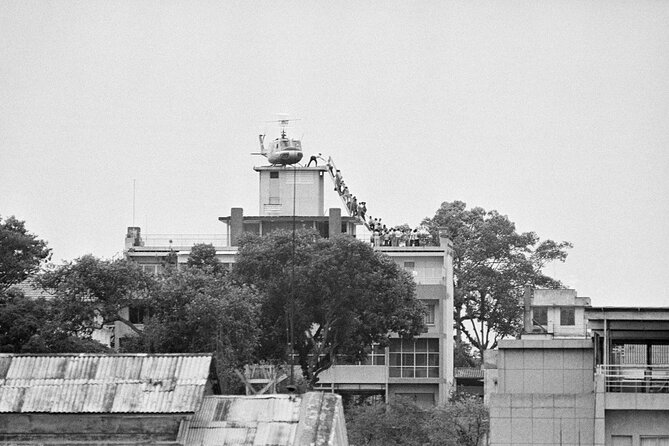
Then the route shifts into a war-memory symbol at Vincom Center. Here you see The Last Helicopter sculpture, which commemorates the end of the Vietnam War. The sculpture depicts a Huey helicopter taking off—an image that’s short, clear, and heavy with meaning.
This is one of those stops where context changes everything. On your own, you might treat it as art or a statue you walk past. With a guide, you’ll connect it to the broader war story and how Saigon remembers events in public spaces.
It’s also a relief to have a shorter pause here (about 20 minutes). If the first two stops made you think, this one helps you feel the emotional weight before you move into larger official sites.
Stop 4: Independence Palace (Reunification Palace) and the shock of timelines
The next big one is Independence Palace, also known as the Reunification Palace. It was built in the 1960s and served as the home and workplace of the President of South Vietnam.
This is where a walking tour format pays off. At most sites like this, you either get a long museum-style lecture or you skim facts on a plaque. Here, you can keep moving and still get the story attached to the place. You’ll get help placing the building in time and understanding why the same walls can mean different things depending on the era.
Practical note: this is a stop that invites questions—about what you’re seeing, why rooms and corridors matter, and how political events shaped everyday space.
Stop 5: Thich Quang Duc Monument and respectful remembering
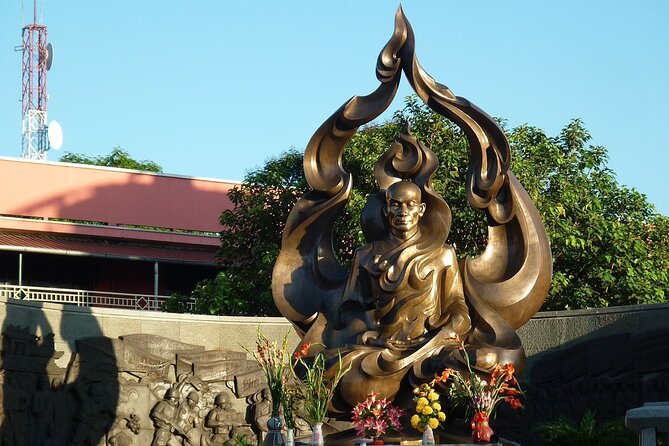
From palace walls, you move into memory with the Venerable Thich Quang Duc Monument. The statue commemorates Thich Quang Duc, a Buddhist monk who set himself on fire in 1963 as a protest that the monument memorializes.
This isn’t just another “see it, move on” stop. A good guide helps you approach the site with the right tone—serious, respectful, and focused on meaning. If you’re in a reflective mood, this is one of the stops that can linger in your head after the tour ends.
Tip: be mindful with photos and keep the pace steady. This is remembrance, not a selfie wall.
Stop 6: Secret Weapons Cellar—underground war logic, explained on foot
The final and longest stop is the Secret Weapons Cellar, with entry included. This set of tunnels was originally built by the Viet Cong during the Vietnam War. They were used as a base for guerrilla warfare and as a way to transport supplies and weapons undetected by American and South Vietnamese forces.
You’ll likely spend around 45 minutes underground, and that timing matters. The cellar is the kind of site where you need a bit of structure. If you rush, you’ll miss the logic of the place—how the space was designed for survival and movement under pressure.
What I’d look for here is the how-and-why, not just the what. A guide can connect the tunnels to the broader strategy of the war, and help you understand why secrecy and concealment weren’t abstract concepts. They were physical and practical.
If you have any interest in conflict history, this is the part that makes the tour feel complete.
Time, pacing, and what to expect from the walk
This tour runs about 3 hours 15 minutes. The route is mostly central Ho Chi Minh City, so you’re on streets with plenty of foot traffic and heat in many seasons. The tour also explicitly requires good weather, which tells you the pacing depends on it.
Plan for:
- Comfortable shoes that can handle lots of city walking
- Sun protection (hat, sunscreen), especially on the cathedral/post office stretch
- A calm approach at the memorial-type stops, where the guide may slow down for meaning
Also note that most people can participate, and the activity lists service animals allowed. Still, it’s smart to consider your own comfort with extended walking and standing.
Price and value: what $14 buys you in Saigon
At $14 per person, the biggest value isn’t just the sights—it’s the package and the guidance style.
You get:
- Bottled water
- Ca Phe Sua Da (or tea)
- All fees and taxes
- Secret Weapons Cellar included
And two of the early landmark stops are listed with free admission tickets (Notre-Dame Cathedral Basilica of Saigon and the Saigon Central Post Office). Even if you’d pay for a couple of these things separately, the included items and the paid entry for the cellar make the total feel more even.
In other words: you’re paying for time with a guide who can connect the places, plus small but real comforts that keep you from feeling like you’re “on your own” the whole way.
Who this tour is best for (and who might want something else)
This Saigon Walking Tour fits best if you want:
- A smaller group experience where you can ask questions
- Local context with a human voice, delivered by student guides
- A route that moves across religion, colonial-era architecture, war memory, and modern city life
It’s also a good option if you don’t want to spend your day hopping between unrelated stops by yourself. The flow works because the guide gives you a story thread.
If you only want hard dates and names with minimal conversation, you may prefer a more traditional lecture-style tour. But if you want to connect the dots through real explanations and conversation, this is the better match.
Should you book this Saigon walking tour with Joy Journeys?
I’d book it if you want a small-group Saigon experience that actually talks back—through student-guides who share personal perspectives and invite questions. The included water and Ca Phe Sua Da make the price feel fair, and the Secret Weapons Cellar stop is the kind of add-on that many standalone tours charge extra for.
Skip it if you’re heat-sensitive, short on time for walking, or you prefer long museum-style explanations without the back-and-forth. Since the tour needs good weather, check conditions before you commit.
If your goal is to leave Ho Chi Minh City with a clearer sense of how different eras live side by side, this route does that well.
FAQ
How long is the Saigon walking tour?
It’s approximately 3 hours 15 minutes.
How much does the tour cost?
The price is $14.00 per person.
How big is the group?
The tour is described as having a maximum of 6 travelers, and the activity info also lists a maximum of 20 travelers.
What’s included in the price?
Included items are bottled water, all fees and taxes, and a cup of Vietnamese coffee (Ca Phe Sua Da) and/or tea. Entry for the Secret Weapons Cellar is included as well.
Do any stops have free admission?
Notre-Dame Cathedral Basilica of Saigon and the Saigon Central Post Office are listed with free admission tickets.
Where do I meet, and where does it end?
You meet at Joy Journeys, 30A Hồ Hảo Hớn Street, Quận 1, Ho Chi Minh City, and the activity ends back at the meeting point.
If you want, tell me your travel month and your interests (war history, architecture, religion, food), and I’ll help you decide if this exact route fits your day plan.
More Tours in Ho Chi Minh City



More Tour Reviews in Ho Chi Minh City
Saigon on Foot, Continued
Just Reviewed Around Saigon
- Secret walking Food Tour Ho Chi Minh City
★ 5.0 · 3 reviews - Ho Chi Minh City: Secret Cocktail Experience
★ 5.0 · 3 reviews - From Ho Chi Minh city: Vung Tau Beach Private Day Tour
★ 5.0 · 3 reviews - Saigoncholon
★ 3.5 · 3 reviews - Saigon On 2 Wheels
★ 3.5 · 3 reviews - From Ho Chi Minh City: Relax In Mui Ne Beach In 1 Day
★ 4.3 · 3 reviews
Ho Chi Minh City Walking Tours, compared.
 ★ 5.0Private Street Food Evening Walking Tour in Ho Chi Minh CityFrom $493,175 reviews
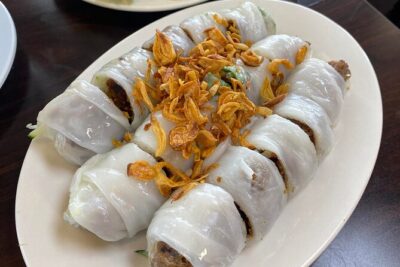 ★ 5.0Super Niche Walking Street Food Tour in Ho Chi Minh CityFrom $291,636 reviews
 ★ 5.0Saigon Night Bites on Foot: Local Vendors, Stories & Sweet FinishFrom $29701 reviews
 ★ 5.0Walking Food Tour with 13 TastingsFrom $27469 reviews
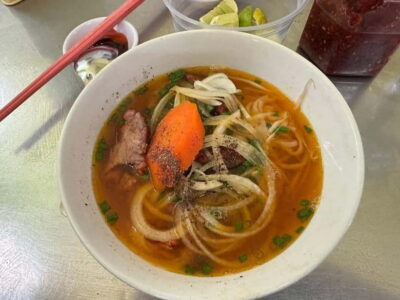 ★ 5.0Super Niche Walking Street Food TourFrom $28438 reviews
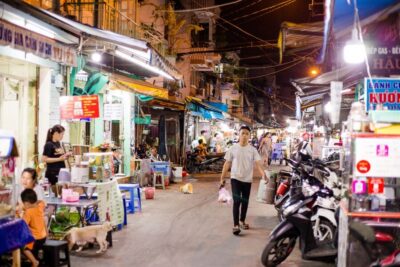 ★ 5.0Private Street Food Evening Walking TourFrom $49436 reviews
 ★ 5.0Original Walking Street Food Tour with FoodiesFrom $28379 reviews
 ★ 4.8Walking Tour with Local GuideFrom $3363 reviews
Browse the lists this tour appears in