
REVIEW · SAIGON
Using Medium Format film camera to discover Saigon
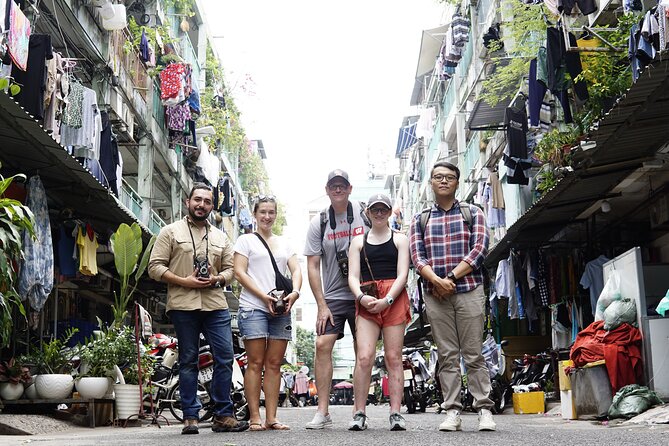
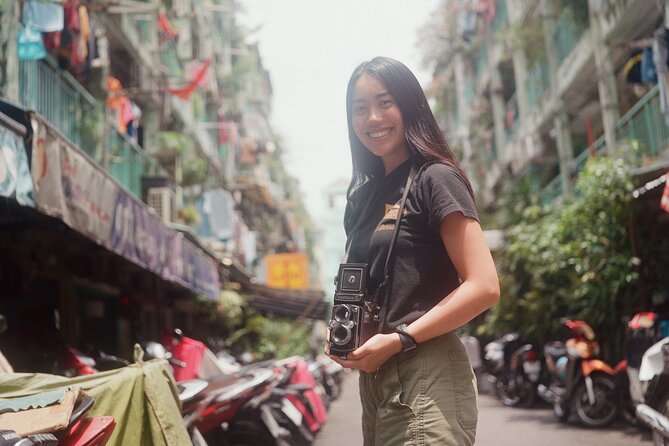
Saigon through the viewfinder changes everything. This 3 to 4 hour analog photography walk turns the city into a slower, more intentional photo scavenger hunt, with help from Bui Hoang Tu. You start with a TLR camera and one roll of B&W medium format film, then use that limitation to notice street life you would normally miss.
I especially like two parts: the first stop for coffee at a 90-year-old shop, where you pause like a local instead of rushing for the next landmark. I also like the focus on real street interaction—your guide acts as a translator, so you can break the ice with people in alley market areas.
One possible drawback: since you’re working with one roll, you have fewer shots and you’ll need patience. If you want lots of photos fast for social media, this kind of tour can feel slow.
In This Review
- Key moments worth looking forward to
- Analog Photography in Saigon: Medium-Format TLR and One B&W Roll
- Coffee Culture and the 1968 Photo Stop
- Alley Markets and a Hidden Old Apartment: Shooting on Foot
- Translator Help and Local Connections Beyond the Usual Tourist Wall
- Price and Included Gear: What $148.27 Actually Covers
- Practical Shooting Tips for Limited Frames in Black and White
- Who This Tour Suits (and who should skip it)
- Should You Book This Medium-Format Saigon Photo Experience?
- FAQ
- How long is the medium format film camera experience in Ho Chi Minh City?
- What camera and film are included?
- Is coffee included in the tour price?
- Where does the tour start and where does it end?
- Do I need my own transportation to join the tour?
- Will I have help communicating with locals?
- What happens if the weather is bad?
- Can I cancel for a full refund?
Key moments worth looking forward to
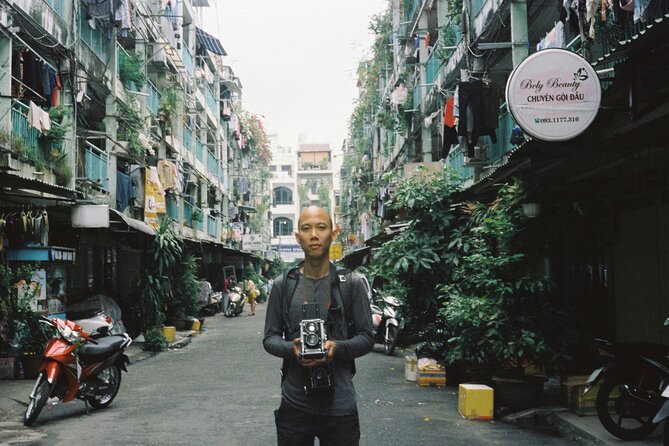
- Medium-format TLR camera + one roll of black-and-white film for hands-on practice
- Coffee at a 90-year-old shop before you even start photographing
- A stop connected to a 1968 building in Ho Chi Minh City for a time-travel photo moment
- Alley street markets on foot, learned through the camera workflow (not just watching)
- An older apartment in town that you likely wouldn’t find without guidance
- Translator support to help you talk with locals and move past the usual tourist wall
Before you book, see how it holds up against the Saigon tours people pile onto most.




Analog Photography in Saigon: Medium-Format TLR and One B&W Roll
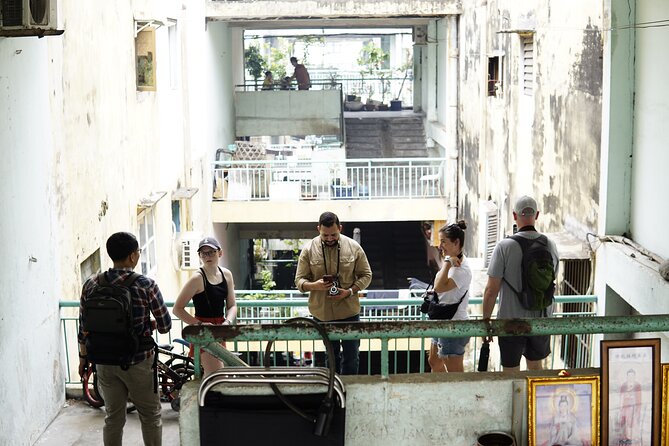
This experience is built around one simple rule: you shoot less, so you look more. You pick up a TLR medium format camera and a single roll of black-and-white film. That setup changes your pace immediately. You stop treating photos like constant proof and start treating them like decisions.
A TLR camera is also a good teacher. Instead of the fast, throw-it-up-and-go style of phone photography, you work through a basic routine: compose carefully, adjust what you can, then press and move on. The medium format negative size (larger than 35mm) usually delivers strong detail and a distinct look in black-and-white, with smoother tonal transitions when the lighting isn’t flat.
You also get a short briefing on how to use the camera. That matters because the value here isn’t just the gear. It’s the method. Your brain learns faster when you’re physically doing things—winding, focusing, and thinking in terms of shots you can’t replace.
The other quiet advantage: black-and-white forces you to notice structure. In Saigon, that means contrasting shadows under awnings, backlit faces at storefronts, strong wall textures in narrow lanes, and the “shape language” of markets. Colors still exist in real life, but you’re training your eye to translate the scene into light and contrast.
Coffee Culture and the 1968 Photo Stop
You start with coffee—smart move, and not just for caffeine. The first stop is an old-school coffee shop that’s about 90 years old, where you sit down and enjoy coffee in a more local rhythm. This is the kind of break that makes your photography walk better, because your mind settles before you start hunting images.
Coffee in Vietnam isn’t only a drink. It’s also a social pause. In places like these, people watch each other. You’ll likely notice small behaviors—how orders move from counter to table, how people occupy chairs and corners, and how conversations sound when the pace is slow. Those details translate well into photos even before you understand anything technical.
Then there’s a stop tied to a 1968 building in Ho Chi Minh City. Even if you don’t know the deeper story in advance, it gives you a strong visual anchor: history visible on the street, not locked behind glass. In black-and-white, buildings from different eras often read like “layers.” You’ll be able to frame architecture and signage with fewer distractions.
Tip: when you move from coffee to photos, keep your shutter thinking consistent. Don’t rush because you’re energized by coffee. Use that calm to plan your frames—especially in early light.
Alley Markets and a Hidden Old Apartment: Shooting on Foot
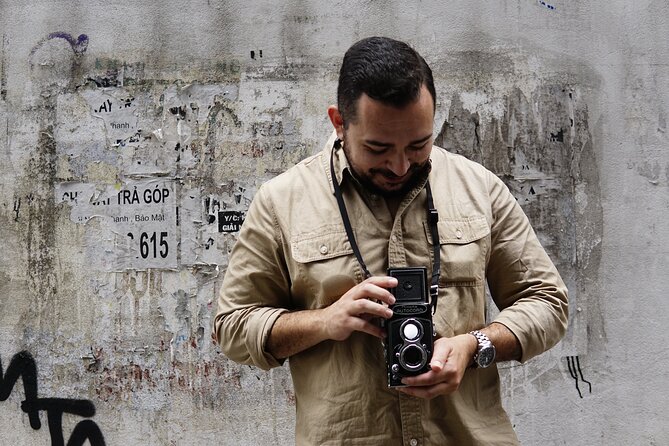
After the first sit-down moment, you get into the street. The walk focuses on alley street markets and an older apartment hidden in town—places where the city feels lived-in rather than staged.
This part is where the analog approach pays off. Narrow alleys are chaotic if you’re trying to “capture everything.” With film, you’re less likely to fire off random shots. You’re more likely to pick a subject: a face, hands at work, a vendor setting up, a doorway with strong shadow lines, or a pattern of hanging goods.
You’ll also practice through the route rather than just being shown pictures. The experience is described as learning and practicing by navigating nearby alleys and these quieter spots. That’s what makes it more than a casual walk. You’re building a workflow while the city provides subjects.
A camera tour also changes how you move. You look up more because you’re composing deliberately. You slow down because you’re waiting for the right moment. And when someone is about to pass, you’re not just trying to dodge them—you’re learning how to frame around real movement.
What about that “oldest apartment hidden in town” idea? It signals something important: you’re not only photographing commercial chaos. You’re also seeing domestic life and older built fabric. If you like street photography, that balance is valuable. It makes your images feel like they belong to the city’s everyday texture, not just the loud parts.
Translator Help and Local Connections Beyond the Usual Tourist Wall
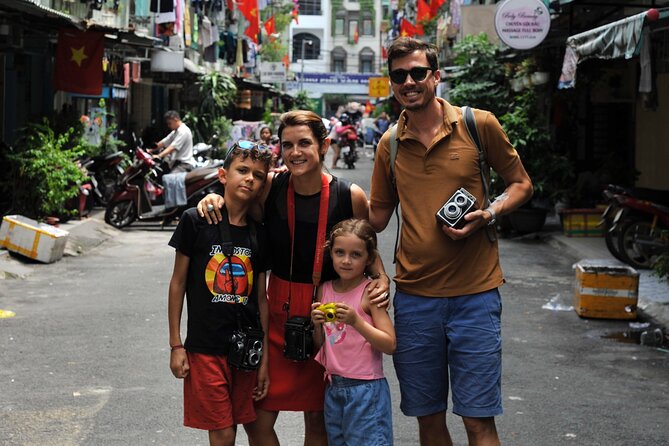
One of the most practical parts of this experience is that your guide helps you break the ice. You’re not left alone in a language gap, and you’re not forced into awkward guessing games either.
On the street, small misunderstandings can kill a photo moment. A translation buffer keeps you calm. It also changes what you can ask or how you can connect when you want to photograph people, shops, or small daily scenes. Even when you don’t directly “talk for photos,” the human ease shows in your images.
This tour also makes a specific kind of value promise: not clichés, not selfie-stick-only corridors, and not a focus on souvenir shopping. The guide is there to steer you toward local interactions and practical conversations so you can experience Saigon as people live it, not as a backdrop.
The best part is that your guide can act as a bridge while you stay focused on photography. You’re still learning your camera. You’re also learning what’s appropriate and how to move naturally in real spaces.
- Cu Chi Tunnels Tour from HCM City – Morning or Afternoon★ 5.0 · 15,833 reviews
- From HCM City: Mekong Delta Tour with Sampan Journey★ 4.5 · 13,132 reviews
- Ho Chi Minh City Street Food Tour & Sightseeing By Motorbike★ 5.0 · 9,413 reviews
- HCM: Cu Chi Tunnels-Tapioca Small Group Tour Morning or Afternoon★ 5.0 · 7,485 reviews
- Cu Chi Tunnels and Mekong Delta Signature Tour★ 5.0 · 7,328 reviews
Price and Included Gear: What $148.27 Actually Covers
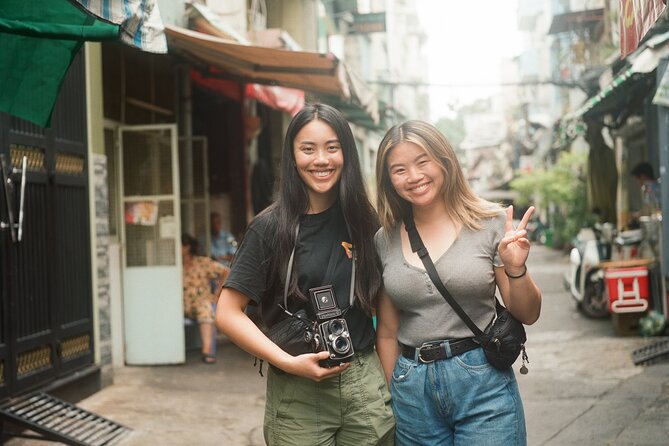
At $148.27 per person, you’re paying for a structured 3 to 4 hour private experience. The value is clearer when you look at what’s included:
- Coffee and/or tea (so you don’t need to budget a first-stop meal)
- An analog camera (TLR)
- One roll of black-and-white film
That gear and film piece is often the “real” cost in analog experiences. Many tours either rent a camera with limited time or tell you to buy your own film separately. Here, you get both as part of the package, and you get taught enough to use the camera during the walk.
What’s not included is private transportation. That means you should plan to reach the start point on your own, likely using public transit. The meeting point is at 73/8 Hồ Hảo Hớn, Phường Cô Giang, Quận 1, and the tour ends at Chợ Bàn Cờ, Phường 3, Quận 3. Since you don’t return to a pickup point at the end, I’d plan your ride home before you start—or keep your evening flexible.
Also note: this experience requires good weather. If rain moves in, you may need to reschedule.
Practical Shooting Tips for Limited Frames in Black and White
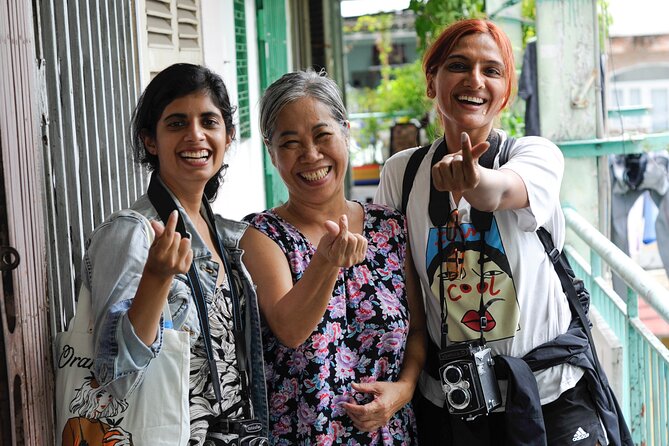
If you’re new to film, the “one roll” rule can feel intimidating. Good. It forces you to get smarter. Here’s how to use the limitation to your advantage during the Saigon walk.
First, think in sets of shots, not single masterpieces. In an alley market area, you might aim for:
- one wider scene (context),
- one mid shot (activity),
- one tight shot (hands, details, signs),
- one portrait or face if the moment feels right.
Second, black-and-white rewards contrast, especially in a city like Saigon. Look for shadows under awnings, bright patches near entrances, and faces lit from the side. When the light is strong, you’ll usually get deeper tones and clearer separation between subjects and backgrounds.
Third, slow down just enough to avoid “film panic.” When you feel rushed, you tend to shoot the first thing you see. Instead, give yourself a short pause before each photo: compose, check the subject, then decide. That reflective pace is exactly what makes analog photography tours work. One review even highlighted how the limited frames make you more thoughtful and reflective.
Finally, don’t treat this as a lesson in technique only. Treat it as a way to see. The camera is the tool; the point is noticing. When you pay attention long enough, Saigon starts offering photos like it’s been waiting for you.
Who This Tour Suits (and who should skip it)
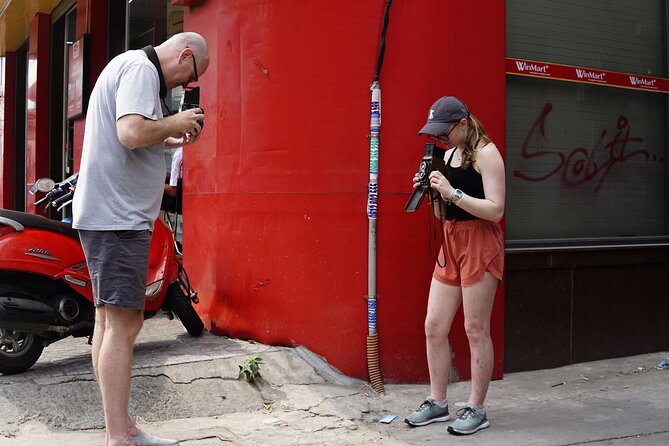
This experience fits best if you want something different from the usual “checklist” sightseeing. You’ll probably enjoy it if you like:
- street life and market scenes,
- analog photography, or at least the idea of learning it hands-on,
- black-and-white images and the discipline of fewer shots,
- a guided way to talk to locals with less awkwardness.
It might not be ideal if you expect a high-energy, fast-paced photo sprint with endless film. With only one roll, you won’t be producing dozens of new favorites. You’ll be producing fewer images that tend to feel more intentional.
It also suits you if you don’t want to spend time hunting for a camera rental shop and figuring out film logistics. You get the gear and film upfront, plus the short briefing so you can actually shoot during the walk.
Should You Book This Medium-Format Saigon Photo Experience?
I’d book it if you want a practical, local-feeling Saigon story told through photography. The mix is smart: coffee to slow you down, a historic-feeling building stop, then real street alleys and a quieter older apartment area—plus translator support that makes conversations possible.
At the same time, be honest about your style. If you’re chasing volume, this won’t give you that. If you enjoy thoughtful pace and you want your photos to feel like they came from choosing, not clicking, this is a great fit.
If you can align with the weather and you’re curious about medium format black-and-white, you’ll likely leave with images—and a way of seeing—that last longer than the trip.
FAQ
How long is the medium format film camera experience in Ho Chi Minh City?
It runs about 3 to 4 hours.
What camera and film are included?
You’ll receive an analog TLR camera and one roll of black-and-white medium format film.
Is coffee included in the tour price?
Yes. Coffee and/or tea is included, and the tour starts with a coffee shop visit.
Where does the tour start and where does it end?
It starts at 73/8 Hồ Hảo Hớn, Phường Cô Giang, Quận 1, and ends at Chợ Bàn Cờ, Phường 3, Quận 3.
Do I need my own transportation to join the tour?
Private transportation is not included, so you’ll need to make your own way to the start point.
Will I have help communicating with locals?
Yes. The guide helps you break the ice as a translator.
What happens if the weather is bad?
The experience requires good weather. If it’s canceled due to poor weather, you’ll be offered a different date or a full refund.
Can I cancel for a full refund?
Free cancellation is available up to 24 hours before the experience start time for a full refund.
More Tour Reviews in Ho Chi Minh City




Just Reviewed Around Saigon
- Secret walking Food Tour Ho Chi Minh City
★ 5.0 · 3 reviews - Ho Chi Minh City: Secret Cocktail Experience
★ 5.0 · 3 reviews - From Ho Chi Minh city: Vung Tau Beach Private Day Tour
★ 5.0 · 3 reviews - Saigoncholon
★ 3.5 · 3 reviews - Saigon On 2 Wheels
★ 3.5 · 3 reviews - From Ho Chi Minh City: Relax In Mui Ne Beach In 1 Day
★ 4.3 · 3 reviews