
REVIEW · SAIGON CITY TOURS
City Sightseeing Saigon Bus Tour
Get your bearings fast in Saigon. I love the open-top deck views and the hop-on hop-off stops near big landmarks. One catch: the upstairs can feel exposed in heavy rain or sun, and the audio commentary may feel a bit flat if you’re hoping for drama.
This is City Sightseeing’s one-day or two-day bus loop style tour of Ho Chi Minh City, with buses running often enough that you can build a day around the stops you care about. You’ll have two routes to work with, an audio guide in several languages, plus free Wi‑Fi and a guidebook with maps, recommendations, timetables, and coupons.
At $21 per person, it’s a solid value if you want convenience and planning help more than you want a deep, hands-on tour. Just remember: the bus ride covers sightseeing and route access, but entry tickets to attractions are not included.
In This Review
- Key things you should know before you ride
- Price and what $21 actually buys you in Saigon
- Before you board: Red Route vs Blue Route and where to start
- Open-top upstairs vs the air-conditioned option when the weather hits
- How hop-on hop-off really works in 75–80 minutes
- Red Route: Saigon Opera House to Notre Dame Cathedral/Central Post Office
- Saigon Opera House area (Stop 1)
- Nguyen Hue Street (Stop 2)
- Nha Rong Wharf (Stop 3)
- Tran Hung Dao Statue area and nearby hotels (Stop 4)
- Ho Chi Minh Campaign Museum / Museum of Vietnamese History (Stop 5)
- War Remnants Museum (Stop 6)
- Beer Street / Pham Ngu Lao (Stop 7)
- Ben Thanh Market (Stop 8)
- Independent Palace (Stop 9)
- Saigon Notre Dame Cathedral / Central Post Office (Stop 10)
- Blue Route: adding Flower Market, Binh Tay Market, and pagodas
- Beer Street / Pham Ngu Lao zone (Stop 1 on Blue Route)
- Ben Thanh Market (Stop 2 on Blue Route)
- War Remnants Museum (Stop 3 on Blue Route)
- Ho Thi Ky Flower Market (Stop 4)
- Phuoc An society premises (Stop 5)
- Ong Bon Pagoda (Stop 6)
- Binh Tay Market (Stop 7)
- Thien Hau Pagoda (Stop 8) and Van Phat Pagoda (Stop 9)
- Audio guide and the free guidebook: how to use them well
- Getting on the right bus: simple ways to avoid a start-day headache
- Who should book this City Sightseeing Saigon bus tour?
- Final call: should you book this bus tour?
- FAQ
- Is this a hop-on hop-off bus tour?
- How long is the tour and how often do the buses run?
- Where is the starting point for the Red Route?
- Where do you start the Blue Route?
- What major sights are included on the routes?
- Is Wi‑Fi and an audio guide included?
- Can I use a mobile voucher instead of a printed ticket?
- Can I cancel for a full refund?
Key things you should know before you ride
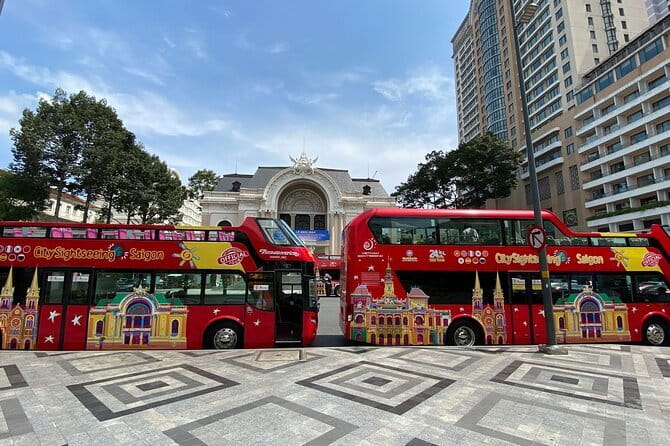
- Two routes (Red and Blue) that cover major sights plus extra neighborhoods
- Open-top upstairs for photos, with an air-conditioned option lower down
- Audio guide in several languages, plus a free printed guidebook
- Frequent service (Red every 30 minutes, Blue every 45 minutes)
- Clear starting points and exchange counters for each route
- Hop on and off at designated stops near the landmarks you’ll want to see up close
The big Saigon sights in one loop




Price and what $21 actually buys you in Saigon
The ticket is listed at $21 per person, and you can choose either a 1-day or 2-day ticket. The value here is less about “how long you sit on the bus” and more about what you get for planning: frequent loops, major-sight coverage, and a route system that helps you avoid guessing distances in a busy city.
You’ll also get free Wi‑Fi on board and a free guidebook with maps, recommendations, timetables, and coupons. That matters in Ho Chi Minh City, because once you’re off the bus, you still want to know what to do next (and how to group sights efficiently).
One thing to budget for: you pay attraction entry fees separately. The bus will take you near the places, but you’ll still need tickets for museums, palaces, and similar attractions.
Before you board: Red Route vs Blue Route and where to start
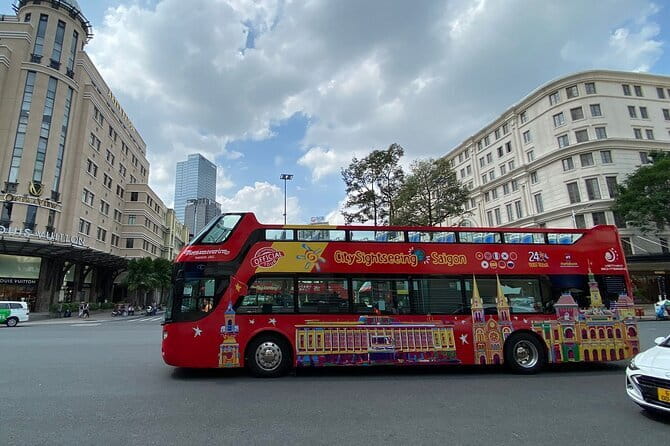
You’ll have two different loops, each with its own starting point and schedule. Both are “hop-on hop-off,” meaning you can get on, ride, get off to explore, and re-board at later stops during operating hours.
Red Route (most central early-day loop)
- First departure: 9:00am
- Last departure: 4:00pm
- Ride time: about 75 minutes
- Frequency: every 30 minutes
- Starting point/Stop 1: Saigon Opera House
- Ticket exchange counter: on the side of the Saigon Opera House, facing the Continental Hotel
Blue Route (adds more market and pagoda stops)
- First departure: 9:00am
- Last departure: 3:45pm
- Ride time: about 80 minutes
- Frequency: every 45 minutes
- Starting point: 187 Pham Ngu Lao Street
- Bus stop is in front of the Liberty Hotel
A practical scheduling note: the tour advises switching lines at Stops 6, 7, and 8 on the Red Route, which corresponds to Stops 1, 2, and 3 on the Blue Route. In plain terms, you’re not “forced” into one loop all day—you can swap routes when you hit the overlap zone.
Also pay attention to dates: 16th February runs 9am until 5pm, and 17th February the tour will not be running.
Open-top upstairs vs the air-conditioned option when the weather hits
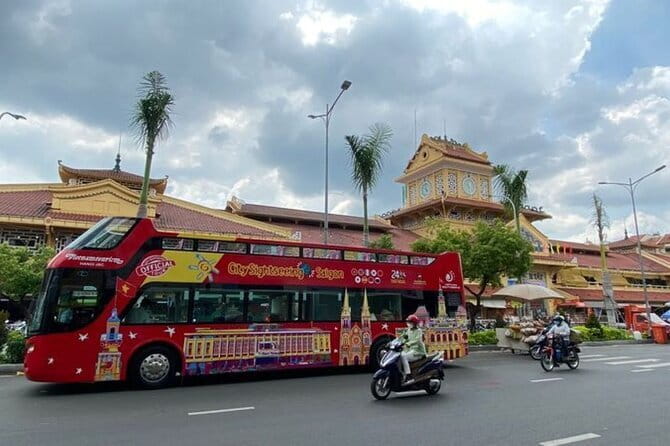
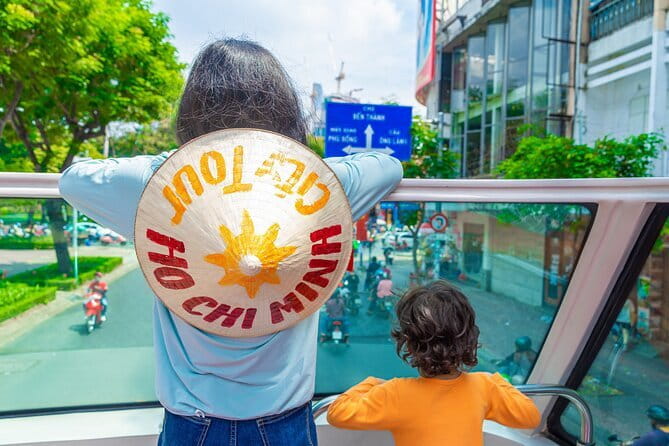
The bus is open-top on the upper deck for big views, and that’s exactly why this tour works so well for first-timers. You’ll get straightforward sightlines for places like the Saigon Opera House area, the riverside views near Nha Rong Wharf, and the cathedral/post office zone.
But you have to plan for the reality of Saigon weather. With an exposed upstairs option, rain or strong sun can change your comfort level fast. If conditions get rough, the air-conditioned lower seating becomes your “I just want to see and stay comfortable” move.
A smart approach is to treat the upstairs as your photo deck during clear stretches, and use the inside when the sky decides to cooperate less.
How hop-on hop-off really works in 75–80 minutes
The listed ride times—about 75 minutes (Red) and 80 minutes (Blue)—are best thought of as one loop around the route, not your entire day. The value is that buses run often, so you can hop off for an hour-ish, grab food nearby, then return to the same stop area when the next bus comes through.
Frequency helps you keep your plans flexible:
- Red every 30 minutes
- Blue every 45 minutes
If you’re trying to cover a lot, pick one “anchor” stop per half-day. For example, museums in the morning, markets in the afternoon, then end with skyline views near central landmarks.
Wider loops through the districts
- Cu Chi Tunnels Tour from HCM City – Morning or Afternoon★ 5.0 · 15,833 reviews
- From HCM City: Mekong Delta Tour with Sampan Journey★ 4.5 · 13,132 reviews
- Ho Chi Minh City Street Food Tour & Sightseeing By Motorbike★ 5.0 · 9,413 reviews
- Mekong Delta Guided Tour from Ho Chi Minh City★ 4.5 · 7,192 reviews
- Ho Chi Minh City: Cu Chi Tunnels Morning or Afternoon Tour★ 4.8 · 6,326 reviews
Red Route: Saigon Opera House to Notre Dame Cathedral/Central Post Office

This loop is your fastest path to many of the classic photo stops and major landmarks. Here’s what each location is good for, and where you might want extra time.
Saigon Opera House area (Stop 1)
Starting at the Saigon Opera House is a smart way to begin because the surrounding area is central and easy to orient from. You’re also positioned near Nguyen Hue Street, which is one of the city’s key corridors.
Practical tip: if you plan to start on the Red Route, go to the ticket exchange counter on the Opera House side facing the Continental Hotel. It’s a clean, obvious reference point.
Nguyen Hue Street (Stop 2)
This stop is about movement and views—think street energy and a broad, city-wide feel. If you want a quick “walk a bit, take photos, watch people” break, this is a good place to step off.
Nha Rong Wharf (Stop 3)
Nha Rong Wharf gives you a riverside angle that you don’t get everywhere in the city. It’s especially useful if you want the tour to include something less purely architectural and more tied to the city’s geography.
Tran Hung Dao Statue area and nearby hotels (Stop 4)
This stop is a reference point for the downtown side of things. It’s not necessarily the most “one-and-done” sightseeing spot, but it’s helpful if you want to reposition without committing to a long walk.
Ho Chi Minh Campaign Museum / Museum of Vietnamese History (Stop 5)
If you’re interested in how Vietnam tells its modern story, this is one of the big stops on the route. Plan time here rather than treating it like a quick photo moment, because museums tend to take longer than you expect.
War Remnants Museum (Stop 6)
This is one of the must-plan stops on the Red Route. The museum is a serious visit, and it’s the kind of place where rushing makes it harder to absorb what you’re seeing.
If you only have time for one “major museum block” in Ho Chi Minh City, this is the stop to choose.
Beer Street / Pham Ngu Lao (Stop 7)
This stop is your switch to lively street life. Even if you’re not making it a nightlife plan, it’s a convenient area for grabbing a snack or refreshing your energy after a museum.
It’s also helpful for travelers who want easy access to lots of small dining options within walking distance of the bus stop.
Ben Thanh Market (Stop 8)
Ben Thanh is the shopping-and-souvenirs stop that most people recognize. It’s useful even if you only have time to browse, because you’ll get a sense of everyday goods, prices, and what’s easy to take home.
Practical note: markets can be crowded. I like to arrive with a loose plan—walk, compare, then buy what fits your budget rather than trying to decide everything on the spot.
Independent Palace (Stop 9)
Independent Palace is another high-impact stop. It’s a major historical site and one of those places where even if you’re not a “history person,” the building’s design and layout make it worth your time.
Give it enough time for photos outside and a full look inside if you can.
Saigon Notre Dame Cathedral / Central Post Office (Stop 10)
This is the grand finale style stop. The area is famous for striking architecture, and it’s also close enough that you can combine sightseeing with a slower walk.
If you like classic-photo spots, this is where you’ll spend your last round of cameras before heading back to dinner.
Blue Route: adding Flower Market, Binh Tay Market, and pagodas
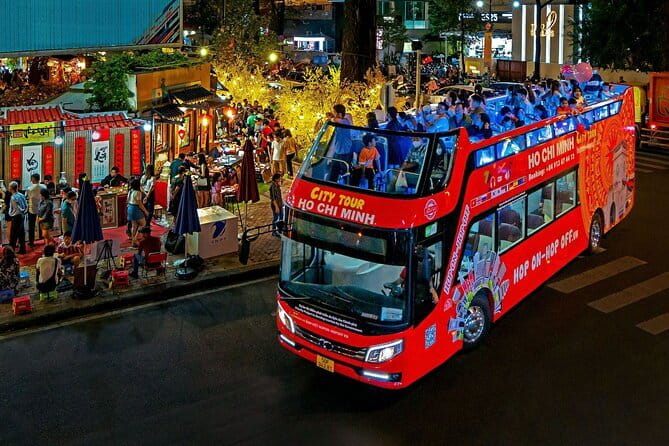
The Blue Route starts at 187 Pham Ngu Lao Street in front of the Liberty Hotel, and it builds a different kind of day. Instead of repeating only the biggest central landmarks, it adds market and temple/pagoda variety.
Here’s how the major Blue Route stops work together.
Beer Street / Pham Ngu Lao zone (Stop 1 on Blue Route)
This is essentially your ready-to-go “urban reset” stop. If you want to start with something easy—walk a bit, find coffee, then head out—this works.
Ben Thanh Market (Stop 2 on Blue Route)
Ben Thanh appears on both systems, which is helpful. It means you can choose your route based on which direction you’re going and still get to the market without starting over.
War Remnants Museum (Stop 3 on Blue Route)
The museum’s presence on both routes makes it easier to fit into any schedule. If your day starts on the Blue Route, you can still get to this major stop without changing plans too much.
Ho Thi Ky Flower Market (Stop 4)
Flower markets add a softer, more local feel. It’s a good stop when you want photos that aren’t purely monuments and museums—plus it’s a nice break in pace.
Phuoc An society premises (Stop 5)
This is one of the more “local culture” stops on the list. You might find it especially interesting if you like observing how communities organize and carry traditions forward.
Ong Bon Pagoda (Stop 6)
A pagoda stop shifts your day from civic landmarks to spiritual architecture and street-side atmosphere. Keep your expectations flexible: some moments here are about quiet observation more than big, ticketed attractions.
Binh Tay Market (Stop 7)
Binh Tay brings you a different market vibe than Ben Thanh. If you want variety—different layout, different goods, different crowd—this is a strong market addition.
Thien Hau Pagoda (Stop 8) and Van Phat Pagoda (Stop 9)
Two pagoda stops close together can be a great way to understand recurring religious motifs and local design styles across neighborhoods.
If you’re doing both, I’d suggest treating them as a pair: walk in, slow down for a few minutes, then move on. That keeps the day enjoyable instead of turning it into back-to-back “same kind of building” time.
Audio guide and the free guidebook: how to use them well
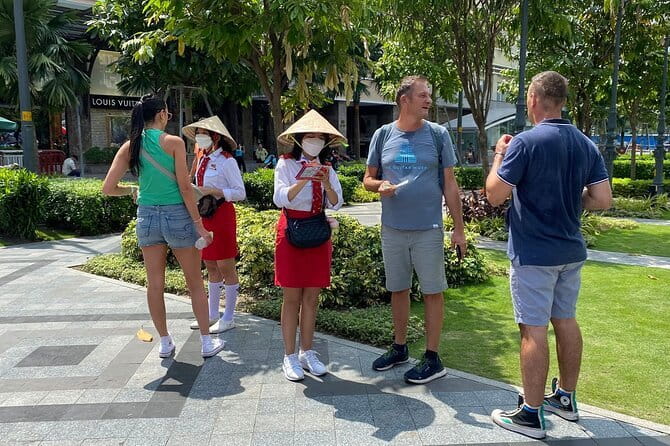
The tour includes an audio guide with commentary in several languages. That’s a real advantage when you’re seeing multiple major stops in a short span, because you’re less likely to feel lost at signage.
One note for your expectations: the narration can feel a bit dry. If you’re the kind of traveler who loves lively storytelling, you’ll get the most out of the audio guide by using it as a basic orientation layer, then pairing what you hear with what you see once you’re off the bus.
The free guidebook is where the tour often becomes more valuable than you’d expect. You’ll have maps, recommendations, timetables, and coupons. My rule for these guidebooks: circle the stops you want most, then use the timetable to avoid backtracking.
If you want another practical shortcut, use the interactive map approach: download the interactive map from the transport company website to locate bus stops quickly. When you’re trying to connect bus stops to walking routes, this saves real time.
Getting on the right bus: simple ways to avoid a start-day headache

A common frustration with hop-on/off tours is losing time at the beginning. The good news is the tour gives clear references, if you use them.
Here’s how to reduce confusion fast:
- Use the exact starting points: Saigon Opera House for Red, and in front of Liberty Hotel for Blue.
- Use the ticket exchange counter landmark at the Opera House side facing the Continental Hotel for Red.
- Double-check the route, not just the bus look. The buses on different routes can be confusing if you assume colors will match the line name. Confirm the route signage before you board.
Once you’re rolling, stop numbers and repeat landmarks (like Ben Thanh and War Remnants Museum) make it easier to regain your bearings.
Who should book this City Sightseeing Saigon bus tour?
This tour fits best if:
- You’re in Ho Chi Minh City for a short time and want quick orientation
- You want to reach major landmarks without relying on taxis for every hop
- You like the flexibility to explore at your own pace (hop off, linger, and re-board later)
- You want the structure of two routes plus a guidebook for what to do once you get there
It may be less ideal if you need constant high-energy narration and very guided, museum-deep explanations. This is a transport-and-sightseeing loop, not a personal private guide.
Also, plan for weather. If it’s pouring, you’ll likely spend more time inside the bus than upstairs.
Final call: should you book this bus tour?
Yes—if your priority is value, convenience, and a quick map of the city’s key sights. The combination of frequent hop-on/off service, open-top viewing, and a free guidebook makes it one of the easiest ways to build a first Saigon day.
Skip it only if you already know your plan (and don’t need route help), or if you prefer museums and neighborhood walks with more detailed, guided storytelling. Otherwise, for most visitors, this is a practical starter ticket that helps you see the big landmarks and still leave room for your own discoveries.
FAQ
Is this a hop-on hop-off bus tour?
Yes. The bus tour lets you join and leave at designated stops, so you can explore on your own and re-board later during operating hours.
How long is the tour and how often do the buses run?
The Red Route runs for about 75 minutes and departs every 30 minutes. The Blue Route runs about 80 minutes and departs every 45 minutes.
Where is the starting point for the Red Route?
The Red Route starts at Stop 1: Saigon Opera House. The ticket exchange counter is on the side of the Opera House facing the Continental Hotel.
Where do you start the Blue Route?
The Blue Route starts at 187 Pham Ngu Lao Street, with the bus stop located in front of the Liberty Hotel.
What major sights are included on the routes?
The routes include stops near major landmarks such as Saigon Opera House, War Remnants Museum, Ben Thanh Market, Independent Palace, and Saigon Notre Dame Cathedral / Central Post Office, plus additional stops like Nha Rong Wharf and several market and pagoda areas on the Blue Route.
Is Wi‑Fi and an audio guide included?
Yes. The tour includes free Wi‑Fi, and there is audio guide commentary in several languages.
Can I use a mobile voucher instead of a printed ticket?
Yes. Mobile and printed paper vouchers are both accepted.
Can I cancel for a full refund?
You can cancel for a full refund if you cancel at least 24 hours before the experience start time. If you cancel less than 24 hours before, the amount paid is not refunded.
More Tours in Ho Chi Minh City






More Tour Reviews in Ho Chi Minh City
All of Saigon in a Day
Just Reviewed Around Saigon
- Secret walking Food Tour Ho Chi Minh City
★ 5.0 · 3 reviews - Ho Chi Minh City: Secret Cocktail Experience
★ 5.0 · 3 reviews - From Ho Chi Minh city: Vung Tau Beach Private Day Tour
★ 5.0 · 3 reviews - Saigoncholon
★ 3.5 · 3 reviews - Saigon On 2 Wheels
★ 3.5 · 3 reviews - From Ho Chi Minh City: Relax In Mui Ne Beach In 1 Day
★ 4.3 · 3 reviews
Saigon City Tours, compared.
 ★ 4.9City Highlights and Saigon Unseen Scooter Combo TourFrom $251,366 reviews
 ★ 4.2City Sightseeing Hop-On Hop-Off Bus TourFrom $211,080 reviews
 ★ 4.3City Sightseeing 45-Minute Panoramic Night TourFrom $7964 reviews
 ★ 5.0Small-group Saigon City Tour: 4-Hour Must-see Iconic LandmarksFrom $30788 reviews
 ★ 5.0Essential Mekong Delta: Highlights Tour from Ho Chi Minh CityFrom $23636 reviews
 ★ 5.0Daily Small Group Tour to Saigon City and Cu Chi TunnelsFrom $50412 reviews
 ★ 5.0Ho Chi Minh City Tour by Motorbike with Female Riders | KissTourFrom $46330 reviews
 ★ 5.0Cu Chi Tunnels – Tapioca & City Tour (6 Major Attractions) 1 dayFrom $72285 reviews
Browse the lists this tour appears in