REVIEW · SAIGON COFFEE TOURS
Egg coffee & Course on 4 traditional types of Viet coffee
Coffee class in Vietnam, no button-press required.
This is a hands-on Vietnamese coffee workshop built around four traditional cups you’ll actually make and taste: egg coffee, condensed milk coffee, sea salt coffee, and coconut milk coffee. I like how the barista ties each drink to real technique and clear presentation, not just pouring from a bottle. One thing to think about first: it’s a caffeine-heavy experience, so plan to eat before you go.
You’ll also get the story behind Vietnamese coffee culture while you’re working—why it’s made the way it is, and how bitterness, sweetness, and temperature all play together. In past sessions, hosts such as Sara and Anna have guided people step-by-step, keeping the pace friendly and the explanations easy to follow. If you’re sensitive to caffeine or you’re looking for something low-key and short, this may feel like a lot.
In This Review
- Key things you’ll notice right away
- Why this Vietnamese coffee class is a great use of 2 hours
- Meeting point reality: plan for a small arrival walk
- What you’ll actually learn: drip technique plus coffee “balance”
- The four Vietnamese coffees you’ll make (and why each one matters)
- 1) Egg coffee (Cà Phê Trứng Lòng Đỏ)
- 2) Dark roast condensed milk coffee (Cà Phê Sữa Đá)
- 3) Sea salt coffee (Cà Phê Muối Biển)
- 4) Coconut milk coffee (Cà Phê Cốt Dừa)
- The “textures and temperatures” lesson you’ll feel in every cup
- The history part: why Vietnamese coffee matters beyond the drinks
- Q&A and pacing: how the workshop keeps from turning chaotic
- Practical tips so your caffeine doesn’t steamroll the class
- Vegan options: what to ask before you arrive
- Price and value: is $18 worth it?
- Who should book this workshop
- Should you book egg coffee and the 4 traditional Viet coffees?
- FAQ
- How long is the egg coffee and Viet coffee course?
- What coffee types will I make and taste?
- Is transportation included?
- Where is the meeting point?
- Does the class include equipment and instruction?
- Is gratuity included?
- Are vegan options available?
- What languages are the instructor and class in?
- What should I bring and wear?
- Is there any cancellation flexibility?
Key things you’ll notice right away
- You make four coffees, not just watch and sip.
- Traditional drip-style technique is a core part of the lesson.
- Egg coffee, sea salt coffee, coconut coffee, and condensed milk coffee each teach a different texture and balance.
- Cultural context comes alongside the hands-on brewing.
- Small-group energy tends to keep the class interactive.
- Vegan options are available upon request, so you can ask for an alternative.
Another glass of ca phe sua da, poured strong



Why this Vietnamese coffee class is a great use of 2 hours
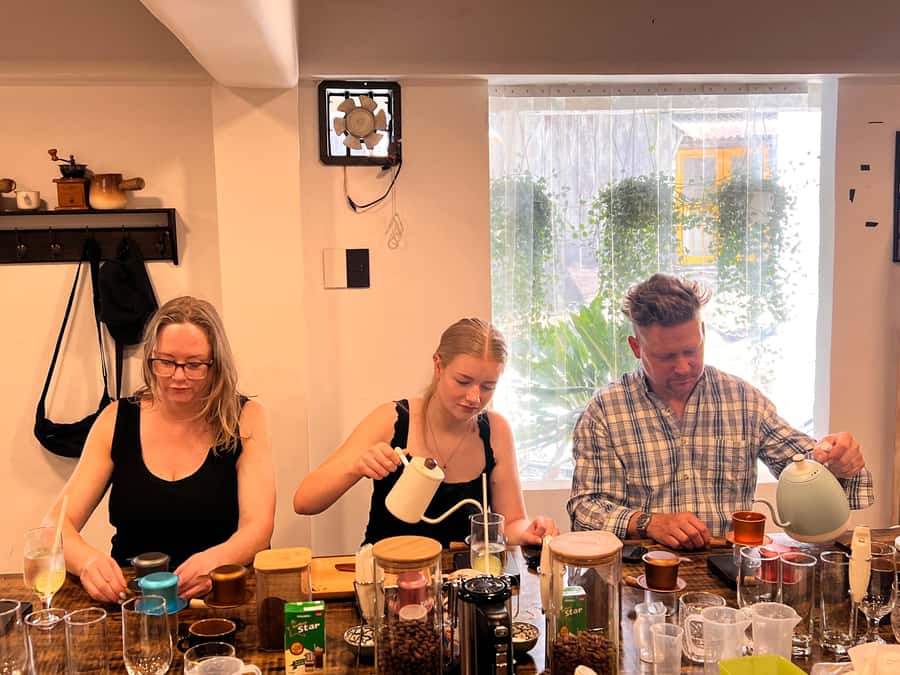
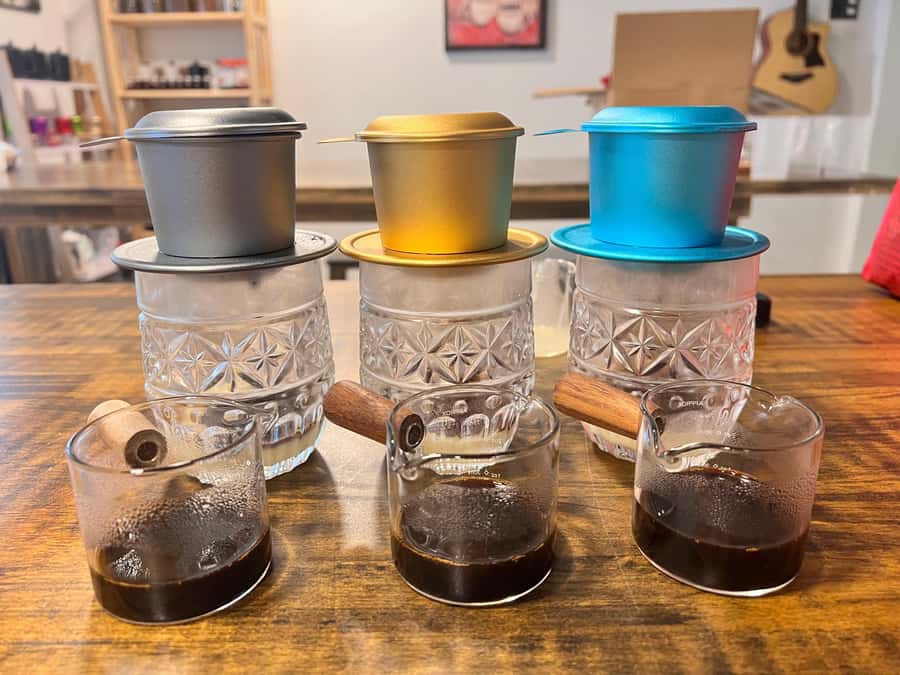
Vietnamese coffee has a reputation for being strong, sweet, and texturally interesting—and this class turns that reputation into something you can reproduce at home. You don’t just taste drinks; you learn the steps, the timing, and the reason behind the method, using traditional drip preparation.
The format is also efficient. In about 2 hours, you go from coffee history to brewing technique to tasting four different styles, with time for Q&A. That makes it an easy win if your Vietnam schedule is already packed with markets and neighborhoods.
Meeting point reality: plan for a small arrival walk
Transportation isn’t included, and the meetup details are very specific. If you’re using a rideshare or similar service, you’ll likely be dropped off at the start of Hem 131. Then you walk down the corridor and look for the 4th building on the left.
This is the kind of activity where arriving a few minutes early helps you settle in and avoid rushing—especially because you’ll be making and tasting multiple coffees, and the caffeine adds urgency of its own.
What you’ll actually learn: drip technique plus coffee “balance”
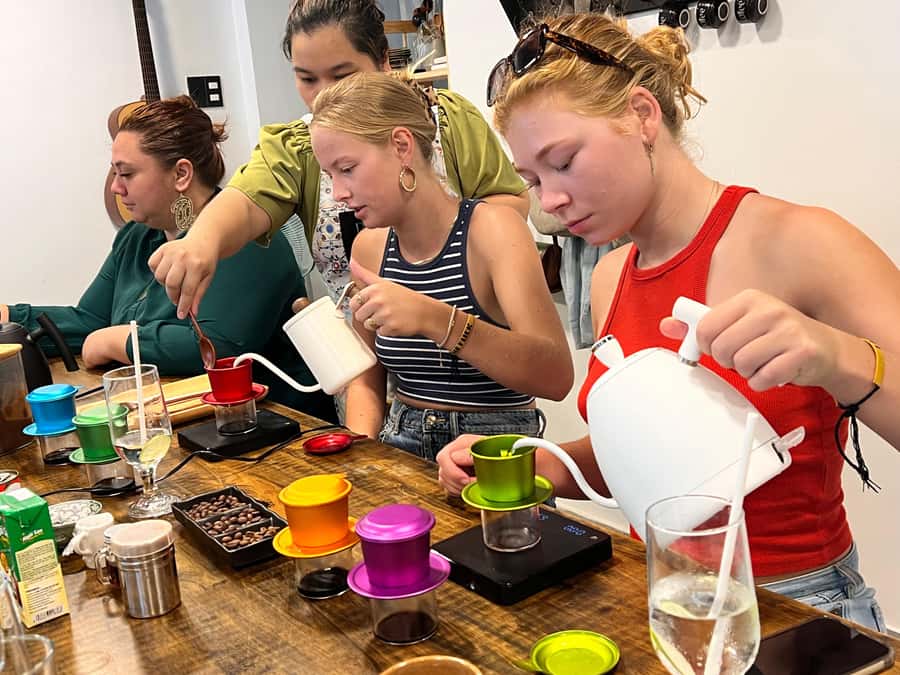
The core of the workshop is hands-on brewing under barista guidance. You’ll work through the process of steeping and brewing the perfect cup using traditional drip methods, then you’ll focus on technique and presentation so the cups come out visually layered and well built.
What you’re really learning is balance. Vietnamese coffee often plays with a contrast: bitter coffee meets sweet condensed or flavored components, and the served temperature affects how those flavors land on your tongue. By making four versions back-to-back, you start to feel how small changes in preparation can shift the taste.
You’ll also get a wrap-up discussion that touches on evolving coffee culture in Vietnam, so the class doesn’t feel like it’s trapped in the past. It connects tradition to what people are doing today.
The four Vietnamese coffees you’ll make (and why each one matters)
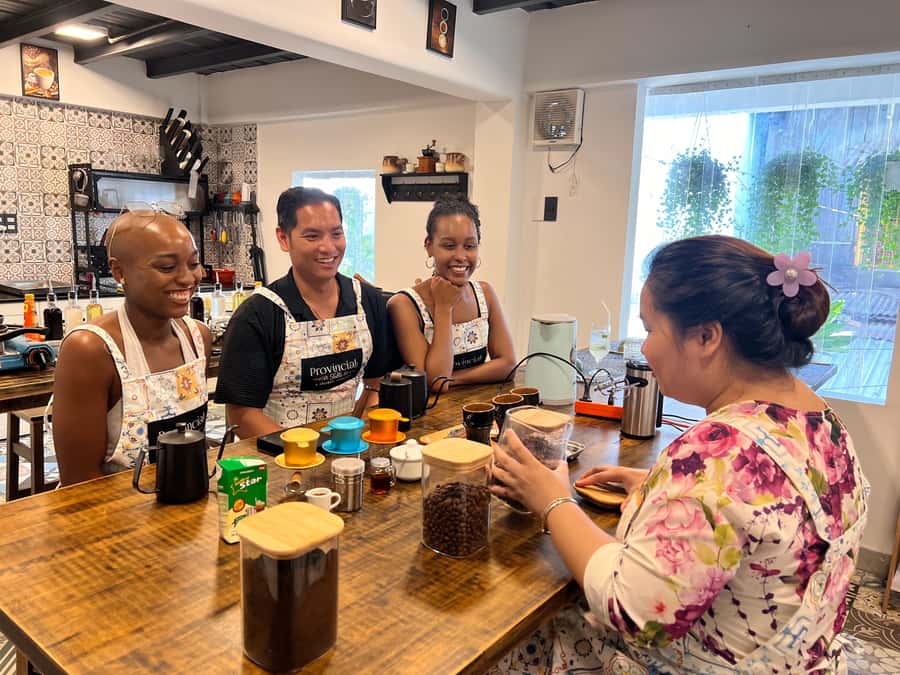
A few Saigon tours to weigh against this one:
- Ho Chi Minh City: Fun and Easy Coffee Workshop for Beginners★ 4.9 · 121 reviews
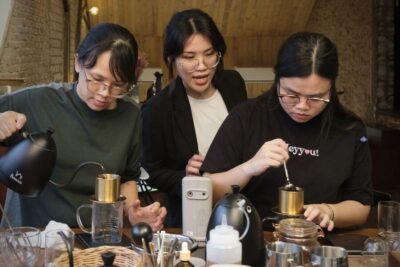
- Techniques & Secrets Behind the Famed Vietnamese Egg Coffee★ 5.0 · 99 reviews
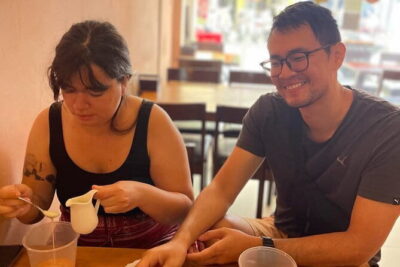
- 1 hour Egg Coffee Cooking Class with Snack and Local Instructor★ 5.0 · 72 reviews
- Saigon Unseen: Culture, Coffee, Hidden Spots Motorbike Adventure★ 5.0 · 60 reviews
- Vietnam Flavour: Market-to-Table & The Art of Egg Coffee★ 5.0 · 53 reviews
1) Egg coffee (Cà Phê Trứng Lòng Đỏ)
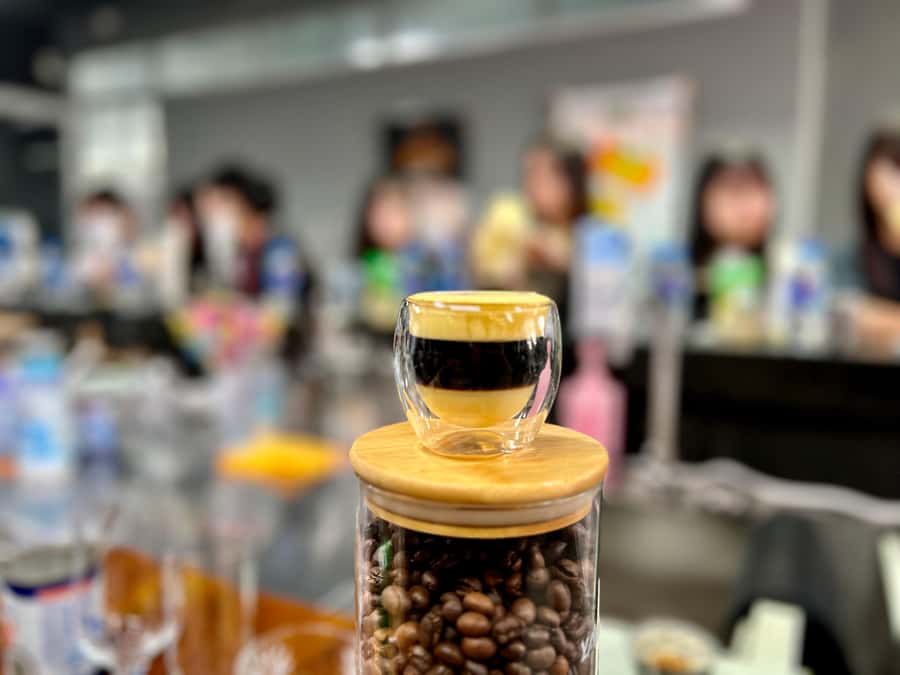
Egg coffee is the signature Vietnamese style that most people come for. The egg component creates a thick, creamy top with a rich mouthfeel, and the “red yolk” theme (Lòng Đỏ) is part of what makes it visually distinctive.
In class, you’re not just trying a novelty drink. You’re learning how the egg layer changes the experience: it cools the sharpness of the coffee underneath while adding a custard-like texture. If you care about mouthfeel—thickness, foam consistency, how fast it settles—this is the one that teaches it best.
2) Dark roast condensed milk coffee (Cà Phê Sữa Đá)
This is the classic sweet-leaning Vietnamese iced style using dark-roast coffee paired with condensed milk. The condensed milk brings heavy sweetness and a smooth finish, while the dark roast holds onto bitterness so the whole drink doesn’t turn one-note.
What you’ll notice as you make it is that sweetness isn’t the enemy of coffee flavor. Done right, it frames bitterness instead of hiding it. You’ll also get practice thinking about temperature, because condensed milk coffee is often served in a chilled format that changes how the coffee tastes.
3) Sea salt coffee (Cà Phê Muối Biển)
Sea salt coffee sounds unusual until you taste it, then it makes perfect sense. The salt doesn’t make the drink salty like the ocean; it acts like a flavor adjuster, sharpening some notes and smoothing the overall balance.
In class, this one tends to stand out because it’s all about contrast. You’ll feel how the bitterness of the coffee can become rounder, and how sweetness can seem more controlled. If you like coffee drinks that feel grown-up rather than dessert-like, this is often the favorite.
4) Coconut milk coffee (Cà Phê Cốt Dừa)
Coconut milk adds a different type of richness—creamy, aromatic, and slightly sweet—while still letting the coffee character show through. This is a great option if egg coffee feels too heavy, or if you want something that tastes more tropical but still grounded in brewed coffee.
In the brewing-and-tasting flow, coconut milk coffee teaches you how flavor partners change the body of the drink. The same coffee method can feel totally different once coconut comes in.
The “textures and temperatures” lesson you’ll feel in every cup
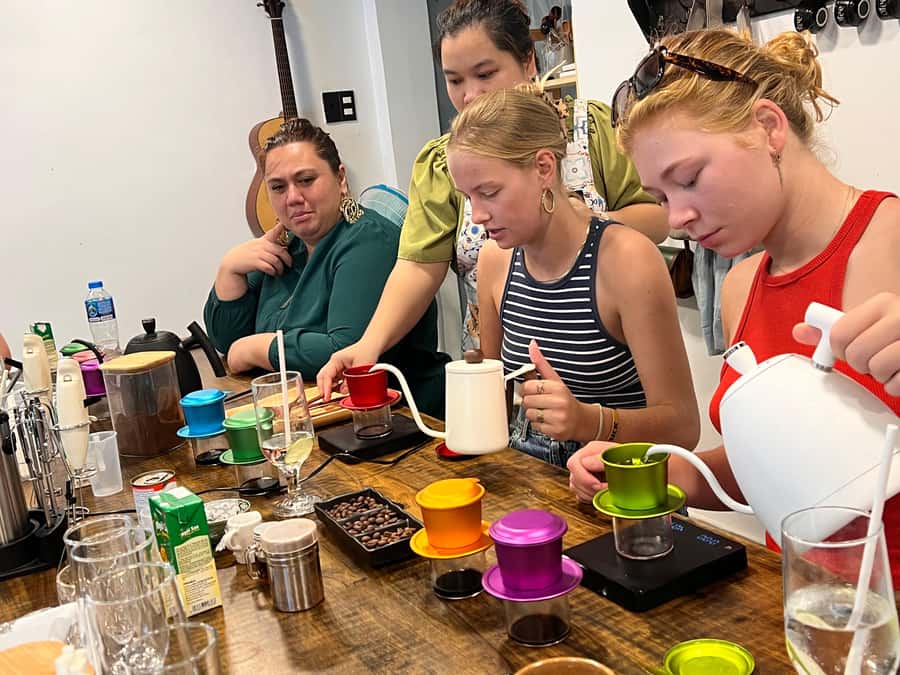
This workshop focuses on the interplay of textures and temperatures, and you’ll see why as you move through the four styles. Some cups are about thick layers and creamy contrast (like egg coffee). Others are about chilled sweetness and the way condensed milk changes bitterness (like the condensed milk style).
Sea salt coffee brings a more refined sensation: a balancing effect that can make the coffee feel cleaner. Coconut milk coffee leans into aroma and smooth mouthfeel, showing how a dairy substitute changes the overall structure.
By the end, you’re not just saying, this tastes sweet or this tastes strong. You’re recognizing what the preparation did to flavor and body.
The history part: why Vietnamese coffee matters beyond the drinks
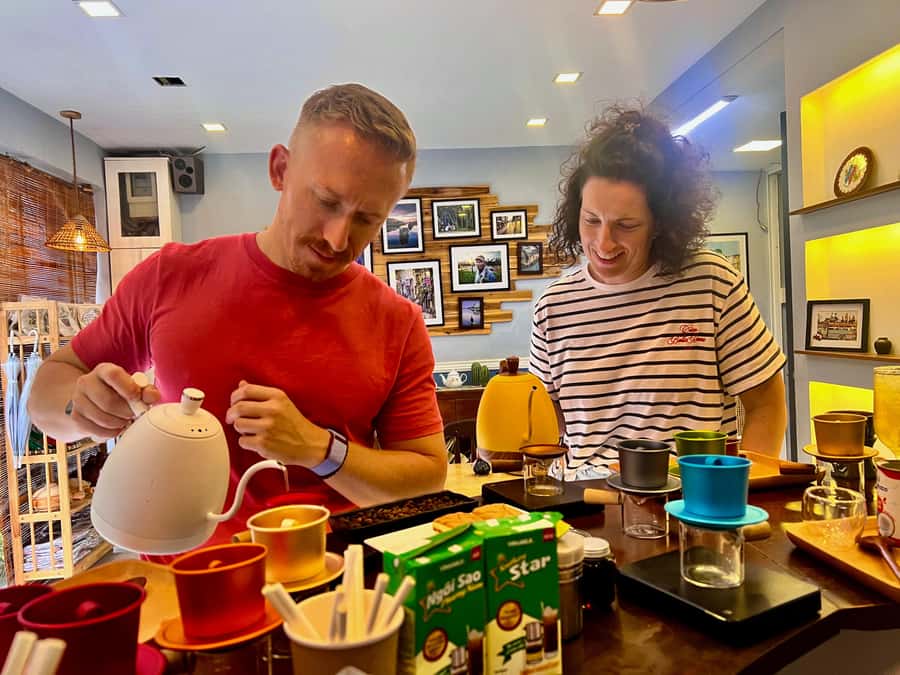
The class starts with coffee history and cultural significance in Vietnam, including origins and influences. You’ll connect that story to what you’re doing with the drip method and the typical add-ins.
This matters for you because technique without context can feel like trivia. Once you understand why Vietnamese coffee is brewed and served the way it is, you’ll remember the method and recreate it with better instincts later.
You’ll also hear discussion on how coffee culture is evolving in Vietnam, which helps the whole experience feel current rather than stuck in a museum label.
Q&A and pacing: how the workshop keeps from turning chaotic
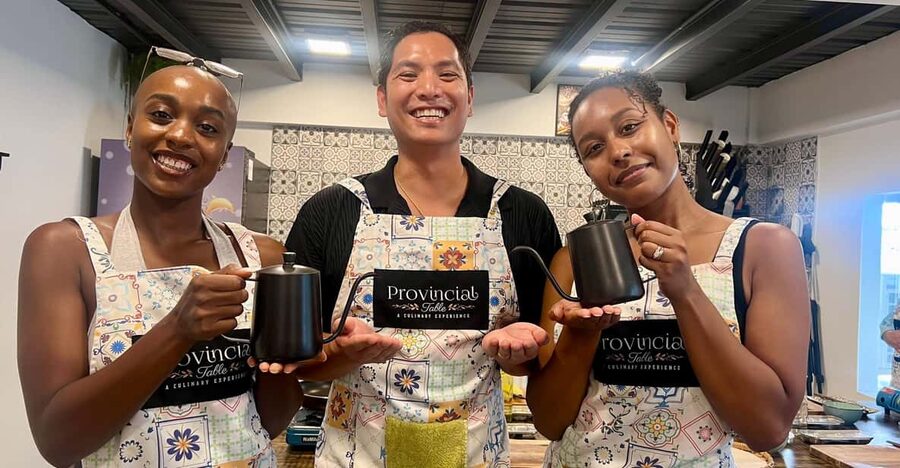
The workshop ends with Q&A, plus highlights and discussion with the barista. Based on how the experience tends to run, it’s the kind of class where you can ask practical questions as you go, not only at the end.
Pacing is usually a big deal in hands-on food classes. Here, you’ll be making and tasting repeatedly, so you get lots of chances to ask what’s happening and why. That also means your group time doesn’t feel like a long lecture.
Practical tips so your caffeine doesn’t steamroll the class
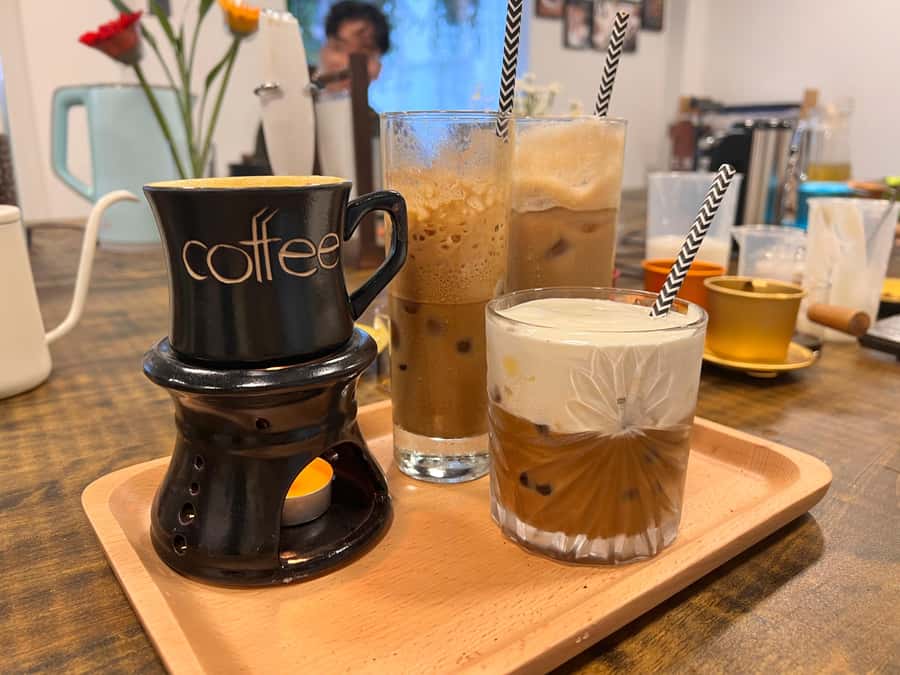
The activity has lots of caffeine. The simple fix is to eat something before you arrive. If you’ve ever had caffeine hit before you’re ready, you know how fast the experience can turn uncomfortable.
Also wear comfortable clothing suitable for a workshop, bring water, and plan on comfortable shoes. You’ll be standing and moving while you make multiple coffees. A camera can help because the drinks are visually layered, but the real value is watching how the process looks step-by-step.
One more note: don’t plan on smoking before or during. It’s not allowed.
Vegan options: what to ask before you arrive
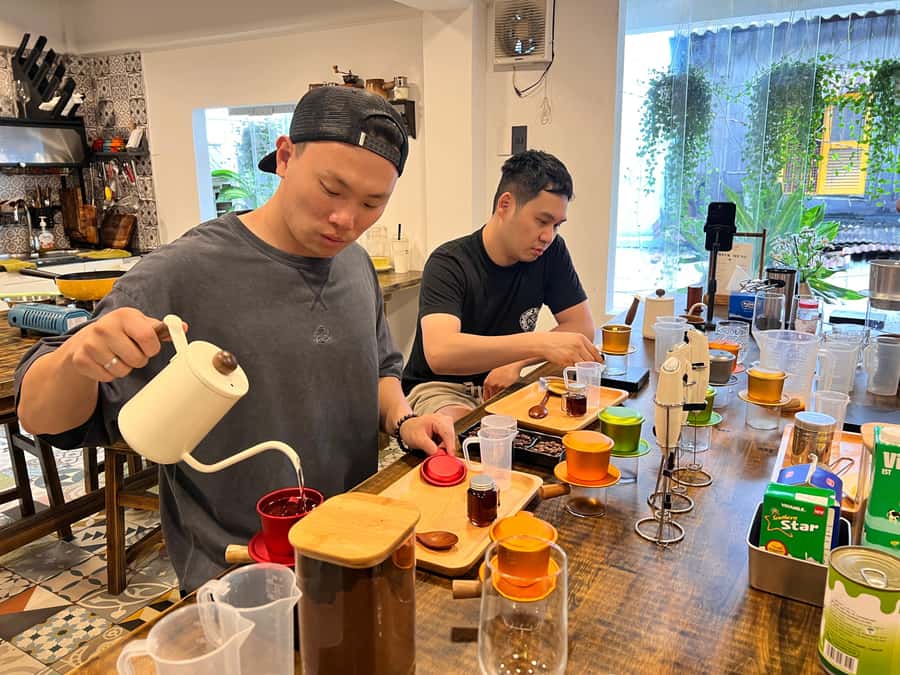
The class offers vegan options upon request. The data doesn’t say which of the four styles are swapped or how, so your best move is to message ahead (or tell the team at the start) and ask what the vegan substitute will be for egg coffee and any dairy-based components.
If you’re vegan and you’re specifically hoping to try a version of egg coffee, ask directly. You’ll get the clearest answer from the barista.
Price and value: is $18 worth it?
For $18 per person and a 2-hour session, this is strong value if you treat it like a skills class, not just a tasting. You’re getting barista guidance, all necessary coffee-making equipment, tastings of four Vietnamese coffee styles, and a Q&A wrap-up. Gratuity is included, so there’s one less surprise cost.
The biggest value isn’t only the drinks. It’s learning the drip method steps and how to balance bitterness and sweetness. That’s the part you can bring home, and it’s why this can feel like more than a one-time caffeine hit.
If you compare it to the cost of four separate coffee orders at cafes, you’re also buying a guided, hands-on experience with equipment and teaching. The math stays favorable because you’re doing more than sipping.
Who should book this workshop
This is a great fit if you:
- want a practical coffee skill you can repeat at home
- love Vietnamese coffee flavors like egg coffee, sea salt coffee, and coconut-based drinks
- prefer a hands-on experience with time to ask questions
- like learning the story behind what you’re tasting, not just tasting
It may be a poor fit if you:
- don’t handle caffeine well
- need an activity that’s low-energy and sit-still
- have back problems, since it’s a hands-on workshop
- are traveling with children under 5 (it’s not suitable)
Should you book egg coffee and the 4 traditional Viet coffees?
Yes, if you want a compact, high-taste, hands-on Vietnam experience. For two hours, you get four distinct styles plus technique and culture, and the class format is designed for you to build understanding as you brew and taste.
Book it if you enjoy learning by doing, and especially if you’re curious about egg coffee and sea salt coffee. If caffeine tends to knock you around, plan your meal carefully and consider spacing your sips during tasting so you can enjoy all four without feeling overpowered.
If you tell me what city in Vietnam you’ll be in (and your travel dates), I can suggest smart ways to pair this with nearby sights so you don’t waste time in transit.
FAQ
How long is the egg coffee and Viet coffee course?
The course lasts 2 hours.
What coffee types will I make and taste?
You’ll make and taste four traditional Vietnamese coffees: Egg Coffee (Cà Phê Trứng Lòng Đỏ), Dark Roast Condensed Milk Coffee (Cà Phê Sữa Đá), Sea Salt Coffee (Cà Phê Muối Biển), and Coconut Milk Coffee (Cà Phê Cốt Dừa).
Is transportation included?
No. Transportation to the venue is not included.
Where is the meeting point?
You’ll likely be dropped off at the start of Hem 131. Walk down the corridor; the venue is the 4th building on the left.
Does the class include equipment and instruction?
Yes. You’ll get head barista guidance and all necessary coffee-making equipment.
Is gratuity included?
Yes, gratuity is included.
Are vegan options available?
Vegan options are available upon request.
What languages are the instructor and class in?
The class is offered in English and Vietnamese.
What should I bring and wear?
Bring comfortable shoes, a camera, and water. Wear comfortable clothing suitable for a hands-on workshop.
Is there any cancellation flexibility?
Yes. You can cancel up to 24 hours in advance for a full refund.
More Coffee Experiences in Ho Chi Minh City
More Tour Reviews in Ho Chi Minh City




Saigon by the Glass of Coffee
Just Reviewed Around Saigon
- Secret walking Food Tour Ho Chi Minh City
★ 5.0 · 3 reviews - Ho Chi Minh City: Secret Cocktail Experience
★ 5.0 · 3 reviews - From Ho Chi Minh city: Vung Tau Beach Private Day Tour
★ 5.0 · 3 reviews - Saigoncholon
★ 3.5 · 3 reviews - Saigon On 2 Wheels
★ 3.5 · 3 reviews - From Ho Chi Minh City: Relax In Mui Ne Beach In 1 Day
★ 4.3 · 3 reviews
Saigon Coffee Tours, compared.
 ★ 5.0Fun & Easy Vietnamese Coffee Workshop in Hồ Chí Minh CityFrom $23293 reviews
 ★ 5.0Vietnamese Coffee & Culture Exploration in Hồ Chí Minh CityFrom $29202 reviews
 ★ 5.0Decadent Vietnamese “Egg Coffee” Workshop in Hồ Chí Minh CityFrom $20150 reviews
 ★ 4.9Fun and Easy Coffee Workshop for BeginnersFrom $23121 reviews
 ★ 5.0Techniques & Secrets Behind the Famed Vietnamese Egg CoffeeFrom $2099 reviews
 ★ 5.01 hour Egg Coffee Cooking Class with Snack and Local InstructorFrom $1572 reviews
 ★ 5.0Saigon Unseen: Culture, Coffee, Hidden Spots Motorbike AdventureFrom $3360 reviews
 ★ 5.0Vietnam Flavour: Market-to-Table & The Art of Egg CoffeeFrom $4553 reviews
Browse the lists this tour appears in