
REVIEW · SAIGON CITY TOURS
Essential Saigon Walking Tour: All Must-see
Saigon history, told street by street. This 2.5-hour walking tour strings together the city’s most important colonial-era sights and postwar landmarks with a real local voice, not a script. I like how it starts with quick orientation, then shifts into stories you can connect to what you’re seeing.
Two things I especially like: the route hits major highlights in a smart order, and the guide support is practical. You get bottled water plus a hand fan, and the tour is designed for a comfortable walk even in daytime heat. One thing to keep in mind: it’s still a lot of ground for about 2.5 hours, so bring decent walking shoes and expect some time standing at busy intersections.
In This Review
- Key points before you go
- Why this Saigon walk is such good value
- Times, duration, and what to expect on your feet
- Starting at Vietravel Headquarters on Pasteur Street
- Turtle Lake’s strange geometry and why it’s more than a pretty shape
- Independence Palace: watching the war story through a building
- Notre-Dame Cathedral Basilica: French-style faith in Saigon
- Saigon Central Post Office and the street that connects East and West
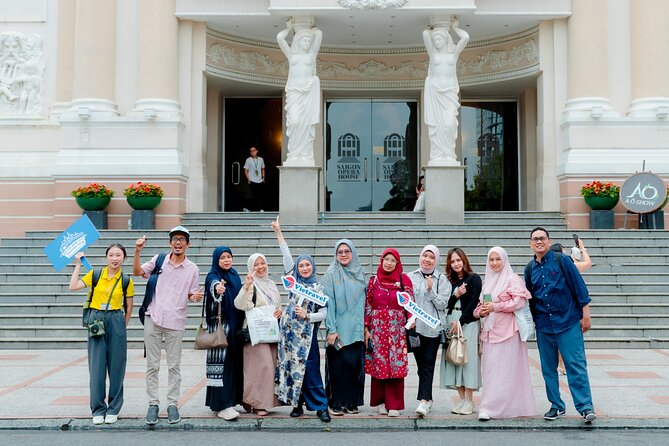
- Saigon Opera House: where elite culture met a changing city
- The People’s Committee Building and the meaning of government architecture
- Café Apartment: the charm of an old French-era building turned modern
- Bach Dang Quay Park: finishing at the river for a calmer end
- What’s included (and why those extras matter)
- How much walking is it really?
- Who should book this walking tour?
- Should you book it?
- FAQ
- FAQ
- How long is the Saigon walking tour?
- What time does the tour start?
- How much does it cost?
- Where do I meet and where does the tour end?
- Is a mobile ticket provided?
- Are entrance fees included for the stops?
- What’s included in the price?
- Are tips included?
- What is the cancellation policy?
- What happens if weather is poor?
Key points before you go
- Small-ticket, high-value format: $5 per person with key inclusions and no mention of paid add-ons at the sites.
- Heat-friendly extras: bottled water and a hand fan to make the walk easier.
- Local perspective matters: guides like Luna and Tam are highlighted for passion and clear context.
- A tight route of famous stops: Turtle Lake to Independence Palace, Notre-Dame Cathedral to the Central Post Office.
- Easy start location: meet at Vietravel HQ on Pasteur Street in District 3, then finish near the river in District 1.
- Tour size cap: max 300 travelers, which helps keep logistics predictable.
The big Saigon sights in one loop



Why this Saigon walk is such good value
For $5, you’re buying convenience plus context. You’re not just checking boxes—you’re getting a guided sequence through central Ho Chi Minh City’s landmarks, where it’s easy to feel lost if you’re reading plaques on your own.
The included extras are small but genuinely useful. Saigon’s walking conditions can be sweaty and bright, so bottled water and a hand fan help you stay focused on the sights instead of ducking into shade every five minutes. And you also get a postcard and a discount coupon for a future trip with the provider, which adds a bit of long-game value if you plan to stay in town.
The other reason this works so well is the guide approach. In the feedback I saw, guides such as Luna and Tam get praised for clear explanations and a local point of view—exactly what you need for a place where the story spans French colonial life, the Vietnam War era, and modern-day Saigon all in one walk.
Times, duration, and what to expect on your feet
This tour runs at 9 A.M. and 4 P.M. and lasts about 2 hours 30 minutes. That timing is important: the afternoon slot can be easier for some people (less morning traffic) but still hot. The morning slot gives you daylight for photos and a calmer feel at some streets.
Because you’ll be moving between landmark clusters, plan to treat this as a walking orientation. Even though each stop is short (often around 10–15 minutes), it’s enough time to understand why each place matters and what you should notice when you look up at façades or scan the area around you.
Also note the tour is capped at 300 travelers. That doesn’t mean it will feel like a tiny private group, but it does usually keep things from turning into total chaos.
Starting at Vietravel Headquarters on Pasteur Street
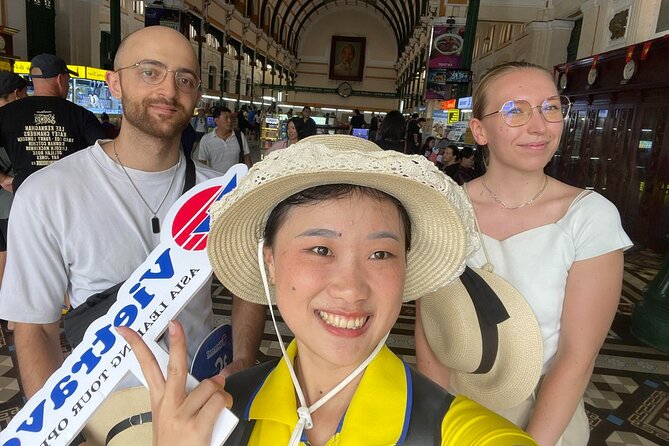
You meet at the Vietravel Headquarters Building, 190 Pasteur (District 3). This is a practical start for two reasons. First, it’s a fixed landmark address (helpful if you’re navigating by taxi or rideshare). Second, it’s mentioned as being near public transportation, which matters in District 3 where traffic flow can change fast.
At the start, the guide shares essential info and you’ll have an opportunity to refill your water before the walk begins. If you’re the type who likes to know the plan upfront, this “setup” part is a real plus—you’ll understand the flow of the day before you step into the busiest streets.
Turtle Lake’s strange geometry and why it’s more than a pretty shape
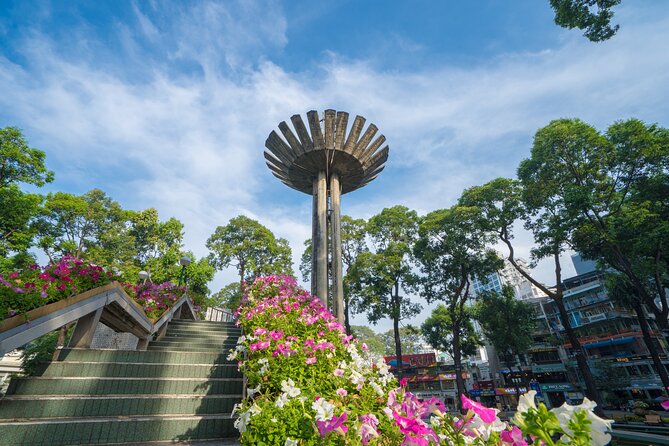
The tour’s first main sight is Turtle Lake, an unusual structure known for an eight-sided form with yin-and-yang symbolism. On its face, it sounds like architecture trivia. In real life, it’s a good example of how Saigon mixes local cultural ideas with built form.
Why this matters for you: it trains your eye early. As you walk, you start looking for patterns, symbols, and design choices instead of treating everything like a separate photo stop. It also helps break the ice—short stop, easy entry, and a story you can carry to the next landmark.
The downside? It’s a brief visit. If you’re the kind of person who wants to read every sign, you’ll have to switch gears to a “listen first, look more later” approach.
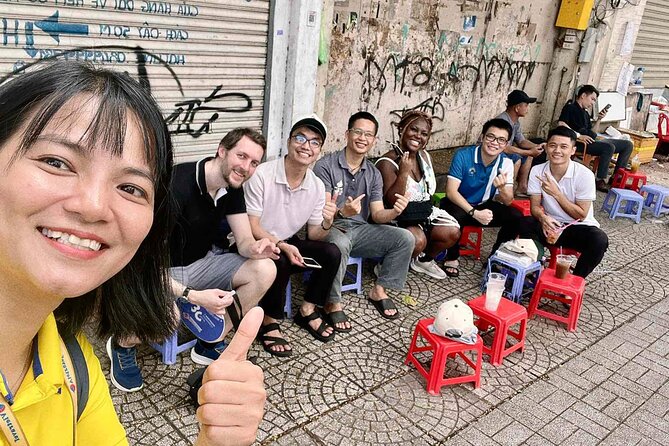
On foot through the old quarters and alleys
- Super Niche Walking Street Food Tour in Ho Chi Minh City★ 5.0 · 1,636 reviews
- Saigon Night Bites on Foot: Local Vendors, Stories & Sweet Finish★ 5.0 · 701 reviews
- Ho Chi Minh City: Walking Food Tour with 13 Tastings★ 5.0 · 469 reviews
- Ho Chi Minh City: Super Niche Walking Street Food Tour★ 5.0 · 438 reviews
- Ho Chi Minh City: Private Street Food Evening Walking Tour★ 5.0 · 436 reviews
Independence Palace: watching the war story through a building
Next comes Independence Palace (also known as the Reunification Palace), a top landmark in central Ho Chi Minh City. It’s historically famous because it functioned as the presidential residence, and it sits right in the center of the city.
What you should do here: don’t only look at the famous rooms or façades (even if you focus on photos). Instead, stand back for a moment and think about how the building’s role changed over time. The value of a guided stop is that you don’t have to guess which era you’re looking at. You get the “why this place matters” framing so the details click faster.
This stop is short, but Independence Palace is so well-known that even a brief visit can give you a strong sense of place—especially if you’re moving to the next French-built site afterward, where the contrast is dramatic.
Notre-Dame Cathedral Basilica: French-style faith in Saigon
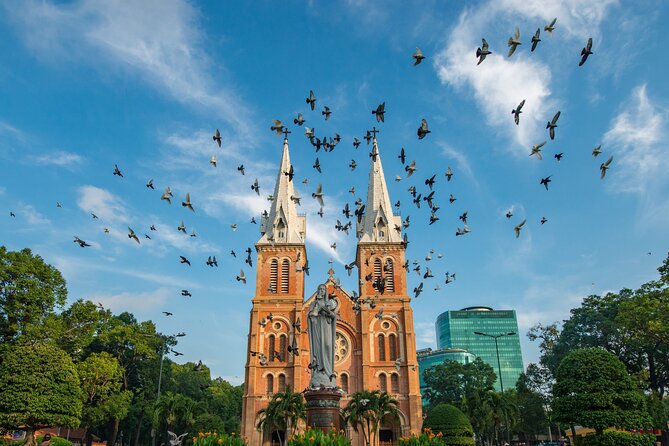
From the palace area, you head to Notre-Dame Cathedral Basilica of Saigon, built by the French and considered a replica of Notre-Dame in Paris. It’s the kind of sight that can feel obvious just because it’s familiar in shape, but the tour angle helps you see it as a historical statement.
Why I think it’s worth including: it’s one of those buildings where you can compare your expectations. If you’ve seen Paris’s cathedral, you’ll notice similarities. If you haven’t, you’ll still get that sense of “European streetscape in Southeast Asia.” Either way, it’s a visual jump that sets up Saigon’s layered identity.
Practical note: expect crowds and traffic near the cathedral. Your guide’s short timing helps you avoid wandering too long in the wrong direction.
Saigon Central Post Office and the street that connects East and West
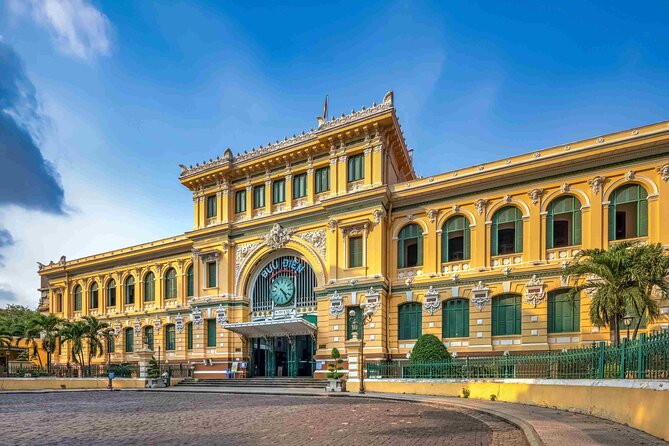
Then it’s a stroll along Pham Ngoc Thach Street toward the Saigon Central Post Office. This is one of the most satisfying stops for people who like to understand how cities work—not just where the big buildings are.
The tour framing focuses on the idea that Eastern and Western influences meet here. Even without getting lost in architectural jargon, you can feel the point: the post office isn’t just a place to mail things. It’s a symbol of communication, administration, and the era that shaped central Saigon’s public spaces.
How to make the most of your time: slow down and look beyond the front façade. If you’re in a hurry, it’s easy to treat it like a photo background. With a guide’s context, you’ll know what to notice and why it matters.
Saigon Opera House: where elite culture met a changing city
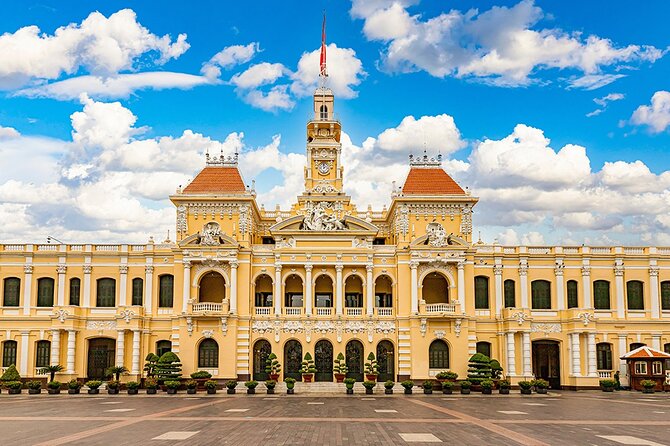
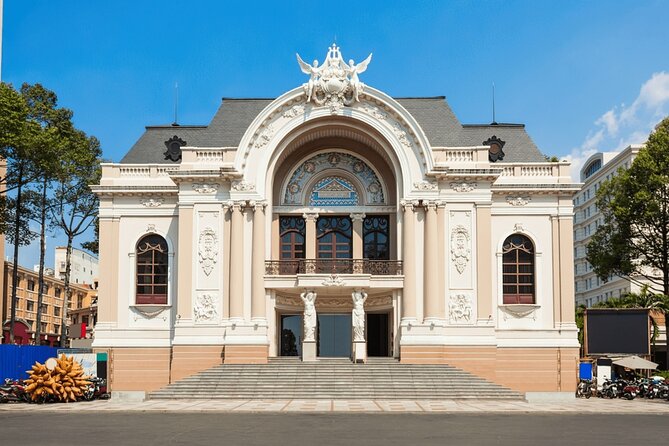
Just across the street is the Saigon Opera House (also called the Ho Chi Minh Municipal Theater). You’ll hear that it was once a gathering place for the elite, and that the city earned the nickname Pearl of the Far East.
This stop is brief, so don’t expect a full deep architectural analysis. Instead, use it like a “pause and compare” moment. You’ve just seen a cathedral tied to French religious presence, and now you’re looking at a performance venue tied to social status and civic life. Put together, those two stops explain more than either one alone.
If you like theater history or colonial urban planning, you’ll probably enjoy standing a moment and imagining what the audience scenes might have looked like back when this was a key public institution.
The People’s Committee Building and the meaning of government architecture
Next is the People’s Committee Building, described as a colonial-style government structure on Lê Thánh Tôn Street. It currently serves as the city’s executive government body.
This is one of those stops where the guide context can change how you feel about it. Government buildings can look “just functional” if you pass them fast. With a short guided explanation, you can spot how colonial-era design still shapes the atmosphere of modern administration.
Practical advice: be mindful of the area around government buildings. You’ll likely be surrounded by traffic and daily movement, so keep your walking pace steady and use the guide’s cues to stay on schedule.
Café Apartment: the charm of an old French-era building turned modern
Then you reach the Café Apartment on Nguyen Hue Walking Street, described as a French-era apartment block that has been transformed into something more casual and visitor-friendly.
Why this stop works on a walking tour: it’s a change of pace from “monument mode.” You’re not only looking at power structures and historic institutions. You’re seeing how older built form becomes part of everyday life.
If you like quirky urban spaces, you’ll probably enjoy this because it’s a story about reuse. You get the idea that the city doesn’t only preserve; it repurposes.
Bach Dang Quay Park: finishing at the river for a calmer end
The walk ends at Bach Dang Quay Park, a quieter stretch by the Saigon River. This stop is positioned as a place that’s watched the city’s transformation over centuries and was a hub for grand arrivals.
Ending at the river is smart. It gives you a natural reset after several historic buildings in dense central streets. If you’re the type who likes to decompress, you’ll appreciate that final segment. You can also use it as a transition point for further exploring in District 1.
You finish near Tôn Đức Thắng, Ward 2, District 1 at Ben Bach Dang. If you’re planning your next activity, this is a good area to aim for rideshare pickups or a post-walk meal nearby.
What’s included (and why those extras matter)
Here’s what you’re getting as part of the tour price and package:
- Bottled water
- Private tour guide (you’re guided rather than just following a map)
- Hand fan (seriously helpful in the heat)
- Postcard
- 10% coupon discount for a next trip with the same provider
Also, admission for each listed stop is shown as free, which helps you avoid random ticket lines at the main sights.
What’s not included is also clearly stated: tips for guide and driver. If you want a comfortable experience, budget a little for that at the end rather than making it awkward.
How much walking is it really?
The itinerary is built around short stops, but the total time is still about 2.5 hours. That means you’ll spend time walking between landmarks, plus brief standing time at each location.
You’ll enjoy this tour most if you:
- like seeing a lot in a short window
- want a guided narrative so the city makes sense faster
- are okay with quick stops rather than long museum-style time
You might reconsider if you:
- hate standing in sun or busy streets
- need long seating breaks often
- want a slower, deep-structure tour of one site
Who should book this walking tour?
I’d point this tour toward first-time visitors who want a fast orientation through central Ho Chi Minh City’s best-known landmarks. It’s also a good choice if you like history but don’t want to spend a whole day inside.
If you’re traveling solo, a good guide can make a big difference, and this route is easy to follow. If you’re a couple or a small group, it’s a low-pressure way to get grounded and avoid wasting your first day wandering.
Should you book it?
Yes, if your goal is context + efficiency. For $5, you’re getting a short guided pass through Saigon’s key monuments, plus practical comfort items like water and a hand fan. You also finish near the river, which makes it easy to roll into your next plan.
Book it especially if you care about hearing the story behind what you see. The standout theme from the guide feedback is passion and clear explanations, with guides like Luna and Tam mentioned as particularly strong at history and local cultural context.
Skip it or plan differently if you want a long, slow pace at fewer sites. This is a “get oriented fast” walk, not a full-day deep dive into one museum or neighborhood.
FAQ
FAQ
How long is the Saigon walking tour?
It runs for about 2 hours 30 minutes (approx.).
What time does the tour start?
There are departures at 9 A.M. and 4 P.M.
How much does it cost?
The price is $5.00 per person.
Where do I meet and where does the tour end?
You start at the Vietravel Headquarters Building at 190 Pasteur in District 3, and the tour ends at Ben Bach Dang on Tôn Đức Thắng in Ward 2, District 1.
Is a mobile ticket provided?
Yes, the tour uses a mobile ticket.
Are entrance fees included for the stops?
The tour information lists admission tickets as free for the stops on the route.
What’s included in the price?
Included items are bottled water, a private tour guide, a hand fan, a postcard, and a 10% coupon discount for your next trip with the provider.
Are tips included?
No. Tips for the guide and driver are not included.
What is the cancellation policy?
Cancellation is free up to 24 hours in advance for a full refund. If you cancel less than 24 hours before the start time, the amount paid isn’t refunded.
What happens if weather is poor?
This experience requires good weather. If it’s canceled due to poor weather, you’ll be offered a different date or a full refund.
More Tour Reviews in Ho Chi Minh City





Saigon on Foot, Continued



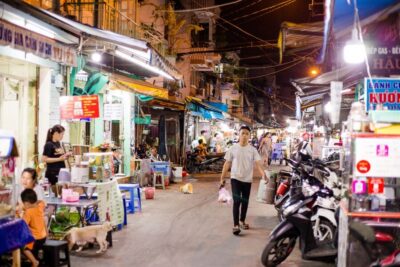
All of Saigon in a Day
Just Reviewed Around Saigon
- Secret walking Food Tour Ho Chi Minh City
★ 5.0 · 3 reviews - Ho Chi Minh City: Secret Cocktail Experience
★ 5.0 · 3 reviews - From Ho Chi Minh city: Vung Tau Beach Private Day Tour
★ 5.0 · 3 reviews - Saigoncholon
★ 3.5 · 3 reviews - Saigon On 2 Wheels
★ 3.5 · 3 reviews - From Ho Chi Minh City: Relax In Mui Ne Beach In 1 Day
★ 4.3 · 3 reviews
Saigon City Tours, compared.
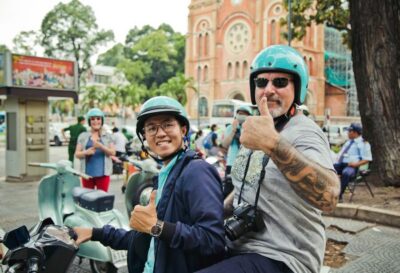 ★ 4.9City Highlights and Saigon Unseen Scooter Combo TourFrom $251,366 reviews
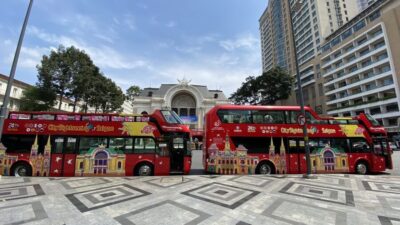 ★ 4.2City Sightseeing Hop-On Hop-Off Bus TourFrom $211,080 reviews
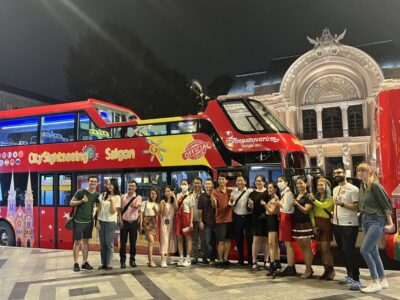 ★ 4.3City Sightseeing 45-Minute Panoramic Night TourFrom $7964 reviews
 ★ 5.0Small-group Saigon City Tour: 4-Hour Must-see Iconic LandmarksFrom $30788 reviews
 ★ 5.0Essential Mekong Delta: Highlights Tour from Ho Chi Minh CityFrom $23636 reviews
 ★ 5.0Daily Small Group Tour to Saigon City and Cu Chi TunnelsFrom $50412 reviews
 ★ 5.0Ho Chi Minh City Tour by Motorbike with Female Riders | KissTourFrom $46330 reviews
 ★ 5.0Cu Chi Tunnels – Tapioca & City Tour (6 Major Attractions) 1 dayFrom $72285 reviews
Browse the lists this tour appears in