
Saigon has a softer side. This small-group, 3-hour tour slows everything down so you can eat in real alleys and learn as you go, with guides Hieu and Spring. I especially loved the no-sign grandma noodle dumplings soup and how Hieu connects each stop to everyday life and Vietnam War context in the city neighborhoods.
One thing to consider: you’ll walk through narrow alleys and market lanes, so comfortable shoes matter, and it isn’t a good fit if you have mobility limitations.
In This Review
- Key things you’ll notice right away
- Why this quiet Saigon breakfast crawl feels different
- Starting point at a monk monument and the small-group advantage
- Stop 1: Grandma noodles in a tiny alley with no signage
- Stop 2: The chessboard market fruit safari (wet market chaos, controlled)
- Stop 3: Vietnam War stories you feel, not just facts you memorize
- Stop 4: Vietnamese coffee with cà phê sữa đá and optional citrus
- Stop 5: Ginger tofu pudding, warm and quietly satisfying
- The backstreet wander where Saigon lives in the hẻm
- Open chat at the end: ask anything, then sit and breathe
- Price and value: what $40 covers in a 3-hour local morning
- Who should book this tour (and who might want a different one)
- Should you book Spring Saigon Tours for this slow-morning Saigon plan?
- FAQ
- How long is the tour?
- How big is the group?
- Is the tour guided and in English?
- Where do we meet?
- What’s included in the price?
- Is transportation included?
- How much does it cost?
- Can I cancel for a full refund?
- Is the tour suitable for people with mobility impairments?
Key things you’ll notice right away
- Grandma-stall noodle dumplings soup in a tiny alley setup, the kind you’d never find by accident
- Saigon’s second-largest local market, known as the chessboard, where fruit is tasted on the spot
- Vietnam War lessons from a local point of view in a historic area, without heavy-handed lecturing
- Vietnamese coffee (cà phê sữa đá) made and explained by a local coffee expert
- Warm ginger tofu pudding finished with ginger syrup and coconut milk
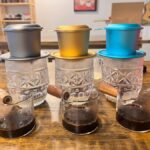
Another glass of ca phe sua da, poured strong



Why this quiet Saigon breakfast crawl feels different
Most people meet Saigon when it’s already running at full speed. Motorbikes, packed cafes, bright sun, everyone wide awake and moving fast. This tour flips that rhythm. You start the day in a slower gear, where the loud sounds are replaced by the small stuff: steam hissing, chopsticks scraping, and vendors going about their routine.
What makes it interesting is that it’s not staged for photos. You’re eating and walking like locals do, then you’re given just enough context to make sense of what you’re seeing. I like that the pacing stays calm, even when you’re heading into busy market areas.
And yes, the food is the main event. But the real payoff is how the meals turn into a story: how people eat, how people live, and how the city remembers.
Starting point at a monk monument and the small-group advantage
You’ll meet in front of a monument of a monk. It’s an easy landmark, and the tour guide keeps the group together so you don’t spend the first part of the morning guessing where to go next.
The group is kept small, limited to 6 participants. That matters more than you might think. Small groups move through alleys and stalls with less friction, and it gives you room to ask questions instead of listening to a lecture you can’t stop.
The tour is guided live in English, with guides Hieu and Spring (with Hieu leading, and Spring supporting). That’s great for turning observations into understanding without slowing the group down too much.
Stop 1: Grandma noodles in a tiny alley with no signage
Your first food moment is a Vietnamese noodle dumplings soup served from a grandma-style stall setup. Think stools, steam, broth that smells like it’s been simmering for real, and a bowl that feels built for breakfast.
The dumpling noodles are a smart first choice for a Saigon morning because they warm you up fast and keep you grounded. You’re not just tasting something exotic; you’re getting a sense of what comfort food looks like before the city turns loud.
Practical tip: this kind of stall experience usually means you’ll be eating close to where food is cooked and served. Wear sleeves/clothes that won’t stress you out if things get a little warm or close.
Stop 2: The chessboard market fruit safari (wet market chaos, controlled)
Next comes a local market walk in Saigon’s second-largest market, known as the chessboard. The nickname fits: the layout feels like a grid you can get lost in, with stalls that branch off in every direction.
This part is a fruit safari in the best way. You’ll try tropical fruits you might only recognize from signage or photos, and here you get them in real form: rambutan, mangosteen, breast milk fruit, sapodilla. You also get the important context that comes with fruit tasting: how people pick it, when it’s at its best, and why certain fruits fit the local diet and daily habits.
One of my favorite ideas in this section is that the market isn’t treated like an exhibit. It’s a working place, and your visit stays respectful—no stopping the flow, no turning every stall into a performance.
If you have allergies, this is the time to speak up early. The tour structure helps here because you’re dealing with one guided group and one guide at a time, not wandering solo in a maze.
Further back into old Ho Chi Minh City
- From Ho Chi Minh: Cu Chi Tunnels Half-Day History Tour with Guide★ 5.0 · 480 reviews
- Saigon Afternoon City Historical Scooter Tour |Opt: Ao Dai Riders★ 5.0 · 466 reviews
- Saigon Unseen, History, & Hidden Gems Sightseeing Motorbike Tour★ 5.0 · 416 reviews
- Saigon Morning City Historical Scooter Tour w Ao Dai Rider option★ 5.0 · 349 reviews
- 6 Hours Historical Tour in Cu Chi Tunnel with Free Snack★ 5.0 · 312 reviews
Stop 3: Vietnam War stories you feel, not just facts you memorize
Then the tour shifts gears to history. You’ll walk through a historic area where you learn about the Vietnam War from a local perspective. The key is that it’s delivered through place and daily life, not a list of dates.
This kind of stop is valuable because it changes what you think history is. Instead of treating the Vietnam War as something locked in textbooks, you see it hovering in the background of neighborhood architecture, routines, and how people talk about their past.
You only spend a few minutes in this portion, and that’s by design. The goal isn’t to overwhelm you. It’s to give you a framework so the rest of the morning—food, streets, and markets—feels connected.
Stop 4: Vietnamese coffee with cà phê sữa đá and optional citrus
After the market, you get a coffee moment that’s simple but deeply Saigon. Vietnamese coffee is served in a way that feels slow and intentional: drip coffee pouring into condensed milk for cà phê sữa đá.
This is also where the guide role matters. A local expert can explain why the coffee tastes the way it does and how it became part of daily life. You’re not just ordering a drink; you’re learning the logic behind it.
If you like experimenting, ask about variations. The tour notes even include the idea of adding lime for cà phê chanh. It sounds odd until you try it, and the guide can help you figure out if it’s your style.
Coffee tip: since you’re drinking something sweet, keep water handy and pace your sips. You’re going to finish with dessert later, and ginger tofu pudding tastes best when you’re not completely maxed out on sugar.
Stop 5: Ginger tofu pudding, warm and quietly satisfying
Your final stop is dessert: silken tofu in warm ginger syrup, served with coconut milk. It’s a gentle end to the tour—soft, sweet, and soothing.
What I like about this finish is that it doesn’t feel like a rushed finale. Ginger and coconut give you aroma and comfort without making the sweetness heavy. It also lands with a cultural note: this is the kind of comfort dessert Vietnamese grandmas are associated with when someone needs care, calm, and a soft reset.
It’s also a good way to end a walk-based tour because it doesn’t require much chewing and settles your stomach after market browsing.
The backstreet wander where Saigon lives in the hẻm
Before the tour wraps, you’ll slide into hẻm alleys—Saigon’s backstreet world. This is where the city feels most real, because you see the scale of daily life. Doors that open straight into narrow lanes. People stepping in and out as if you’re part of the morning routine.
This part also keeps the tour grounded in movement. Instead of ending with one last restaurant stop, you get that slow landing feeling: walking slows down, the air cools a bit, and you’re ready to sit.
Open chat at the end: ask anything, then sit and breathe
The tour finishes in a quieter spot with coffee—basically a bench moment that leaves room for questions. This is where you can ask about anything that came up during the morning: war stories you didn’t expect to hear, food choices you’re curious about, or what else to eat next in Saigon.
I like this structure because it prevents the classic problem of tours where you only get answers in between bites. Here, you get time to ask follow-ups without feeling rushed.
If you’re the type who likes a calm conversation after a busy day, this ending style is a big plus.
Price and value: what $40 covers in a 3-hour local morning
At $40 per person for 3 hours, this tour isn’t trying to compete as a cheap snack walk. It’s priced like a guided morning with multiple food stops and context.
Here’s what you’re paying for in practical terms:
- A full seated-style noodle dumplings soup stop at a grandma stall
- Fruit tasting in a major local market (with guidance on what to try)
- Coffee prepared and explained by a local expert, including condensed-milk style coffee
- Dessert: silken tofu in warm ginger syrup with coconut milk
- Plus history framing and neighborhood walking that connects everything
Also, it’s a small group capped at 6. That usually means less crowd pressure at narrow stalls and more chance to get direct answers.
Not included: transportation to and from the meeting point. So you’ll want to factor that in if you’re comparing total cost.
In my view, the value comes from the combination: food + market access + history context + coffee craftsmanship, all packed into a short, walkable morning.
Who should book this tour (and who might want a different one)
This is a great fit if you want Saigon to feel real rather than checklist-y. You’ll enjoy it most if you like:
- Street food that isn’t wrapped in tourist branding
- Markets where you taste as you go
- Short history that connects to daily life
- A calm pace with space to ask questions
It may not be the best choice if you:
- Have mobility issues, since the route uses narrow alleys and market lanes
- Prefer very structured, museum-like history with lots of dates (this is more lived-in and place-based)
- Want a long food crawl with many stops, since the format is designed to be a quiet morning adventure
Should you book Spring Saigon Tours for this slow-morning Saigon plan?
If you’re tired of rushed tours and want a Saigon morning that feels like you found a private rhythm, I’d book it. The biggest strength is the pairing of real eating with local storytelling, without turning the day into a nonstop performance.
I’d especially consider it if you care about Vietnam War context in a way that feels human and grounded. You’ll also get a standout coffee moment with cà phê sữa đá, plus a comfort-food dessert that’s not the typical cookie-and-café ending.
On the other hand, if your comfort level with walking through busy markets is low, or if you need wheelchair-friendly routing, you should skip this one and look for a tour designed for easier circulation.
FAQ
How long is the tour?
It lasts 3 hours.
How big is the group?
The group is limited to 6 participants.
Is the tour guided and in English?
Yes, it’s a live tour guide in English.
Where do we meet?
You meet in front of a monument of a monk.
What’s included in the price?
Everything is included.
Is transportation included?
No, transportation to the meeting point and back home is not included.
How much does it cost?
The price is $40 per person.
Can I cancel for a full refund?
Yes. You can cancel up to 24 hours in advance for a full refund.
Is the tour suitable for people with mobility impairments?
No. The tour isn’t suitable for people with mobility impairments because it includes narrow alleys and markets.
Back Through Old Ho Chi Minh City




More Tour Reviews in Ho Chi Minh City




Saigon by the Glass of Coffee
Just Reviewed Around Saigon
- Secret walking Food Tour Ho Chi Minh City
★ 5.0 · 3 reviews - Ho Chi Minh City: Secret Cocktail Experience
★ 5.0 · 3 reviews - From Ho Chi Minh city: Vung Tau Beach Private Day Tour
★ 5.0 · 3 reviews - Saigoncholon
★ 3.5 · 3 reviews - Saigon On 2 Wheels
★ 3.5 · 3 reviews - From Ho Chi Minh City: Relax In Mui Ne Beach In 1 Day
★ 4.3 · 3 reviews
Saigon Coffee Tours, compared.
 ★ 4.9Egg coffee & Course on 4 traditional types of Viet coffeeFrom $18487 reviews
 ★ 5.0Fun & Easy Vietnamese Coffee Workshop in Hồ Chí Minh CityFrom $23293 reviews
 ★ 5.0Vietnamese Coffee & Culture Exploration in Hồ Chí Minh CityFrom $29202 reviews
 ★ 5.0Decadent Vietnamese “Egg Coffee” Workshop in Hồ Chí Minh CityFrom $20150 reviews
 ★ 4.9Fun and Easy Coffee Workshop for BeginnersFrom $23121 reviews
 ★ 5.0Techniques & Secrets Behind the Famed Vietnamese Egg CoffeeFrom $2099 reviews
 ★ 5.01 hour Egg Coffee Cooking Class with Snack and Local InstructorFrom $1572 reviews
 ★ 5.0Saigon Unseen: Culture, Coffee, Hidden Spots Motorbike AdventureFrom $3360 reviews
Browse the lists this tour appears in