
REVIEW · SAIGON COOKING CLASSES
M.O.M COOKING CLASS
Cooking Vietnam starts with a trip to the market. At M.O.M, you get a Saigon market start and then a hands-on class that turns shopping and prep into real skills you can repeat later.
I really liked the people factor. In the classes I’m describing here, guides are friendly and help you keep up, and one guide named Helen is known for speaking strong English and answering questions patiently.
One thing to think about: if you have allergies, translation matters. One group situation involved confusion around allergy needs, so you’ll want to flag restrictions clearly and double-check ingredients during class.
In This Review
- Key points worth knowing before you book
- Saigon Market Stop: Where You Start Cooking Before You Cook
- Choosing the Right Option: Market-and-Class vs Class Focus
- Inside the Air-Conditioned Classroom: How the Lesson Works
- Your Five Dishes: Building Skills, Not Just Eating
- Eating Your Results, Plus the Dessert Surprise
- Dietary Needs, Allergies, and Language Support in Real Life
- Price and Logistics: What $40 Buys You in Saigon Time
- Who Should Book M.O.M Cooking Class (and who should pass)
- Should You Book This Saigon Cooking Class?
- FAQ
- How much does the M.O.M cooking class cost?
- How long is the experience?
- Is it a private class or a group class?
- Does the half-day option include a market visit?
- Can the class accommodate vegetarian or special dietary needs?
- Do I get recipes after the class, and is dessert included?
Key points worth knowing before you book
- Market shopping first: you learn what to look for and buy fresh produce used in your dishes.
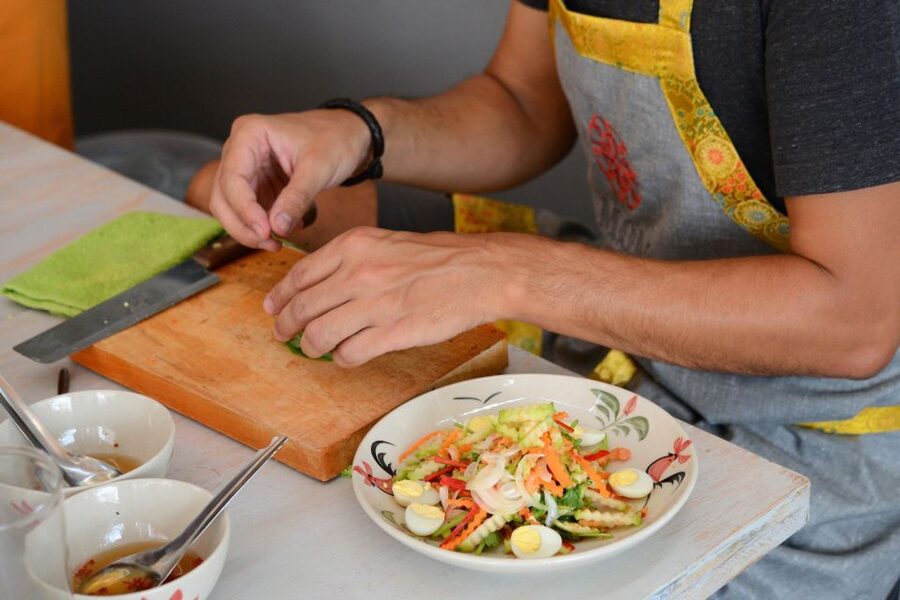
- Five dishes from scratch: you don’t just watch; you cook and get guided step by step.
- Small group size (8 max): easier to ask questions and get help when your chopsticks skills wobble.
- You eat your results: meals and beverages are included, plus complimentary ice-tea and water.
- Recipes + certificate afterward: you receive recipes in English, Korean, or Chinese.
- Dietary needs are possible: vegetarian options and other adjustments can be made if you indicate them in advance.
Roll up your sleeves in another Saigon kitchen


Saigon Market Stop: Where You Start Cooking Before You Cook
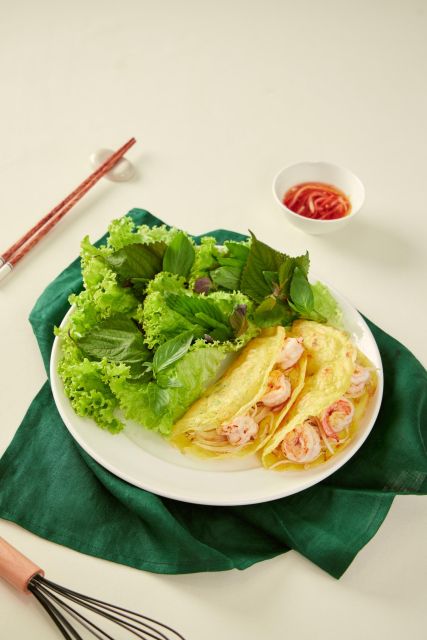
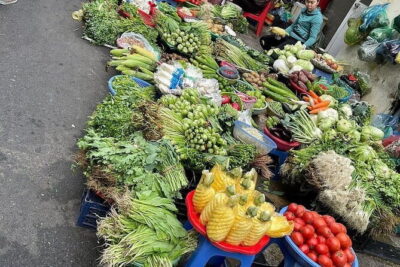
This experience starts with a local market, and that’s the big difference between a “cook for fun” class and a “learn how Vietnamese cooking actually works” class. You’ll be shown how to pick ingredients so the dishes taste right, instead of relying on a mystery box of shortcuts.
You’ll also shop for fresh produce needed for what you’re going to cook. That matters more than it sounds. In Vietnamese cooking, the balance of herbs, vegetables, and aromatics is a huge part of flavor, and the market is where you see the ingredients before they end up on your cutting board.
If you’re the type who likes to understand why something tastes a certain way, this is where you get your footing. Even if you’ve eaten Vietnamese food a hundred times, learning the ingredient logic makes it easier to recreate dishes back home.
Choosing the Right Option: Market-and-Class vs Class Focus
M.O.M offers a couple ways to fit cooking into your day. You can book a half-day style experience that includes a local market visit, then shift into the hands-on cooking portion. You can also choose a hands-on cooking class option.
Starting times vary, and you can typically find classes in the mornings, afternoons, or evenings depending on availability. That flexibility is useful in Saigon, where plans can change fast—especially if you’re bouncing between sights and meals.
Here’s how I’d think about the two options:
- If you want the full “learn ingredients first” experience, pick the market-inclusive option.
- If you mainly want to cook, eat what you make, and go home with recipes, the hands-on class option still delivers the core value: step-by-step chef guidance and multiple dishes cooked from scratch.
Either way, the activity ends back at the meeting point, so you’re not left figuring out transport after you’re done eating.
Inside the Air-Conditioned Classroom: How the Lesson Works
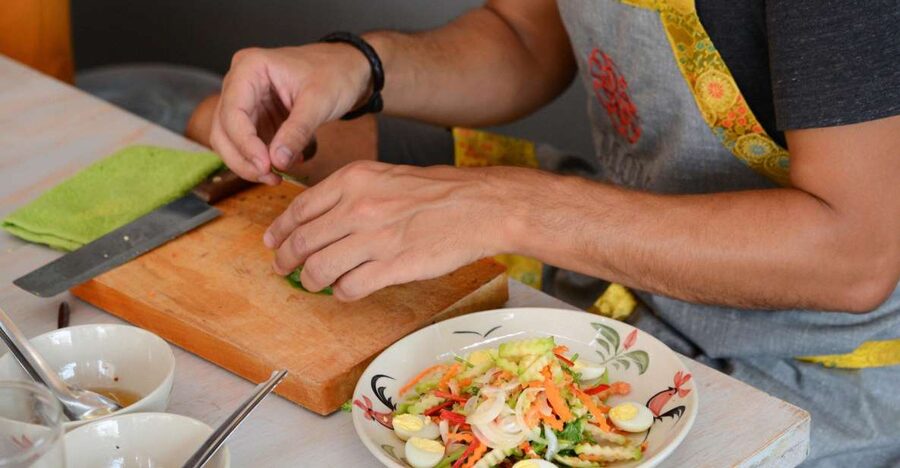
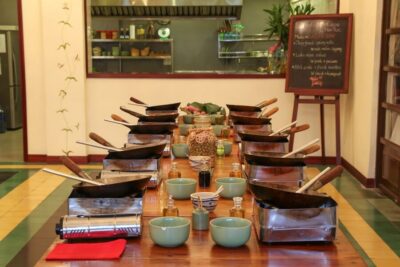
After the market portion (if your option includes it), you’ll move into an air-conditioned classroom. That’s a practical win in Saigon. Cooking is hands-on and warm-work-heavy, so having climate control keeps the experience comfortable while you focus on technique.
The class is built as a join in group cooking class with guidance as you go. You’re not left with vague instructions like good luck. Instead, you get step-by-step help from your guide/chef so you can follow along even if your kitchen experience is mostly reheating pad thai.
It’s also a small group experience—limited to 8 participants. That size really changes how the class feels. You’re close enough to the instructor to ask questions and get adjustments without waiting in line behind ten other people.
You’ll also receive meals and beverages during the experience, and there’s complimentary ice-tea and water. That turns the session into a full experience rather than a quick cooking demo followed by a snack.
Your Five Dishes: Building Skills, Not Just Eating
A core promise here is that you’ll cook five famous Vietnamese dishes, each one from scratch. The menu can shift by day, but the structure stays the same: you learn, you cook, you taste, and you build confidence to repeat the dishes later.
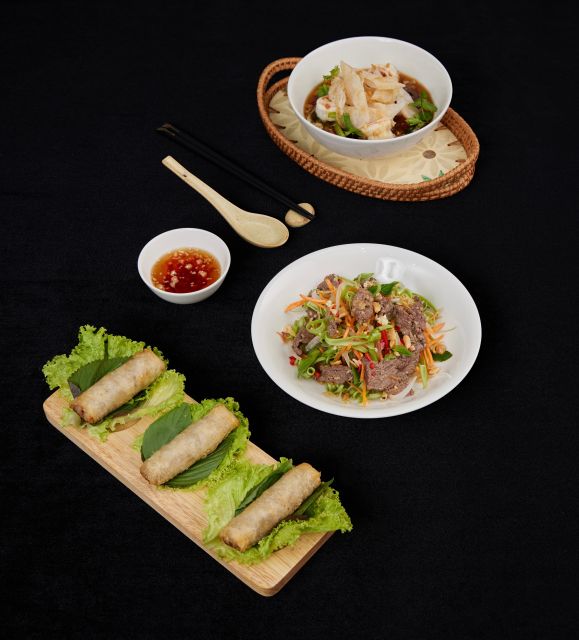
From past classes, you can sometimes expect dishes like banh mi and pho—and in one session, spring rolls also showed up as a bonus. Even if your exact menu differs, the pattern is similar: you’ll practice multiple Vietnamese cooking components instead of repeating the same flavor profile.
What I find valuable is that cooking from scratch forces you to learn the workflow:
- prep and assembly
- balancing flavors as you go
- understanding how dishes come together from ingredients you selected at the market (when booked with the market option)
And you’re eating what you make. That’s not just about satisfaction; it also helps you learn fast. When you taste your own food, you notice what you did well and what you’d tweak next time. It’s the quickest way to go from recipe-reading to real technique.
Back to the wok, another lesson
- HCM:Mekong Delta Boat,Khotcake cooking Coconut Village,SmallGroup★ 5.0 · 2,374 reviews
- Mekong Delta 4 Islands, TukTuk, Boat, Try Khot Cake Local Cooking★ 5.0 · 1,148 reviews
- Immersive Cooking Class & Wet Market Tour by Local Chef +Cookbook★ 5.0 · 367 reviews
- Small-group 2-Day Mekong Delta: Floating market, Cooking Class…★ 5.0 · 194 reviews
- Authentic Vietnamese Cooking Class with Market Visit in HCMc★ 5.0 · 182 reviews
Eating Your Results, Plus the Dessert Surprise
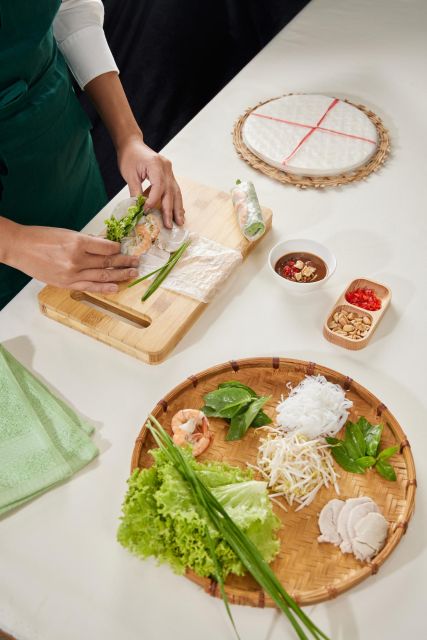
One of the best parts is simple: you get to enjoy your self-cooked meal, not just carry it around like a trophy. Meals and beverages are included, and you’ll get ice-tea and water during the session.
Dessert is where things get a little unpredictable. There’s no fixed dessert on the menu; it changes daily. That’s not a problem, just a heads-up. If dessert is your main goal, plan for variety and don’t expect the same sweet each time you book.
Also, since you’ll be cooking multiple dishes, come hungry. The class isn’t designed as a light tasting—it’s a full meal day experience in a guided format.
Dietary Needs, Allergies, and Language Support in Real Life

M.O.M says the cooking class can be adapted to various dietary needs, including vegetarian options. If you have special dietary requirements, you’re expected to indicate them during checkout.
This is the right policy. But the practical takeaway from real-world experience is that you should treat your instructions like part of the program. When allergy needs are not clearly communicated, you can end up with an overly cautious cooking result where ingredients are removed across the whole table—even if only one person needed a change.
One class example involved a mix-up around allergies where the group ended up avoiding ingredients that might have been fine for some people. To prevent that, do two things:
- Specify your restrictions clearly at checkout.
- Reconfirm them with the chef/guide once you arrive and again during cooking when ingredients are introduced.
If language is a concern for you, the guides are English/Vietnamese speaking. In one reviewed class, Helen’s English was described as very good and she was willing to answer questions. That’s what you want: not just translation, but real time understanding.
Finally, remember that the recipes you receive afterward can be in English, Korean, or Chinese. If you have a language preference, tell the chef so your recipe set matches what you’ll actually use at home.
Price and Logistics: What $40 Buys You in Saigon Time
At $40 per person, this isn’t a bargain-cooking fantasy. It’s closer to a structured meal experience plus skill-building.
Here’s what you get for the price, based on the program details:
- a small group (up to 8)
- an English/Vietnamese-speaking guide
- market shopping (on the half-day option)
- ingredients for five dishes
- an air-conditioned classroom
- step-by-step chef guidance
- meals and beverages, plus ice-tea and water
- recipes and a certificate
When you add all that up, the value comes from three places:
- You cook multiple dishes, from scratch, not just one.
- You get guided technique, which is usually where cooking classes earn their cost.
- You leave with recipes, so it’s not a one-time meal memory.
The duration is 3–4 hours, depending on the option and schedule. That’s a good length for visitors who want a full experience without losing the whole day. Starting times vary by availability, and meeting points can vary based on what you booked, but the activity ends back at the meeting point.
If you’re comparing it to doing cooking on your own, the price also covers convenience: you’re not planning ingredient sourcing, figuring out steps, or coordinating a group. You show up, shop (if booked), cook, eat, learn, and leave with a guide’s recipe pack.
Who Should Book M.O.M Cooking Class (and who should pass)
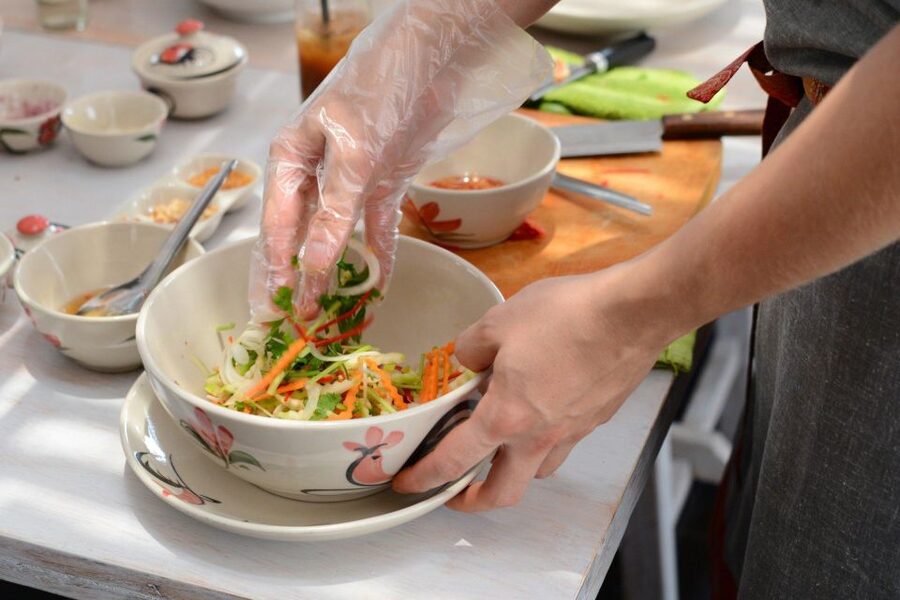
I’d point you toward M.O.M if you:
- want to learn Vietnamese cooking methods you can repeat at home
- like market time and ingredient selection, not just the cooking station
- enjoy small groups where you can ask questions
- want a structured experience that includes food, drinks, recipes, and a certificate
You might want to reconsider if:
- you have complex allergy requirements and you can’t clearly communicate them in advance
- you’re bringing very young kids (it’s not suitable for children under 6 years)
- you prefer a quick, casual food tasting with no cooking commitment
For most people, this lands in the sweet spot: hands-on, guided, and designed to give you more than a full stomach.
Should You Book This Saigon Cooking Class?
If your goal is skill-building plus a great meal, I think it’s an easy yes. The combination of market shopping (on the half-day option), cooking five dishes from scratch, and leaving with recipes in your preferred language makes the class feel like a real investment, not a ticket to watch other people work.
Just don’t treat dietary needs as a side note. Be explicit, confirm on arrival, and ask about ingredients as you cook. If you do that, you’ll get the fun part—cooking with friendly instruction, eating what you make, and going home with something you can actually reproduce.
FAQ
How much does the M.O.M cooking class cost?
It costs $40 per person.
How long is the experience?
The duration is 3–4 hours, depending on the starting time available for your option.
Is it a private class or a group class?
It’s a group cooking class in a small group setting, limited to 8 participants.
Does the half-day option include a market visit?
Yes. The half-day option includes a local market visit where you learn how to choose ingredients and you shop for fresh produce used in the dishes you’ll cook.
Can the class accommodate vegetarian or special dietary needs?
Yes. You can indicate special dietary requirements during checkout, including vegetarian options, and the class can be adapted to various dietary needs.
Do I get recipes after the class, and is dessert included?
You receive recipes and a certificate after the class. Dessert is not fixed and changes daily. If you want the recipes in a specific language (English, Korean, or Chinese), inform the chef of your preference.
Learn One More Vietnamese Dish
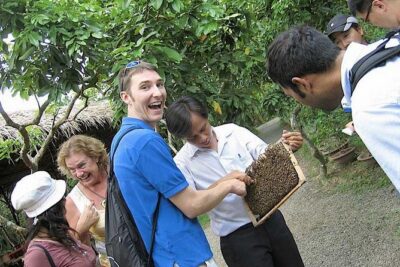

More Tour Reviews in Ho Chi Minh City


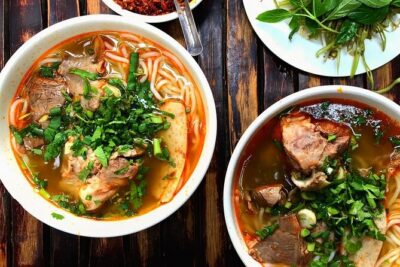
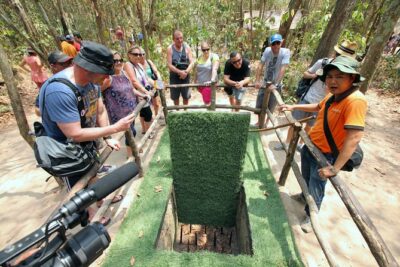


Cook It Yourself: Saigon Kitchens
Just Reviewed Around Saigon
- Secret walking Food Tour Ho Chi Minh City
★ 5.0 · 3 reviews - Ho Chi Minh City: Secret Cocktail Experience
★ 5.0 · 3 reviews - From Ho Chi Minh city: Vung Tau Beach Private Day Tour
★ 5.0 · 3 reviews - Saigoncholon
★ 3.5 · 3 reviews - Saigon On 2 Wheels
★ 3.5 · 3 reviews - From Ho Chi Minh City: Relax In Mui Ne Beach In 1 Day
★ 4.3 · 3 reviews
Saigon Cooking Classes, compared.
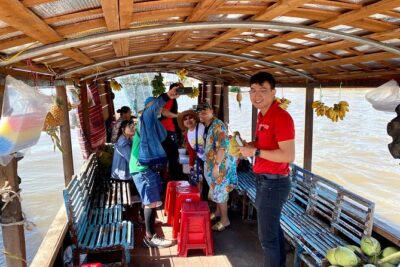 ★ 5.0Cai Be Mekong Delta Tour: Cooking Class, Cycling & Craft VillagesFrom $391,881 reviews
 ★ 5.0Mekong Day Trip Explore Village Bicycle CookingClass Group 12 PaxFrom $29705 reviews
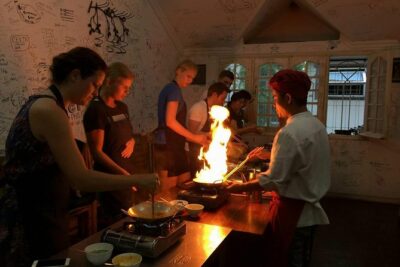 ★ 5.0Chef Vu Cooking Class Plus Market Trip in Saigon Center (Pick up by Cyclo)From $46477 reviews
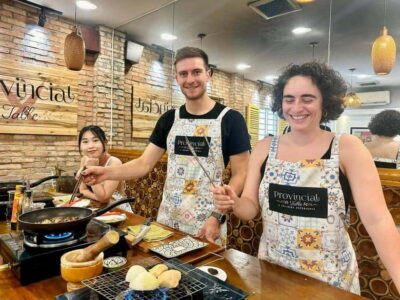 ★ 4.8Immersive Cooking Class & Market Tour By Local Chef+CookbookFrom $33426 reviews
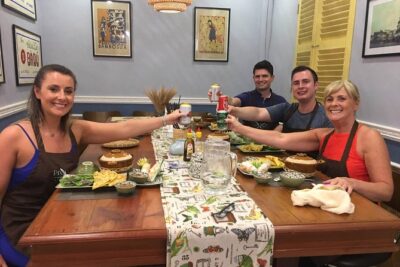 ★ 5.0Immersive Cooking Class & Wet Market Tour by Local Chef +CookbookFrom $49367 reviews
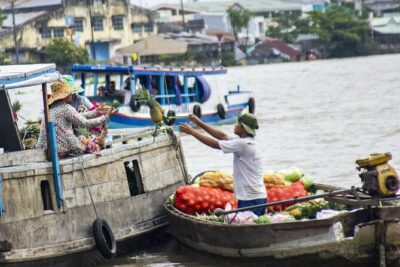 ★ 5.0Small-group 2-Day Mekong Delta: Floating market, Cooking Class…From $170194 reviews
 ★ 5.0Authentic Vietnamese Cooking Class with Market Visit in HCMcFrom $45182 reviews
 ★ 4.9Cooking Class with Ben Thanh Market visitFrom $4594 reviews
Browse the lists this tour appears in