
REVIEW · SAIGON COOKING CLASSES
Cooking Class with Ben Thanh Market visit
Hands-on cooking starts at a market gate. I love the mix of Ben Thanh Market shopping with a chef and a 3-course class where you actually cook. You’ll leave with Vietnamese kitchen know-how you can repeat, not just photos.
I also like the clear flavor rules built into the lesson. MSG and Knorr powders are forbidden, and each person gets their own tools and ingredients so the steps make sense as you go.
One thing to keep in mind: the pace can feel fast if you’re a slow cook or easily distracted. The market runs until 9:50 AM, you return by taxi around 9:40 AM, and then the main cooking block runs 10:00 AM–1:00 PM.
In This Review
- Key points you’ll care about
- Meeting at Cua Tay Gate: where the class actually begins
- Ben Thanh Market with a chef: how you learn what to buy
- The 9:40 taxi back: tight timing that prevents kitchen downtime
- Inside the kitchen: hands-on learning, one station per person
- The 3-course menu: you’ll taste what you’re learning
- Flavor rules that make the lesson feel trustworthy
- Vegetarian and allergy adaptations: you must tell them first
- Who teaches you: English support and patient pacing
- Price and value: why $45 can be a good deal
- What to expect from your timing and meal schedule
- Who this class is best for (and who might want a different option)
- Should you book this Ben Thanh Market + Cooking Class?
- FAQ
- Where do I meet the chef?
- What time does the experience run?
- Do I get picked up and dropped off?
- How do we get from the market to the kitchen?
- How many courses will I cook and eat?
- Is MSG or Knorr powder used?
- Can vegetarians or people with allergies join?
- What languages are used during the class?
Key points you’ll care about
- Ben Thanh Market ingredient shopping with your chef, so you learn what to buy and why
- A tight schedule (market, taxi back, then a 10:00 AM start) that keeps the class efficient
- Hands-on cooking with your own station, not a watch-and-hope experience
- No MSG or Knorr powders, so the flavors you taste match Vietnamese cooking choices
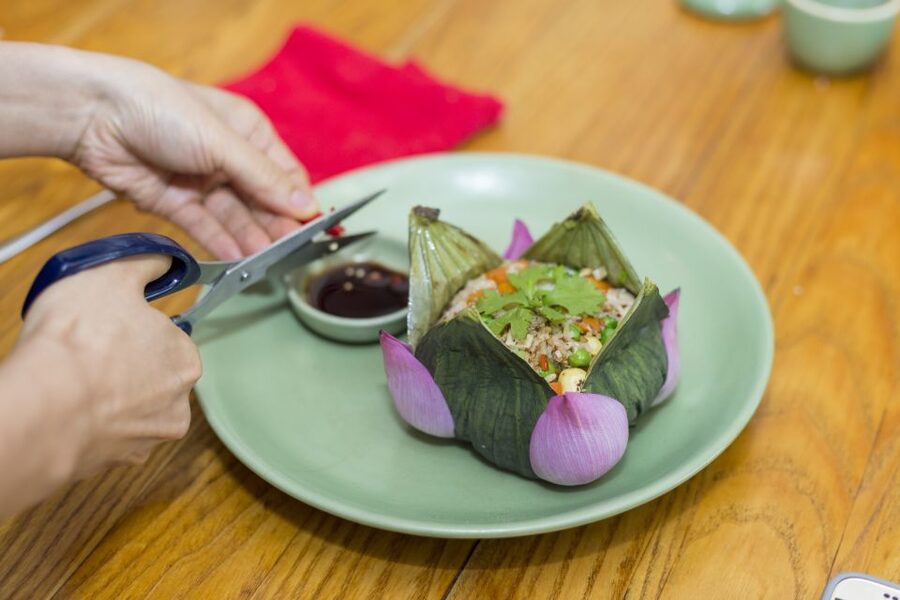
- 3 courses you eat as you cook, plus iced tea and water during the class
- Vegetarian and allergy swaps are possible if you tell them in advance
Roll up your sleeves in another Saigon kitchen


Meeting at Cua Tay Gate: where the class actually begins
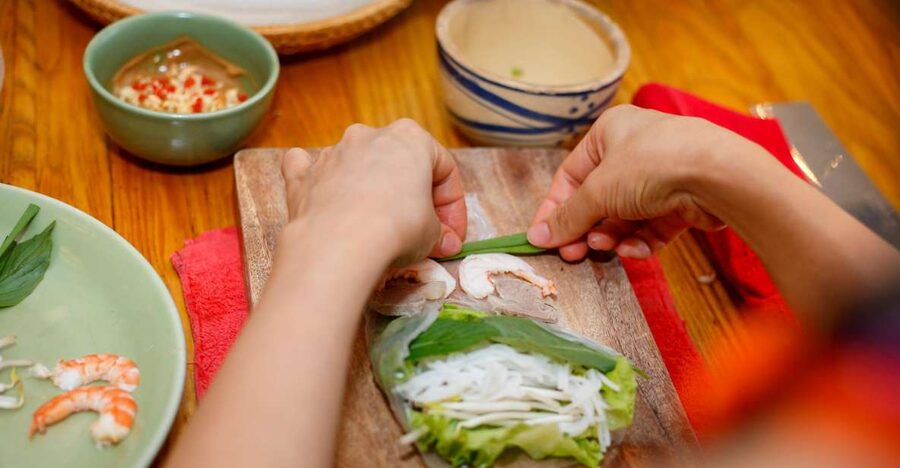
The day starts at 9:00 AM at the Cua Tay gate of Ben Thanh Market on Phan Chu Trinh Street. Look for the chef in a Saigon Cooking Class t-shirt, and arrive a few minutes early so you’re not jogging through the market to catch up.
This meeting point matters because it sets the tone: you’re not doing a random market browse. You’re meeting the person who will guide you to the ingredients you’ll cook later, which makes the shopping time feel purposeful instead of chaotic.
You should also plan to dress for walking. Ben Thanh is a market, so comfy shoes help, especially since you’ll be moving through stalls during that 9:00–9:50 AM window.
Ben Thanh Market with a chef: how you learn what to buy
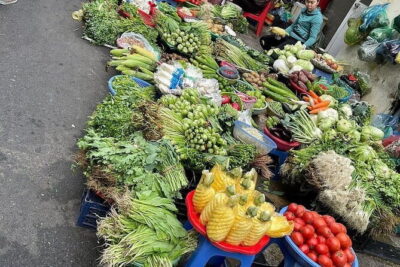
From 9:00 to 9:50 AM, your chef leads the market visit and helps you buy what you need for the menu. The best part is that the shopping isn’t generic. You’re guided through ingredients with context—what they’re used for, how they’re chosen, and how they connect to what you’ll cook in the kitchen.
This is where you’ll pick up practical “ingredient logic.” You’ll start to understand why certain Vietnamese flavors rely on specific herbs, aromatics, and seasoning choices instead of just adding sauce at the end.
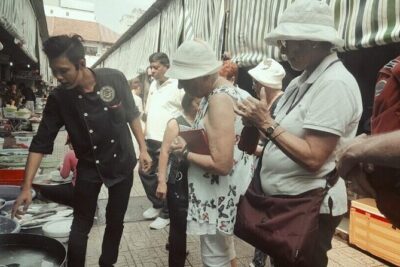
I also like that the market isn’t treated like a museum stop. It’s treated like a working place, so you learn how locals actually source ingredients. If you’ve ever cooked Vietnamese food at home and wondered why it tasted different, this is the part that helps you close that gap.
The 9:40 taxi back: tight timing that prevents kitchen downtime
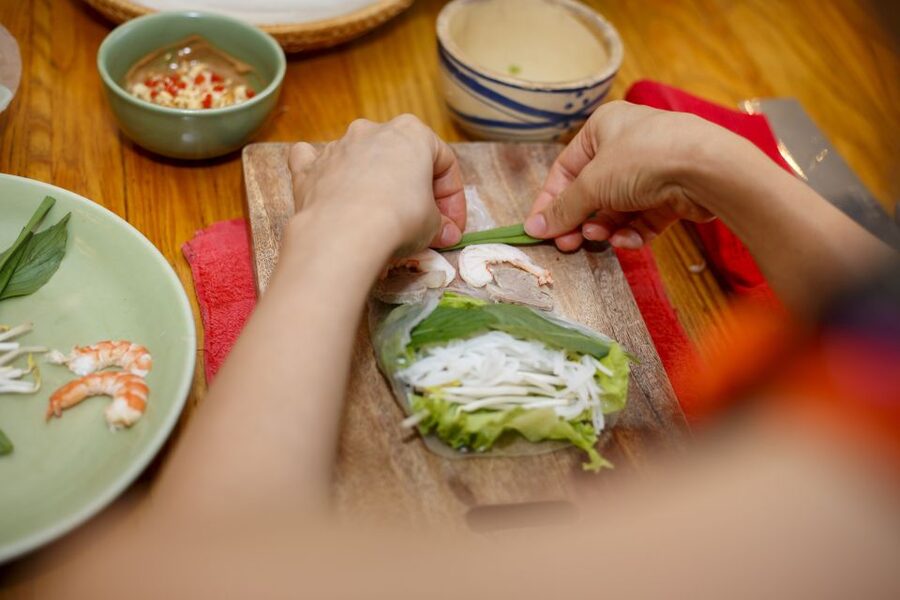
At 9:40 AM, your chef brings you back by taxi to begin the cooking class. The class officially runs from 10:00 AM to 1:00 PM, so this transfer keeps you from arriving late or sitting around waiting.
Why you’ll feel this in real life: cooking-class mornings can get slow if there’s no time buffer. By tightening the schedule, the kitchen time goes to cooking instead of logistics.
It’s also included in the price, while pick-up and drop-off aren’t. So you’re responsible for getting yourself to the meeting point, but once the day starts, the transition to the kitchen is handled.
Inside the kitchen: hands-on learning, one station per person
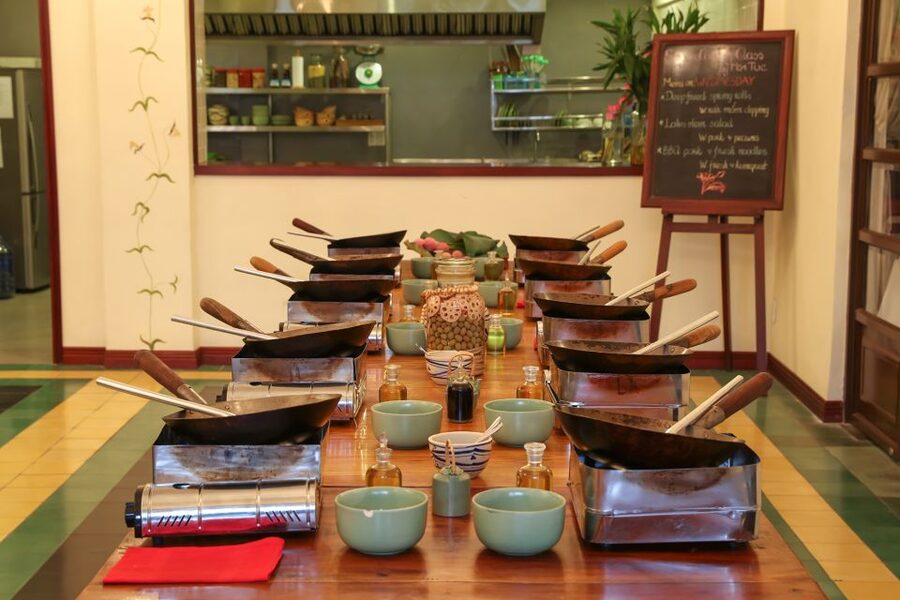
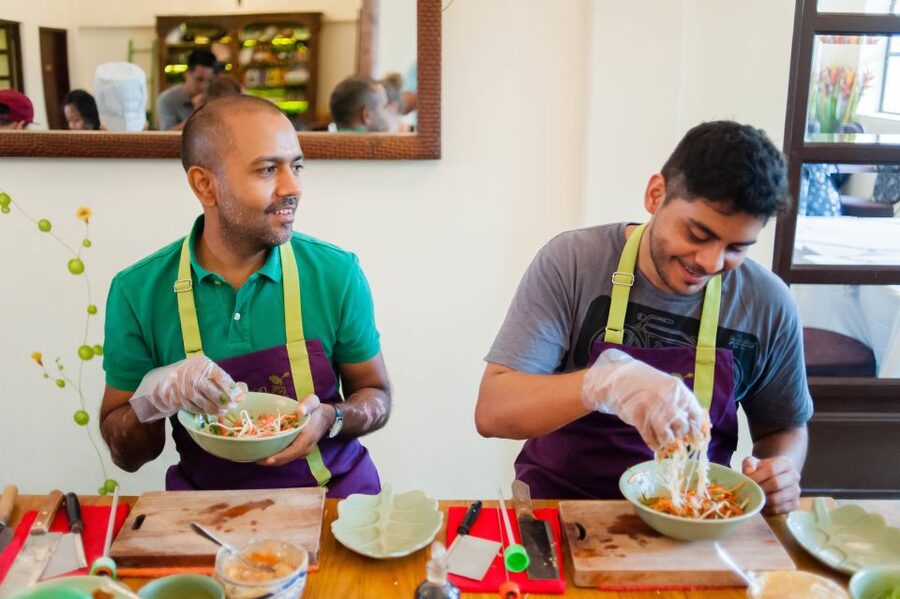
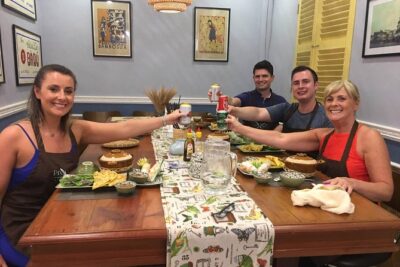
The cooking class is hands-on and designed so you follow step by step together. From 10:00 AM to 1:00 PM, you’ll cook all together, and the setup is built for learning: each person has their own equipment and ingredients.
That single detail changes everything. When you share tools or watch someone else work, it’s easy to miss the “why” behind each step. Here, you’re doing the work, so technique sticks.
You’ll also encounter Vietnamese kitchenware as part of the lesson. It’s not just a cooking demo; it’s a chance to see what tools and formats Vietnamese cooks use and how those choices affect the final food.
Some prep is handled for you—like portioning ingredients—so the class doesn’t turn into an endless “start from scratch” marathon. You still get to cook, but you’re not wasting time with steps that don’t teach you the core flavors.
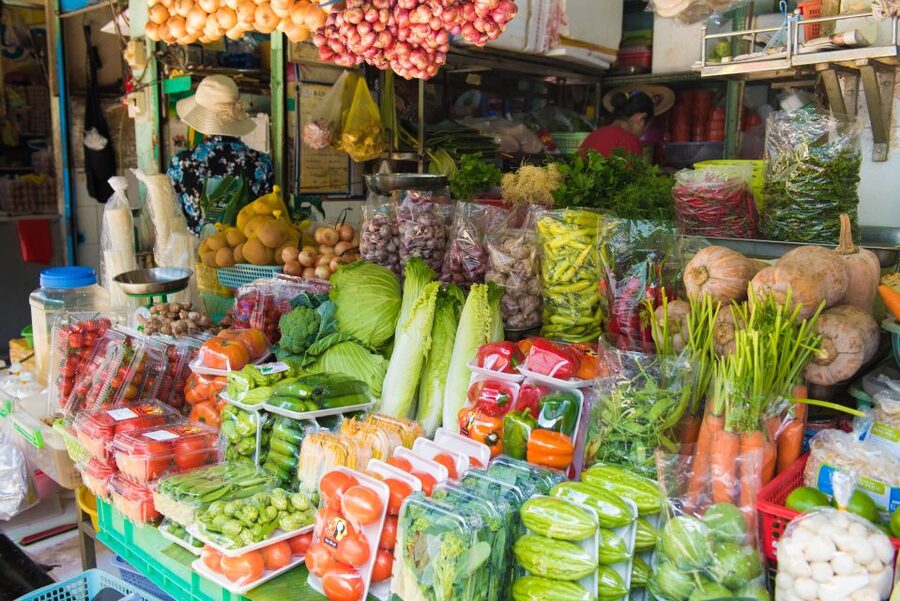
Into the stalls and food counters of Ben Thanh
- Cooking Class with Ben Thanh Market visit★ 4.9 · 94 reviews
- Ben Thanh Princess Luxurious Dining Cruise in Ho Chi Minh City★ 5.0 · 21 reviews
- Ben Thanh Princess: Luxury Dinner Cruise on Saigon River★ 5.0 · 12 reviews
- Exploring Ben Thanh Princess Dining Cruise in Ho Chi Minh★ 5.0 · 8 reviews
- Ho Chi Minh City: History Museum and Ben Thanh Market Tour★ 3.9 · 4 reviews
The 3-course menu: you’ll taste what you’re learning
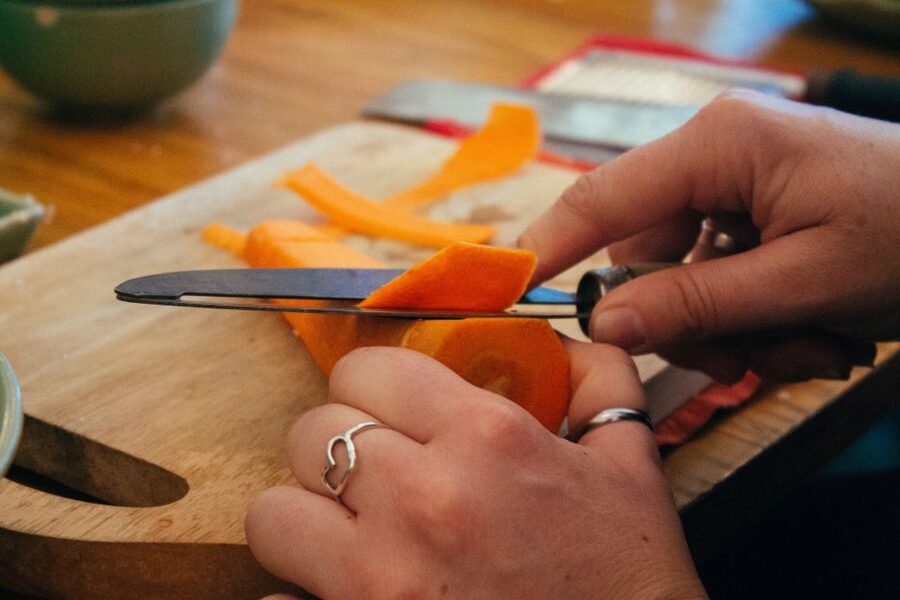
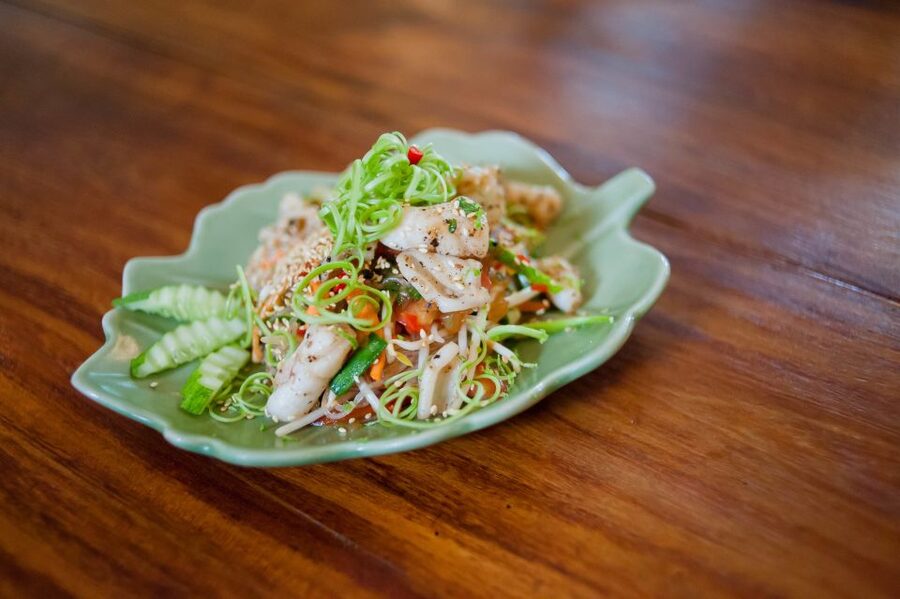
By the time you start eating, you’re already in the flow of the lesson. The experience is built around making and enjoying a 3-course meal, and the timing is set so you’re not waiting until the very end to taste.
You’ll also get iced tea and water during the class. It’s a small inclusion, but it keeps you comfortable while you’re working at the station.
One detail I appreciate: the class includes a digital recipe book, which means you can cook again later with a clear reference. This is especially helpful if you want to recreate the dishes after the spices and notes start fading.
And yes, there can be a surprise dessert. Leave room, because it’s not just a token sweet—people mention saving space for what comes next.
Flavor rules that make the lesson feel trustworthy
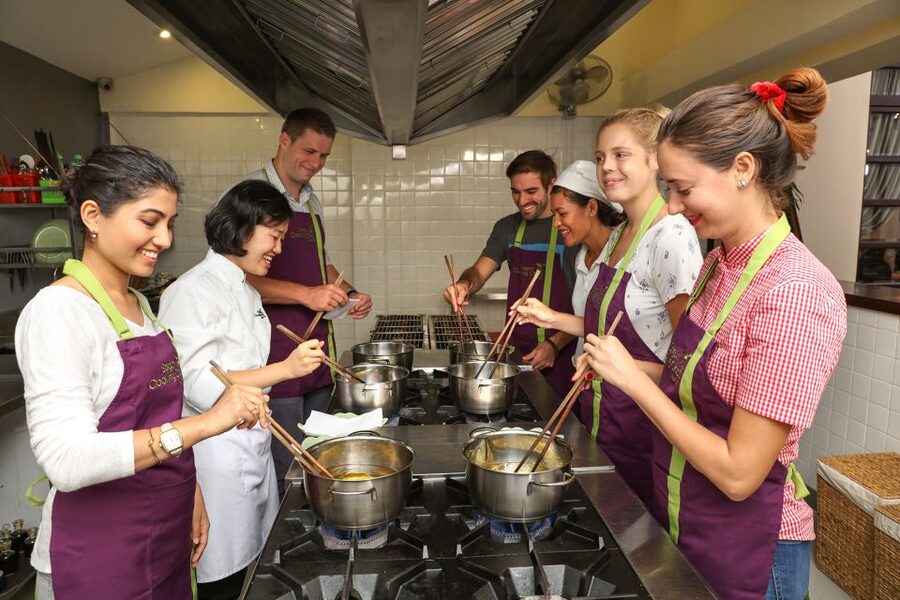
A lot of cooking classes say they’ll teach you real flavor, but the ingredient rules don’t always back it up. Here, MSG and Knorr powders are forbidden, and that matters because it changes how seasoning is taught and tasted.
It pushes you toward Vietnamese seasoning methods that rely on fresh ingredients and balanced flavor building rather than a shortcut powder. If you’re the type who wants to understand how dishes work at home, this rule makes the class more than just a fun morning.
It also helps if you’re sensitive to heavily processed seasonings. If your food preferences lean toward simpler ingredient lists, this class is an easier fit.
Vegetarian and allergy adaptations: you must tell them first
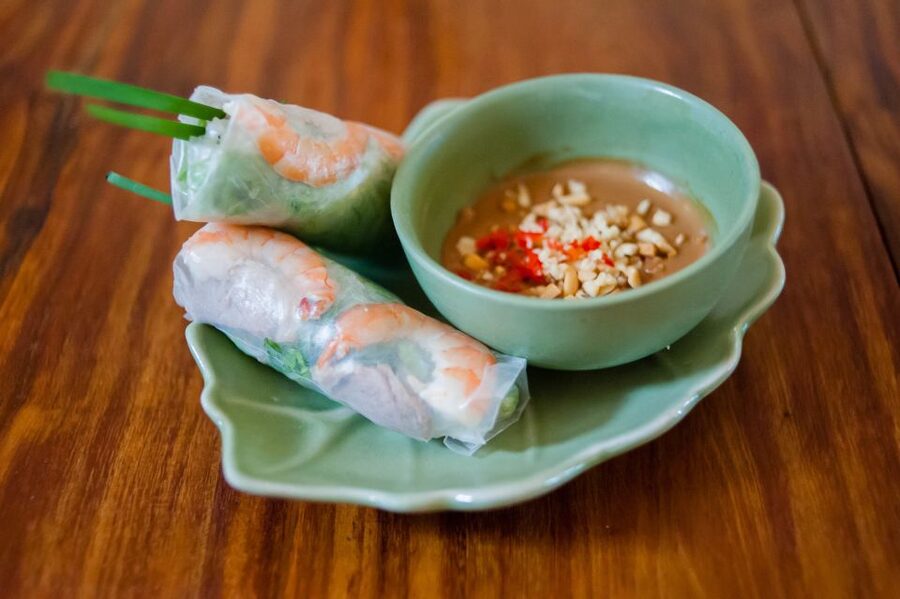
The menu can be adapted for vegetarians and people with food allergies if you let them know in advance. That’s the key word: in advance.
If you have dietary needs, don’t wait until the day of the class. Share your needs early so the chef can adjust ingredients for your station and keep you in the cooking flow with everyone else.
Also note that this adaptation isn’t described as an “extra side plate.” It’s framed as adjusting the menu, which is what you want if you’re planning to eat what you cook with the group.
Who teaches you: English support and patient pacing
Instruction is Vietnamese and English, with chefs and guides praised for clear communication. Names that come up include Chef Ly, Oanh, Li, Thao, and Wan, and they’re often mentioned for being helpful and explaining steps in a way that works for different levels.
If you’re worried about understanding the process, English support is a big plus. One of the strongest patterns in the feedback is that the instructions are easy to follow while you’re standing at your station, not just during a lecture.
That said, keep one consideration in mind: the cooking pace can feel quick at moments, especially when multiple steps stack up. If you know you like time to slow down, don’t be shy about asking for clarification.
Price and value: why $45 can be a good deal
At $45 per person for about 4 hours, this can be good value if you compare it to what you’d pay for food alone plus a market guide.
You’re getting:
- A market visit with a chef (not just a stroll)
- A full hands-on cooking class
- A 3-course meal you eat
- Iced tea and water
- A digital recipe book
For many people, the hidden cost in cooking classes is that you’re mostly paying for instruction while you eat very little. Here, you’re eating what you cook, and the recipe book gives you something you can use later.
The other value angle: the lesson includes ingredient sourcing. If you’ve ever tried to cook Vietnamese food without knowing where to start, shopping with a chef is part of what makes the class worth it.
What to expect from your timing and meal schedule
Plan your morning around the class rhythm. The market time is 9:00–9:50 AM, then you return to start cooking, and the main cooking window runs 10:00 AM–1:00 PM.
That timing is also why many people suggest arriving hungry. If you eat a big breakfast first, the three-course meal may feel less satisfying. You don’t need to skip breakfast entirely, but you’ll likely enjoy the experience more if you save room.
Also remember the end point: the activity ends back at the meeting point. So you’re not dropped off somewhere random after lunch—you’re sent back where you started, which makes it easier to plan what comes next.
Who this class is best for (and who might want a different option)
This is a strong fit if you want a real Vietnamese cooking foundation without spending days hunting recipes. It’s especially good for:
- First-time visitors who want Ben Thanh context plus cooking skills
- Food lovers who learn best by doing
- Couples or small groups who want shared food and conversation
- People with allergies or vegetarian preferences who want menu flexibility (with advance notice)
It’s also been run successfully for younger participants in at least one case, with a chef described as managing students as young as 8. That suggests the teaching style can work across ages, as long as everyone can follow the steps at the station.
The main reason to rethink it is pacing. If you know you need a slow, relaxed environment where you can take your time without catching up, you might feel pressure when steps stack quickly.
Should you book this Ben Thanh Market + Cooking Class?
I’d book it if you want a morning that combines ingredient learning with cooking you can repeat. The market shopping with the chef, the hands-on station setup, the 3-course meal, and the fact that MSG and Knorr powders are forbidden all point in the same direction: you’ll leave with food knowledge that transfers to your own kitchen.
I’d hold off if you’re very sensitive to fast instruction or you dislike structured time blocks. Also, if you have dietary restrictions, book only when you can clearly communicate them ahead of time so the menu can be adapted.
If you’re planning a Saigon trip and you want one experience that touches both culture and cooking technique, this one is a solid choice.
FAQ
Where do I meet the chef?
Meet the chef at 9:00 AM at the Cua Tay gate of Ben Thanh Market on Phan Chu Trinh Street. The chef will be wearing a Saigon Cooking Class t-shirt.
What time does the experience run?
The full experience takes about 4 hours. The market visit runs 9:00 AM to 9:50 AM, and the hands-on cooking class runs 10:00 AM to 1:00 PM. Check availability for starting times.
Do I get picked up and dropped off?
No. Pick-up and drop-off are not included. You’ll meet at the market and then return to the meeting point after the class.
How do we get from the market to the kitchen?
After the market visit, you’ll go back to the cooking location by taxi starting around 9:40 AM. This taxi is included in the price.
How many courses will I cook and eat?
You’ll make and enjoy a 3-course meal during the cooking class.
Is MSG or Knorr powder used?
No. MSG and Knorr powders/enhance flavors are forbidden.
Can vegetarians or people with allergies join?
Yes. The menu can be adapted for vegetarians and for people with food allergies, as long as you let them know in advance.
What languages are used during the class?
The instructor speaks Vietnamese and English.
More Tour Reviews in Ho Chi Minh City


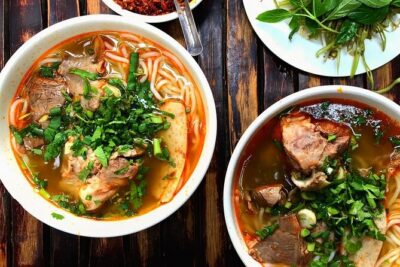



The Stalls of Ben Thanh Market




Cook It Yourself: Saigon Kitchens
Just Reviewed Around Saigon
- Secret walking Food Tour Ho Chi Minh City
★ 5.0 · 3 reviews - Ho Chi Minh City: Secret Cocktail Experience
★ 5.0 · 3 reviews - From Ho Chi Minh city: Vung Tau Beach Private Day Tour
★ 5.0 · 3 reviews - Saigoncholon
★ 3.5 · 3 reviews - Saigon On 2 Wheels
★ 3.5 · 3 reviews - From Ho Chi Minh City: Relax In Mui Ne Beach In 1 Day
★ 4.3 · 3 reviews
Saigon Cooking Classes, compared.
 ★ 5.0Cai Be Mekong Delta Tour: Cooking Class, Cycling & Craft VillagesFrom $391,881 reviews
 ★ 5.0Mekong Day Trip Explore Village Bicycle CookingClass Group 12 PaxFrom $29705 reviews
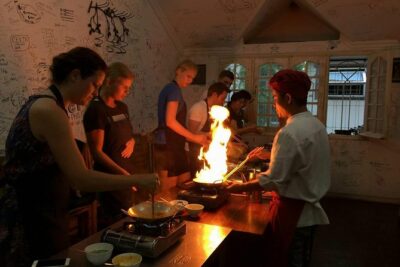 ★ 5.0Chef Vu Cooking Class Plus Market Trip in Saigon Center (Pick up by Cyclo)From $46477 reviews
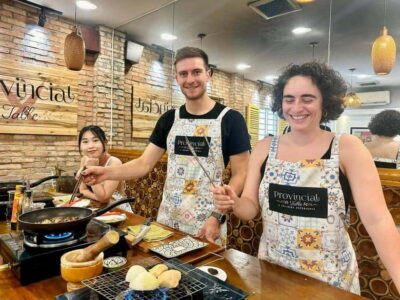 ★ 4.8Immersive Cooking Class & Market Tour By Local Chef+CookbookFrom $33426 reviews
 ★ 5.0Immersive Cooking Class & Wet Market Tour by Local Chef +CookbookFrom $49367 reviews
 ★ 5.0Small-group 2-Day Mekong Delta: Floating market, Cooking Class…From $170194 reviews
 ★ 5.0Authentic Vietnamese Cooking Class with Market Visit in HCMcFrom $45182 reviews
 ★ 5.0Experience half-day cooking class with market visitFrom $4292 reviews
Browse the lists this tour appears in