
REVIEW · MEKONG DELTA DAY TRIPS
Mekong Delta 2 Days 1 Night – Shared Tour
One of the best ways to slow down in Southern Vietnam. This shared Mekong Delta trip links Mỹ Tho canals and coconut country with a full rowing sampan segment, then finishes with an early boat outing to Cần Thơ’s Cai Rang Floating Market. I especially like how the day 1 route mixes big-sight stopping (Vinh Trang pagoda) with small-river moments like the rowing portion and canal rides. I also like that you’re not stuck staring from a bus window—there’s time on boats, fruit breaks, and hands-on workshop stops like coconut candy and noodle making.
The main thing to consider is that the flow can feel tour-heavy on day 2, and the timing may leave gaps. The schedule is early (think 6am departure for the floating market) and some meals and downtime can feel out of sync, so pack patience. Also, since it’s a shared group tour, you may not be guaranteed a fully English-speaking crowd, even with an English guide.
In This Review
- Key things to know before you go
- From HCMC to Mỹ Tho: the ride, Vinh Trang, and river rhythm
- Tien River to Tortoise Islet: what you’ll actually see from the motorized boat
- Bến Tre coconut country: the garden-pond-cage model and honey tea breaks
- Rowing sampan on shaded canals: the calm part of the trip
- Lunch in an orchard, then village walking with fruit and folk music
- The trip back to Mỹ Tho and the move to Cần Thơ
- Cần Thơ early morning: Cai Rang Floating Market and that bamboo monkey bridge
- My Khánh Tourist Village lunch, then back to HCMC
- Price and value: what $101 really covers
- Who this shared tour fits best (and who should skip it)
- Should you book this Mekong Delta 2 Days 1 Night – Shared Tour?
- FAQ
- How long is the Mekong Delta 2 Days 1 Night shared tour?
- Where does the tour start and pick me up?
- What are the main areas you visit?
- What meals are included?
- Is the hotel included, and what quality is it?
- Is an English-speaking guide included?
- What does the tour include for river and local activities?
- Are entrance fees included?
- Is there an extra cost for solo travelers?
- Can I cancel for a refund?
Key things to know before you go
- Mỹ Tho first, Cần Thơ overnight: you get a real second day instead of a rushed one-day coaster tour.
- Rowing sampan on narrow canals: a calmer, cooler stretch under coconut shade.
- Vinh Trang pagoda stop: one major cultural landmark built with mixed Vietnamese, Khmer, and European influences.
- Cai Rang Floating Market early boat ride: you’re there in the morning for the most active feel.
- Monkey bridge crossing: a simple, memorable village activity made from bamboo.
- Workshop-and-shopping risk: some parts can feel sales-driven, especially if you want pure nature only.
Sampans, orchards and coconut candy, more delta days
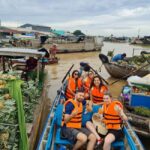
From HCMC to Mỹ Tho: the ride, Vinh Trang, and river rhythm
This tour starts in Ho Chi Minh City and then trades city traffic for rice fields. The drive is about 1.5 hours, and it’s one of the quiet benefits of this itinerary: you’re still moving, but the scenery starts to change fast. If you’ve only seen Vietnam from highways, this is a nice reset.
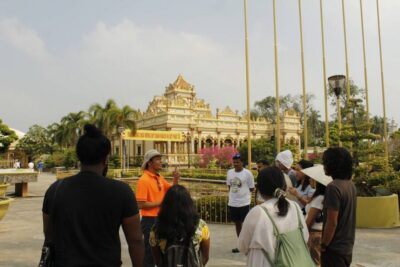
Once you reach Mỹ Tho, you’ll visit Vinh Trang pagoda, described as the oldest ancient pagoda in Southern Vietnam. It’s also presented as the largest in the region, with architecture shaped by Vietnamese and Khmer influence, plus European touches. Even if you’re not a “pagoda person,” this is worth it because it anchors the trip in place: the Mekong Delta isn’t just rivers and fruit stalls—it’s a living culture.
Practical tip: wear something comfortable you can sit in for a temple visit, and bring a light layer for later boat time. You’ll spend a lot of the day outdoors.
Tien River to Tortoise Islet: what you’ll actually see from the motorized boat
Day 1’s river time starts with a motorized boat on the Tien River to Qui (Tortoise) Islet. This portion is about views more than walking—stilt houses, the fishing port, and boat-building workshops are all part of the ride. You’ll also pass by several named islets, including Dragon, Phoenix, and Unicorn.
What I like about this style of sightseeing is simple: you don’t have to keep changing boats and tickets every ten minutes, yet you still get variety. You see the river as the highway, not as scenery.
Bến Tre coconut country: the garden-pond-cage model and honey tea breaks
Next comes Bến Tre province, known for coconut production. The itinerary includes a stop to see a typical farming model called Garden – Pond – Cage, which is a practical way to understand how locals manage water, land, and animals together. Even if you don’t remember every term, you’ll come away with a clearer sense of why coconut villages look the way they do.
Then you’ll visit a coconut candy mill and enjoy honey tea. These breaks are not only for taste. They’re also a window into how small food and drink businesses work in the Delta—quick, local, and built around coconut and fruit products.
One note: these stops can sometimes feel commercial. If your goal is mostly nature and river life, keep your expectations flexible. If you like learning how everyday treats get made, you’ll probably enjoy these moments.
Rowing sampan on shaded canals: the calm part of the trip
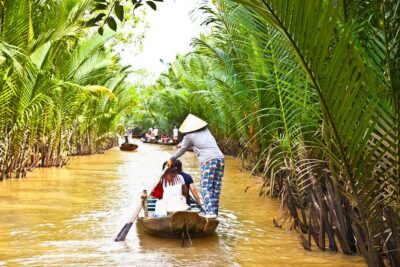
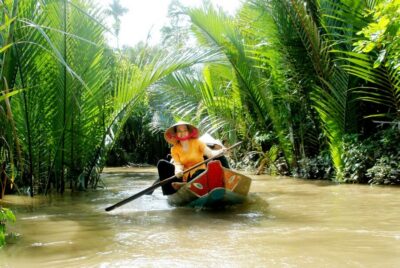
After the coconut-country stops, you’ll continue by smaller waterways, including a rowboat rowing (sampan) segment on narrow canals. This is the part that tends to feel most “Mekong Delta” in the best way: you’re moving slowly, usually under coconut trees, and you can feel the difference from the larger motorized stretches.
This part matters because it changes your pace. On a trip like this, speed can make everything feel like a checklist. The rowing segment is a natural antidote.
Practical tip: bring sunscreen and sunglasses. Even if the water feels cool, the sun in the Delta can be strong, especially on open canal stretches.
How else to spend a Saigon evening
- From Ho Chi Minh: 3-Day 2-Night Mekong Delta & Ca Mau Cape★ 4.5 · 4 reviews
Lunch in an orchard, then village walking with fruit and folk music
Lunch is served “right in the heart of the orchard garden,” which is exactly the kind of setup that makes a tour feel less manufactured. You’ll be eating in a place that matches what you’re seeing outside your boat windows.
After lunch, you’ll walk along the village path, visit a fruit garden, and enjoy tropical fruits. The itinerary also includes listening to Southern Vietnamese folk music performed by islanders. That combination—fruit + music in a walking segment—often lands well because it slows the tour down without you needing to “do” anything hard.
There’s also a chance to join daily activities of local people. The specific activity isn’t spelled out in detail here, so treat this as a friendly participatory moment rather than a guaranteed lesson. You’re likely to get more value if you’re relaxed and observant.
The trip back to Mỹ Tho and the move to Cần Thơ
The day ends with a final boat trip back to Mỹ Tho on the Tan Thach natural canal. Then there’s a short walk through village paths before you get back on the bus toward Cần Thơ.
You’ll check in to a 3-star hotel for one night (with an upgrade to 5-star available for a surcharge). The itinerary leaves the evening open for you to explore and relax.
How to use your free time well: skip trying to “see everything.” Pick one area to stroll, grab a drink (not included), and let your feet recover. This kind of tour is built on movement—boats, walking, transfers—so you’ll feel the mileage.
Cần Thơ early morning: Cai Rang Floating Market and that bamboo monkey bridge
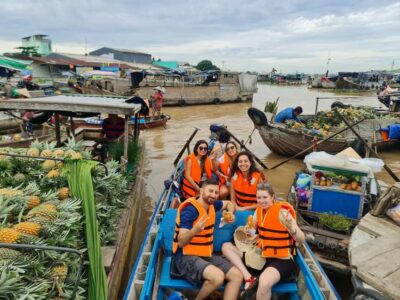
Day 2 begins with breakfast, followed by a boat trip exploring tributaries of the Lower Mekong River. Then it’s on to Cái Răng Floating Market, described as one of the most original and busy markets in the region.
Cai Rang is the headline here, but it’s the sequence that matters. You’re on a boat first, which frames what you’re seeing. The market then becomes less like a backdrop and more like part of a working river system.
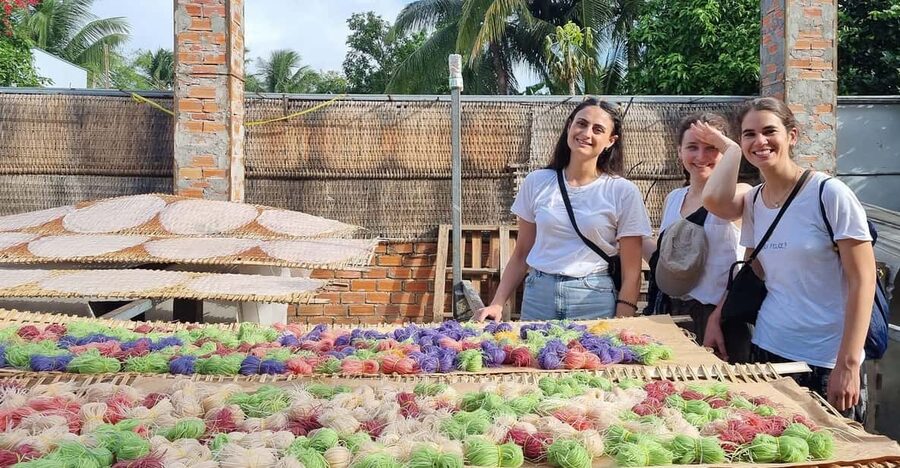
After the floating market, you’ll go see how Vietnamese vermicelli noodles are made. This is another workshop-style stop. Again, it can feel touristy, but it also gives you a reason to pay attention beyond just buying souvenirs.
You’ll then trek along a village path and experience a monkey bridge built from bamboo. This is one of those small moments that can make the trip feel real: it’s quick, physical, and grounded in everyday village design.
My Khánh Tourist Village lunch, then back to HCMC
After the village segment, you’ll visit My Khánh Tourist Village and have lunch there. After lunch, the bus transfer takes you back to Ho Chi Minh City.
If you’re wondering whether day 2 feels full: it does, but the balance can shift depending on how the morning runs. The itinerary is structured around the floating market timing, so later parts can feel rushed or padded. If you’re sensitive to schedule chaos, bring snacks and expect that your day might not always match your ideal meal timing.
Price and value: what $101 really covers
At $101 per person for 2 days / 1 night, you’re paying for a lot of “included logistics”:
- Air-conditioned transport during the day
- Meals: 2 lunches and 1 breakfast (dinner not included)
- Entrance fees
- Multiple boat experiences plus biking (listed as included)
- Coconut candy, honey tea, and fruit
- 1 night in a 3-star hotel (upgrade to 5-star with surcharge)
- English-speaking tour guide
- Cool towels and mineral water
For many people, that package structure is the value: you don’t have to map routes between Mỹ Tho, Bến Tre areas, and Cần Thơ, and you don’t have to figure out how to string together boats + markets + village activities. You’re also getting meals built into the plan, which helps when you’re on the water and canals.
Where it’s not great value: if you strongly dislike workshop stops or shopping-like environments, you may feel like your time is being used for sales-friendly stops. Also, dinner isn’t included, and drinks cost extra—so your day-to-day spending budget should assume add-ons.
If you’re traveling solo, there’s a surcharge: +400,000 VND, paid directly to the guide.
Who this shared tour fits best (and who should skip it)
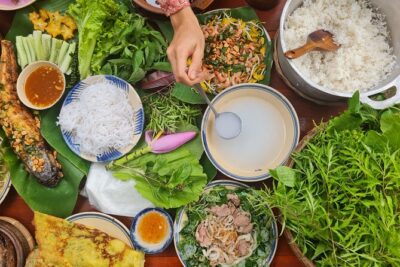
This tour is a good fit if you want a classic Mekong Delta route with variety: pagoda culture, big river cruising, a calmer rowing segment, fruit-and-music village time, and the iconic floating market in the morning.
It’s less ideal if you:
- want mostly quiet nature with minimal market and workshop time
- need very consistent English-only group interactions (shared tours can mix languages)
- hate early mornings and meal timing that doesn’t match your internal clock
It’s also worth noting that a shared group can affect how quickly you connect. Even with an English guide, you might end up with most other passengers speaking Vietnamese, so conversations could be limited.
Should you book this Mekong Delta 2 Days 1 Night – Shared Tour?
I’d book it if you want an organized, scenic 2-day loop that includes the main Delta hits without forcing you to plan transportation between stops. The rowing sampan, the orchard lunch setup, and the Cái Răng morning are the big reasons to choose it.
I’d hesitate if your top priority is only nature and you dislike anything that feels shop-forward. Also, if you’re the kind of traveler who gets cranky when breakfast and activities don’t line up perfectly, you’ll want to build your day around early timing and possible gaps.
If you do book: keep your expectations balanced—this is half river travel, half cultural + food stops, with a floating market finale. Pack patience, snacks for the long day, and comfortable shoes.
FAQ
How long is the Mekong Delta 2 Days 1 Night shared tour?
It runs for 2 days with 1 night in a hotel. Starting times can vary, so you’ll need to check availability for the schedule.
Where does the tour start and pick me up?
It includes pickup from a meeting point in Ho Chi Minh City at the departure time.
What are the main areas you visit?
You’ll go from Ho Chi Minh City to Mỹ Tho, then through Bến Tre and on to Cần Thơ. Day 2 includes a stop at Cái Răng Floating Market and then returns to Ho Chi Minh City.
What meals are included?
The tour includes 2 lunches and 1 breakfast. Dinner is not included.
Is the hotel included, and what quality is it?
Yes. You get 1 night at a 3-star hotel. An upgrade to 5-star is available for a surcharge.
Is an English-speaking guide included?
Yes. The tour includes an English-speaking tour guide.
What does the tour include for river and local activities?
Included activities feature boat trips, rowing sampan, and biking, plus fruit, honey tea, and coconut candy. Day 2 also includes vermicelli noodle making and a monkey bridge experience.
Are entrance fees included?
Yes. Entrance fees are included.
Is there an extra cost for solo travelers?
Yes. Solo travelers pay a surcharge of +400,000 VND, paid directly to the tour guide.
Can I cancel for a refund?
Yes. Free cancellation is available up to 24 hours in advance for a full refund.
More Tours in Ben Tre
More Tour Reviews in Ben Tre
More Days Down the Mekong
Just Reviewed Around Saigon
- HCM City: Ben Tre Mekong Delta & My Tho Day Trip with Lunch
★ 4.7 · 3 reviews - Ben Tre: visit Mekong delta region
★ 4.3 · 3 reviews - From Ho Chi Minh: 3-Day 2-Night Mekong Delta & Ca Mau Cape
★ 4.5 · 4 reviews - Private Vinh Trang Pagoda & Mekong Delta from Ho Chi Minh
★ 5.0 · 4 reviews - From Ho Chi Minh: Mekong Delta 3-day w Tra Su Forest
★ 3.3 · 4 reviews - Saigon: Mekong Delta Day Cruise
★ 4.0 · 5 reviews
Mekong Delta Day Trips, compared.
 ★ 4.5Mekong Delta Tour with Sampan JourneyFrom $1613,132 reviews
 ★ 4.7Cu Chi Tunnels & Mekong Delta with Coconut Village TourFrom $3511,836 reviews
 ★ 5.0Cu Chi Tunnels and Mekong Delta Signature TourFrom $337,328 reviews
 ★ 4.5Mekong Delta Guided Tour from Ho Chi Minh CityFrom $187,192 reviews
 ★ 5.0Cu Chi Tunnels & Mekong Delta Tour with VIP Limousine TransferFrom $567,052 reviews
 ★ 5.0Cu Chi Tunnels and Mekong Delta Full Day Tour – Max 12From $436,257 reviews
 ★ 4.8Full-Day Cu Chi Tunnels and Mekong Delta TourFrom $444,616 reviews
 ★ 4.7Mekong Delta, My Tho & Ben Tre Coconut VillageFrom $163,304 reviews
Browse the lists this tour appears in