
REVIEW · MY THO & BEN TRE TOURS
Private tour: Explore the authentic rural life in Ben Tre
Coconut canals beat city noise every time. This private Ben Tre outing swaps Ho Chi Minh-style traffic for small-river boat views and a rowing-boat pass through tight canals, the kind of waterway where you actually see how rural life sits alongside the river. I also like how the day mixes watching with doing, from coconut making to trying mat weaving with your own hands.
One heads-up: the guide’s English may be limited, so if you want lots of back-and-forth questions, plan to use simple wording, gestures, or a translation app.
In This Review
- Key points to know before you go
- Ben Tre rural life feels real, not staged
- Small-river boat trip plus a rowing pass through palm canals
- Old Brick Kiln on the river: see handmade bricks in action
- Coconut processing workshop: fresh tasting plus handcraft steps
- Nam Bo Coconut Candy Mill: watch, taste, and catch folk music
- Mat weaving by handloom: try the craft, not just watch
- Optional lunch at a riverside restaurant
- Rowing back and ending at the pier
- Price and timing: what $46.67 gets you
- Who this tour is best for
- Practical tips for a smooth Ben Tre morning
- Should you book Nam Bo Tours in Ben Tre?
- FAQ
- How long is the Ben Tre rural life boat tour?
- What does the price include?
- Do I need to buy tickets for the stops?
- What time does the tour start, and where do I meet?
- Is lunch part of the tour?
- Can the tour pick me up from Ho Chi Minh City?
Key points to know before you go
- Private canal time on small rivers, not a rushed big-bus stop-and-snap routine
- Rowing through palm waterways gives you slow views and close-up canal moments
- Coconut-to-candy craft stops include tasting fresh coconut and fruit with the process
- Handmade skills you can try at the mat-weaving house
- Optional riverside lunch with local specialties like elephant-ear fish and river shrimp
- Weather matters since the route depends on good conditions
The near delta at My Tho and Ben Tre
Ben Tre rural life feels real, not staged
Ben Tre is known for the Mekong Delta, but this tour keeps your focus on how people live day to day along the water. The route starts by shifting you away from the busier, built-up feel and into quiet channels where boats slip between coconut shade and village paths. That contrast is a big part of why the experience works.
I like that you get multiple kinds of river scenes in one morning: you’ll be on a boat on small rivers, then you’ll go into narrower waterways by rowed boat. Each one changes what you notice—bigger boats let you see more of the settlements along the banks, while the rowing section makes you pay attention to the details: palm fronds, canal width, and how slowly the water moves through everyday work areas.
The tour is also structured around traditional production: bricks, coconut products, and woven mats. You’re not just walking past workshops. You’re in the middle of the process, with short stops that still give enough time to understand what you’re seeing.
Small-river boat trip plus a rowing pass through palm canals
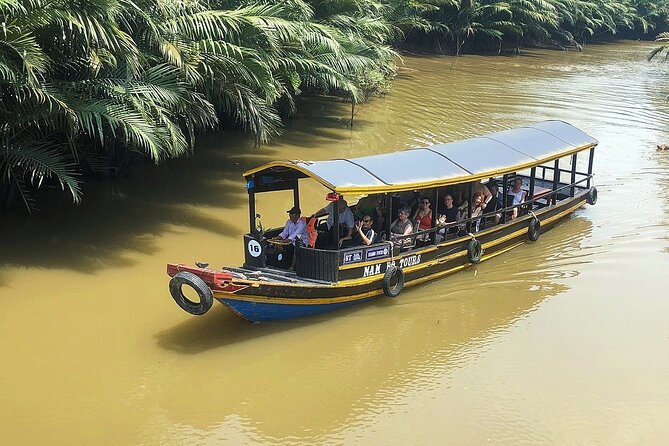
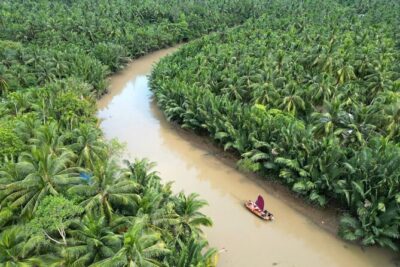
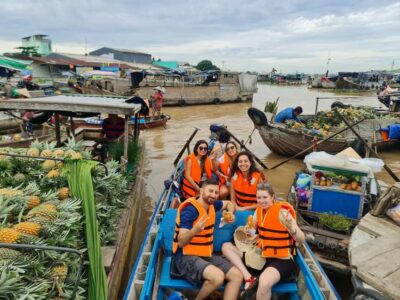
The signature part here is the water time. First comes a private boat trip through the Ben Tre area’s smaller river routes. This is where you’ll see the region’s natural beauty in motion—watery paths, coconut-lined banks, and the feeling that the river is a road, not a viewpoint.
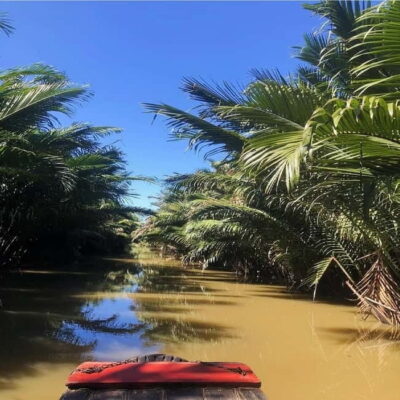
Then you’ll switch to a rowing boat for sightseeing on the so-called water-palms canal area. This is the part that tends to land hardest with people: the boat is smaller, quieter, and you can really track how the canal bends and tightens. In that section, you’re moving at a slower pace, which makes it easier to notice how locals use the river edge—where boats tie up, where activity clusters, and where the river feels calmer.
The rowing portion is short (about 15 minutes), so think of it as a highlight slice rather than the entire tour. You’ll still feel it because it’s the closest you’ll get to a hands-on canal experience without needing any equipment or special skills.
Practical tip: bring something for sun protection. The canal sections can be shaded some of the time, but you will still be outdoors for long stretches across the morning.
Old Brick Kiln on the river: see handmade bricks in action
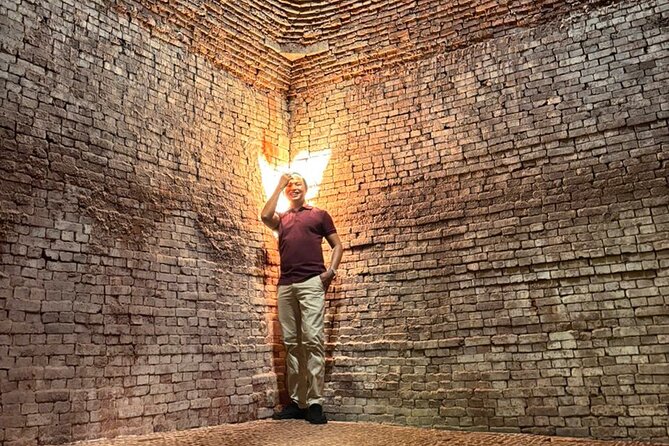
Your first major stop centers on Ben Tre’s old brick kiln area. You don’t just arrive and tour a building; you travel out by boat to reach the kiln site, and that travel time is built into the stop.
Once there, you’ll watch workers make bricks the traditional way by hand. That means you’ll see the workflow rather than only the finished product. Even if you don’t speak much Vietnamese, it’s usually easy to understand what’s happening because the steps are visible: shaping, drying, and handling the clay-made materials.
This stop lasts about an hour, and it’s also one of the clearest ways to understand how “rural life” is connected to river transport. Brickwork is labor-focused, and being in the area makes it feel practical: the work is where the materials and processing happen, and the river is where people move things.
What to watch for: how the workers handle the material and how the site looks when it’s in active production mode. If you want to ask questions, start with simple ones like what the clay is used for or how long bricks take before they’re ready (you can also point to the steps you’re seeing).
Coconut processing workshop: fresh tasting plus handcraft steps
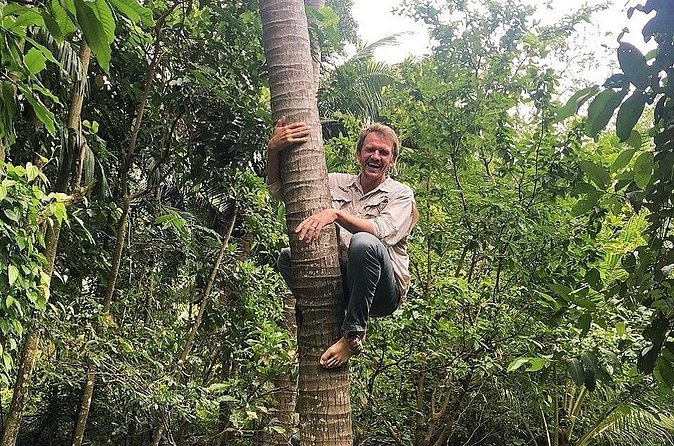
After the brick kiln, you’ll move to a coconut processing workshop. This is a shorter stop—around 15 minutes—but it’s designed for quick, direct context. You’ll sample fresh coconut, then see how handcrafts are made using coconut by-products.
If you’re curious about why Ben Tre is so coconut-focused, this is where the connection starts to click. Coconut isn’t treated like one product. It’s treated like a full ingredient kit—food, supplies, and craft materials. That theme shows up again later at the candy mill.
Because the stop is brief, come with a flexible mindset. You may not cover every detail. Instead, use it to get your bearings: what parts of the coconut are being used and what the local makers are aiming for.
If language is a challenge, tasting helps. You can still connect the process to the final result in your mouth. Fruit and coconut juice are also included in the tour, which makes these craft stops feel more complete.
- Full-Day Mekong Tour: From Ho Chi Minh to My Tho & Ben Tre★ 4.8 · 7 reviews
- HCMC: Mekong Delta 2-Days My Tho–Ben Tre & Cai Rang Market★ 3.6 · 7 reviews
- Private tour: Explore the authentic rural life in Ben Tre★ 5.0 · 7 reviews
- Mekong Delta 2 Days 1 Night – Shared Tour★ 3.7 · 6 reviews
- Saigon: Mekong Delta Day Cruise★ 4.0 · 5 reviews
Nam Bo Coconut Candy Mill: watch, taste, and catch folk music
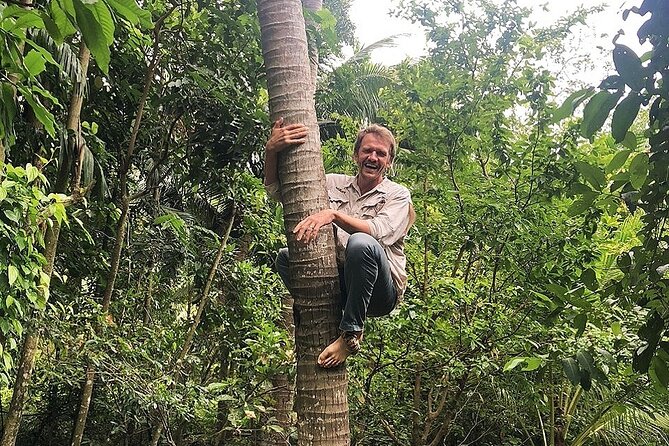
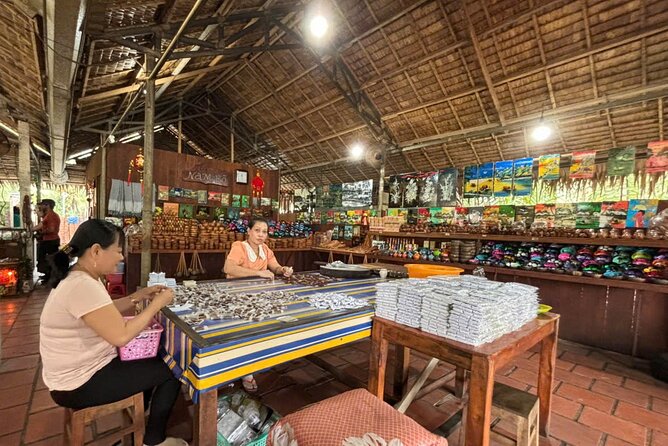
Next is the Nam Bo Coconut Candy Mill, one of the more sensory stops. You’ll see how coconut candies are made, and you’ll also get to eat fruits while listening to traditional folk music.
This is a good pairing: visual process plus a taste, and the music gives the moment a sense of place. A candy mill can sound like a sales stop, but the structure here is more about watching production and enjoying the surrounding culture cues.
The stop time is about one hour. That length matters because it gives you a chance to notice the rhythm of work—how ingredients are handled, how the process is paced, and how the final product is shaped.
What you can do best here is slow down. Look at the steps as a sequence, not as separate actions. If you want to photograph, this is also the easiest place to get a clear shot because people are usually working in an organized area.
Mat weaving by handloom: try the craft, not just watch
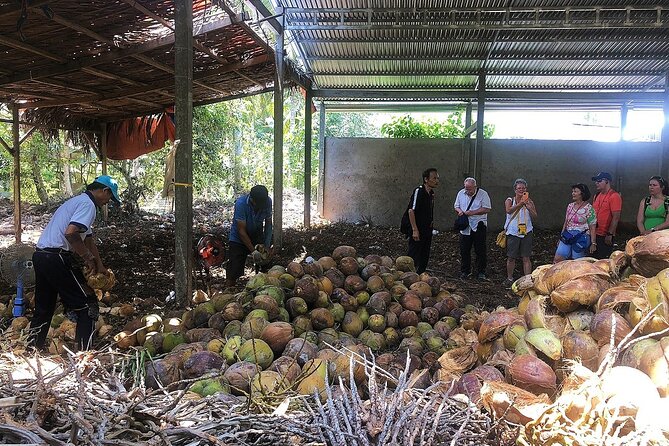
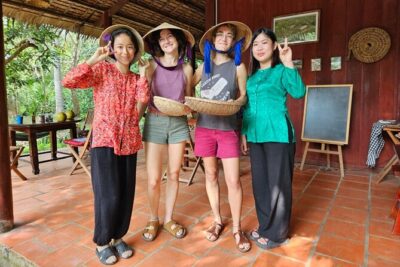
Your next stop is the mat weaving house. Here you’ll see straw mats woven using a handloom, and you can even try weaving yourself.
This is one of the most satisfying stops because it’s interactive. Even if your first attempt looks like a tangled experiment, you’ll leave with an actual sense of how fine-motor the work is. That’s what makes it more memorable than just watching. You learn why mats are made the way they are: it’s repetitive, it needs tension control, and the pattern matters.
Time on this stop is about 40 minutes, which is enough for a real attempt plus time to observe. If you’re the kind of traveler who likes to come home with a skill you can point to, this is where you’ll get it.
Small caution: woven mats and straw work can make things a bit warm and dusty depending on the workshop setup. Wear clothes you’re comfortable getting a little rumpled and consider closed-toe shoes.
Optional lunch at a riverside restaurant
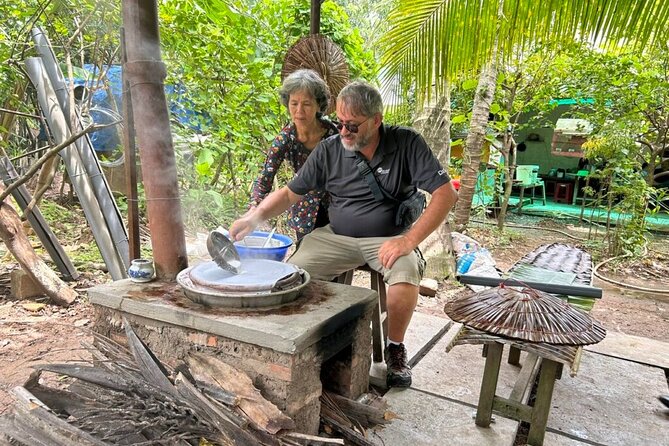
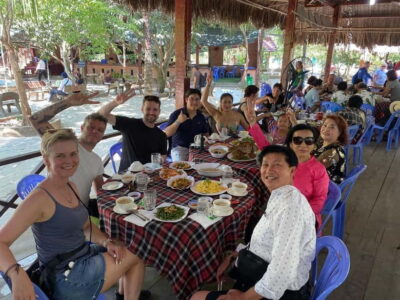
If you want lunch during the tour, you can stop at a local riverside restaurant. Lunch itself is not included in the price, but the tour can work it in (about one hour at this stage).
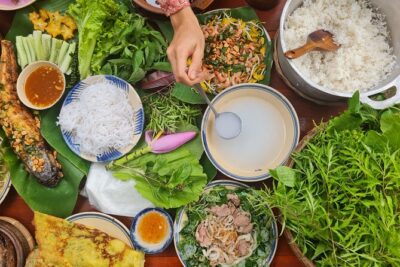
The food list you’ll commonly see includes local specialties like elephant-ear fish and river shrimp. This matters because it’s not just generic Vietnamese restaurant food; it’s tied to the river environment.
Two practical notes:
- If you have dietary needs, say so before ordering. The menu details aren’t listed here beyond examples, so you’ll want clarity on what’s available.
- Plan for tips. Tips aren’t included, and this is the part of the day where most people find a natural time to reward good service.
If you don’t want lunch, you’ll still have the benefit of a riverside reset before the final canal segment.
Rowing back and ending at the pier
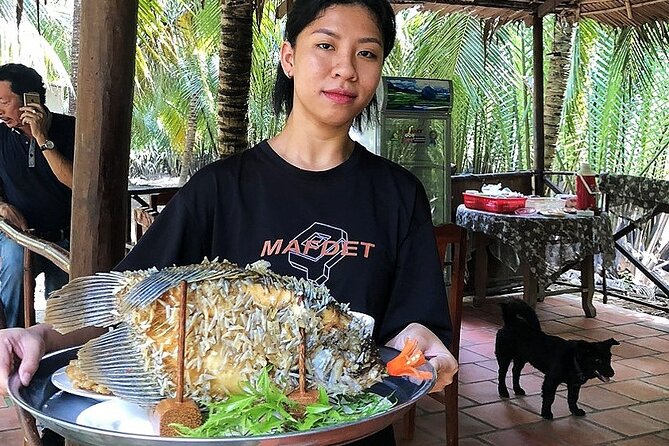
After the craft and food stops, the tour finishes with more canal time. You’ll do the rowing-boat sightseeing segment through the palm waterway (about 15 minutes). This portion is meant to give you that calm, shaded feeling—the kind of view that’s hard to get from roads or big sightseeing boats.
Then you’ll head back to the pier by boat, with about 45 minutes for this return segment. That longer return time is useful: it’s a natural buffer so you’re not rushing out right after the last stop, and it gives you one more chance to watch river life from a slightly wider angle.
Photo tip: in the return segment, try stepping back and shooting wider frames. After you’ve spent time looking at hands-on production, the wider river view can feel refreshing and gives your photos a sense of story.
Price and timing: what $46.67 gets you
This tour costs $46.67 per person and runs about 4 to 5 hours. You’re paying for a private setup and for entrance fees being covered, plus fruit and coconut juice. That combination is what makes it good value for a short morning: you’re not paying extra ticket lines at each stop, and you’re getting multiple distinct experiences in one flow.
Two other points that affect value:
- Private boat trip time: boat access is a key cost driver in Vietnam’s canal areas, so private use usually means you get more control and less crowding.
- Group discounts are available, and average booking happens about two weeks ahead. That doesn’t guarantee your exact group size, but it signals that this route is popular.
Start time is 9:00 am, and the tour begins and ends at the Ben Tre tourist pier meeting point (Bến tàu du lịch thành phố Bến Tre, 157a, Mỹ Thạnh An, Bến Tre, Vietnam). It’s also near public transportation, which can help if you’re not arranging hotel pickup.
Hotel pickup from Ho Chi Minh City is possible with a modest extra fee. If you’re basing yourself in Ho Chi Minh and want to avoid extra logistics, ask about the pickup details early so you can match it to your day plan.
Who this tour is best for
I think this one suits you if you want:
- A real rural rhythm: brick making, coconut products, and weaving, not only scenic boating
- A mix of watching and hands-on moments (especially mat weaving)
- Short, focused stops you can manage without feeling exhausted by a long day
It also fits families and most travelers because the structure is simple: short visits, boat transfers, and a gentle pace overall.
If you’re someone who wants lots of deep conversation, be aware that English understanding may be limited with some guides based on past experience. This doesn’t ruin the tour, but it changes how much you’ll be able to ask in the moment. Using a translation app helps a lot.
Practical tips for a smooth Ben Tre morning
Here’s what I’d do to get the best experience from this kind of canal-and-craft day:
- Wear light clothes and plan for sun. Even with palm shade, you’ll spend time outdoors.
- Bring a hat, sunglasses, and some water. Coconut juice is included, but you’ll still want your own backup.
- Use a translation app for questions. If your guide’s English is limited, you’ll still get more out of the day.
- Expect brief workshop stops. The tour packs several locations into about half a day, so don’t worry if you don’t master every detail.
- Bring small cash for lunch (since it’s not included) and for tips.
- Take weather seriously. The tour requires good weather, and if it can’t run due to poor conditions, you’ll be offered a different date or a full refund.
Should you book Nam Bo Tours in Ben Tre?
Book it if you want a focused taste of the Ben Tre countryside without a full-day slog. The biggest selling points are the small-river boat time and the chance to see coconut products and weaving up close, with a realistic flow between production and river scenery.
Skip it only if you know you need a highly fluent English guide for lots of discussion, or if you prefer a purely scenic boat day with fewer workshops. This tour has an instructional, craft-forward structure, and that’s the point.
If you’re deciding between tours, choose this one when you care about authenticity you can actually observe: handmade bricks, coconut processing, and a mat-weaving attempt you’ll remember.
FAQ
How long is the Ben Tre rural life boat tour?
It runs about 4 to 5 hours.
What does the price include?
The tour includes a private boat trip, all entrance fees, and fruit and coconut juice. Lunch and tips are not included.
Do I need to buy tickets for the stops?
Entrance fees are included in the tour price.
What time does the tour start, and where do I meet?
It starts at 9:00 am at Bến tàu du lịch thành phố Bến Tre, 157a, Mỹ Thạnh An, Bến Tre, Vietnam. The tour ends back at the meeting point.
Is lunch part of the tour?
Lunch is optional. You can stop at a riverside local restaurant, but lunch is not included in the price.
Can the tour pick me up from Ho Chi Minh City?
Yes, hotel pickup from Ho Chi Minh City is possible for a modest extra fee.
More Tour Reviews in Ben Tre
The Near Delta: My Tho and Ben Tre
Just Reviewed Around Saigon
- HCM City: Ben Tre Mekong Delta & My Tho Day Trip with Lunch
★ 4.7 · 3 reviews - Ben Tre: visit Mekong delta region
★ 4.3 · 3 reviews - From Ho Chi Minh: 3-Day 2-Night Mekong Delta & Ca Mau Cape
★ 4.5 · 4 reviews - Private Vinh Trang Pagoda & Mekong Delta from Ho Chi Minh
★ 5.0 · 4 reviews - From Ho Chi Minh: Mekong Delta 3-day w Tra Su Forest
★ 3.3 · 4 reviews - Saigon: Mekong Delta Day Cruise
★ 4.0 · 5 reviews
My Tho & Ben Tre Tours, compared.
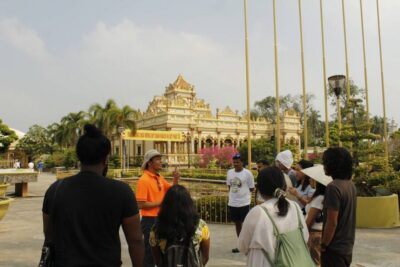 ★ 4.7Mekong Delta, My Tho & Ben Tre Coconut VillageFrom $163,304 reviews
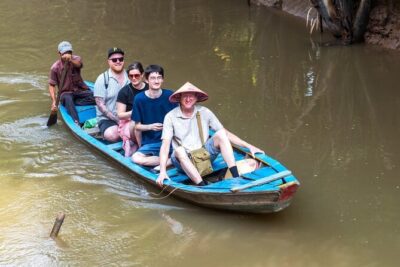 ★ 5.0Mekong Delta tour: My Tho – Ben Tre 1 day by DGTFrom $221,178 reviews
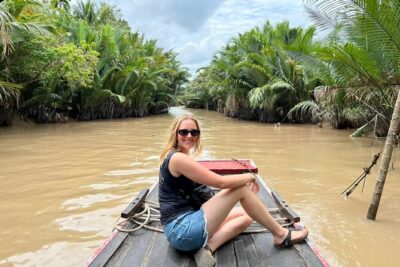 ★ 5.0Authentic ‘Less-Touristy’ Mekong Delta Ben Tre 1-Day TourFrom $65765 reviews
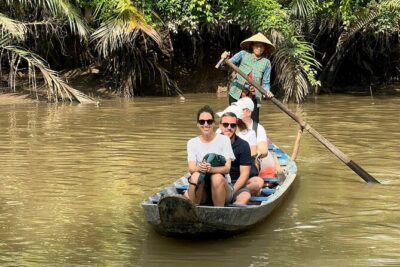 ★ 5.0Mekong Delta tour: Ben Tre 1 day by DGTFrom $65465 reviews
 ★ 5.0Mekong Delta Full Day Trip – My Tho & Ben Tre – VIP Private TourFrom $85371 reviews
 ★ 5.01-Day Mekong Delta Deluxe Tour: My Tho & Ben Tre (Max 10)From $27336 reviews
 ★ 4.8Mekong Delta Less-Touristy One-Day Tour to Ben TreFrom $54272 reviews
 ★ 5.0Local Mekong Delta ‘Lesser-Known’ My Tho & Ben Tre 1-Day TourFrom $45219 reviews
Browse the lists this tour appears in