
REVIEW · MEKONG DELTA DAY TRIPS
Mekong Delta 3-Day: Saigon to Phnom Penh Gateway
Mekong days start early and feel endless. This 3-day Saigon-to-Phnom Penh gateway route strings together Cai Be waterways, Cai Rang floating market life, and Chau Doc temple stops with hotel pickup, boat time, and most meals handled for you. I especially like the practical start—pickup from District 1 (with a couple of exceptions) so you don’t waste your first hours navigating.
I also like the human side of the trip: an English-speaking guide for all the day-to-day context, plus a group size capped at 25 people, so you’re less lost in a crowd. You’ll hit hands-on food moments like coconut sweets in Tan Phong and see mangroves up close at Tra Su, with explanations that help you understand what you’re looking at.
One thing to weigh: the days are packed. You’ll spend real time on buses and you’ll rotate through many stops where you only get a short window at each place, so it’s not ideal if you crave slow mornings and lots of free time.
In This Review
- Key points to know before you go
- Saigon start and route logic: how you move from Vietnam to Cambodia
- Cai Be (Day 1): islands, coconut palms, and the Mekong at human speed
- Cai Rang and An Giang (Day 2): noodles, Khmer temples, eco-craft, and birds in mangroves
- Chau Doc and Sam Mountain (Day 3): temples, floating village life, and the Phnom Penh handoff
- Hotels, meals, and the “value that comes with speed”
- Guides and local stops: what helps it feel authentic (and what to watch)
- Price and logistics: is $261 really fair for a Saigon-to-Cambodia route?
- Should you book this Mekong Delta gateway tour?
- FAQ
- What time does the tour start?
- Where are hotel pickups offered in Ho Chi Minh City?
- How large is the group?
- What’s included with the tour price?
- Are there vegetarian meal options?
- What accommodation should I expect?
- Can I continue to Phnom Penh instead of ending back in Ho Chi Minh City?
- Do I need Cambodia paperwork in advance?
- What information is needed for the Phnom Penh boat service?
- What if weather is bad?
Key points to know before you go
- Small-group cap (25 people) keeps the route more manageable than big coach tours
- Pickup from Saigon District 1 saves time on day one (Tan Dinh and Da Kao aren’t covered)
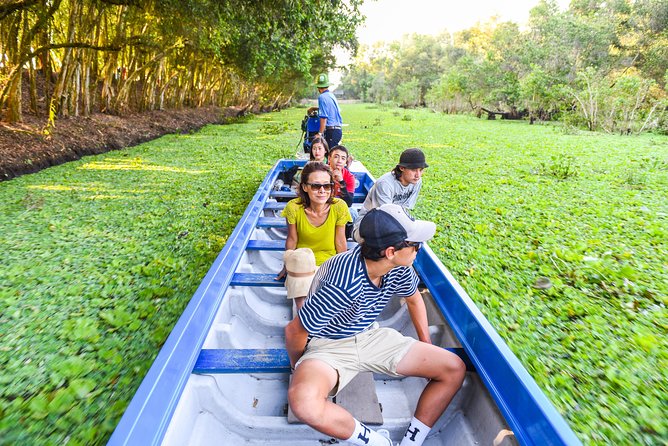
- Multiple boat segments give you genuine river views, not just roadside scenery
- Tra Su Bird Sanctuary and the mangrove ecosystem are a highlight for nature lovers
- Phnom Penh option is built in (fast boat or bus, depending on availability)
- Accommodation is basic: 3-star or similar, with some reports of limited comfort like no AC in certain options
Sampans, orchards and coconut candy, more delta days


Saigon start and route logic: how you move from Vietnam to Cambodia
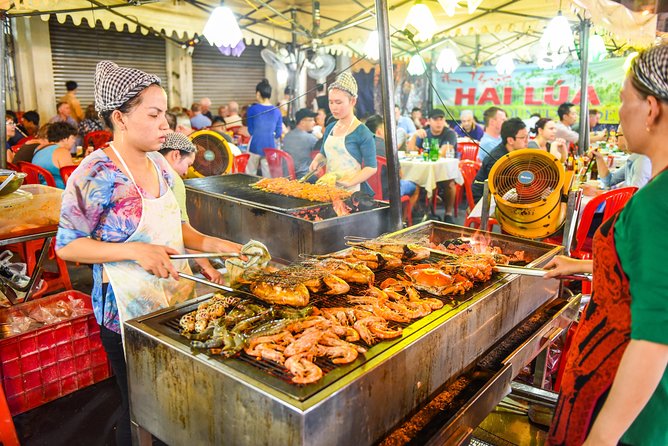
This is a true “corridor trip,” meaning you’re not just touring the Mekong inside Vietnam—you’re also moving toward Cambodia. The start time is early (7:45 am), and the trip is designed to keep you on the move from the moment you’re picked up. The payoff is that you see a lot of the delta’s spread—villages, canals, markets, temples—without having to plan buses, boat tickets, or the border handoff yourself.
Pickup is offered for centrally located hotels in District 1, except Tan Dinh ward and Da Kao ward. If you’re staying elsewhere, you may need to get to a nearby public transport connection. The tour uses an air-conditioned vehicle plus boats for key segments, which matters because the delta can feel hot and humid even when the morning starts out cool.
Group size is capped at 25, and that usually helps with logistics like getting on and off boats, keeping track of meeting points, and getting quick answers from your guide. You’ll also see why the schedule is so tight: the route tries to fit major stops across Day 1 (Cai Be and the Upper Mekong area), Day 2 (Cai Rang plus An Giang near Chau Doc), and Day 3 (Chau Doc area and then either onward to Phnom Penh or back toward Ho Chi Minh City).
Cai Be (Day 1): islands, coconut palms, and the Mekong at human speed
Day one feels like the “slow intro” to the delta, even though the schedule still runs tight. After pickup in Ho Chi Minh City, you travel out toward Cai Be in the morning. The first big shift is being on the water and watching how commerce works along the Tien River: you get a sense of what used to be a wholesale floating market rhythm and how the waterway life has changed over time.
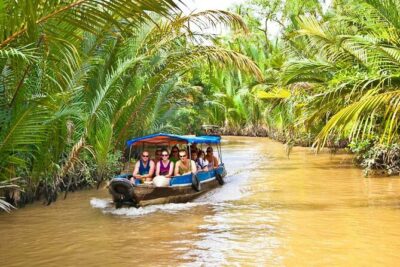
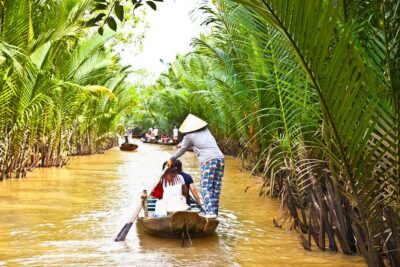
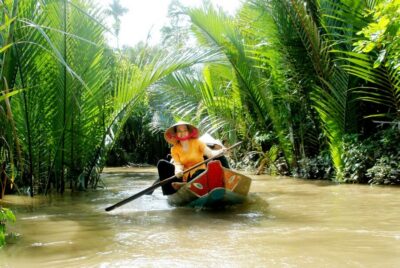
The boat ride on the Tien River is the backbone of this day. You’re not just looking at scenery; you’re seeing how the river functions as a road for daily activity, with quiet villages and palm-lined banks. It’s the kind of viewpoint that makes the Mekong feel less like a postcard and more like a living system.
Next comes Nhà cổ Ông Kiệt, an antique house in a traditional Mekong village setting. This stop gives you a cultural pause. When you see preserved wooden structures and old-style architecture, you start to understand why families built where they did and how they arranged life around water access.
From there, the tour leans into food and hands-on local craft. In Tan Phong, you’ll watch a family-run confectionery make coconut sweets and rice popcorn—simple ingredients, skilled hands, and a process that doesn’t feel like a factory show. Then you move into narrow canals in the Upper Mekong Delta: water coconut palms and water lilies show up along tranquil waterways, and the views shift from wider river traffic to a calmer, more intimate scale.
Lunch is served in a garden setting with tropical fruits and herbs. This is one of those meals you don’t just eat; you use it as a reset between boat and bicycle time. After lunch, you bike for about half an hour on dirt trails through countryside islands—rice paddies, fruit groves, palms. It’s not a workout tour; it’s more like a way to slip into the landscape at local speed.
The day wraps with a boat ride back toward Cai Be, then a transfer by private car to Can Tho City for hotel check-in. If you want one piece of advice here, it’s this: bring a little patience for travel time and use the river segments as your “breather” moments.
Cai Rang and An Giang (Day 2): noodles, Khmer temples, eco-craft, and birds in mangroves
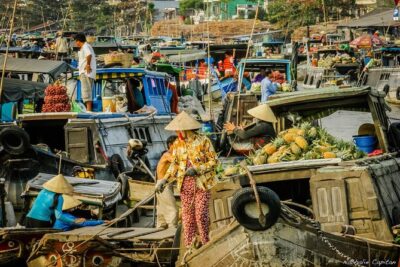
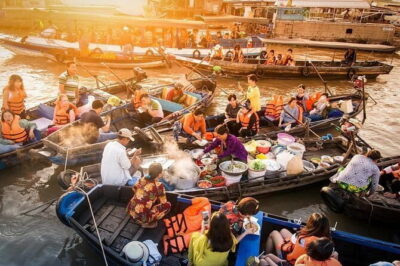
Day two starts with Cai Rang Floating Market along the Bassac River. You’re taken out on a boat in the morning after breakfast, which is the best way to see this kind of market life. From the water, you see how boats cluster, how goods move, and how vendors interact at the waterline.
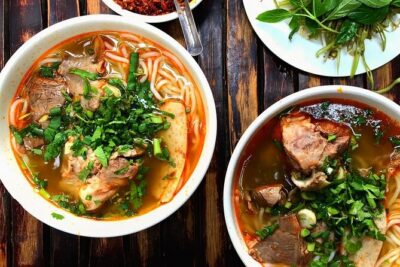
One standout stop is a traditional noodle factory demonstration. You’ll see how rice noodles go from raw ingredients to finished product. Even if you’re not a food-nerd, it helps you connect the Mekong delta’s farming and food culture to what ends up on plates later.
The trip also makes room for religion and cultural layers. At Munir Ansay (a Khmer Buddhist temple area), you get a look at Khmer artistry—murals and sacred grounds—showing that the delta isn’t only Vietnamese Buddhist. It’s a reminder that border regions carry overlapping identities.
Then you head to Cồn Sơn for a community-led approach to tourism tied to traditional crafts. This part can feel a bit “program-like,” but the point is that the community maintains crafts through family collaboration and a more eco-conscious orientation. If you care about sustainability, this is a better moment to ask your guide questions than when you’re just walking through a market stall.
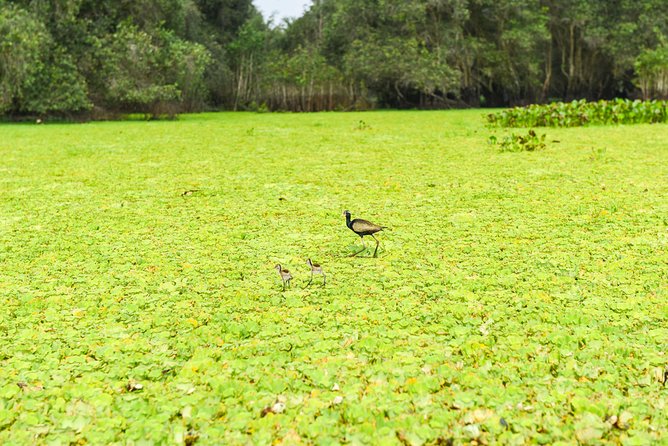
After lunch, the route pushes toward An Giang and the Tra Su Bird Sanctuary near Chau Doc. This is where nature lovers tend to smile for real. Tra Su is a mangrove ecosystem, and you’ll be exploring it in a way designed for close-up wildlife viewing. The focus is ecology—water, trees, and the bird habitat—rather than entertainment.
Next you visit Mieu Ba Chua Xu Nui Sam, a Vietnamese pilgrimage temple dedicated to the protective deity. It’s not just sightseeing. Temples like this help explain local belief systems, and when you pair it with a mangrove ecosystem day, the overall region feels more balanced: land and water, faith and habitat.
Chau Doc and Sam Mountain (Day 3): temples, floating village life, and the Phnom Penh handoff
Day three is for Chau Doc area highlights and the “choose your ending” moment. If you’re continuing to Phnom Penh, the tour can arrange a designated stop at the boat meeting point so you can transition onward. The included transfer uses a fast boat or bus depending on real-time availability, and fast boat is specifically mentioned if you choose the Phnom Penh exit.
Before that handoff, you get to visit Hang Pagoda (Chua Hang) on Sam Mountain. The experience is partly about the climb and partly about arriving to a calmer space. It’s a good contrast after two days of canals and boats.
You’ll also spend time around the floating village and the Cham Village area. This is one of the more culturally specific stops on the route because it connects local river life to Cham heritage in the Mekong Delta region. For many people, this becomes an emotional highlight: you’re seeing how communities organize around water, not just visiting a landmark.
There’s also a Long Xuyen meal stop focused on local Mekong Delta cuisine. This is your “food and fuel” moment before the day’s final transfer—either back toward Ho Chi Minh City or onward to Phnom Penh, depending on your choice.
The pace on day three stays structured. If you know you’ll be tired—early starts plus packed days—plan to travel with comfort in mind: light layers, water bottle use (you get one bottle/day), and snacks in your day bag just in case you find a meal timing isn’t perfect for your appetite.
A few Saigon tours to weigh against this one:
- Ho Chi Minh: 3-Day Mekong Delta & Optional Exit to PhnomPenh★ 4.8 · 273 reviews
- Mekong Delta 3-Day: Saigon to Phnom Penh Gateway★ 4.5 · 234 reviews
- 3-Day Mekong Delta Tour including: Cai Rang floating market★ 5.0 · 65 reviews
- 3D2N Mekong – Floating Market – Chau Doc – Boat To Phnom Penh★ 5.0 · 61 reviews
- Incredible Mekong Delta Tour 3-day from Ho Chi Minh City★ 5.0 · 55 reviews
Hotels, meals, and the “value that comes with speed”
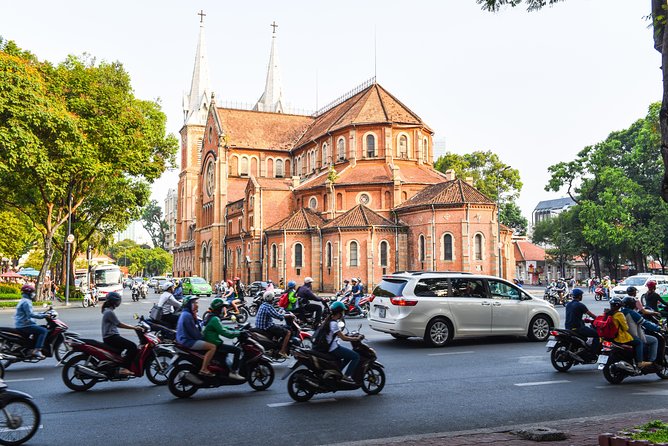
At a price point of $261 per person for three days, the value is mostly in what’s bundled: pickup, air-conditioned transport, boat time, entrance fees on the included stops, and a meaningful set of meals. You’re not paying extra for every single component, and the route covers a lot of ground.
Meal inclusions are solid on paper: dinner is included, plus two breakfasts and two lunches. Mineral water is included at one bottle per day. That’s helpful because it removes small, daily decisions—especially important when you’re bouncing between boats, temples, and markets.
Accommodation is based on twin or double share in a basic 3-star hotel or similar. The word “basic” shows up in real-world feedback, including reports of accommodations without AC in some homestay-style options. That doesn’t mean it’s unsafe or unpleasant, but it does mean you should pack like you’re sleeping in humid conditions.
Now the important tradeoff: speed. The trip can feel like a lot of moving parts—buses plus several boat segments. Many people love the variety. A smaller number of people find it too much, pointing out that some stops feel rushed (short windows of 20–60 minutes) and you might feel like you’re switching locations more than you’re settling into them.
If you hate that feeling, you can still make this tour work for you by choosing one or two “must-see” moments and letting the rest be bonus. For example, pick either Tra Su Bird Sanctuary or the floating markets as your emotional anchors, then treat the other stops as supporting scenes.
Guides and local stops: what helps it feel authentic (and what to watch)
This is the sort of tour where the guide makes a noticeable difference. In past experiences, guides with names like Sunny, John, Tom Cruz (often described with a nickname tied to food), Alex, Gordon, and Git Suong are singled out for being upbeat and for explaining what you’re seeing.
You’ll typically get local context tied to the stops: what a floating market means in daily life, why canal villages are arranged a certain way, and what religious temples represent to the community. That matters because the Mekong Delta can look “just scenic” if nobody connects the dots.
There’s also a practical reality: the tour passes through places that sell things. Some visitors report mild pressure to buy candy or items, and tips may be expected for boat drivers or rowers. This doesn’t have to ruin the day if you treat purchases as optional and keep small cash ready for real local effort, not for surprises.
Here’s the balanced approach I’d use if I were advising a friend: enjoy the experience, but don’t let the schedule push you into decisions you don’t want to make. If a stop feels sales-heavy, take a quick look, ask one question, then move on with your group.
Price and logistics: is $261 really fair for a Saigon-to-Cambodia route?
For $261, you’re paying for a lot of “middle steps” that are hard to piece together on your own: hotel pickup in Saigon, air-conditioned vehicle transport, multiple boat rides, included entrance fees on the key visits, and a supported transfer toward Phnom Penh using fast boat or bus.
You’re also not just getting transit. The route includes specific cultural and nature stops: Cai Be waterway commerce, old house architecture at Ông Kiệt, Tan Phong food craft, Cai Rang market morning, Munir Ansay temple artistry, Tra Su mangrove bird habitat, and Cham Village in Chau Doc.
If you were to DIY parts—boat rides, market guides, entrance fees, and cross-border coordination—you’d likely spend more time and money juggling details. That’s where the value really lands: you pay for coordination so you can focus on actually seeing the delta.
The downside is the time cost. This tour trades flexibility for coverage. If you want long stays in one place, independent pacing, or deeper museum-level time, you may feel pushed. If you want a structured crash course that still includes real river life, this price can feel like a bargain.
Should you book this Mekong Delta gateway tour?
Book it if:
- You want a 3-day structure that takes you from Ho Chi Minh City toward Phnom Penh
- You like a mix of boat time, markets, and temple visits
- You’re comfortable with early mornings and a schedule that keeps moving
Consider skipping or choosing a slower option if:
- You hate long bus stretches and prefer longer time at fewer places
- You’re sensitive to basic accommodations and don’t want any chance of limited comfort like no AC
- You know you’ll be annoyed by quick stopovers and occasional sales moments
FAQ
What time does the tour start?
The tour starts at 7:45 am.
Where are hotel pickups offered in Ho Chi Minh City?
Hotel pickup is offered for centrally located hotels in District 1, except Tan Dinh ward and Da Kao ward.
How large is the group?
The group size has a maximum of 25 travelers.
What’s included with the tour price?
Included items include dinner, 2 breakfasts and 2 lunches, hotel pickup, an English-speaking guide, boat trips and entrance fees on the listed activities, air-conditioned vehicle transport, mineral water (1 bottle/day), and hotel accommodation based on twin/double share basic 3-star or similar.
Are there vegetarian meal options?
Yes. A vegetarian option is available if you request it at booking.
What accommodation should I expect?
Accommodation is based on your choice and is listed as twin or double share basic at a 3-star hotel or similar.
Can I continue to Phnom Penh instead of ending back in Ho Chi Minh City?
Yes. The tour includes an optional exit to Phnom Penh with transport arranged by fast boat or bus depending on real-time availability.
Do I need Cambodia paperwork in advance?
Cambodia visa requirements are not included. You’ll need your own visa if required.
What information is needed for the Phnom Penh boat service?
To arrange the boat service to Phnom Penh, you’ll need to provide a passport photo of each traveler before departure.
What if weather is bad?
The tour notes that it requires good weather. If it’s canceled due to poor weather, you’ll be offered another date or a full refund.
More 3-Day Experiences in Ho Chi Minh City
More Tour Reviews in Ho Chi Minh City
More Days Down the Mekong
Just Reviewed Around Saigon
- Secret walking Food Tour Ho Chi Minh City
★ 5.0 · 3 reviews - Ho Chi Minh City: Secret Cocktail Experience
★ 5.0 · 3 reviews - From Ho Chi Minh city: Vung Tau Beach Private Day Tour
★ 5.0 · 3 reviews - Saigoncholon
★ 3.5 · 3 reviews - Saigon On 2 Wheels
★ 3.5 · 3 reviews - From Ho Chi Minh City: Relax In Mui Ne Beach In 1 Day
★ 4.3 · 3 reviews
Mekong Delta Day Trips, compared.
 ★ 4.5Mekong Delta Tour with Sampan JourneyFrom $1613,132 reviews
 ★ 4.7Cu Chi Tunnels & Mekong Delta with Coconut Village TourFrom $3511,836 reviews
 ★ 5.0Cu Chi Tunnels and Mekong Delta Signature TourFrom $337,328 reviews
 ★ 4.5Mekong Delta Guided Tour from Ho Chi Minh CityFrom $187,192 reviews
 ★ 5.0Cu Chi Tunnels & Mekong Delta Tour with VIP Limousine TransferFrom $567,052 reviews
 ★ 5.0Cu Chi Tunnels and Mekong Delta Full Day Tour – Max 12From $436,257 reviews
 ★ 4.8Full-Day Cu Chi Tunnels and Mekong Delta TourFrom $444,616 reviews
 ★ 4.7Mekong Delta, My Tho & Ben Tre Coconut VillageFrom $163,304 reviews
Browse the lists this tour appears in