
REVIEW · SAIGON CITY TOURS
Private Ho Chi Minh City Tour
Saigon moves fast, so this private day helps you see the key places without the guesswork. You get private transport plus a guide who can shape the pace, with all entrance fees included along the way. The trade-off: it’s not wheelchair accessible, and one stop is a market that some people may find a bit sales-forward.
I especially like how this route pairs “big-ticket” landmarks with places that hit harder, like the War Remnants Museum. You’ll also get the payoff of a classic French-colonial stroll—Notre Dame area, the Central Post Office, and the Opera House—then end in the most energetic shopping zone, Ben Thanh Market.
One thing to consider: even with flexibility, your day is still built around specific stops and set timing. If your priorities lean heavily toward one neighborhood (or you hate markets), you’ll want to steer the schedule early.
In This Review
- Key things I’d pay attention to
- Why this private Ho Chi Minh City route works so well
- Independence Palace: the eerie “time capsule” you can walk through
- War Remnants Museum: powerful stories, and a warning for your emotions
- Emperor Jade Pagoda: incense, incense smoke, and statues that feel otherworldly
- Notre Dame Cathedral and the French government quarter feel like a reset button
- Central Post Office: the French-styled postcard you can actually walk through
- People’s Committee Building and the Nguyen Hue night-lit promenade
- Dong Khoi Street: the Rue Catinat vibe in one walk
- Saigon Opera House: a recognizable landmark that shows France’s showy side
- Ben Thanh Market: where the day finishes, and bargaining has a script
- What lunch feels like in the middle of the day
- Flexible timing: how to use it without losing momentum
- The guides and the VIP tone that makes it feel worth it
- Value check: when this tour is a smart buy
- Small risks to consider before you book
- Who should book this private tour
- Should you book this private Ho Chi Minh City tour?
- FAQ
- How long is the private Ho Chi Minh City tour?
- What is the price per person?
- What’s included in the tour price?
- Are entrance fees included?
- Do you offer hotel pickup?
- Where does the tour start and where does it end?
- Is lunch included, and are drinks included?
- How long do you spend at Ben Thanh Market?
- Is the tour wheelchair accessible?
- What is the cancellation policy?
- How far in advance do people typically book?
Key things I’d pay attention to
- Private guide and driver: your day is just for your group, not a join-in crowd.
- Included entrances: you won’t have to budget ticket costs for major sights along the route.
- Hard-hitting museum stop: War Remnants Museum is a serious, emotional place—plan your mindset.
- Incense-filled temple visit: Emperor Jade Pagoda is atmospheric and smoky, so dress accordingly.
- Evening-friendly architecture: the People’s Committee area is best when lit up at night.
- Market finish at Ben Thanh: you get a focused window to shop, with bargaining expected.
The big Saigon sights in one loop


Why this private Ho Chi Minh City route works so well
Ho Chi Minh City can feel like a lot at once. This tour helps you turn chaos into a clean loop: government history, war memory, religious atmosphere, French colonial landmarks, and then a final hit of street life at Ben Thanh. It’s built for people who want maximum meaning per hour, not just a photo parade.
What makes it practical is the balance between structure and control. You can tailor the day, spending more or less time at sights like Independence Palace and the temple stops. That flexibility matters when you’re trying to match your energy level—especially with an 8-hour day.
Price-wise, $100 per person is only a good deal if you actually use what’s included. Here, you do: private transportation, a private guide, Vietnamese restaurant lunch, bottled water, and all fees and taxes are part of the package. If you were to piece together tickets, transport, and a guide on your own, the math usually gets messy fast in a city with traffic and long distances.
Independence Palace: the eerie “time capsule” you can walk through
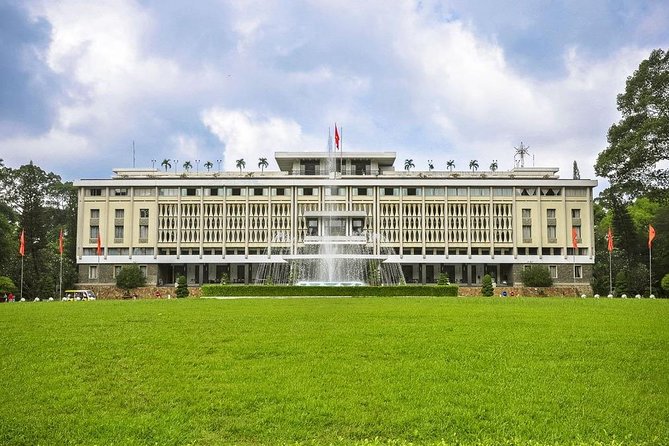
Your day starts at the Independence Palace, a government building framed by royal palm trees with architecture that looks very 1960s even today. The atmosphere is part of the experience. There’s something quietly unsettling about walking through areas that feel abandoned, then realizing how central this site was to the fall of Saigon in 1975.
You’ll get about 1 hour here, including admission. If you like details, look for the period motifs and the way the building’s design locks you into that moment. It’s not just a history stop—it’s a setting.
A small consideration: this is one of the most emotionally loaded stops, but it’s also visually theatrical. If you want a calmer day, you might mentally “pace” it by not rushing your photos and leaving time to absorb what you’re seeing.
War Remnants Museum: powerful stories, and a warning for your emotions
The War Remnants Museum is widely known for a reason: it shows how war affects civilians, and it does so in a way that lands hard. The museum’s reputation comes from its ability to show brutal impacts without hiding behind distance. Some displays can feel one-sided, but many disturbing photos include material sourced from US sources, including references connected to My Lai.
Plan on 1 hour 30 minutes. Don’t treat it as a quick sprint. I’d go slower than you think you need, especially for the photographs. You’ll likely feel affected, and that’s normal—this is the kind of museum where your brain needs a few minutes to reset after each room.
If you’re traveling with kids or anyone sensitive to graphic content, you’ll want to judge your group’s comfort level before committing to the full time.
Emperor Jade Pagoda: incense, incense smoke, and statues that feel otherworldly

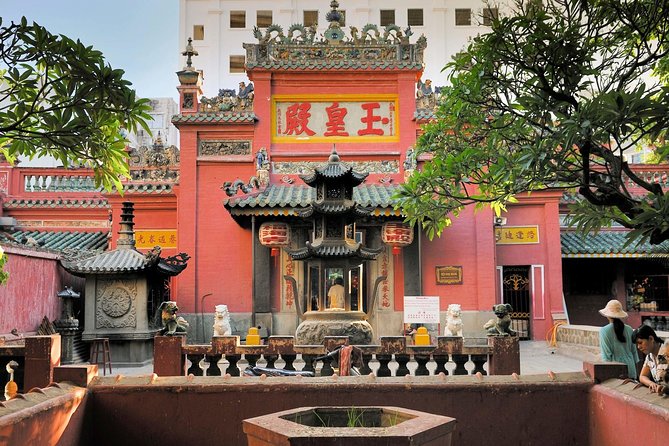
Next you’ll visit Emperor Jade Pagoda, built in 1909 in honor of the Jade Emperor (Ngoc Hoang). This isn’t a “quick look” temple. It’s famously atmospheric: incense smoke (huong) fills the air, and the interior feels alive with statues of Taoist and Buddhist lore.
You’ll spend about 30 minutes, and admission is included. The woodcarvings can be gorgeous, but the smoke is part of the character. If you’re sensitive to strong incense, consider wearing something breathable and plan to step back for a moment when needed.
A neat detail here is that some figures are made from reinforced papier mâché. That mix of craftsmanship and myth makes it more than just a pretty building.
Wider loops through the districts
- Cu Chi Tunnels Tour from HCM City – Morning or Afternoon★ 5.0 · 15,833 reviews
- From HCM City: Mekong Delta Tour with Sampan Journey★ 4.5 · 13,132 reviews
- Ho Chi Minh City Street Food Tour & Sightseeing By Motorbike★ 5.0 · 9,413 reviews
- Mekong Delta Guided Tour from Ho Chi Minh City★ 4.5 · 7,192 reviews
- Ho Chi Minh City: Cu Chi Tunnels Morning or Afternoon Tour★ 4.8 · 6,326 reviews
Notre Dame Cathedral and the French government quarter feel like a reset button
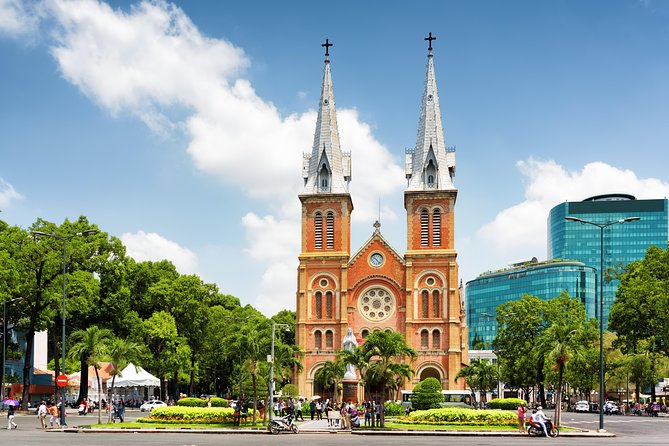
From the pagoda, you shift to the Saigon Notre Dame Cathedral, built between 1877 and 1883. You’ll get roughly 20 minutes, and entrance is free here.
This stop is shorter by design, but it still gives you context. The cathedral sits in the heart of the government quarter facing Ð Dong Khoi, and the neo-Romanesque look with its square towers and iron spires makes it instantly recognizable. Even if you’re not a church person, it helps you understand how Saigon’s French-colonial identity showed up in brick and stone.
If you want more quiet time, aim to visit with a calm pace rather than rushing the interior.
Central Post Office: the French-styled postcard you can actually walk through
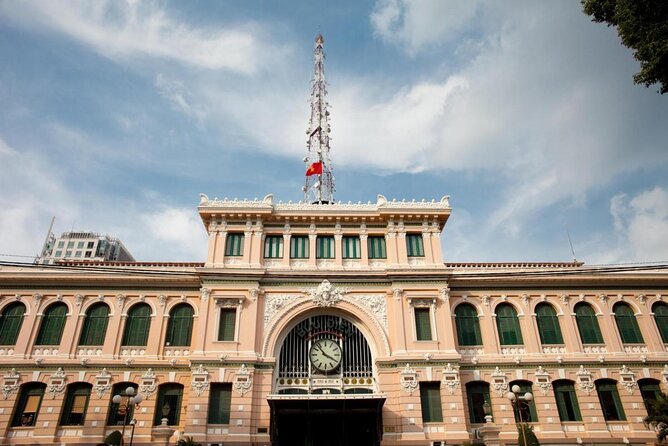
Across the way is the Central Post Office, built between 1886 and 1891 and designed by Marie-Alfred Foulhoux (often mistakenly credited to Gustave Eiffel). The building is famous for its barrel-vaulted hall, tiled interior floor, and the green-painted wrought iron.
You’ll have about 30 minutes, and admission is included. Look for the historic maps painted on the walls—South Vietnam, Saigon, and Cholon—and the mosaic of Ho Chi Minh at the end of the hall. Even if you don’t plan to mail anything, it’s one of those places where the design makes you slow down without trying.
Practical thought: this is a high-photography zone, and it can get visually crowded. If you’re traveling at a busy hour, focus on a few key angles rather than trying to capture everything.
People’s Committee Building and the Nguyen Hue night-lit promenade
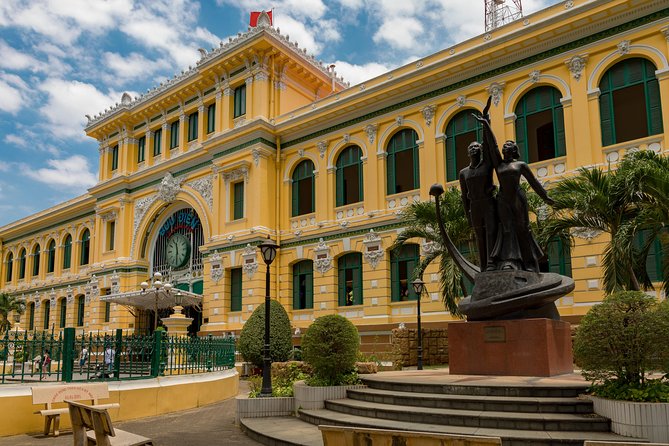
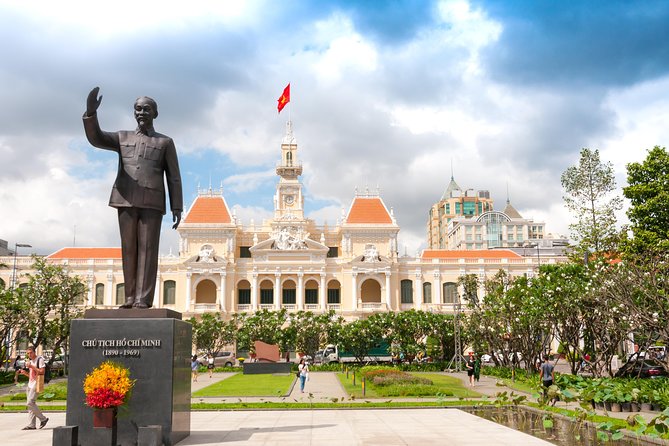
The People’s Committee Building sits at the end of the Nguyen Hue walking promenade. You’ll get about 20 minutes here, and the entrance is free. The point of this stop is the details: embossed animals and people on the structure, bas-reliefs on the walls, and the statue of Ho Chi Minh in front.
Timing matters. This area is described as best in the evening because of LED illumination. If your tour runs later, you’ll see it at its most dramatic. If it runs earlier, you’ll still get the architecture, just with less light magic.
Next comes the Nguyen Hue Street stretch, a broad pedestrian promenade lined with French colonial-era buildings. There’s also mention of a fountain show by night. Even if you catch only part of it, the vibe here is where the city feels most like a “center” rather than scattered landmarks.
Dong Khoi Street: the Rue Catinat vibe in one walk
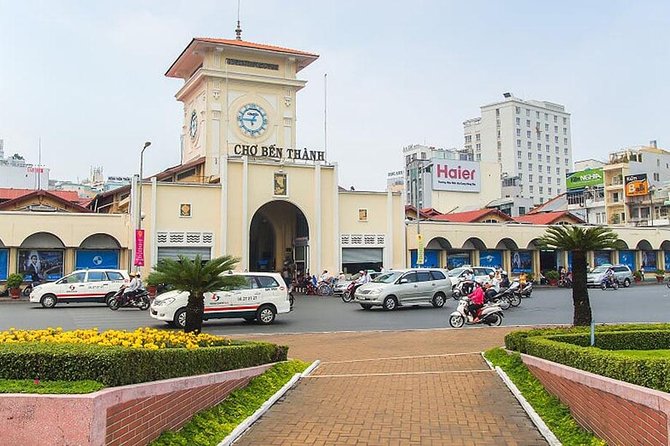
As you move through central District 1, you’ll pass Ð Dong Khoi Street, a boulevard that has shifted meanings over time. During the French occupation it was the center of glamour and was called Rue Catinat.
This segment isn’t presented as one big attraction you must stare at for an hour. It’s a connective thread. It helps you connect the colonial landmarks you’ve been seeing with the modern city energy that surrounds them now.
Saigon Opera House: a recognizable landmark that shows France’s showy side
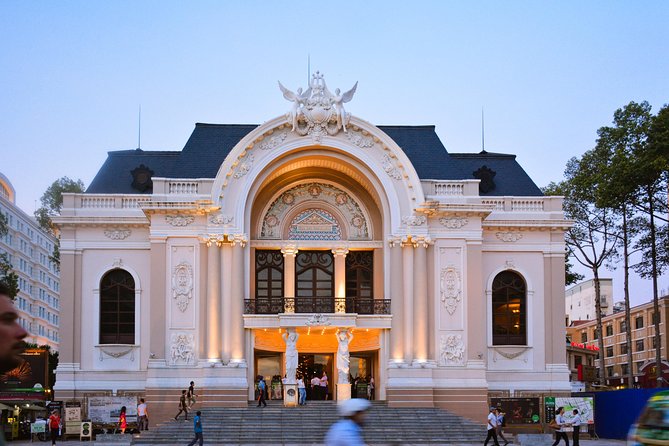
At the intersection of Ð Dong Khoi and ÐL Le Loi, you’ll see the Saigon Opera House (also called the Ho Chi Minh Municipal Theater). It was built in 1897 and it’s one of the city’s most recognizable colonial buildings.
You’ll get about 20 minutes, with entrance free. The practical value here is visual orientation. After seeing it, it’s easier to understand why District 1 feels so different from the more chaotic outer neighborhoods—this part of town was designed to project style.
If you like architecture, watch the building from the street first, then decide if you want to focus on stairs and facade lines for photos.
Ben Thanh Market: where the day finishes, and bargaining has a script
Your tour ends at Ben Thanh Market, a central, high-energy area where food, clothing, and souvenirs show up in thick piles. You’ll have about 30 minutes, and admission is included.
Here’s the key practical advice: vendors often price higher than elsewhere, and bargains are expected. Prices may even be higher if you show up as a tourist with a tight schedule. The guidance is to bargain firmly and ignore any signs that suggest fixed pricing.
Also note the structure of your time. Since this is the final stop, you’ll want to decide early what you’re shopping for—snacks, small gifts, or clothing—so your 30 minutes doesn’t vanish into decision fatigue.
What lunch feels like in the middle of the day
Lunch is included at a Vietnamese restaurant, and you’ll also have bottled water. Drinks during the meal aren’t included, so if you want soda or something stronger, budget extra.
Lunch timing matters because your schedule includes a mix of intensity levels: museum emotion, temple atmosphere, and then colonial architecture. A sit-down meal is what keeps the day from feeling like pure exertion.
If you’re the type who hates rushing, this included lunch is a win because it prevents you from hunting for a place on your own halfway through a packed day.
Flexible timing: how to use it without losing momentum
The tour is built so you can spend more or less time at sights. I like this kind of flexibility because it lets you match your interests to the day’s mood.
Here’s how I’d use it:
- If your group loves photography, ask for a few extra minutes at the Cathedral area or Central Post Office where details reward slow looking.
- If your group needs a break from intensity, don’t overstuff the War Remnants Museum time—stay as long as your energy holds.
- If shopping is a priority, protect time at the end so Ben Thanh doesn’t feel like a forced dash.
One detail worth noting: this is a private experience, so you should feel comfortable communicating priorities to your guide.
The guides and the VIP tone that makes it feel worth it
The experience is often described as thoughtful and “VIP” in tone. One guide named Thai Nguyen gets praise for being prepared and caring, and another guide referred to as Mr. Tai is noted for being kind and very knowledgeable.
That matters because your comfort in a city often depends on how well someone explains what you’re seeing. A good guide helps you notice the cues you’d miss: what matters at a museum, why a temple looks the way it does, and how the colonial landmarks connect to the city layout.
Even if you’re a confident traveler, a private guide in Ho Chi Minh City can save you from wasting time on confusing routes and scattered entrances.
Value check: when this tour is a smart buy
This tour is priced at $100 per person, for about 8 hours, with private transport and included fees. That’s strong value if you plan to actually visit the main sights without shopping around for cheaper ticket options.
You’ll get:
- Private transportation and a private tour guide
- Vietnamese restaurant lunch
- Bottled water
- All fees and taxes
- Mobile ticket
You don’t get:
- Accommodation, air ticket
- Beverage during the meal
- Tips (for guide and driver)
- Personal expenses
If your goal is a smooth day with minimal planning effort—plus the ability to steer time—this price can make sense fast.
Small risks to consider before you book
There’s one caution that stands out from the overall feedback: there’s at least one report of the tour not running as scheduled even though hotel pickup was confirmed, with no prior information. It sounds like an isolated incident, but it’s enough that I’d do one extra safety step.
My practical advice: confirm your pickup details clearly and keep your contact info ready for day-of communication. Then you’re covered if anything slips.
Who should book this private tour
This fits best if:
- You want a private guide and driver so the day feels organized
- You like a mix of landmarks and meaningful stops (especially the War Remnants Museum)
- You want a classic central-city loop ending at Ben Thanh Market
- Your group values flexibility in how long you linger at each stop
It may be less ideal if:
- Your group strongly dislikes markets or shopping pressure
- You want zero emotional intensity in your itinerary
- You need wheelchair access (it’s not wheelchair accessible)
Should you book this private Ho Chi Minh City tour?
If you want an organized, meaningful day that covers the key sights in District 1—with included entrances, lunch, and private transport—this is a solid choice. The ending at Ben Thanh Market is a nice finish if you like shopping and people-watching, and the route balances architecture with memory in a way that feels like a real city experience.
I’d say book it if you’re comfortable with the War Remnants Museum being heavy, and you’re okay with at least some shopping time at the end. I’d also add a quick day-of confirmation step to reduce the odds of any pickup confusion.
Overall: this is the kind of tour that helps you get your bearings fast, without skipping the places that give Ho Chi Minh City its texture.
FAQ
How long is the private Ho Chi Minh City tour?
It runs for about 8 hours.
What is the price per person?
The price is $100.00 per person.
What’s included in the tour price?
Included are private transportation, a private tour guide, Vietnamese restaurant lunch, bottled water, and all fees and taxes.
Are entrance fees included?
Yes. All entrance fees are included for the stops that require tickets.
Do you offer hotel pickup?
Hotel pickup is offered. If you prefer, you can also meet your guide at Independence Palace.
Where does the tour start and where does it end?
The tour starts at Independence Palace / Ben Thanh, District 1, Ho Chi Minh City, Vietnam. It ends at Ben Thanh Market, District 1, Ho Chi Minh City.
Is lunch included, and are drinks included?
Lunch at a Vietnamese restaurant is included. Beverages during the meal are not included.
How long do you spend at Ben Thanh Market?
You’ll have about 30 minutes at Ben Thanh Market.
Is the tour wheelchair accessible?
No, it’s not wheelchair accessible.
What is the cancellation policy?
You can cancel for a full refund if you cancel up to 24 hours in advance of the experience start time.
How far in advance do people typically book?
On average, this is booked about 41 days in advance.
More Tours in Ho Chi Minh City




More Tour Reviews in Ho Chi Minh City
All of Saigon in a Day
Just Reviewed Around Saigon
- Secret walking Food Tour Ho Chi Minh City
★ 5.0 · 3 reviews - Ho Chi Minh City: Secret Cocktail Experience
★ 5.0 · 3 reviews - From Ho Chi Minh city: Vung Tau Beach Private Day Tour
★ 5.0 · 3 reviews - Saigoncholon
★ 3.5 · 3 reviews - Saigon On 2 Wheels
★ 3.5 · 3 reviews - From Ho Chi Minh City: Relax In Mui Ne Beach In 1 Day
★ 4.3 · 3 reviews
Saigon City Tours, compared.
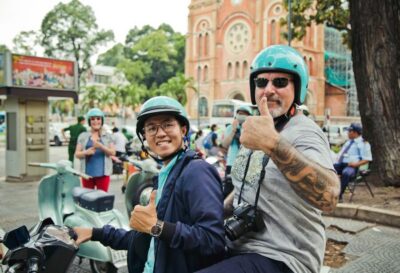 ★ 4.9City Highlights and Saigon Unseen Scooter Combo TourFrom $251,366 reviews
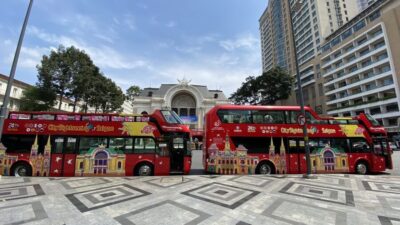 ★ 4.2City Sightseeing Hop-On Hop-Off Bus TourFrom $211,080 reviews
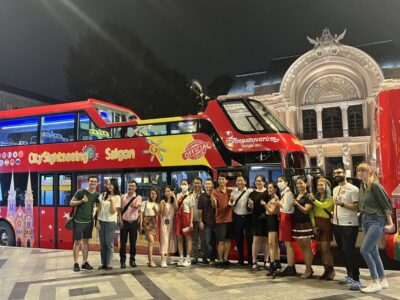 ★ 4.3City Sightseeing 45-Minute Panoramic Night TourFrom $7964 reviews
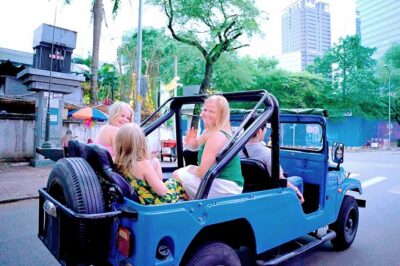 ★ 5.0Small-group Saigon City Tour: 4-Hour Must-see Iconic LandmarksFrom $30788 reviews
 ★ 5.0Essential Mekong Delta: Highlights Tour from Ho Chi Minh CityFrom $23636 reviews
 ★ 5.0Daily Small Group Tour to Saigon City and Cu Chi TunnelsFrom $50412 reviews
 ★ 5.0Ho Chi Minh City Tour by Motorbike with Female Riders | KissTourFrom $46330 reviews
 ★ 5.0Cu Chi Tunnels – Tapioca & City Tour (6 Major Attractions) 1 dayFrom $72285 reviews
Browse the lists this tour appears in