
REVIEW · SAIGON PHOTO TOURS
Saigon Street Photography Experience
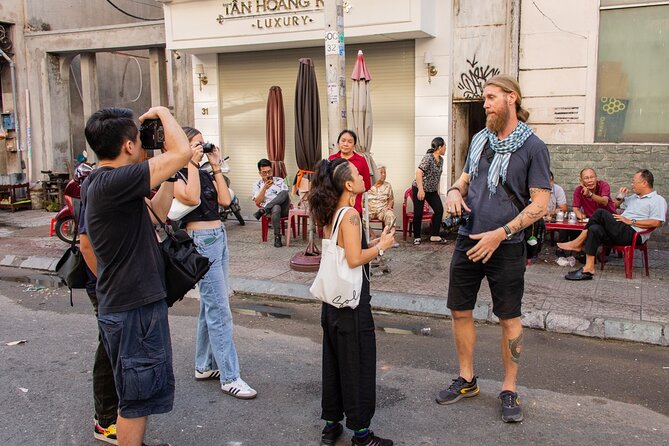
Street photos stop being guesswork here. You get a 7:00 am Saigon morning walk with pro coaching from Frederik Wissink or Kevin Lee, plus real scenes built for camera learning, not just sightseeing.
I especially like the mix of subjects: French colonial and war-era apartment buildings, a local hardware market, and a Buddhist temple stop that gives you light and angles worth working.
One thing to consider: this is a 2.5-hour walking session through alleyways, so bring comfy shoes and expect to shoot in early-day conditions and whatever traffic you find.
In This Review
- Key highlights worth planning for
- Saigon street photography is a 7:00 am game
- Your hosts: Frederik Wissink and Kevin Lee
- Meeting at Cafe Linh77 and getting camera-ready fast
- French colonial and war-era apartments: practice lines and windows
- The local hardware market: details, hands, and texture
- Alleyways and “non-touristy” Saigon: the real lesson
- A Buddhist temple stop: light, calm, and respect
- The shooting approach: angles, light, and working with people
- How far you’ll walk (and how to make it easier)
- What value $73 buys you in Saigon
- Who this tour fits best
- Should you book the Saigon Street Photography Experience?
- FAQ
- What is the price of the Saigon Street Photography Experience?
- Where is the meeting point?
- What time does the tour start?
- How long is the experience?
- How many people are in the group?
- Who will host the experience?
- What places will you photograph during the walk?
- Is the experience beginner-friendly?
- Do I get a ticket on my phone?
- What happens if the tour gets canceled or I cancel?
Key highlights worth planning for
- Small group pace (max 10): more questions, less waiting your turn
- Pro guidance on approach: how to talk to people, not just photograph them
- Architecture + street mix: apartment facades, alley life, market details, and temple scenes
- Coffee start at the meeting point: warm up with tips before you hit the streets
- Any level welcome: from phone cameras to interchangeable lenses
More of Saigon through a lens

Saigon street photography is a 7:00 am game
This is built for the morning, and that matters. Early in Ho Chi Minh City, you tend to get more forgiving light for faces and textures, plus the day hasn’t fully churned into full-speed chaos. The result is that you can slow down and practice: framing, waiting, and then clicking at the right moment.
You’ll start over coffee or tea and get photo guidance right away. That early setup is smart. It gets you thinking like a photographer before you’re distracted by everything happening around you.
Also, because the group stays small, you’re not fighting for space at every turn. You can actually try angles and compositions instead of just holding the camera and hoping.
Your hosts: Frederik Wissink and Kevin Lee
One of the strongest reasons this works is the host lineup. This experience was created with renowned photographer Frederik Wissink, a Canadian who’s lived in Vietnam for 17 years. His credits include commercial work for major hotel brands like Accor, Hyatt, and Four Seasons, plus corporate assignments for Google and Samsung. His journalism-style work has appeared with outlets like The New York Times, The Guardian, USA Today, and Discovery Channel, and his photos have shown up on the covers of Conde Nast Traveller and Car & Driver.
When Kevin Lee hosts, you’re in production-and-photography territory too. He focuses on both breathtaking landscapes and candid moments, and he has experience as a producer. He’s also hosted street photography meetups in Singapore—useful, because the goal here isn’t studio technique. It’s learning how to work streets without freezing up.
In plain terms: you’re learning from people who photograph professionally, not just people who know cool corners of town.
Meeting at Cafe Linh77 and getting camera-ready fast
You meet at Cafe Linh77 Hàm Nghi, Phường Nguyễn Thái Bình, Quận 1 at 7:00 am. The location is convenient, and you’re near public transportation, which makes it easier to arrive without adding stress before the shoot.
The first part of the walk is about getting your eye tuned. Your host shares photo tips, plus practical advice on how to approach people and what to look for as you move. That pairing—technique plus social comfort—is what turns this from a casual stroll into a learning session.
You’re also hearing historic facts about Saigon’s downtown and the architecture you’ll see along the way. This isn’t just trivia. It helps you notice why certain buildings feel the way they do, and why details you might ignore (a doorway, a balcony line, a texture on an apartment block) end up looking strong in photos.
French colonial and war-era apartments: practice lines and windows
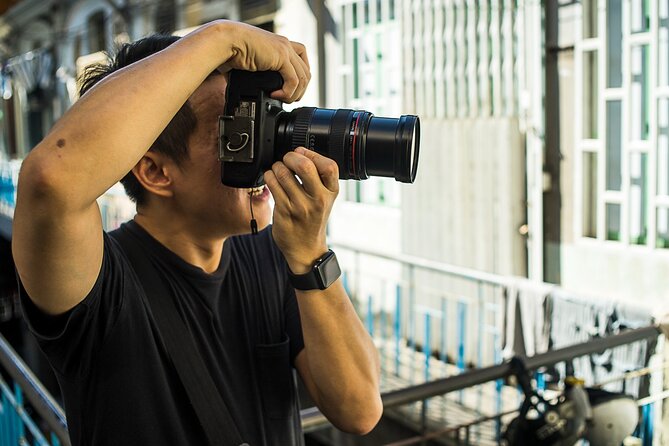
One of the stops focuses on French colonial and war-era apartment buildings. Architecture like this gives you two great things to practice:
1) Strong geometry: edges, balconies, window grids, and repeating facades
2) Human scale: doors, stairways, and everyday details that show how people live
This is where you can work angles without needing a “perfect subject.” Instead, you can let the building do the heavy lifting while you experiment with perspective—low-to-the-ground, shooting up at a facade, or framing through doorways and passageways.
The trade-off is simple: these areas can be busy, and your framing may include people. That’s not a problem if your host taught you how to approach and wait. Street photography isn’t about freezing reality. It’s about composing it with respect and patience.
A few more frames worth the trip
- Private Sunset Photography Tour – Travel through history and time★ 5.0 · 13 reviews
- Photography Tour with Professional Photographer in Ho Chi Minh★ 5.0 · 13 reviews
- Saigon Railway Village Photo Tour★ 5.0 · 10 reviews
- Sundown in the Colony Photo Tour★ 5.0 · 8 reviews
- Ho Chi Minh City: Professional Portrait Photography Session★ 5.0 · 6 reviews
The local hardware market: details, hands, and texture
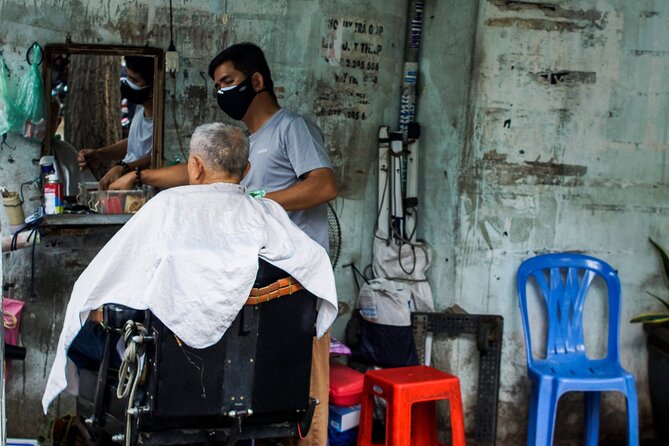
You’ll also visit a local hardware market. Markets are photography candy because they give you close-up textures and active motion: tools, packaging, signage, and hands doing real tasks.
What you get here isn’t a staged scene. It’s the daily rhythm of commerce—exactly the kind of environment where you can practice candid shooting. You learn how to spot moments quickly and how to keep your presence low-key while still getting the shot.
If you want photos that feel lived-in (not like postcards), this is where the day starts paying off. You can focus on small things: a person holding an object, a stack of items creating a pattern, or a contrast between worn materials and newer supplies.
And yes, you’ll probably want to shoot both vertically and wide. Markets reward movement. If you stand in one place too long, you’ll miss the real actions.
Alleyways and “non-touristy” Saigon: the real lesson
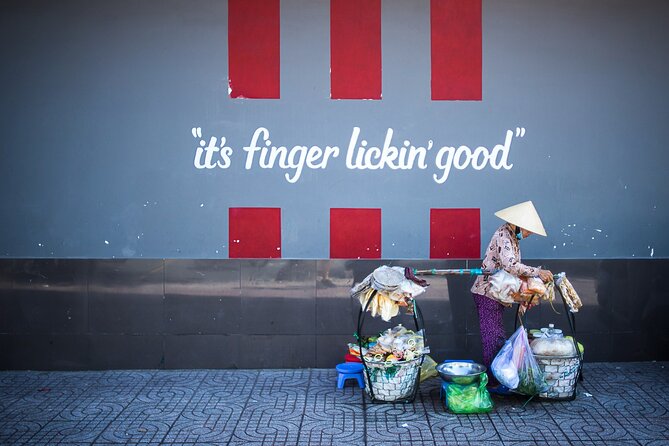
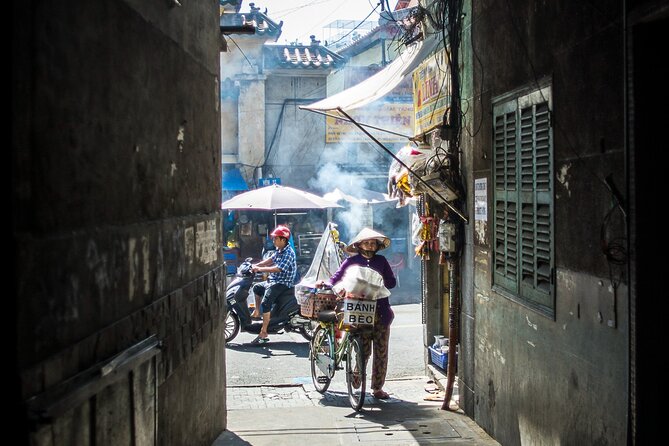
The heart of the experience is stepping into an intricate network of alleyways and seeing everyday life close-up. The point isn’t to hunt for shock-value scenes. It’s to learn how local life repeats in small ways—how families move, how neighbors interact, and how daily routines become visual stories.
Your host also helps with the social side: how to approach people, what to say, and how to ask without turning it into a big production. That’s one of the most practical skills you can take home from any street photography tour.
One more benefit: because you’re walking rather than riding a bus, you’re not just consuming scenes. You’re getting time to notice them. You can wait for a person to step into the right light or for a pass-by moment to line up with a clean background.
A Buddhist temple stop: light, calm, and respect
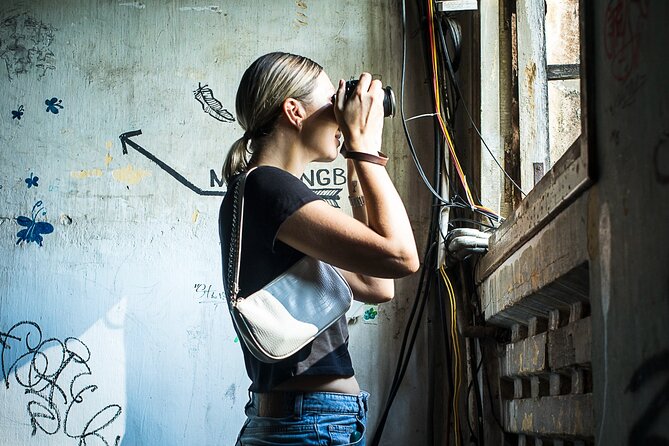
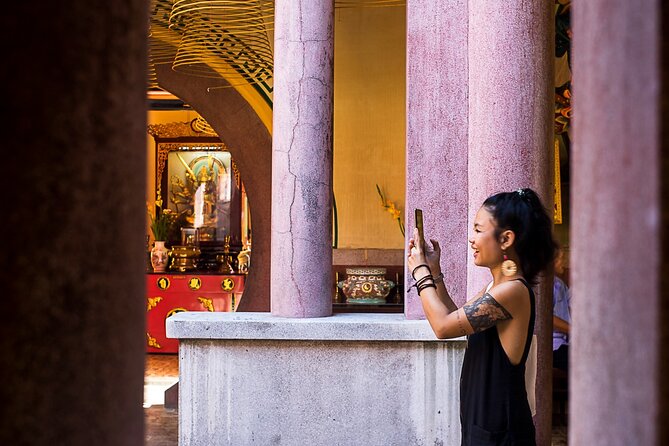
You’ll visit a Buddhist temple during the walk. Temples change the pace. Even if you only spend a short time there, it gives you a different set of photography challenges: softer lighting, more stillness, and the need to be extra mindful about your behavior.
This stop is valuable because it breaks the day into moods. Street shooting often swings between fast action and slower observation. A temple helps you practice the slower half—composition, careful framing, and respecting where and when you can take photos.
It’s also a good contrast to market shooting. If your photos so far are mostly busy scenes, a temple can help you produce a set that feels balanced instead of repetitive.
The shooting approach: angles, light, and working with people
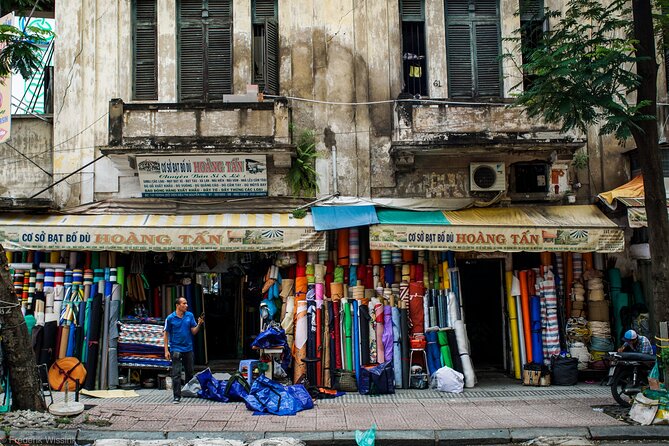
What makes this experience especially strong is the way it teaches how to see.
From the coaching topics you’ll get—angles, light, and how to make compositions differently—you’ll likely start shooting with a plan instead of just pointing and hoping. Street photography looks random when you’re new. Coaching turns it into a repeatable process: find a shape, look for the right moment, then get out of the way quickly.
You’ll also learn how to handle different camera types. One attendee specifically mentioned getting tips for using an iPhone effectively, including the basic idea that the best camera is the one you have with you. That’s a reminder that street practice matters more than gear.
If you’re a beginner, the value is that you won’t feel like you’re doing everything wrong at once. You can ask questions, try variations, and immediately see what changes in your results.
If you’re experienced, you still benefit from structured prompts. A good host doesn’t just correct; they suggest constraints that help you experiment.
How far you’ll walk (and how to make it easier)
The duration is about 2 hours 30 minutes, and the stops aren’t meant to be a marathon across the city. Locations are grouped so the walking stays manageable, which matters because your energy level affects your photos.
Still, you’re moving through tight alley spaces. Plan your pace. Wear shoes you can trust for stairs and uneven pavement. Bring a camera strap you can keep comfortable while walking and taking quick shots.
One smart scheduling tip: if you can choose between days, a weekend morning may mean fewer traffic jams in the area, which can translate into cleaner shooting windows.
What value $73 buys you in Saigon
At $73 per person, this isn’t a bargain “just walk around” deal. You’re paying for two things you can’t easily DIY:
1) Access to the right types of subjects in one morning: apartment architecture, a hardware market, and a temple
2) A professional teaching rhythm: approach people, compose with angles and light, and keep improving as you go
The small group cap (max 10) also adds real value. You’re more likely to get targeted advice rather than general commentary from the sidelines.
In Vietnam, it’s common to find cheap tours. This one earns its price by being focused: photography practice tied to real places, guided by people who do this work for a living.
Who this tour fits best
This experience is designed for any photography level—aspiring, beginner, or more advanced. It’s especially good if you want:
- Street photos that look intentional, not accidental
- Practical help approaching people and understanding what to notice
- A guided route that leads to architecture and daily-life scenes in central Saigon
- A manageable morning walk that still delivers meaningful results
It’s also a strong match if you’re traveling with a phone and want instruction that works right away, not just theory about settings.
Should you book the Saigon Street Photography Experience?
Yes, if you want a morning plan that improves your photos without turning into a lecture. The best reason to book is the combination of pro coaching and real-world scenes—from apartment buildings to markets to a temple—so you practice the skills you actually need.
I’d skip it only if you strongly dislike early mornings or walking through alleyways, or if you want a slow, purely scenic sightseeing pace. This is a photo-learning walk first, and it moves with purpose.
If that sounds like your style, grab a spot. It’s the kind of outing that makes you look at Saigon differently long after you pack up your camera.
FAQ
What is the price of the Saigon Street Photography Experience?
It costs $73.00 per person.
Where is the meeting point?
You meet at Cafe Linh77 Hàm Nghi, Phường Nguyễn Thái Bình, Quận 1, Thành phố Hồ Chí Minh, Vietnam.
What time does the tour start?
The start time is 7:00 am.
How long is the experience?
It runs for about 2 hours 30 minutes (approx.).
How many people are in the group?
The tour has a maximum of 10 travelers.
Who will host the experience?
The experience is hosted either by Frederik Wissink or Kevin Lee.
What places will you photograph during the walk?
You’ll visit locations including French colonial and war-era apartment buildings, a local hardware market, and a Buddhist temple, plus other less-touristy areas and alleyways.
Is the experience beginner-friendly?
Yes. It’s suitable for aspiring and professional photographers of any level.
Do I get a ticket on my phone?
Yes. It includes a mobile ticket.
What happens if the tour gets canceled or I cancel?
You can cancel up to 24 hours in advance for a full refund. The experience requires good weather, and if it’s canceled due to poor weather you’ll be offered a different date or a full refund. It also requires a minimum number of travelers; if it’s canceled because the minimum isn’t met, you’ll be offered a different date/experience or a full refund.
Take Home Sharper Photos
More Tour Reviews in Ho Chi Minh City


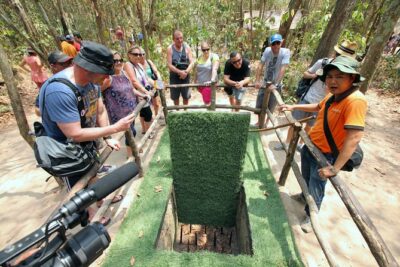
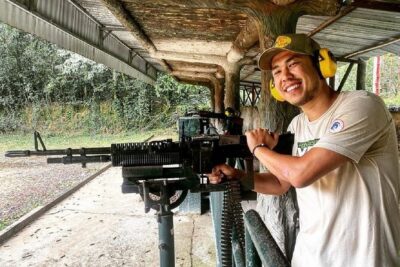

Sharper Shots of Your Saigon Trip
Just Reviewed Around Saigon
- Secret walking Food Tour Ho Chi Minh City
★ 5.0 · 3 reviews - Ho Chi Minh City: Secret Cocktail Experience
★ 5.0 · 3 reviews - From Ho Chi Minh city: Vung Tau Beach Private Day Tour
★ 5.0 · 3 reviews - Saigoncholon
★ 3.5 · 3 reviews - Saigon On 2 Wheels
★ 3.5 · 3 reviews - From Ho Chi Minh City: Relax In Mui Ne Beach In 1 Day
★ 4.3 · 3 reviews
Saigon Photo Tours, compared.
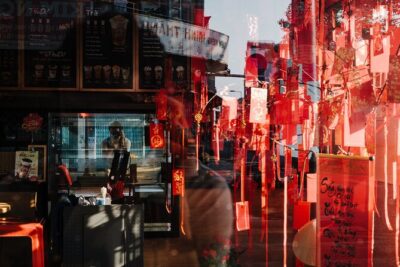 ★ 5.0Private Sunrise Photography Tour – Down in ChinatownFrom $8959 reviews
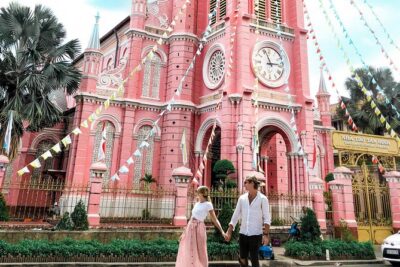 ★ 5.0️ Ho Chi Minh City Instagram Tour: Hidden Gems (Private & All-Inclusive)From $12155 reviews
 ★ 5.0Private Photography Tour & Ho Chi Minh City Exploration By LocalFrom $8025 reviews
 ★ 4.8Private Photography Tour & Ho Chi Minh City ExplorationFrom $7616 reviews
 ★ 5.0Photography Tour with Professional Photographer in Ho Chi MinhFrom $7013 reviews
 ★ 5.0Private Sunset Photography Tour – Travel through history and timeFrom $8913 reviews
 ★ 5.0Saigon Railway Village Photo TourFrom $11910 reviews
 ★ 4.5[Free E-sim] Half day Instagram Cafe Tour in Ho Chi MinhFrom $308 reviews
Browse the lists this tour appears in