
REVIEW · SAIGON COOKING CLASSES
Small-group Cooking Class with Market visiting (4-5 hours)
Cyclo to the market, then real cooking. Market visit plus hands-on cooking led by guides like Camellia and Joey makes this a quick hit of flavors and culture, and you’ll leave with lunch you actually built yourself. The only real catch is that cyclo pickup is limited to District 1, so you may need to plan a short ride to the start if you’re elsewhere.
What makes it work so well is the pacing. You start with ingredients, then move straight to the kitchen, then eat what you made. That structure is great if you want more than a cooking demo and less than a full-day production.
This class also has a smart mix of food skills and context. You’ll learn what goes into staples like nước mắm (fish sauce), how Vietnamese rice cooking differs by type, and some etiquette tips so you don’t feel lost at the table.
In This Review
- Key things you’ll notice right away
- Your half-day format: cyclo pickup, market walk, and a proper lunch
- Market visiting: how to spot ingredients behind Vietnamese flavors
- The kitchen lesson: traditional tools, Yin-Yang balance, and why it matters
- Cooking your meal: classic dishes and step-by-step guidance
- Lunch after you cook: eating with context, not just hunger
- Price and value: why $60 is fair for what you get
- Practical tips before you go (so the class feels easy)
- Who should book this cooking class, and who might pass
- Should you book it?
- FAQ
- How long is the cooking class with market visiting?
- What is the price per person?
- Is hotel pickup included?
- Where does the tour start and end?
- What’s included in the tour?
- Are drinks included with lunch?
- Is a vegetarian option available?
- Is there a child rate?
Key things you’ll notice right away
- Rice and ingredient variety at the market that helps you shop (and order) with confidence later
- Chef-led prep of multiple dishes, not just one plate for show
- Fish sauce and spice blending basics, including how flavors get balanced
- Traditional kitchen tools and stories, from Imperial-era roots to outside influences
- Dining etiquette plus chopstick technique, so lunch is more than eating
- Lunch included after you cook, with time to ask questions and compare methods
Roll up your sleeves in another Saigon kitchen


Your half-day format: cyclo pickup, market walk, and a proper lunch
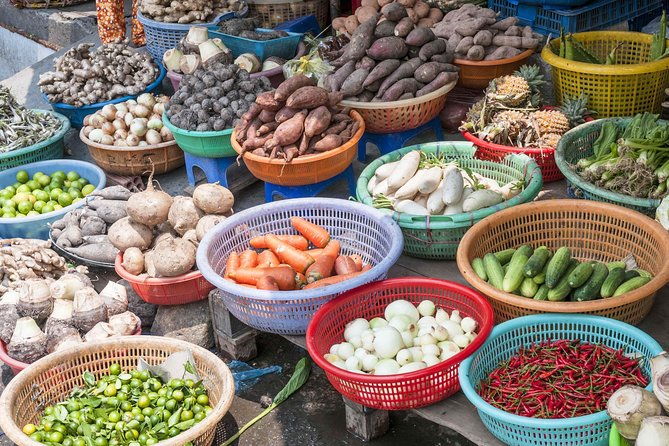
This is built for people who want Vietnamese cooking to make sense fast. The total time is listed around 3 hours (and it’s also described as a half-day), so expect a compact schedule that moves without feeling rushed. The flow usually starts with a hotel pickup by cyclo (one way) in District 1, then you head to the market, then the cooking classroom, then you eat.
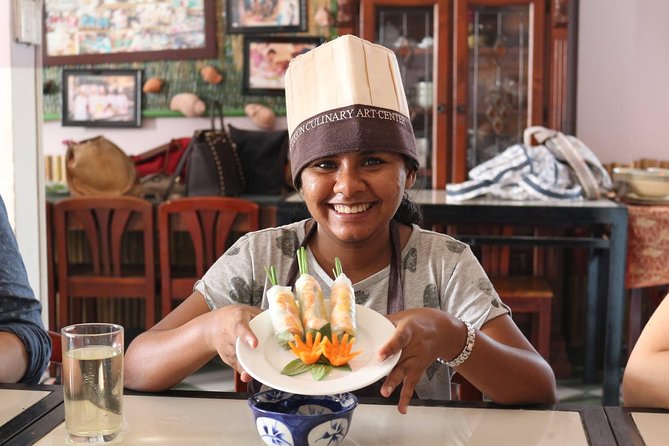
Two practical wins jump out. First, you’re not just watching. You get guided through prep steps and cooking steps with a chef-instructor, which is where you actually learn. Second, the class ends with lunch made from your work. That turns the lesson into something you can remember the taste of, right away.
One consideration: hotel drop-off isn’t included. The activity ends back at the meeting point, so you’ll want to plan how you’ll get from there back to your hotel. Also, “smart casual” is the dress code, which is easy, but you may want comfortable shoes since markets involve standing and walking.
Market visiting: how to spot ingredients behind Vietnamese flavors
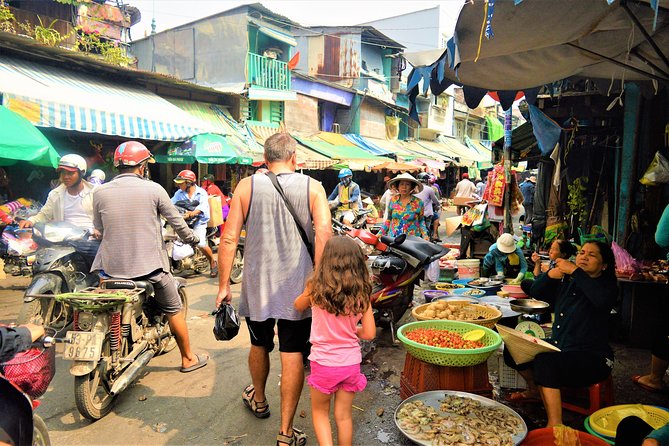
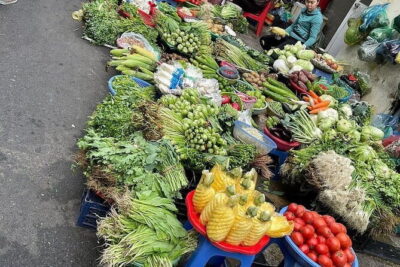
The market stop is the real education engine of this tour. You’ll see key ingredients and many rice varieties, plus the herbs and staples used in everyday Vietnamese cooking. That matters because Vietnamese food often tastes simple until you understand what’s underneath. Once you recognize the ingredients, you can recreate flavor even after you get home.
What to pay attention to on the stalls:
- Rice types: different textures and cooking behaviors mean different dishes make sense with different rice
- Fresh herbs and aromatics: these are not garnish in Vietnamese food. They often shape the final flavor
- Sauce ingredients: you’ll connect the ideas behind nước mắm to what you see during the walk
You’ll also get help connecting ingredient names to uses. That’s useful because Vietnamese menus can be confusing if you only know a few dish names. After this market visit, you’re better equipped to ask for the right thing and avoid the “why does this taste different” moment when you order later.
One small note for your expectations: this isn’t a huge photo-shoot tour where you just wander. It’s more like guided shopping and ingredient decoding, then you head straight into the kitchen.
The kitchen lesson: traditional tools, Yin-Yang balance, and why it matters
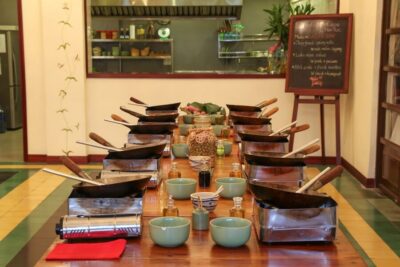
In the cooking class, you’re introduced to a traditional Vietnamese kitchen style and the utensils linked to how people cooked in the past. This is more than “cool props.” It helps you understand why certain techniques exist, especially in homes where flavor balance is the main goal, not fancy plating.
Here’s what you can expect to learn during instruction:
- How to recognize basics used in Vietnamese dishes
- How ingredients and spices get blended into signature flavors, including nước mắm
- How rice cooking techniques vary by rice type
- The idea of Yin-Yang balance as part of Vietnamese thinking about food
There’s also cultural context in the lesson. You’ll hear about Vietnamese cuisine’s roots in Hue Citadel Imperial Cuisine, and how later influences from the West and other Eastern cultures affected what ended up on plates. That background helps explain why Vietnamese food can feel both familiar and surprisingly layered, even when it’s not heavy.
You’ll also get a short crash course in dining etiquette and chopstick technique. This is one of those things you’ll use right away because lunch is included, and it’s easier to practice with a guide nearby than to figure it out alone at a noisy restaurant.
Cooking your meal: classic dishes and step-by-step guidance
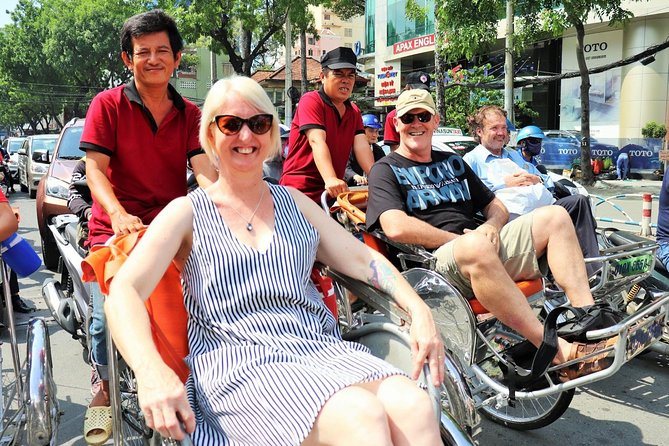
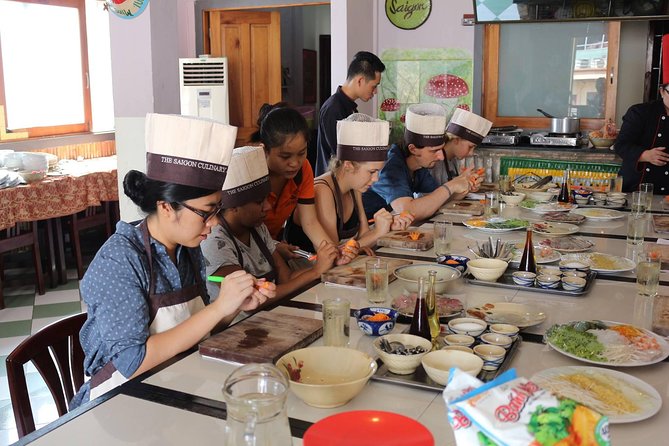
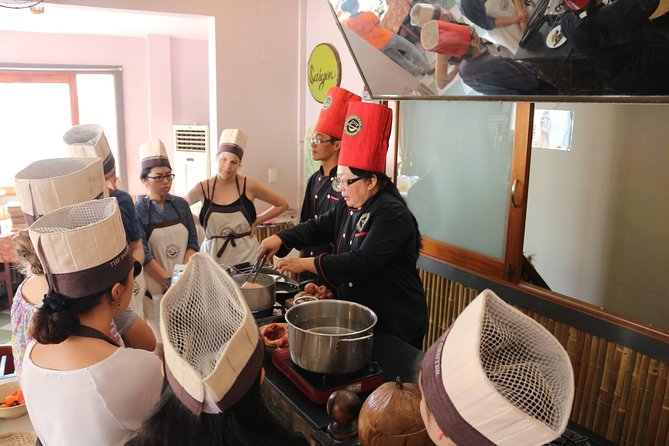
The cooking part is the heart of the experience. You’ll prepare a selection of favorite dishes with the chef-instructor’s guidance. The goal is simple: learn the process, not just the recipe.
Across the class, you’ll cover the kind of skills that help you cook beyond one dish:
- Ingredient prep (what to cut, how much, and what it changes in cooking)
- Flavor building (especially around fish sauce-based seasoning and spice blending)
- Rice technique (learning how to match method to rice type)
The most positive feedback pattern here is how patient and thorough the chefs and hosts are. Names you may see in the guides include Camellia, Daniel, My, Joey, and Dana, and the chef-instructors include Chef Qi/Quy and Chef Manh. If you get one of the more conversational instructors, you’ll likely enjoy the cultural storytelling layered into the technique.
One realistic consideration: a “smart casual” class doesn’t mean an ultra-formal setting, but you are still cooking. You might want to dress so you don’t worry about a light sauce splash, and bring a water bottle mindset since bottled water is included but drinks are not.
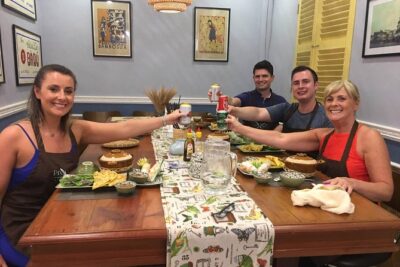
Also, the class is small-group with a maximum of 20 travelers. That’s large enough to feel lively, but small enough that you’re not lost in a factory line. In practice, it usually means you can ask questions when you hit a snag, especially with chopsticks and seasoning balance.
More stalls and shophouse streets to browse
- 1-Day Mekong Delta Cai Rang Floating Market-Ancient House-Pancake★ 5.0 · 653 reviews
- Chef Vu Cooking Class Plus Market Trip in Saigon Center (Pick up by Cyclo)★ 5.0 · 477 reviews
- Immersive Cooking Class & Market Tour By Local Chef+Cookbook★ 4.8 · 426 reviews
- Immersive Cooking Class & Wet Market Tour by Local Chef +Cookbook★ 5.0 · 367 reviews
- Cai Rang Floating Market & Mekong Delta Private 1-Day Tour★ 5.0 · 197 reviews
Lunch after you cook: eating with context, not just hunger
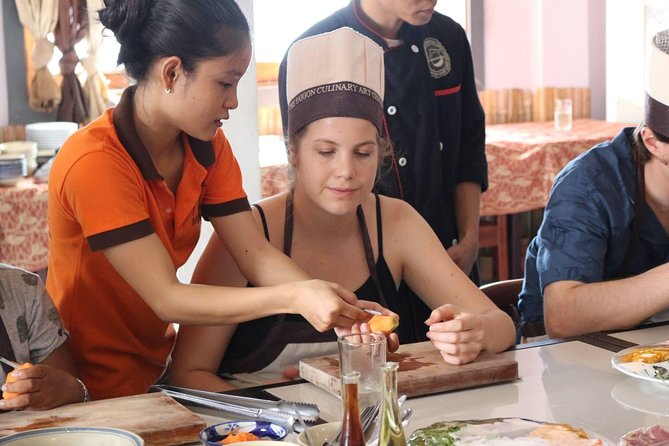
After the cooking session, you’ll eat lunch—your work, your flavors, your results. This is where the lesson locks in. You’ll likely find yourself doing a quick mental checklist: did the rice texture match what you expected, did the sauce taste balanced, did the herbs come through the way the chef described.
Another underrated value here is the chance to chat with the instructor while eating. Since you’re not just leaving right after cooking, you can ask follow-ups like:
- Why this seasoning order works
- How to adjust sweetness/saltiness in nước mắm style sauces
- What ingredient substitutions make sense if you can’t find the exact item
And because the lesson includes dining etiquette and chopstick technique, lunch is less awkward. Instead of guessing, you’re practicing what you were taught. That can turn lunch into a confidence boost, not a trial.
Price and value: why $60 is fair for what you get
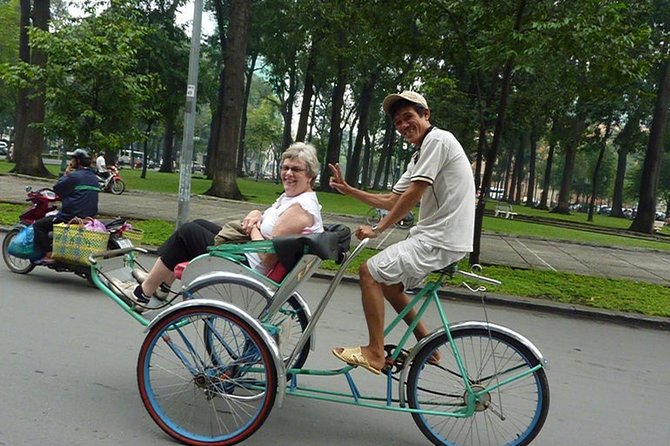
At $60 per person, you’re paying for four major pieces:
1) Hotel pickup (one way) in District 1 by cyclo
2) Market visiting with ingredient guidance
3) Cooking class instruction with a chef-instructor
4) Lunch (plus bottled water)
For Ho Chi Minh City, that’s a lot bundled in. The pickup matters more than you might think if you’re short on time or don’t want to figure out the route to the market and kitchen. The market visit also adds value because it teaches you what to buy and why.
A quick reality check: drinks aren’t included, and tips aren’t included. If you want extra beverages at lunch, budget for that. Still, the core experience is priced in a way that feels like you’re paying primarily for the guided food education and the meal, not just transportation.
If you’re comparing to cooking classes that only teach one dish, this one tends to feel better because you’re learning multiple dishes and the underlying ingredient logic.
Practical tips before you go (so the class feels easy)
Here’s how to make the experience smoother from your side.
Come hungry, but not desperate. You’ll eat lunch at the end, so you don’t need a full meal before you start. Still, if you have a sensitive stomach, a small snack beforehand can help.
Be ready to stand and walk. The market visit involves movement, and you’ll likely spend time near ingredient stalls before heading to the kitchen.
Plan your dietary needs early. A vegetarian option is available if you ask at booking time. If you have allergies or specific requirements, tell the operator when you book so they can adjust.
Wear shoes you can cook in. You’re not doing a formal performance, but you’ll be in a working kitchen environment.
Bring curiosity. The best instructors use the class to explain why flavors behave the way they do. If your guide is someone like Camellia, Joey, or My, expect helpful explanations and plenty of room for questions.
Who should book this cooking class, and who might pass
This tour is a strong fit if you want:
- A small-group Vietnamese cooking experience with direct chef guidance
- A market walk that teaches ingredient recognition, not just sightseeing
- An included lunch so you can taste what you made
- A cultural layer beyond recipes, including etiquette and some culinary history
It’s also a good choice for first-timers in Ho Chi Minh City who want a structured morning without spending mental energy on transportation.
You might consider passing (or at least planning extra logistics) if:
- You’re staying outside District 1, since cyclo pickup is limited to that area
- You dislike hands-on cooking and prefer pure observation
- You want a longer, slower experience. The schedule is compact, and it’s meant to be efficient
Should you book it?
If you like the idea of learning Vietnamese cooking through real ingredients—rice varieties, herbs, and nước mắm logic—then this is worth booking. The price feels fair because you get pickup (District 1), guided market visiting, chef-led cooking instruction, and lunch.
I’d book it especially if you’re the type who wants a souvenir you can eat and recreate later. And if you’re hoping for a friendly guide, the guidance quality is clearly a standout: people often mention hosts like Camellia, Joey, Daniel, My, and Dana, plus chefs such as Chef Qi/Quy and Chef Manh.
If you’re outside District 1 or you’re very time-sensitive, just double-check how you’ll reach the start and how you’ll get back afterward. Once that’s squared away, this is a satisfying, practical way to learn Vietnamese food in just a few focused hours.
FAQ
How long is the cooking class with market visiting?
The duration is listed as about 3 hours (and it’s described as a half-day experience).
What is the price per person?
The price is $60.00 per person.
Is hotel pickup included?
Yes. There is one-way hotel pickup in District 1 by cyclo.
Where does the tour start and end?
It starts at Mekong River Tours [Asiana Link Travel], 60 Tôn Thất Đạm, Bến Nghé, Quận 1, Hồ Chí Minh 700000, Vietnam. It ends back at the meeting point.
What’s included in the tour?
Included: District 1 one-way cyclo pickup, tour escort/host, market visiting, cooking class fee, lunch, and bottled water.
Are drinks included with lunch?
No. Drinks are not included.
Is a vegetarian option available?
Yes. A vegetarian option is available if you advise at the time of booking.
Is there a child rate?
A child rate applies only when sharing with 2 paying adults, and children must be accompanied by an adult.
Leave Room in the Suitcase


More Tour Reviews in Ho Chi Minh City


Cook It Yourself: Saigon Kitchens
Just Reviewed Around Saigon
- Secret walking Food Tour Ho Chi Minh City
★ 5.0 · 3 reviews - Ho Chi Minh City: Secret Cocktail Experience
★ 5.0 · 3 reviews - From Ho Chi Minh city: Vung Tau Beach Private Day Tour
★ 5.0 · 3 reviews - Saigoncholon
★ 3.5 · 3 reviews - Saigon On 2 Wheels
★ 3.5 · 3 reviews - From Ho Chi Minh City: Relax In Mui Ne Beach In 1 Day
★ 4.3 · 3 reviews
Saigon Cooking Classes, compared.
 ★ 5.0Cai Be Mekong Delta Tour: Cooking Class, Cycling & Craft VillagesFrom $391,881 reviews
 ★ 5.0Mekong Day Trip Explore Village Bicycle CookingClass Group 12 PaxFrom $29705 reviews
 ★ 5.0Chef Vu Cooking Class Plus Market Trip in Saigon Center (Pick up by Cyclo)From $46477 reviews
 ★ 4.8Immersive Cooking Class & Market Tour By Local Chef+CookbookFrom $33426 reviews
 ★ 5.0Immersive Cooking Class & Wet Market Tour by Local Chef +CookbookFrom $49367 reviews
 ★ 5.0Small-group 2-Day Mekong Delta: Floating market, Cooking Class…From $170194 reviews
 ★ 5.0Authentic Vietnamese Cooking Class with Market Visit in HCMcFrom $45182 reviews
 ★ 4.9Cooking Class with Ben Thanh Market visitFrom $4594 reviews
Browse the lists this tour appears in