
REVIEW · SAIGON PHOTO TOURS
The River’s Edge Photo Tour
District 7 by dawn makes your camera work harder. You’ll walk the canal edge and floating-village lanes in Ho Chi Minh City, aiming for scenes of working river life, river-edge architecture, portraits, and cityscapes. The best part is the way the tour turns scattered photos into a single photo story, with practical composition guidance for different shots—people, buildings, and wide skyline views.
I like that it’s not a sit-and-watch workshop. You’re out moving for about four hours (around 5:30am start), and you’ll cover multiple settings in one loop, from tugboats and a floating village to a traditional market with strong people-photography light. I also like the small group size, capped at 6, because you get steadier attention from the photographer guide.
One thing to consider: this is a weather-dependent early walk. If it’s not good, the tour may be rescheduled or refunded, so plan your morning with a little flexibility.
In This Review
- What You’re Really Buying: A River Photo Story, Not Just Snapshots
- Key Highlights You’ll Feel on the Walk
- District 7 Canal Wander: Working River Life and Composition Practice
- Passing a Buddhist Temple: Architecture Frames and Respectful Street Photography
- The Floating Village Segment: Portraits, Houseboat Texture, and Real Life
- Saigon Skyline Across the River: Cityscape Ideas Without Losing the Human Thread
- Traditional Market Light: People Photography You Can Actually Use
- Guide Feedback Makes the Difference (and It’s Not Just Polite Talk)
- Timing, Duration, and Group Size: Why 4 Hours Works Well
- Price and Value: Is $119 Worth It?
- Weather and Practical Comfort: The One Real Variable
- Who Should Book This and Who Might Skip It
- Should You Book the River’s Edge Photo Tour?
- FAQ
- What’s the duration of the River’s Edge Photo Tour?
- What time does the tour start in Ho Chi Minh City?
- How much does the tour cost per person?
- Does the tour include pickup?
- How many people are in each group?
- What’s included in the tour price?
- Is the admission ticket free?
- What happens if the weather is poor?
What You’re Really Buying: A River Photo Story, Not Just Snapshots
This is a photo tour with a clear structure. The goal isn’t simply to see District 7’s river edge—it’s to photograph it in a way that makes sense when you later sort, edit, and sequence your images.
That matters for two reasons:
- You’ll learn how to pace a narrative across shots, not just what settings to use.
- You’ll come away with a mix of subject types—architecture, people, and city views—so your gallery feels like it belongs together.
The tour is led by a professional photographer guide, and multiple guides have been praised for giving fast, usable feedback. In the past, guides like William and Paul (including Paul Green) have focused on helping you improve quickly, suggesting what to shoot next, and showing ways to approach people even if language is limited.
There’s also a practical value angle: the tour price is $119 per person for roughly four hours, and it includes the pro guide, with pickup offered. For a morning session in a place you might not easily find on your own, the cost often pencils out if you want guided access to authentic river-edge corners and real-world photo coaching.
More of Saigon through a lens
Key Highlights You’ll Feel on the Walk
Early morning light for people and river scenes
You start at 5:30am, which gives you softer brightness and easier contrast for faces, water activity, and market streets.
Canal-side working life with tugboats and cargo
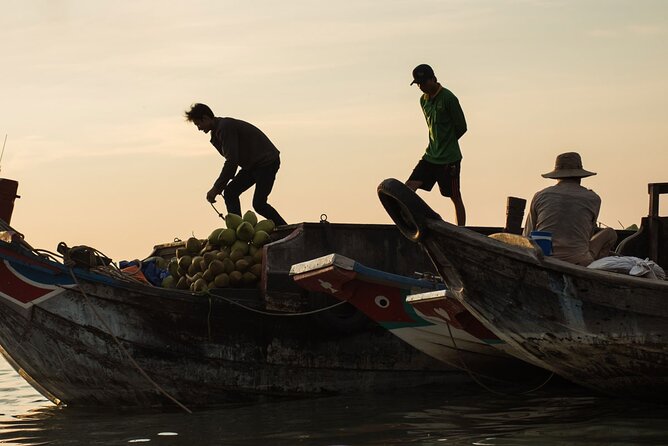
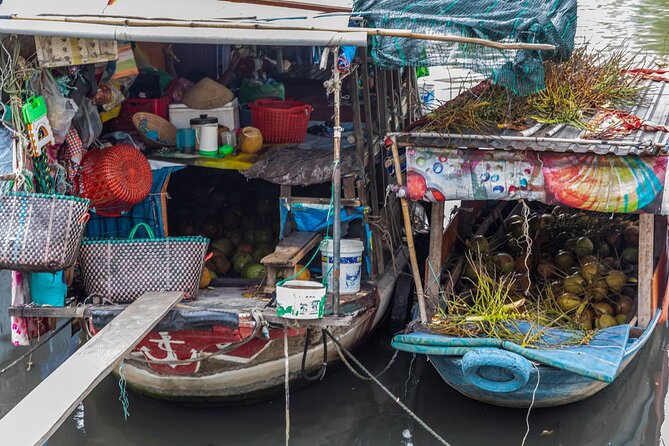
You’ll photograph classic Saigonese riverside moments, including tugboats arriving with goods like coconuts.
Floating village portraits and working-at-home moments
You move through a floating village area with rickety anchored houseboats, and the owners often interact—great for natural portraits and candid scenes.
A skyline view that connects old water life to modern Saigon
You’ll finish part of the loop with a dramatic look toward Saigon’s 21st-century skyline across the river.
A traditional market stop for fast storytelling
The final leg includes a traditional market with lighting that’s good for people photography, where small gestures and details can turn into a strong sequence.
District 7 Canal Wander: Working River Life and Composition Practice
You start in District 7 with a canal-side walk designed to get you photographing right away. This part is about rhythm: water movement, boats arriving, and everyday labor that doesn’t feel staged.
You’re aiming at scenes like tugboats pulling in and carrying goods from the Mekong. It’s the kind of subject that rewards attention to timing—where people are standing, how boats line up with poles or edges, and how cargo creates repeating shapes.
From a photo-coaching standpoint, this stop is ideal for learning how to build a frame around motion and environment. You’ll likely experiment with:
- tighter crops that focus on the people-handling side of the work
- wider shots that include the canal banks and boat forms
- layered compositions where water, boat, and faces sit at different distances
Why it’s valuable: If your photos only show scenery, they can feel flat. Working river scenes add human purpose. They also give you strong texture—wood, rope, water streaks, and repetitive boat geometry.
Possible drawback: Early morning can mean cooler air and low-energy mornings. If you’re not a morning person, this is still very doable, but it helps to arrive ready—water bottle, comfortable shoes, and your camera strap adjusted for quick movement.
Passing a Buddhist Temple: Architecture Frames and Respectful Street Photography
After the first river-life stretch, the route moves past a Buddhist temple. This is a useful shift from “action and movement” to “structure and detail.”
Temples give you built-in composition tools: repeated roof lines, doorways, and symmetry cues. For architecture photography, you’ll want to think about angles—how close you stand to get scale, and how far you step back to fit the frame without making things look cramped.
It’s also a moment to practice observational street photography. Even if you’re not shooting long sequences, you can grab:
- a doorway or gate close-up with meaningful context
- a wider shot that shows the temple against the river-side urban edge
- a respectful portrait opportunity if people interact in the space
Why it’s valuable: This stop helps you avoid a common mistake on photo tours—only photographing people and missing the architecture that gives the place its identity. A balanced story needs both.
The Floating Village Segment: Portraits, Houseboat Texture, and Real Life
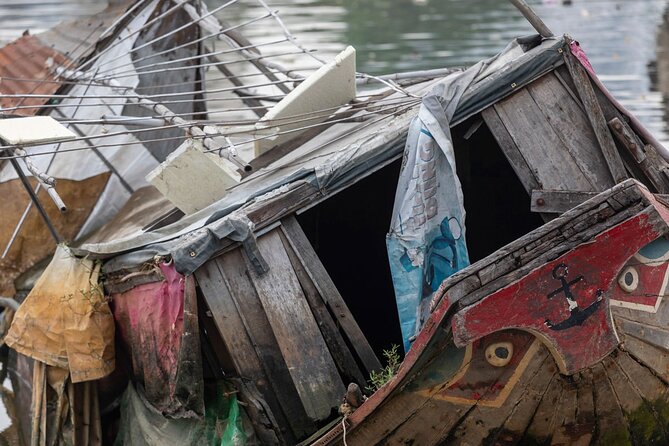
Then you move onto the floating village area, with rickety anchored houseboats along the path. This is where the tour gets personal.
The owners often come out to chat. That’s more than a nice moment—it’s a photo advantage. When people feel comfortable, your portraits get better. You’ll have chances to photograph them at work and play, which usually means more natural expressions than a posed-only approach.
Houseboat settings also bring visual texture. You’ll see irregular lines, wood tones, and a sense of daily life shaped by water levels and the layout of docks and stairs. Your job is to frame it so the viewer understands the space at a glance.
Practical ideas to focus on during this portion:
- Look for a subject plus environment combo: a person plus their daily context
- Use lines from docks or railings to pull the eye toward a face or an activity
- Try switching between portrait framing and wider “where am I” shots
Why it’s valuable: A floating village gives you a story contrast. You’re photographing people living with water as a neighbor. That turns your images from travel pictures into a narrative about livelihood and place.
Possible drawback: These areas can feel tight and uneven. Keep your footing in mind and don’t force the shot at the expense of safety.
A few more frames worth the trip
- Private Sunset Photography Tour – Travel through history and time★ 5.0 · 13 reviews
- Photography Tour with Professional Photographer in Ho Chi Minh★ 5.0 · 13 reviews
- Saigon Railway Village Photo Tour★ 5.0 · 10 reviews
- Sundown in the Colony Photo Tour★ 5.0 · 8 reviews
- Ho Chi Minh City: Professional Portrait Photography Session★ 5.0 · 6 reviews
Saigon Skyline Across the River: Cityscape Ideas Without Losing the Human Thread
The tour doesn’t stop at local life. It builds toward a view of Saigon’s modern skyline over the river. This is one of those “connect the dots” moments—showing how a global-city image sits across from traditional river-edge routines.
Cityscapes are tricky because they tempt you into over-shooting wide and forgetting subject. The tour approach helps here. You’re not just aiming at a pretty skyline; you’re trying to pace the story so the city view feels earned.
To make this section work, use your earlier photos as context. If your first images show working boats and faces, your skyline frame can become the “chapter break.” You might shoot:
- a wider city view that includes river edge cues
- a mid-shot that emphasizes scale (people or boat forms foregrounding the distance)
- a tighter frame where the buildings become shapes, not clutter
Why it’s valuable: You leave with images that show both change and continuity. That’s the kind of contrast that holds attention long after the trip.
Traditional Market Light: People Photography You Can Actually Use
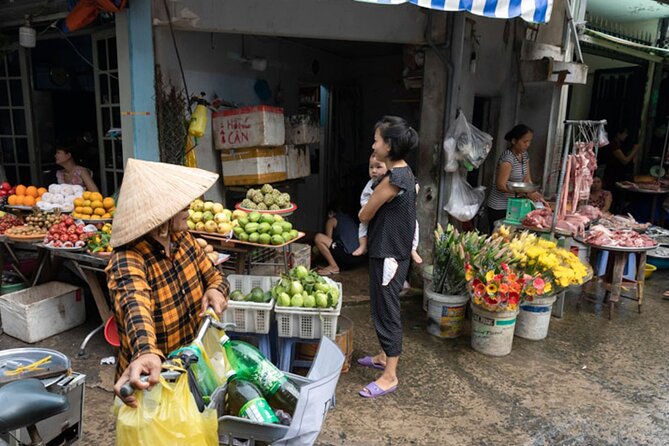
You finish with a walk through a traditional market. The big appeal here is people photography with good light. Markets create motion, micro-interactions, and small moments you can sequence into a narrative.
This is also where your coaching tips pay off most. A lot of photo tours talk about camera settings; fewer help you decide what to capture next. In this kind of market environment, you need that decision-making support.
Expect to photograph:
- faces and expressions as people work or move through stalls
- hands at work and close details that show effort and craft
- wider scenes that anchor your characters to the market environment
Why it’s valuable: Market stop photos often become the most relatable images in a gallery. They give viewers human detail, not just geography.
Guide Feedback Makes the Difference (and It’s Not Just Polite Talk)
The reviews highlight that the photographer guides go beyond pointing at subjects. Guides like William and Paul (including Paul Green) have been praised for giving feedback that helps you improve quickly, plus suggesting new ideas for photographing the river in a fresh way.
That’s exactly what you want in a photo tour. You shouldn’t leave only with a list of places. You want adjustments you can apply on the spot, like how to change angle, where to stand for a cleaner frame, or how to shift from a posed portrait to a more candid moment.
Also, one guide approach stood out: helping you approach people smoothly even when Vietnamese isn’t shared. That matters on a river walk where you’re photographing real homes and daily routines. When a guide models respectful communication, your photos tend to look more natural, and you tend to feel less awkward asking for a moment.
Timing, Duration, and Group Size: Why 4 Hours Works Well
This tour runs about 4 hours and starts at 5:30am. That time window is long enough to cover multiple environments, but short enough that you’re not stuck in one spot waiting for the perfect light.
Group size is limited to a maximum of 6 travelers. For photography, that’s a sweet spot. You’re less likely to feel rushed, and the guide can help more directly. It also makes it easier to move as a unit without constant bottlenecks near tight waterfront paths.
Pickup is offered, which helps you show up early without the stress of navigating morning transit.
Price and Value: Is $119 Worth It?
At $119 per person for about four hours, you’re paying for three things:
- A professional photographer guide who teaches story-building and composition across varied subjects
- Guided access to authentic river-edge areas you might not naturally find
- Time efficiency—a single morning route that covers boats, a floating village setting, skyline views, and a market
If you’re an absolute beginner, you might still find it worthwhile because you’ll get coaching on what to shoot and how to structure a set. If you’re more experienced, you’ll likely appreciate the narrative pacing advice and the chance to apply composition ideas to real scenes, not staged ones.
Where the value is strongest is if you want a gallery that feels connected. If your goal is just to collect random photos, you could probably do that on your own. But if you want images that tell a story about Saigon’s river life, this format is built for it.
Weather and Practical Comfort: The One Real Variable
The tour requires good weather. If conditions are poor, you’ll be offered a different date or a full refund. That’s normal for outdoor walking tours, and it’s especially relevant early in the day when light and visibility matter for both cityscape and people photography.
For you, the practical takeaway is simple: dress for early morning walking, wear shoes you trust on uneven paths, and keep your rain plan realistic if skies look uncertain.
Who Should Book This and Who Might Skip It
This tour is a great fit if you:
- want photo coaching that helps you build a story, not just chase subjects
- enjoy people photography and don’t mind getting close to real daily life
- like mixing types of shots: portraits, architecture, river action, and skyline views
- prefer small groups with direct guide attention
You might choose something else if you:
- hate early starts and would struggle with a 5:30am meeting time
- need a fully sedentary experience (this is a walking photo route)
- can’t handle uneven, waterfront-adjacent terrain
Should You Book the River’s Edge Photo Tour?
My short take: if you want a Saigon photo session that feels grounded in real river life, this is a strong choice. The structure is built for storytelling—river work, floating village portraits, skyline connection, and market people light—and multiple guides (William and Paul, including Paul Green) have a track record of giving feedback that helps you improve fast.
The only reasons to hesitate are weather risk and the early morning start. If you can handle both, you’ll likely leave with more than a folder of images. You’ll have a set that reads like a single morning along the river’s edge.
FAQ
What’s the duration of the River’s Edge Photo Tour?
It runs for about 4 hours.
What time does the tour start in Ho Chi Minh City?
The start time is 5:30am.
How much does the tour cost per person?
The price is $119.00 per person.
Does the tour include pickup?
Pickup is offered.
How many people are in each group?
The tour has a maximum of 6 travelers.
What’s included in the tour price?
A professional photographer guide is included.
Is the admission ticket free?
Yes, admission ticket is free for this activity.
What happens if the weather is poor?
This experience requires good weather. If it’s canceled due to poor weather, you’ll be offered a different date or a full refund.
More Tours in Ho Chi Minh City



More Tour Reviews in Ho Chi Minh City
Sharper Shots of Your Saigon Trip
Just Reviewed Around Saigon
- Secret walking Food Tour Ho Chi Minh City
★ 5.0 · 3 reviews - Ho Chi Minh City: Secret Cocktail Experience
★ 5.0 · 3 reviews - From Ho Chi Minh city: Vung Tau Beach Private Day Tour
★ 5.0 · 3 reviews - Saigoncholon
★ 3.5 · 3 reviews - Saigon On 2 Wheels
★ 3.5 · 3 reviews - From Ho Chi Minh City: Relax In Mui Ne Beach In 1 Day
★ 4.3 · 3 reviews
Saigon Photo Tours, compared.
 ★ 5.0Private Sunrise Photography Tour – Down in ChinatownFrom $8959 reviews
 ★ 5.0Saigon Street Photography ExperienceFrom $7356 reviews
 ★ 5.0️ Ho Chi Minh City Instagram Tour: Hidden Gems (Private & All-Inclusive)From $12155 reviews
 ★ 5.0Private Photography Tour & Ho Chi Minh City Exploration By LocalFrom $8025 reviews
 ★ 4.8Private Photography Tour & Ho Chi Minh City ExplorationFrom $7616 reviews
 ★ 5.0Photography Tour with Professional Photographer in Ho Chi MinhFrom $7013 reviews
 ★ 5.0Private Sunset Photography Tour – Travel through history and timeFrom $8913 reviews
 ★ 5.0Saigon Railway Village Photo TourFrom $11910 reviews
Browse the lists this tour appears in