
REVIEW · CU CHI TUNNELS TOURS
Cu Chi Luxury Group Tour – Tapioca and Cake Half Day
Cu Chi hits you fast: you’re not just staring at history, you’re walking through it. I like that the tour includes a 3D intro movie plus hands-on tunnel time, so it’s easier to understand how the fighters lived underground. I also love the wartime-food touch—cassava—which makes the story feel practical, not abstract. One catch: the tunnel part is physically tough, and you should plan for tight spaces.
The setup is simple and comfortable: pickup by AC minivan from Districts 1, 3, and 4, an English-speaking guide, and a group limit of 25. Still, if you’re sensitive to crowds, you’ll want to go in with a little patience, since multiple groups can overlap at key tunnel entrances.
In This Review
- Quick hits before you go
- Walking into the Cu Chi story (and what you’re really signing up for)
- The big kickoff: 3D movie and the underground plan
- Stop inside Cu Chi: three layers, trapdoors, hospitals, and the crawl
- Outside views: rice fields and overgrown blast craters
- The forest stop and a documentary-style reset
- Food break that actually fits the theme: cassava, tea, and wheat cake
- How the drive and timing work from Ho Chi Minh City
- Crowd reality check
- Guides: why their style changes what you take away
- Is the $21.99 price fair? Yes, if you want this exact kind of value
- Who should book this tour, and who should think twice
- Should you book the Cu Chi Luxury Group Tour: Tapioca and Cake Half Day?
- FAQ
- How long is the Cu Chi Tunnels half day tour?
- What’s included in the price?
- Where do they pick you up?
- Does the tour include a movie?
- Do you get to crawl into the tunnels?
- Is this tour physically demanding?
- How many people are in the group?
- What food and drinks are provided?
- Where does the tour end?
- Can I cancel for free?
Quick hits before you go
- A 3D movie first helps you get the big picture before you crawl
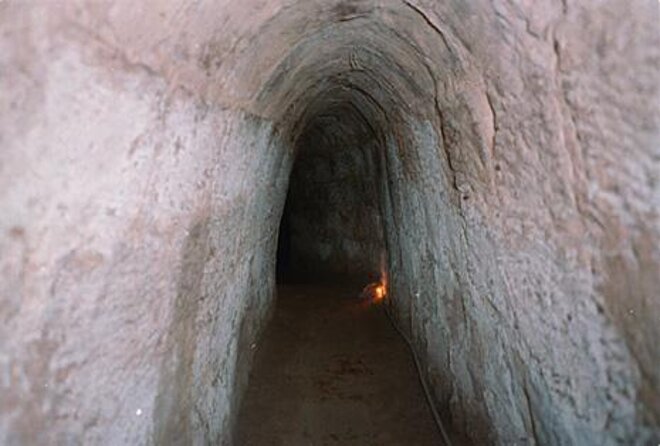
- Crawling into a real passage lets you feel how narrow the tunnels are
- Three layers of tunnels with trapdoors, storage areas, and field hospitals
- Bombing-era blast craters show up again outside, not just underground
- Cassava + tea + wheat cake are included, tied to what people actually ate
Down into the tunnels, a few more ways to go

Walking into the Cu Chi story (and what you’re really signing up for)
The Cu Chi tunnels tour is often sold as a half-day trip, but in practice you should plan on a full outing around 7 hours. That extra time matters, because you’re doing more than one thing: a film, a guided walk through the tunnel maze, outside views like the blast craters, and at least a short food break.
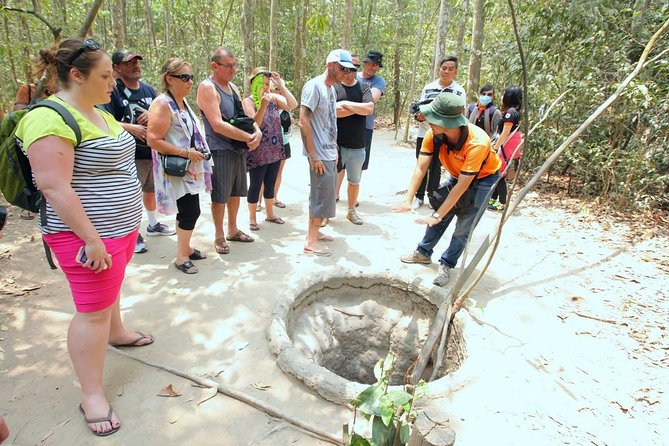
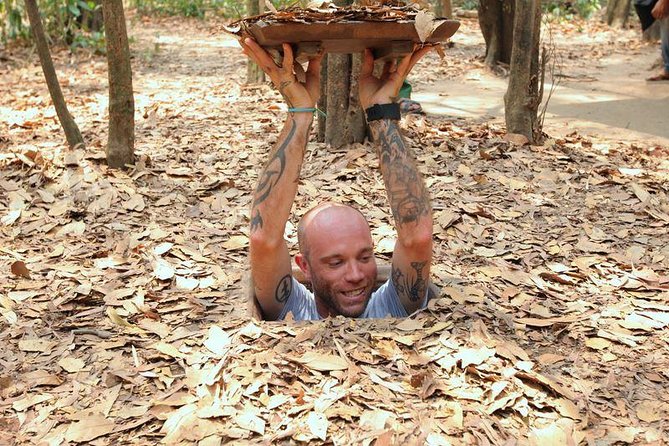
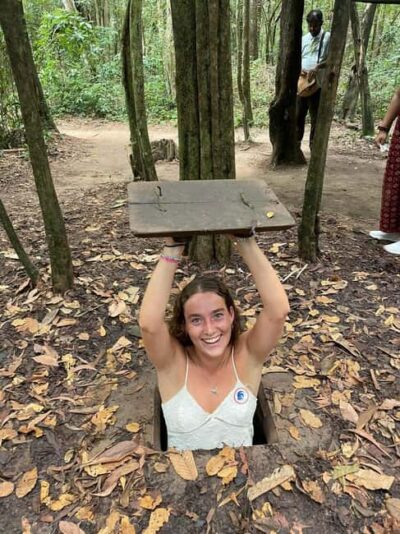
This is also a tour where the “comfort level” depends on your body. You’ll be asked to try a tiny hiding entrance and then crawl into a tunnel. That doesn’t just test fitness. It changes how you interpret the place—suddenly you understand how hiding, ventilation, and movement had to be engineered for real humans in real panic.
The guides can make a huge difference in how the day flows. Names that have shown up on different departures include Hien, Long, Bo, Thuy, Bao, Kelvin, Lee, Xam, Niem, Jackie, Simon, and Tim. Even when the route is the same, the best guides use the tunnel stops to connect “what you’re seeing” to “why it mattered.”
The big kickoff: 3D movie and the underground plan
Before you ever hit the first trapdoor, the tour starts with a 3D movie about the Vietnam War, centered on one of the largest American ground operations. Even if you think you already know the basics, this is a smart warm-up. It gives you the timeline and geography so the tunnel system stops feeling like random holes in the ground.
What I like about doing the film first is the order of attention. Underground, your brain has limited bandwidth. Your eyes are on low ceilings, dark passages, and signage. The movie helps you keep track of the bigger picture—how the network was built, layered, and used between 1961 and 1972.
After the movie, your guide moves you from story to mechanics: how the system was designed to support day-to-day survival during wartime rather than just being a place to hide.
Stop inside Cu Chi: three layers, trapdoors, hospitals, and the crawl
This is the heart of the tour, and it’s where you either love it—or decide you’d rather stay above ground next time.
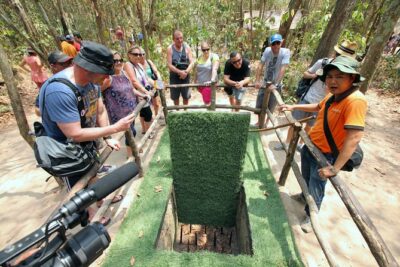
You’ll spend time exploring the maze of tunnels that includes:
- trapdoors and hidden entrances
- storage and work areas
- field hospital spaces
- command and kitchen areas
- ventilation features
The description can sound like a list, but during the walk it starts to click. You begin to see the tunnels as a full “operating system.” People weren’t just hiding; they were coordinating movements, treating injuries, managing supplies, and keeping communication working even while being hunted.
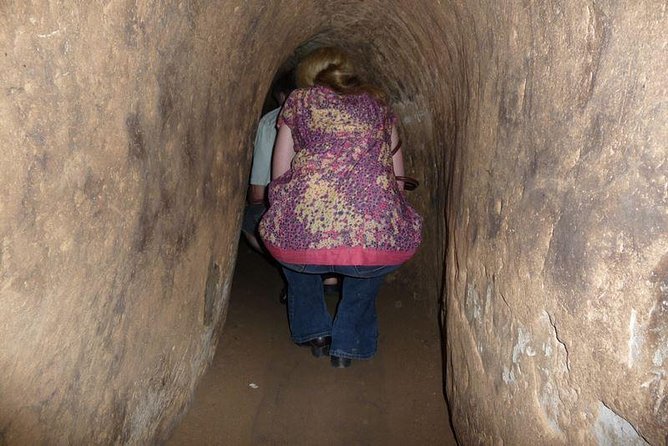
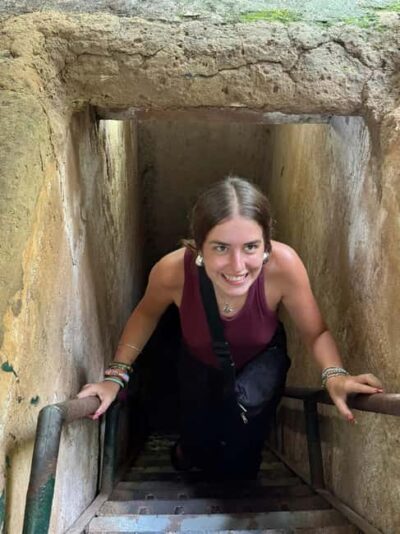
Then comes the part many people remember most: crawl into the tunnel experience. Reviews mention that the visitor tunnel has been widened for visitors, but it’s still tight enough to feel the constraint of the original passages. If you’re claustrophobic, this is not the time to be brave. If you’re okay with discomfort, it’s one of the most honest ways to understand the scale of hardship.
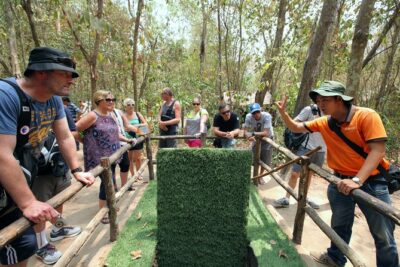
One small but meaningful advantage: some guides have been able to reduce waiting by guiding groups to less crowded entrances. You can’t control crowds entirely, but you can stay flexible—listen carefully to where your guide directs you and move quickly when your turn comes.
Outside views: rice fields and overgrown blast craters
What I appreciate is that the tour doesn’t stop underground. You also get to see how the tunnels connected to the landscape around them.
You’ll observe villagers working nearby rice fields, and some of these areas sit over—or relate to—the tunnel spaces. That detail matters because it shows how war-built systems and everyday life can overlap. The place isn’t frozen in time; it’s part of the local countryside now.
You’ll also see overgrown blast craters from aerial bombing campaigns. These aren’t polished views designed for postcards. They’re reminders of what the land endured and what had to be rebuilt afterward. Seeing the craters from the ground also helps you understand why being underground wasn’t just an idea—it was survival.
A few Saigon tours to weigh against this one:
- VIP Tour Cuchi Tunnels & Mekong Delta Cruise Full Day Group 12pax★ 5.0 · 1,650 reviews
- HCMC: Cu Chi Tunnels & Mekong Delta VIP Tour by Limousine★ 4.7 · 1,015 reviews
- Cu Chi Tunnels and Mekong Delta – VIP Tour★ 5.0 · 910 reviews
- Cu Chi Tunnels – VIP Private Tour★ 5.0 · 883 reviews
- From Ho Chi Minh: Cu Chi Tunnels and VIP Speedboat Tour★ 4.8 · 865 reviews
The forest stop and a documentary-style reset
Midway through the day, you’ll spend time exploring the forest area around the site, including time for a documentary on the tunnel system’s strategy. I think of this part as a mental reset. After crawling and walking through tight spaces, the open air gives your body a breather while your brain catches up on the why behind the how.
If you’re someone who gets overwhelmed by technical details, this stop helps you reframe the tunnels as part of a larger military and political struggle.
Food break that actually fits the theme: cassava, tea, and wheat cake
The tour includes cassava, plus Vietnamese hot tea, wheat cake, and bottled water. This is one of those “small” inclusions that becomes more meaningful because it ties directly to the wartime story.
Cassava matters here because it’s described as the most popular food during war days at Cu Chi. Instead of eating “just because it’s time,” you eat in a way that matches what people had access to underground and under pressure.
If you were hoping for a big restaurant-style meal, don’t plan on it. Think of this as a practical refuel, not a feast. Bring your expectations in line and you’ll feel better when the day runs long.
How the drive and timing work from Ho Chi Minh City
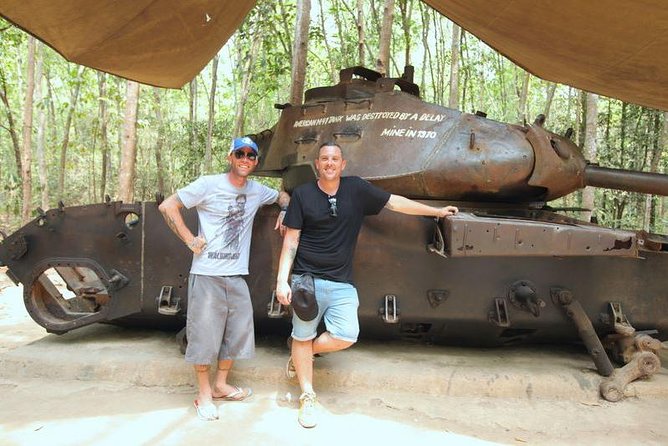
Your day usually starts with pickup from hotels in District 1, 3, and 4. Then you travel by AC minivan with an experienced English-speaking guide. The tour includes the entrance fee and travel insurance, which removes a couple of decision points and keeps things moving.
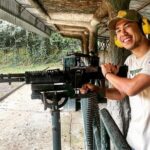
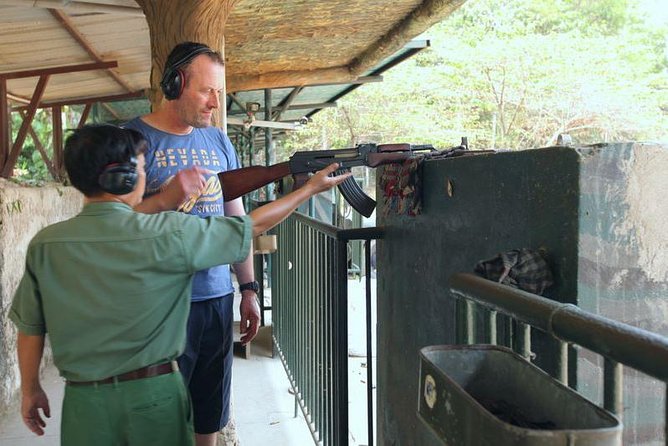
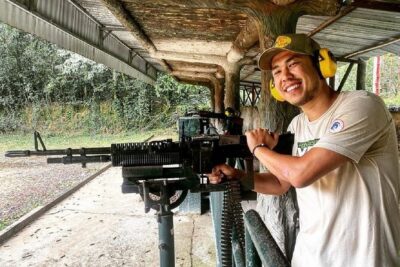
The tour duration is listed at about 7 hours, and admission for the main stop is included. One review detail to keep in mind: sometimes extra activities pop up depending on the day’s flow. For example, there’s mention of a shooting range option with additional costs. That’s not part of the core included program, so treat it as a possible add-on, not a replacement for tunnel time.
Also note the ending: it returns to District 1. If you’re planning dinner or an evening plan in central areas, you’ll usually be able to make it.
Crowd reality check
Cu Chi can be popular. Tunnel entrances can get busy, and you may spend some time waiting in sun while groups take turns. If your schedule allows it and the operator offers different departure times, I’d choose the option that tends to be less crowded—some guides have helped by routing groups to reduce waiting, but the site is still shared.
Guides: why their style changes what you take away
This is one of those tours where “the guide” is not a nice-to-have. It’s part of the product.
Different guides have been highlighted for different strengths:
- Hien was praised for answering questions and handling lots of history context.
- Long and Bo were praised for passionate, detailed explanations that connect the tunnel layout to real wartime life.
- Thuy and Bao got kudos for running a story-forward tour that makes the tunnels feel human, not just structural.
- Jackie and Niem were noted for clear, step-by-step guiding that keeps the pace comfortable.
That said, you should still give yourself a buffer if English level or pacing varies by guide. You’ll get an English-speaking guide, but the experience lives or dies on how well the guide translates the “big ideas” into what you’re seeing right in front of you.
Is the $21.99 price fair? Yes, if you want this exact kind of value
At $21.99 per person, this tour is priced like a budget-friendly way to see Cu Chi without DIY stress. And the included items matter:
- pickup and drop-off in key central districts
- AC minivan
- English-speaking guide
- tunnel entrance fee
- tapioca/cassava, tea, wheat cake, bottled water
- wet tissues
- travel insurance
Where value gets even better is when you treat it as a guided “framework.” The tunnels are confusing if you’re alone. With a good interpreter, you can turn the tunnel maze into a story you understand in under a day.
What might cost extra is anything not listed as included—such as optional add-ons that can appear on-site or along the route. One example mentioned is the shooting range option at extra cost. If you don’t want that, you can focus your money on the included core: tunnels, craters, food, and context.
Who should book this tour, and who should think twice
You’ll be a good fit if:
- you’re comfortable with physically active parts like crawling in tight spaces
- you want a guided experience with a 3D intro and clear storytelling
- you value context over just photos
You might think twice if:
- you’re strongly claustrophobic or sensitive to cramped environments
- you expect a slow, relaxed sightseeing pace
If you love history but hate “lecture tours,” this one can work because the guide connects explanations to physical locations. If you hate history and only want scenery, the tunnel crawl may feel like too much.
Should you book the Cu Chi Luxury Group Tour: Tapioca and Cake Half Day?
If you want an efficient, guided Cu Chi day with practical inclusions—pickup, entrance, AC transport, English guide, and wartime-themed food—I think it’s a strong bet at $21.99. The best part is that you don’t just watch the war; you experience how the tunnel design shaped daily life.
Book it if you can handle tight spaces and you’d like your day structured with a movie, a guided crawl, and outside views like the rice fields and blast craters. Skip it if crawling is a hard no.
FAQ
How long is the Cu Chi Tunnels half day tour?
It runs about 7 hours (approximately). The main tunnel admission portion is listed at 6 hours.
What’s included in the price?
Pickup and drop-off, an air-conditioned minivan, an experienced English-speaking guide, tapioca, Vietnamese hot tea, wheat cake, wet tissues, bottled water, entrance fee, and travel insurance.
Where do they pick you up?
Pickup is offered from hotels in District 1, 3, and 4 in Ho Chi Minh City.
Does the tour include a movie?
Yes. You watch a 3D movie about a major American ground operation during the Vietnam War before exploring the tunnels.
Do you get to crawl into the tunnels?
Yes. The itinerary includes time to crawl into a tunnel and explore the tunnel network.
Is this tour physically demanding?
Yes. Travelers should have a strong physical fitness level, because the tunnel experience involves tight, crawling-style areas.
How many people are in the group?
The maximum group size is listed as 25 travelers.
What food and drinks are provided?
You get tapioca, Vietnamese hot tea, wheat cake, wet tissues, and bottled water.
Where does the tour end?
The activity ends back at the meeting point, with drop-off in District 1.
Can I cancel for free?
Yes. Free cancellation is available. You can cancel up to 24 hours in advance for a full refund. If you cancel less than 24 hours before the start time, the amount paid is not refunded.
More Tours in Ho Chi Minh City



More Tour Reviews in Ho Chi Minh City
The Cu Chi Tunnels, a Few More Ways Down
Just Reviewed Around Saigon
- Secret walking Food Tour Ho Chi Minh City
★ 5.0 · 3 reviews - Ho Chi Minh City: Secret Cocktail Experience
★ 5.0 · 3 reviews - From Ho Chi Minh city: Vung Tau Beach Private Day Tour
★ 5.0 · 3 reviews - Saigoncholon
★ 3.5 · 3 reviews - Saigon On 2 Wheels
★ 3.5 · 3 reviews - From Ho Chi Minh City: Relax In Mui Ne Beach In 1 Day
★ 4.3 · 3 reviews
Cu Chi Tunnels Tours, compared.
 ★ 4.7Cu Chi Tunnels Morning or Afternoon TourFrom $1319,646 reviews
 ★ 5.0Cu Chi Tunnels Tour from HCM City – Morning or AfternoonFrom $1515,833 reviews
 ★ 4.7Cu Chi Tunnels & Mekong Delta with Coconut Village TourFrom $3511,836 reviews
 ★ 5.0Cu Chi Tunnels-Tapioca Small Group Tour Morning or AfternoonFrom $147,485 reviews
 ★ 5.0Cu Chi Tunnels and Mekong Delta Signature TourFrom $337,328 reviews
 ★ 5.0Cu Chi Tunnels & Mekong Delta Tour with VIP Limousine TransferFrom $567,052 reviews
 ★ 4.8Cu Chi Tunnels Morning or Afternoon TourFrom $136,326 reviews
 ★ 5.0Cu Chi Tunnels and Mekong Delta Full Day Tour – Max 12From $436,257 reviews
Browse the lists this tour appears in